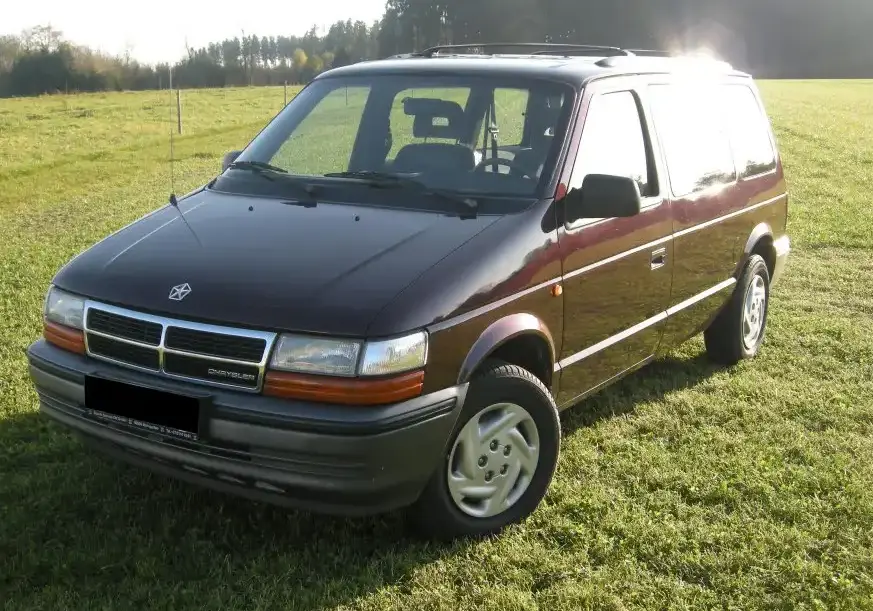
The Chrysler Voyager V 2.8 CRD (150 hp) represents a diesel-powered variant of the fifth-generation Chrysler Voyager minivan, produced from 2007 to 2016. Positioned as a practical and fuel-efficient option within the Voyager lineup, it primarily served the European market where diesel engines were – and continue to be – highly favored for family vehicles and long-distance travel. This model aimed to provide a balance between space, comfort, and reasonable running costs, appealing to families and those requiring a versatile vehicle for both passenger and cargo transport. It was a key offering in a segment dominated by vehicles like the Renault Espace and Volkswagen Sharan.
Technical Specifications
| Brand | Chrysler |
| Model | Voyager |
| Generation | Voyager V |
| Type (Engine) | 2.8 CRD (150 Hp) |
| Start of production | 2007 |
| End of production | 2016 |
| Powertrain Architecture | Internal Combustion engine |
| Body type | Minivan |
| Seats | 5 |
| Doors | 5 |
| Fuel consumption (combined) | 8.3 l/100 km (28.3 US mpg, 34 UK mpg, 12 km/l) |
| Fuel Type | Diesel |
| Acceleration 0 – 100 km/h | 11.9 sec |
| Acceleration 0 – 62 mph | 11.9 sec |
| Acceleration 0 – 60 mph | 11.3 sec |
| Maximum speed | 180 km/h (111.85 mph) |
| Weight-to-power ratio | 13.4 kg/Hp, 74.4 Hp/tonne |
| Weight-to-torque ratio | 5.6 kg/Nm, 178.7 Nm/tonne |
| Power | 150 Hp @ 3800 rpm |
| Power per litre | 54 Hp/l |
| Torque | 360 Nm @ 1800 rpm (265.52 lb.-ft. @ 1800 rpm) |
| Engine layout | Front, Transverse |
| Engine displacement | 2776 cm3 (169.4 cu. in.) |
| Number of cylinders | 4 |
| Engine configuration | Inline |
| Cylinder Bore | 94 mm (3.7 in.) |
| Piston Stroke | 100 mm (3.94 in.) |
| Compression ratio | 17.5:1 |
| Number of valves per cylinder | 4 |
| Fuel injection system | Diesel Commonrail |
| Engine aspiration | Turbocharger, Intercooler |
| Engine oil capacity | 6.6 l (6.97 US qt | 5.81 UK qt) |
| Coolant capacity | 16.6 l (17.54 US qt | 14.61 UK qt) |
| Kerb Weight | 2015 kg (4442.31 lbs.) |
| Max. weight | 2515 kg (5544.63 lbs.) |
| Max load | 500 kg (1102.31 lbs.) |
| Trunk (boot) space – minimum | 1970 l (69.57 cu. ft.) |
| Trunk (boot) space – maximum | 3640 l (128.55 cu. ft.) |
| Fuel tank capacity | 75 l (19.81 US gal | 16.5 UK gal) |
| Length | 4808 mm (189.29 in.) |
| Width | 1997 mm (78.62 in.) |
| Height | 1803 mm (70.98 in.) |
| Wheelbase | 2878 mm (113.31 in.) |
| Front track | 1600 mm (62.99 in.) |
| Rear track | 1626 mm (64.02 in.) |
| Drivetrain | Front wheel drive |
| Number of gears | 4 |
| Gearbox type | Automatic transmission |
| Front brakes | Ventilated discs |
| Rear brakes | Disc |
| Assisting systems | ABS (Anti-lock braking system) |
| Steering type | Steering rack and pinion |
| Power steering | Electric |
| Tires size | 215/65 R16 |
INTRODUCTION
The Chrysler Voyager V 2.8 CRD (150 hp), launched in 2007, was a significant offering in Chrysler’s European lineup. Built on the NS platform (also known as the 1HX0/A3 platform, shared with other Chrysler and Dodge models), this variant aimed to provide a diesel alternative to the gasoline-powered Voyagers. The “V” designation denoted the fifth generation of the Voyager, which saw a shift towards a more refined and spacious interior, along with improved safety features. The 2.8 CRD engine was intended to appeal to buyers prioritizing fuel economy and torque for towing or carrying heavy loads, making it a popular choice for families and those with active lifestyles.
Powertrain & Engine Architecture
The heart of the Voyager V 2.8 CRD is the 2.8-liter inline-four cylinder diesel engine. This engine, often identified by engine codes such as EDC, utilized a common rail direct injection (CRDI) system, a technology that significantly improved fuel efficiency and reduced emissions compared to older diesel injection methods. The CRDI system, supplied by Bosch, precisely meters fuel directly into the combustion chamber at extremely high pressure, optimizing combustion. A turbocharger with an intercooler further enhances performance by forcing more air into the engine, increasing power output. The engine features four valves per cylinder and a robust engine block designed for durability. The 4-speed automatic transmission, sourced from Chrysler, was the sole transmission option for this variant. While providing convenience, it wasn’t known for its particularly quick shifts or fuel efficiency compared to more modern automatic transmissions.
Driving Characteristics
The 150 hp and 360 Nm (265 lb-ft) of torque delivered by the 2.8 CRD engine provided adequate, though not exhilarating, performance for the Voyager V. Acceleration from 0-60 mph took around 11.3 seconds, and top speed was limited to 180 km/h (112 mph). The automatic transmission, with its four gears, meant that the engine often operated at higher RPMs during acceleration, impacting fuel economy. Compared to the higher-output gasoline engines available in the Voyager lineup, the 2.8 CRD prioritized low-end torque over outright speed. This made it well-suited for towing and navigating hilly terrain. The gear ratios were optimized for cruising, providing a relatively comfortable driving experience on highways, but could feel sluggish during quick overtaking maneuvers. Compared to manual transmission versions (not widely available with this engine), the automatic offered less driver control and a slightly less responsive feel.
Equipment & Trim Levels
The 2.8 CRD Voyager V typically came with a reasonable level of standard equipment. This included air conditioning, power windows and locks, a basic audio system, and alloy wheels. Interior upholstery was generally cloth, though leather options were available as upgrades. Higher trim levels, such as the Limited or LX, added features like automatic climate control, upgraded audio systems with CD changers, rear parking sensors, and more luxurious interior appointments. Optional extras included a DVD entertainment system for rear passengers, sunroof, and navigation system. The dashboard layout was functional and straightforward, prioritizing ease of use over stylistic flair.
Chassis & Braking
The Voyager V utilized a front-wheel-drive chassis with an independent suspension setup at the front and a twist-beam rear suspension. The front suspension featured MacPherson struts, while the rear employed a semi-independent twist-beam axle. This configuration provided a comfortable ride quality, but wasn’t particularly sporty in handling. Braking duties were handled by ventilated discs at the front and solid discs at the rear. Anti-lock Braking System (ABS) was standard, enhancing safety during emergency braking situations. The suspension was tuned for comfort and load-carrying capacity, rather than aggressive cornering. Stabilizer bars were fitted to both the front and rear axles to reduce body roll.
Market Reception & Comparison
The Chrysler Voyager V 2.8 CRD was generally well-received in Europe as a practical and fuel-efficient family vehicle. Critics praised its spacious interior, comfortable ride, and the torque provided by the diesel engine. However, the 4-speed automatic transmission was often criticized for its lack of responsiveness and contribution to lower fuel economy compared to manual transmission options. Compared to other diesel-powered minivans like the Renault Espace and Volkswagen Sharan, the Voyager offered a competitive level of space and features at a relatively affordable price point. Fuel economy was respectable for its class, averaging around 8.3 l/100 km (28.3 US mpg), but lagged behind some of its more modern competitors.
Legacy
The 2.8 CRD engine, while generally reliable, is known to require regular maintenance, particularly regarding the diesel particulate filter (DPF) and fuel injectors. DPF issues can be common if the vehicle is primarily used for short trips, as the filter doesn’t have sufficient opportunity to regenerate. The automatic transmission, while durable, can be prone to wear and tear over time. Today, the Voyager V 2.8 CRD can be found on the used car market at relatively affordable prices. Its spacious interior and diesel engine continue to appeal to buyers seeking a practical and economical family vehicle, but potential buyers should be aware of the potential maintenance costs associated with the diesel engine and automatic transmission. It remains a testament to Chrysler’s attempt to cater to the European market’s preference for diesel-powered vehicles.