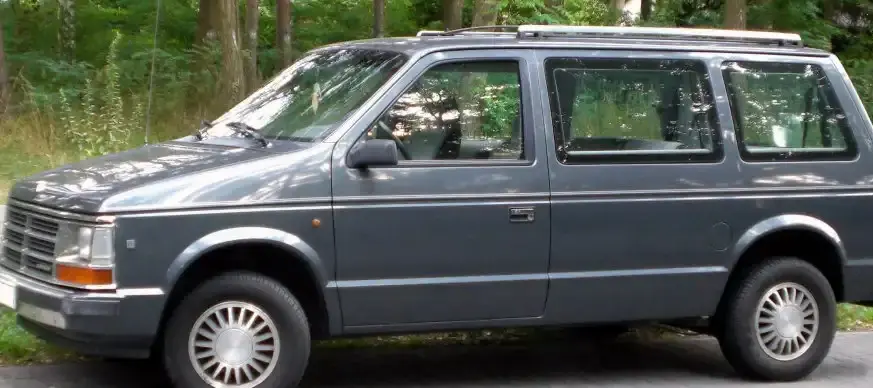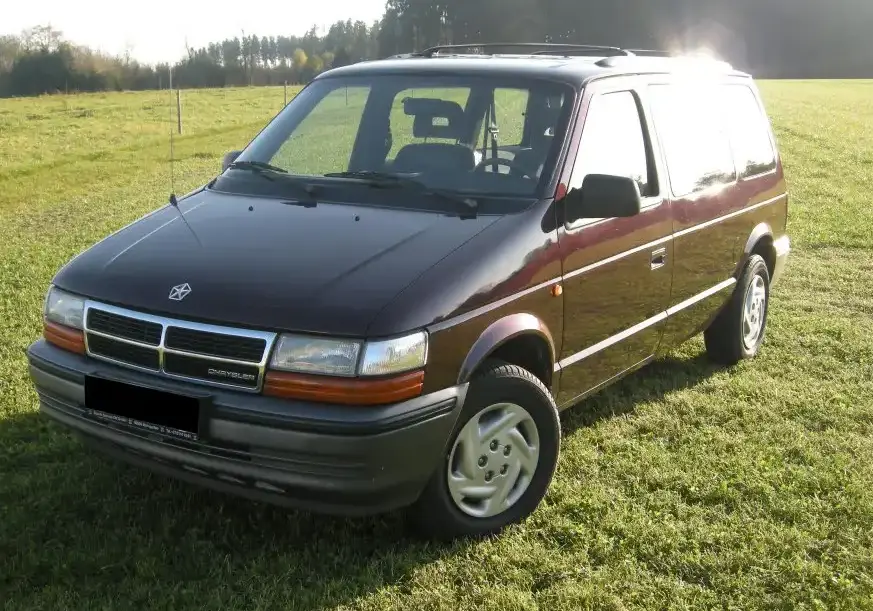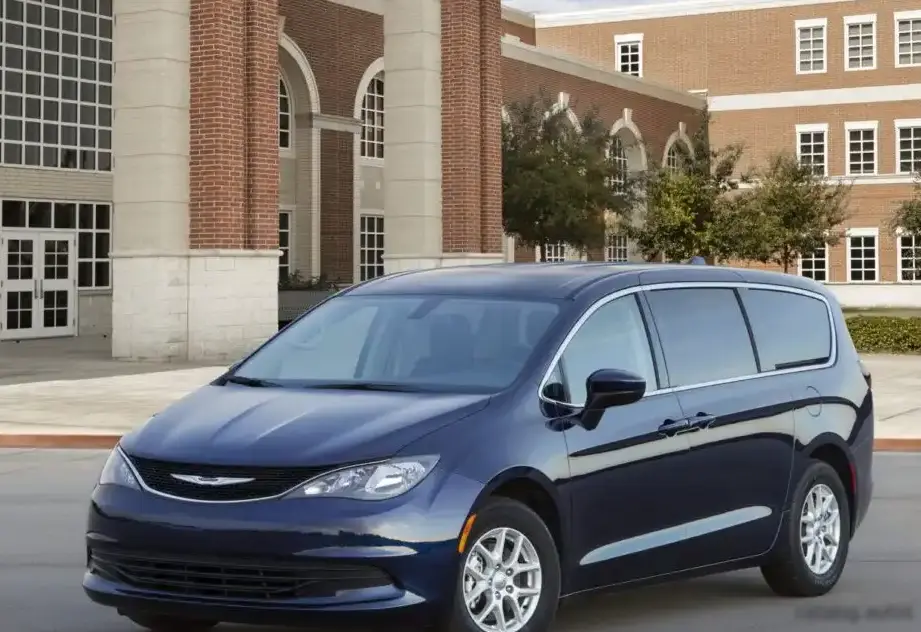
The Chrysler Voyager VI, specifically equipped with the 3.6-liter Pentastar V6 engine paired with the TorqueFlite nine-speed automatic transmission, represents a significant iteration in Chrysler’s minivan lineage. Produced from 2019 to 2021, this variant aimed to deliver a balance of power, efficiency, and family-oriented practicality within the Voyager lineup. It served as a mainstream offering, positioned between more basic trims and potentially more luxurious configurations depending on regional market offerings. The Voyager VI, built on the Chrysler RU platform, continued the brand’s tradition of innovative minivan design and features.
Technical Specifications
| Brand | Chrysler |
| Model | Voyager |
| Generation | Voyager VI |
| Type (Engine) | 3.6 Pentastar V6 (291 Hp) TorqueFlite |
| Start of production | 2019 year |
| End of production | 2021 year |
| Powertrain Architecture | Internal Combustion engine |
| Body type | Minivan |
| Seats | 7-8 |
| Doors | 5 |
| Fuel Type | Petrol (Gasoline) |
| Weight-to-power ratio | 6.7 kg/Hp, 148.2 Hp/tonne |
| Weight-to-torque ratio | 5.5 kg/Nm, 180.8 Nm/tonne |
| Power | 291 Hp @ 6400 rpm |
| Power per litre | 80.7 Hp/l |
| Torque | 355 Nm @ 4000 rpm, 261.83 lb.-ft. @ 4000 rpm |
| Maximum engine speed | 6400 rpm |
| Engine layout | Front, Transverse |
| Engine Model/Code | Pentastar / ERC |
| Engine displacement | 3605 cm3, 219.99 cu. in. |
| Number of cylinders | 6 |
| Engine configuration | V-engine |
| Cylinder Bore | 96 mm, 3.78 in. |
| Piston Stroke | 83 mm, 3.27 in. |
| Compression ratio | 11.3:1 |
| Number of valves per cylinder | 4 |
| Fuel injection system | Multi-port manifold injection |
| Engine aspiration | Naturally aspirated engine |
| Valvetrain | CVVT |
| Engine oil capacity | 4.7 l, 4.97 US qt | 4.14 UK qt |
| Coolant | 12.4 l, 13.1 US qt | 10.91 UK qt |
| Kerb Weight | 1964 kg, 4329.88 lbs |
| Max. weight | 2747 kg, 6056.1 lbs |
| Max load | 783 kg, 1726.22 lbs |
| Trunk (boot) space – minimum | 915 l, 32.31 cu. ft. |
| Trunk (boot) space – maximum | 3979 l, 140.52 cu. ft. |
| Fuel tank capacity | 71.9 l, 18.99 US gal | 15.82 UK gal |
| Length | 5176 mm, 203.78 in. |
| Width | 2022 mm, 79.61 in. |
| Width including mirrors | 2297 mm, 90.43 in. |
| Height | 1777 mm, 69.96 in. |
| Wheelbase | 3089 mm, 121.61 in. |
| Front track | 1735 mm, 68.31 in. |
| Rear (Back) track | 1736 mm, 68.35 in. |
| Front overhang | 960 mm, 37.8 in. |
| Rear overhang | 1127 mm, 44.37 in. |
| Ride height (ground clearance) | 131 mm, 5.16 in. |
| Drag coefficient (Cd) | 0.30 |
| Minimum turning circle (turning diameter) | 12.1 m, 39.7 ft. |
| Approach angle | 14.0° |
| Departure angle | 18.7° |
| Ramp-over (brakeover) angle | 12.5° |
| Drivetrain Architecture | The Internal combustion engine (ICE) drives the front wheels of the vehicle. |
| Drive wheel | Front wheel drive |
| Number of gears and type of gearbox | 9 gears, automatic transmission TorqueFlite |
| Front suspension | Independent, type McPherson with coil spring and anti-roll bar |
| Rear suspension | Independent coil spring |
| Front brakes | Ventilated discs |
| Rear brakes | Disc |
| Assisting systems | ABS (Anti-lock braking system) |
| Steering type | Steering rack and pinion |
| Power steering | Electric Steering |
| Tires size | 235/65 R17 |
| Wheel rims size | 7J x 17 |
INTRODUCTION
The Chrysler Voyager VI 3.6 Pentastar V6 with the TorqueFlite transmission, launched in 2019, represented a continuation of Chrysler’s commitment to the minivan segment. This generation Voyager aimed to provide a practical and comfortable transportation solution for families, offering a spacious interior and a range of features. The 3.6-liter Pentastar V6 engine, a mainstay of Chrysler’s powertrain lineup, was chosen for its blend of power and fuel efficiency. The nine-speed TorqueFlite automatic transmission was implemented to further enhance fuel economy and provide smooth shifting. This particular configuration was often positioned as a mid-range offering, providing a step up in performance from base models while remaining more accessible than fully-loaded trims.
Powertrain & Engine Architecture
At the heart of this Voyager variant lies the 3.6-liter Pentastar V6 engine, designated with the ERC code. This engine is a naturally aspirated, 60-degree V6 featuring a dual overhead camshaft (DOHC) valvetrain and Chrysler’s Variable Valve Timing (CVVT) technology. The CVVT system optimizes valve timing based on engine speed and load, improving both performance and fuel efficiency. The engine utilizes multi-port fuel injection, delivering fuel directly to the intake ports. The 3.6L Pentastar is known for its robust construction and relatively simple design, contributing to its reliability. The TorqueFlite 948TE nine-speed automatic transmission is a key component of this powertrain. This transmission features a wide gear ratio spread, allowing the engine to operate in its most efficient range more often. It employs a torque converter for smooth launches and low-speed driving, and utilizes electronically controlled shifts for precise gear changes.
Driving Characteristics
The 291 horsepower and 261 lb-ft of torque produced by the 3.6-liter Pentastar V6, when channeled through the nine-speed TorqueFlite transmission, provided adequate performance for everyday driving and family hauling. While not a performance-oriented minivan, the Voyager VI 3.6 offered sufficient acceleration for merging onto highways and passing other vehicles. The nine-speed transmission, while contributing to fuel economy, could sometimes exhibit slightly hesitant shifts, particularly at lower speeds. Compared to potential lower-powered four-cylinder options, the V6 delivered a noticeably smoother and more refined driving experience. The gear ratios were tuned for a balance between acceleration and fuel efficiency, with higher gears prioritizing economy during highway cruising. Compared to a manual transmission (not offered on this trim), the automatic provided convenience and ease of use, but at the expense of some driver control.
Equipment & Trim Levels
The Voyager VI 3.6 Pentastar V6 typically came standard with a respectable array of features. Interior appointments generally included cloth upholstery, though leather options were often available as upgrades. Standard features often included a touchscreen infotainment system with Apple CarPlay and Android Auto compatibility, a rearview camera, and basic safety features like ABS and stability control. Higher trim levels could add features such as power-adjustable seats, upgraded audio systems, and advanced driver-assistance systems like blind-spot monitoring and rear cross-traffic alert. Optional extras frequently included a power liftgate, sunroof, and various convenience packages.
Chassis & Braking
The Voyager VI utilized an independent McPherson strut suspension in the front and an independent coil spring suspension in the rear. This setup aimed to provide a comfortable ride while maintaining reasonable handling characteristics. The front suspension incorporated a stabilizer bar to reduce body roll during cornering. Braking duties were handled by ventilated discs at the front and solid discs at the rear. The ABS system helped to prevent wheel lockup during hard braking, enhancing safety. The suspension tuning was geared towards comfort rather than sporty handling, prioritizing a smooth ride for passengers.
Market Reception & Comparison
The Chrysler Voyager VI 3.6 Pentastar V6 received generally positive reviews for its spacious interior, comfortable ride, and respectable fuel economy. Critics noted the engine’s adequate power for most driving situations, but some found the nine-speed transmission to be occasionally less refined than other automatic transmissions. Compared to other minivan trims, such as those with smaller engines, the 3.6L V6 offered a noticeable performance advantage. Fuel economy was competitive within the minivan segment, typically achieving around 19-28 mpg depending on driving conditions. Reliability reports generally indicated good long-term durability for the Pentastar V6 engine and TorqueFlite transmission.
Legacy
The 3.6-liter Pentastar V6 and TorqueFlite nine-speed automatic transmission combination proved to be a reliable and durable powertrain in the Voyager VI. In the used car market, these Voyagers are often sought after for their blend of practicality, comfort, and relatively low maintenance costs. The Pentastar V6 engine has a reputation for longevity, and the TorqueFlite transmission, while occasionally exhibiting minor issues, is generally considered robust. The Voyager VI 3.6 Pentastar V6 represents a solid choice for families seeking a spacious and dependable minivan.