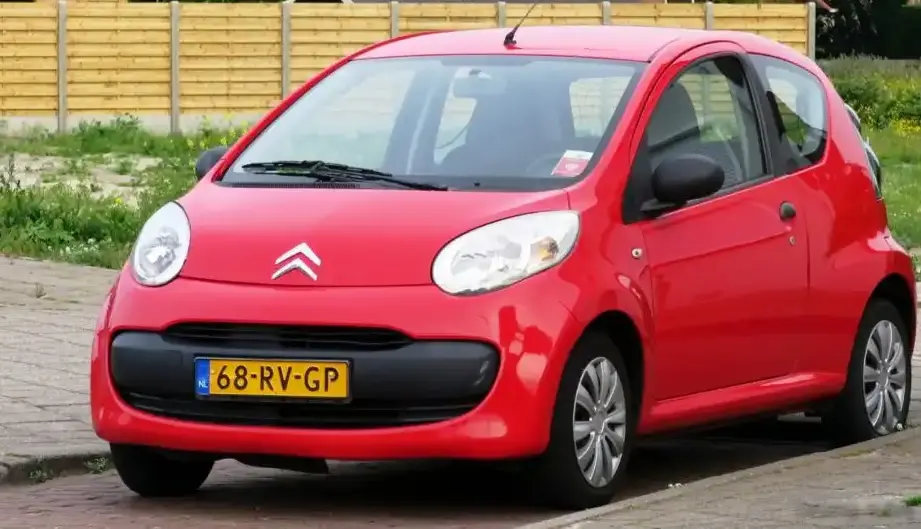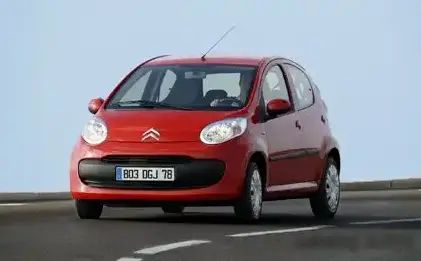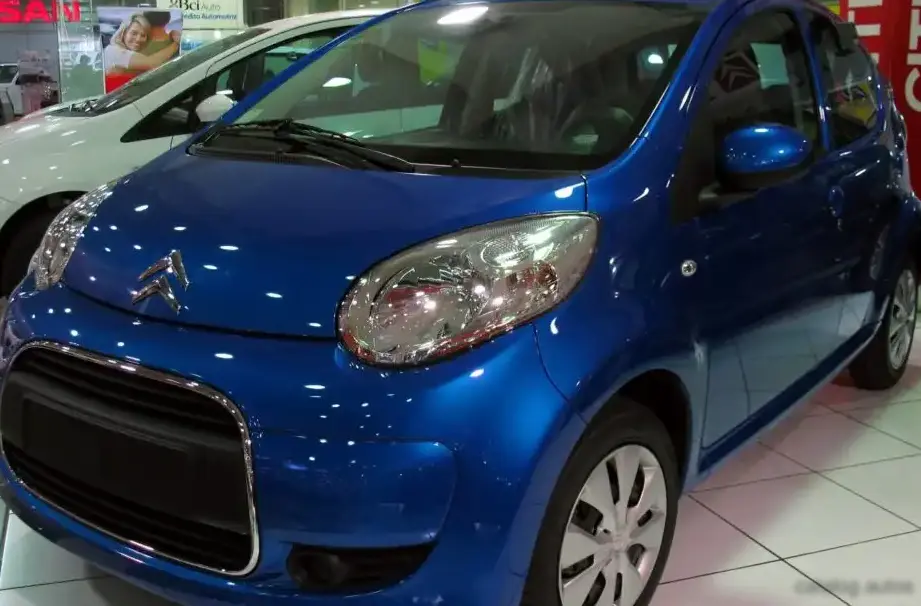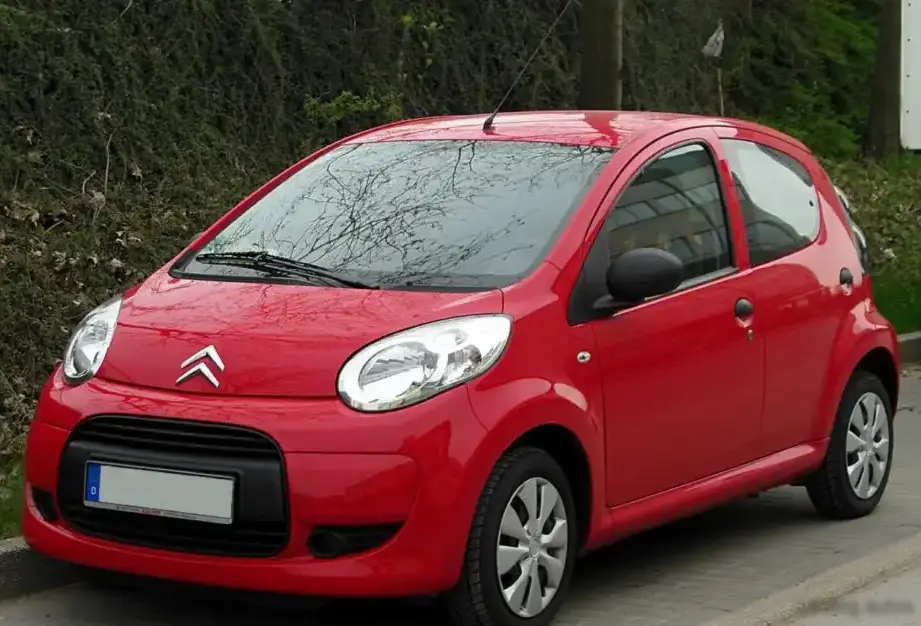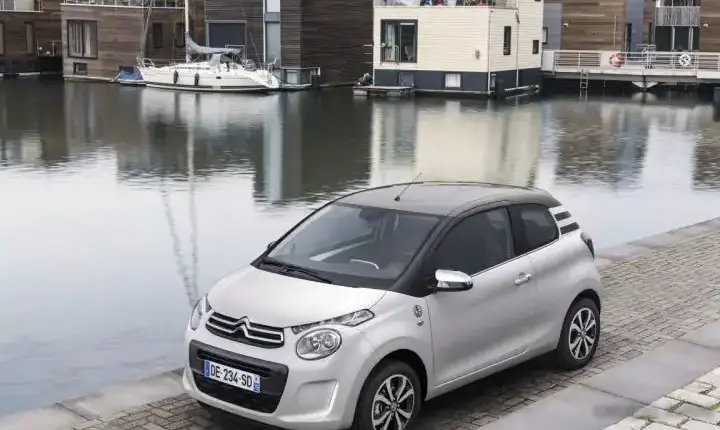
The Citroen C1 II, specifically the 1.0 VTi (69 hp) S&S 3-door model produced between May 2014 and April 2018, represents a key iteration of Citroen’s city car offering. This variant was positioned as the entry-level model within the C1 II range, designed for affordability and fuel efficiency. It shared its platform and core engineering with the Peugeot 108 and Toyota Aygo, a result of a collaborative venture between PSA Group (now Stellantis) and Toyota Motor Corporation. The C1 II aimed to provide a practical and economical solution for urban commuting, particularly in European markets.
Technical Specifications
| Brand | Citroen |
| Model | C1 |
| Generation | C1 II (Phase I, 2014 3-door) |
| Type (Engine) | 1.0 VTi (69 Hp) S&S |
| Start of production | May, 2014 |
| End of production | April, 2018 |
| Powertrain Architecture | Internal Combustion engine |
| Body type | Hatchback |
| Seats | 4 |
| Doors | 3 |
| Fuel consumption (urban) | 4.5 l/100 km (52.3 US mpg, 62.8 UK mpg, 22.2 km/l) |
| Fuel consumption (extra urban) | 3.5 l/100 km (67.2 US mpg, 80.7 UK mpg, 28.6 km/l) |
| Fuel consumption (combined) | 3.8 l/100 km (61.9 US mpg, 74.3 UK mpg, 26.3 km/l) |
| CO2 emissions | 88 g/km |
| Fuel Type | Petrol (Gasoline) |
| Acceleration 0 – 100 km/h | 14.3 sec |
| Acceleration 0 – 62 mph | 14.3 sec |
| Acceleration 0 – 60 mph | 13.6 sec |
| Maximum speed | 157 km/h (97.56 mph) |
| Emission standard | Euro 5 |
| Weight-to-power ratio | 12.4 kg/Hp, 80.7 Hp/tonne |
| Weight-to-torque ratio | 9 kg/Nm, 111.1 Nm/tonne |
| Power | 69 Hp @ 6000 rpm |
| Power per litre | 69.1 Hp/l |
| Torque | 95 Nm @ 4800 rpm (70.07 lb.-ft. @ 4800 rpm) |
| Engine layout | Front, Transverse |
| Engine Model/Code | CFB 1KR |
| Engine displacement | 998 cm3 (60.9 cu. in.) |
| Number of cylinders | 3 |
| Engine configuration | Inline |
| Cylinder Bore | 71 mm (2.8 in.) |
| Piston Stroke | 84 mm (3.31 in.) |
| Compression ratio | 11.5:1 |
| Number of valves per cylinder | 4 |
| Fuel injection system | Multi-port manifold injection |
| Engine aspiration | Naturally aspirated engine |
| Engine oil capacity | 3.1 l (3.28 US qt | 2.73 UK qt) |
| Coolant | 3.6 l (3.8 US qt | 3.17 UK qt) |
| Kerb Weight | 855 kg (1884.95 lbs.) |
| Max. weight | 1240 kg (2733.73 lbs.) |
| Max load | 385 kg (848.78 lbs.) |
| Trunk (boot) space – minimum | 196 l (6.92 cu. ft.) |
| Trunk (boot) space – maximum | 780 l (27.55 cu. ft.) |
| Fuel tank capacity | 35 l (9.25 US gal | 7.7 UK gal) |
| Length | 3465 mm (136.42 in.) |
| Width | 1615 mm (63.58 in.) |
| Width including mirrors | 1884 mm (74.17 in.) |
| Height | 1460 mm (57.48 in.) |
| Wheelbase | 2340 mm (92.13 in.) |
| Front track | 1425 mm (56.1 in.) |
| Rear (Back) track | 1420 mm (55.91 in.) |
| Front overhang | 665 mm (26.18 in.) |
| Rear overhang | 460 mm (18.11 in.) |
| Ride height (ground clearance) | 120 mm (4.72 in.) |
| Drag coefficient (Cd) | 0.285 |
| Minimum turning circle | 9.6 m (31.5 ft.) |
| Drivetrain Architecture | Front wheel drive |
| Drive wheel | Front wheel drive |
| Number of gears and type of gearbox | 5 gears, manual transmission |
| Front suspension | Independent, type McPherson with coil spring and anti-roll bar |
| Rear suspension | Semi-independent, coil spring |
| Front brakes | Ventilated discs |
| Rear brakes | Drum |
| Assisting systems | ABS (Anti-lock braking system) |
| Steering type | Steering rack and pinion |
| Tires size | 165/65 R14 |
| Wheel rims size | 14 |
Powertrain & Engine Architecture
The heart of the C1 II 1.0 VTi S&S is the CFB 1KR engine, a 998cc inline three-cylinder petrol engine. This engine utilizes a multi-point fuel injection system and is naturally aspirated, meaning it doesn’t employ a turbocharger or supercharger. The engine produces 69 horsepower at 6000 rpm and 95 Nm (70 lb-ft) of torque at 4800 rpm. The ‘S&S’ designation indicates the inclusion of a Start & Stop system, designed to automatically shut off the engine when the vehicle is stationary (e.g., at traffic lights) to improve fuel economy. The engine’s relatively simple design contributes to its reliability and ease of maintenance. The engine is paired with a five-speed manual transmission, which was the standard offering for this trim level. The transmission is geared towards maximizing fuel efficiency rather than outright performance.
Driving Characteristics
The 1.0 VTi S&S 3-door C1 is not designed for spirited driving. Its 69 horsepower and relatively low torque output result in modest acceleration – 0-60 mph takes around 13.6 seconds. The focus is on providing adequate power for urban environments and economical cruising. The five-speed manual transmission allows drivers to keep the engine in its optimal power band, but frequent downshifting is often required for overtaking or climbing hills. Compared to higher-spec C1 models with more powerful engines, this variant feels noticeably slower. However, its light weight (855 kg) helps to mitigate the lack of power to some extent. The steering is light and precise, making it easy to maneuver in tight city streets.
Equipment & Trim Levels
As the entry-level trim, the 1.0 VTi S&S 3-door C1 came equipped with basic but essential features. Standard equipment typically included power steering, central locking, electric front windows, and an ABS anti-lock braking system. Interior upholstery was typically cloth, and the dashboard featured a simple, functional design. Optional extras included air conditioning, a radio with USB connectivity, and alloy wheels. The overall interior ambiance was basic but durable, prioritizing practicality over luxury.
Chassis & Braking
The C1 II utilizes a McPherson strut front suspension and a semi-independent coil spring rear suspension. This setup provides a comfortable ride quality, particularly on smooth roads. The front brakes are ventilated discs, while the rear brakes are drums. This configuration is typical for vehicles in this weight class and price range. The steering is rack and pinion, offering responsive handling. The relatively narrow tires (165/65 R14) contribute to fuel efficiency but limit grip during cornering.
Market Reception & Comparison
The Citroen C1 II 1.0 VTi S&S was generally well-received by critics as an affordable and economical city car. Its low running costs, compact size, and ease of parking were highlighted as key strengths. However, its limited power and basic interior were also noted. Compared to other trims in the C1 lineup, such as the VTi 82, this variant offered a more accessible price point but sacrificed performance. Against competitors like the Fiat 500 and Volkswagen Up!, the C1 offered a compelling value proposition, often undercutting them in price.
Legacy
The 1.0 VTi engine, while not known for its blistering performance, has proven to be a reliable and durable unit. The C1 II 1.0 VTi S&S remains a popular choice in the used car market, particularly for first-time drivers or those seeking an economical runabout. Maintenance costs are generally low, and parts availability is good. The collaborative engineering between Citroen, Peugeot, and Toyota has resulted in a robust and well-engineered platform that continues to provide reliable transportation for many years.