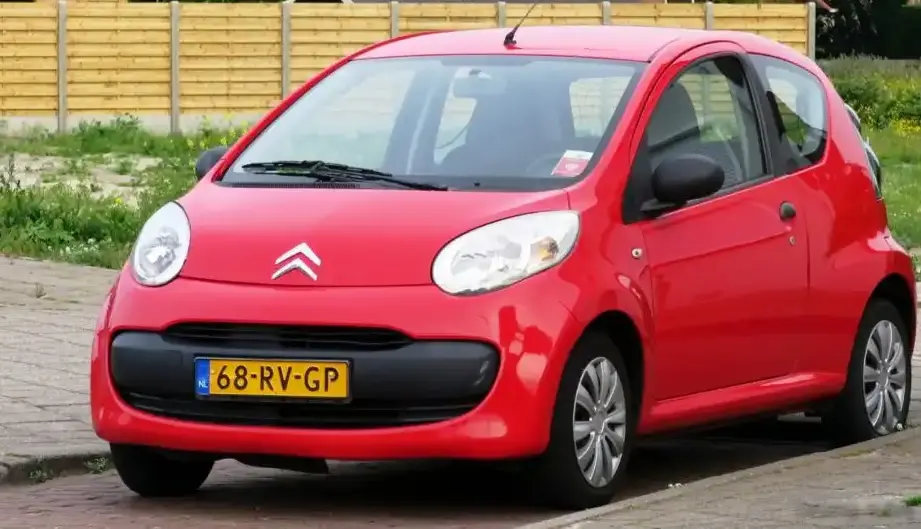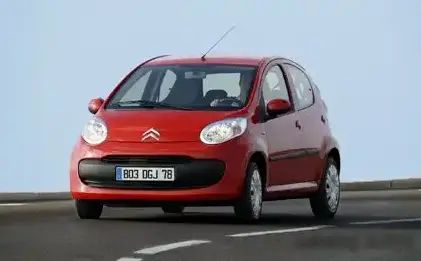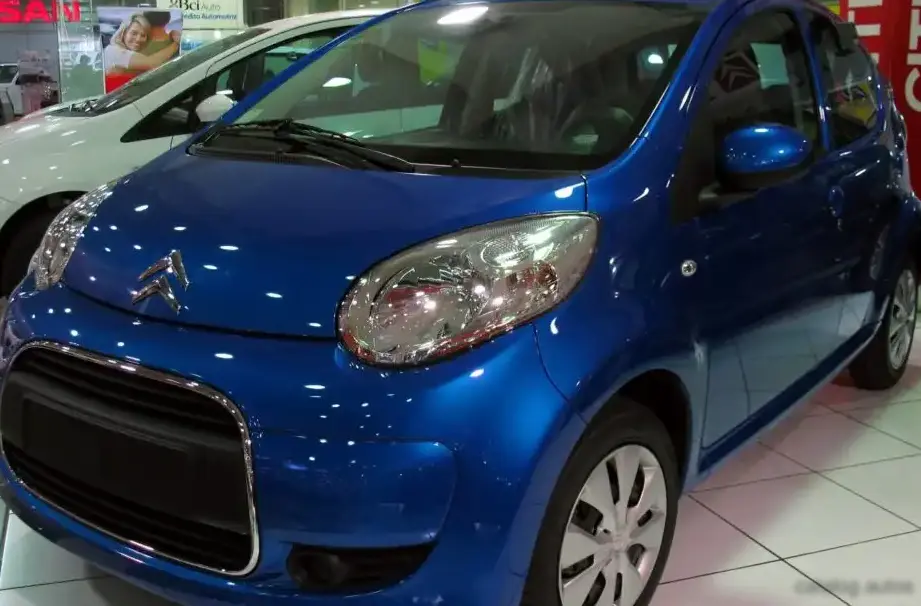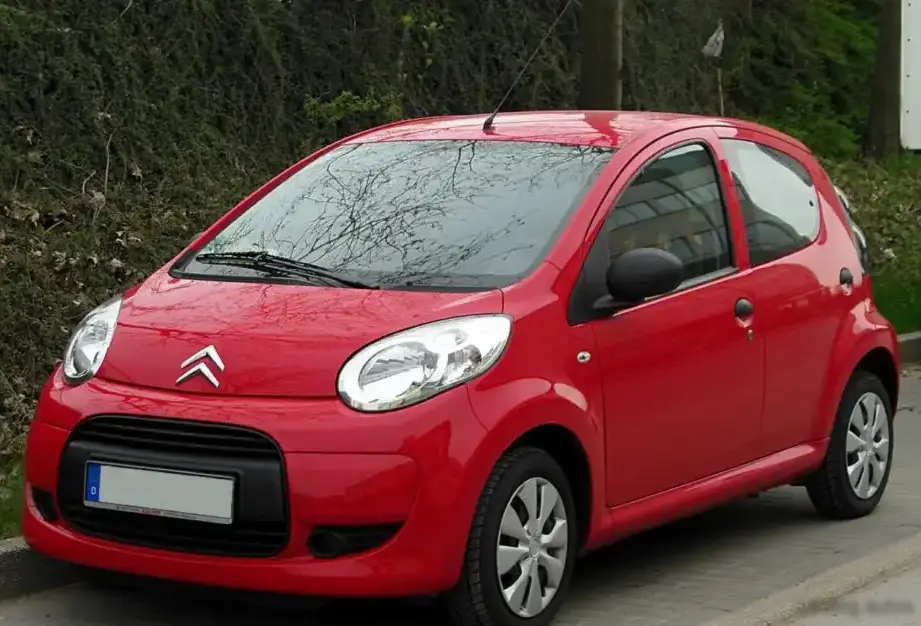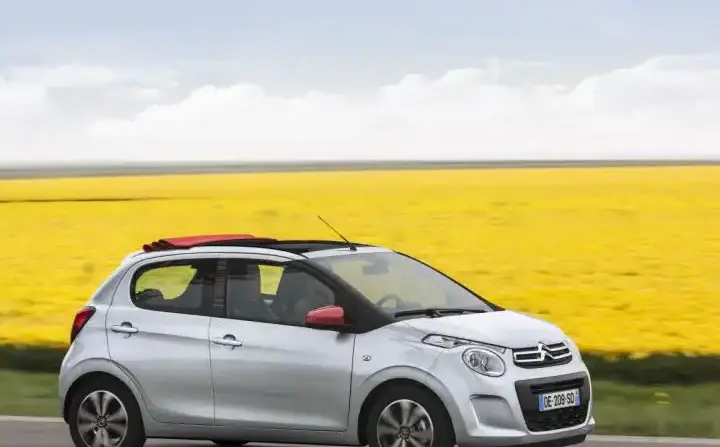
The Citroen C1 II Airscape 1.0 VTi (72 hp) S&S, produced from 2019 to 2022, represents a key variant within the second generation of Citroen’s city car. Positioned as an entry-level to mid-range offering, this 5-door hatchback aimed to provide affordable and efficient transportation, particularly within European urban environments. It’s built on the shared 1HX0/A3 platform developed in collaboration with Peugeot and Toyota, resulting in the closely related Peugeot 108 and Toyota Aygo. The Airscape trim level specifically denotes the inclusion of a retractable panoramic sunroof, adding a touch of open-air enjoyment to the compact package. This variant was primarily sold in Europe, where demand for small, economical vehicles remains strong.
Technical Specifications
| Brand | Citroen |
| Model | C1 |
| Generation | C1 II (Phase I, 2014 5-door) |
| Type (Engine) | Airscape 1.0 VTi (72 Hp) S&S |
| Start of production | April, 2019 |
| End of production | January, 2022 |
| Powertrain Architecture | Internal Combustion engine |
| Body type | Hatchback |
| Seats | 4 |
| Doors | 5 |
| Fuel consumption at Low speed (WLTP) | 5.4-5.5 l/100 km (43.6 – 42.8 US mpg, 52.3 – 51.4 UK mpg, 18.5 – 18.2 km/l) |
| Fuel consumption at Medium speed (WLTP) | 4.4-4.5 l/100 km (53.5 – 52.3 US mpg, 64.2 – 62.8 UK mpg, 22.7 – 22.2 km/l) |
| Fuel consumption at high speed (WLTP) | 4.1-4.2 l/100 km (57.4 – 56 US mpg, 68.9 – 67.3 UK mpg, 24.4 – 23.8 km/l) |
| Fuel consumption at very high speed (WLTP) | 5.4-5.5 l/100 km (43.6 – 42.8 US mpg, 52.3 – 51.4 UK mpg, 18.5 – 18.2 km/l) |
| Combined fuel consumption (WLTP) | 4.8-4.9 l/100 km (49 – 48 US mpg, 58.9 – 57.6 UK mpg, 20.8 – 20.4 km/l) |
| CO2 emissions (WLTP) | 108-111 g/km |
| Fuel consumption (economy) – urban (NEDC) | 4.3 l/100 km (54.7 US mpg, 65.7 UK mpg, 23.3 km/l) |
| Fuel consumption (economy) – extra urban (NEDC) | 3.4 l/100 km (69.2 US mpg, 83.1 UK mpg, 29.4 km/l) |
| Fuel consumption (economy) – combined (NEDC) | 3.7 l/100 km (63.6 US mpg, 76.3 UK mpg, 27 km/l) |
| CO2 emissions (NEDC) | 85 g/km |
| Fuel Type | Petrol (Gasoline) |
| Acceleration 0 – 100 km/h | 12.6 sec |
| Acceleration 0 – 62 mph | 12.6 sec |
| Acceleration 0 – 60 mph | 12 sec |
| Maximum speed | 160 km/h (99.42 mph) |
| Emission standard | Euro 6d |
| Weight-to-power ratio | 12.6 kg/Hp, 79.1 Hp/tonne |
| Weight-to-torque ratio | 9.8 kg/Nm, 102.2 Nm/tonne |
| Power | 72 Hp @ 6000 rpm |
| Power per litre | 72.1 Hp/l |
| Torque | 93 Nm @ 4400 rpm (68.59 lb.-ft. @ 4400 rpm) |
| Engine layout | Front, Transverse |
| Engine Model/Code | CFB 1KR |
| Engine displacement | 998 cm3 (60.9 cu. in.) |
| Number of cylinders | 3 |
| Engine configuration | Inline |
| Cylinder Bore | 71 mm (2.8 in.) |
| Piston Stroke | 84 mm (3.31 in.) |
| Number of valves per cylinder | 4 |
| Fuel injection system | Multi-port manifold injection |
| Engine aspiration | Naturally aspirated engine |
| Engine oil capacity | 3.1 l (3.28 US qt | 2.73 UK qt) |
| Coolant | 3.6 l (3.8 US qt | 3.17 UK qt) |
| Engine systems | Start & Stop System |
| Kerb Weight | 910 kg (2006.21 lbs.) |
| Max. weight | 1240 kg (2733.73 lbs.) |
| Max load | 330 kg (727.53 lbs.) |
| Trunk (boot) space – minimum | 196 l (6.92 cu. ft.) |
| Trunk (boot) space – maximum | 780 l (27.55 cu. ft.) |
| Fuel tank capacity | 35 l (9.25 US gal | 7.7 UK gal) |
| Length | 3466 mm (136.46 in.) |
| Width | 1615 mm (63.58 in.) |
| Width including mirrors | 1884 mm (74.17 in.) |
| Height | 1460 mm (57.48 in.) |
| Wheelbase | 2340 mm (92.13 in.) |
| Front track | 1420 mm (55.91 in.) |
| Rear (Back) track | 1425 mm (56.1 in.) |
| Front overhang | 666 mm (26.22 in.) |
| Rear overhang | 460 mm (18.11 in.) |
| Ride height (ground clearance) | 120 mm (4.72 in.) |
| Minimum turning circle (turning diameter) | 9.6 m (31.5 ft.) |
| Drivetrain Architecture | The Internal combustion engine (ICE) drives the front wheels of the vehicle. |
| Drive wheel | Front wheel drive |
| Number of gears and type of gearbox | 5 gears, manual transmission |
| Front suspension | Independent, type McPherson with coil spring and anti-roll bar |
| Front brakes | Ventilated discs |
| Rear brakes | Drum |
| Assisting systems | ABS (Anti-lock braking system) |
| Steering type | Steering rack and pinion |
| Power steering | Electric Steering |
| Tires size | 165/65 R14; 165/60 R15 |
| Wheel rims size | 14; 15 |
INTRODUCTION
The Citroen C1 II Airscape 1.0 VTi (72 hp) S&S, launched in 2019, is a five-door hatchback representing the facelifted version of the second-generation C1. This iteration builds upon the foundation laid by the original C1, offering a more refined and feature-rich experience while retaining the core values of affordability and practicality. The Airscape trim, distinguished by its retractable panoramic roof, aimed to broaden the C1’s appeal to buyers seeking a touch of style and open-air driving. This model is part of a collaborative effort between Citroen, Peugeot, and Toyota, sharing its platform and many components with the Peugeot 108 and Toyota Aygo. It was designed primarily for the European market, catering to the demand for compact, fuel-efficient city cars.
Powertrain & Engine Architecture
At the heart of the C1 Airscape 1.0 VTi S&S lies the CFB 1KR, a 998cc inline three-cylinder petrol engine. This engine is part of Citroen’s PureTech family, known for its lightweight construction and efficiency. The engine utilizes a multi-point fuel injection system and features four valves per cylinder. The ‘VTi’ designation indicates variable valve timing on the intake side, optimizing performance and fuel economy. The ‘S&S’ denotes the inclusion of a Start & Stop system, which automatically shuts off the engine when the vehicle is stationary to reduce fuel consumption and emissions. Paired with this engine is a 5-speed manual transmission, delivering power to the front wheels. The engine produces 72 horsepower at 6000 rpm and 93 Nm (68.59 lb-ft) of torque at 4400 rpm. The engine’s relatively simple design contributes to its reliability and ease of maintenance.
Driving Characteristics
The 1.0 VTi engine, coupled with the 5-speed manual transmission, provides adequate, though not exhilarating, performance. Acceleration from 0 to 100 km/h (0-62 mph) takes approximately 12.6 seconds. The engine feels best suited to urban driving, where its nimble handling and light steering make maneuvering in tight spaces effortless. The gear ratios are tuned for fuel efficiency, meaning the engine needs to be revved to access its full potential. Compared to higher-output versions (which weren’t offered on this generation C1), this variant prioritizes economy over outright speed. The manual transmission offers a more engaging driving experience than an automatic would, allowing drivers to maintain control over gear selection and engine speed. While not a sporty car, the C1 Airscape 1.0 VTi provides a comfortable and predictable driving experience.
Equipment & Trim Levels
The Airscape trim level adds several features over the base C1. Standard equipment includes the retractable panoramic sunroof, air conditioning, electric front windows, a touchscreen infotainment system with Bluetooth connectivity, and USB port. Safety features include ABS, ESP (Electronic Stability Program), and multiple airbags. Optional extras available for this trim included alloy wheels, parking sensors, and a reversing camera. The interior features cloth upholstery and a functional, if somewhat basic, dashboard layout. The Airscape trim aimed to provide a balance between affordability and comfort, offering a more appealing package than the entry-level models.
Chassis & Braking
The C1 Airscape utilizes a McPherson strut front suspension with a coil spring and anti-roll bar, providing a comfortable ride and responsive handling. The rear suspension consists of a torsion beam setup, which is a cost-effective and space-saving solution. The front brakes are ventilated discs, offering good stopping power, while the rear brakes are drums. This combination is typical for vehicles in this weight class. The steering is electrically assisted, providing light and precise control. The relatively lightweight construction of the C1 contributes to its agility and fuel efficiency.
Market Reception & Comparison
The Citroen C1 II Airscape 1.0 VTi S&S was generally well-received by critics for its affordability, fuel efficiency, and practicality. It was often praised as an ideal city car, easy to park and maneuver in congested urban environments. Compared to other trims in the C1 lineup, this variant offered a good balance of features and price. Its fuel economy, ranging from 4.8 to 4.9 l/100 km (49-48 US mpg), was a significant selling point. While some reviewers noted the engine’s lack of power, it was generally considered adequate for its intended purpose. Compared to the Peugeot 108 and Toyota Aygo, which share the same platform and engine, the C1 Airscape distinguished itself with its unique styling and Citroen’s reputation for comfort.
Legacy
The Citroen C1 II Airscape 1.0 VTi S&S has proven to be a reliable and economical vehicle in the used car market. The 1KR engine is known for its durability, and the relatively simple mechanical design makes it relatively inexpensive to maintain. However, as with any small car, regular maintenance is crucial to ensure long-term reliability. The C1’s compact size and fuel efficiency continue to make it a popular choice for urban commuters and first-time car buyers. Its affordability and practicality have cemented its place as a successful city car, and it remains a common sight on European roads.