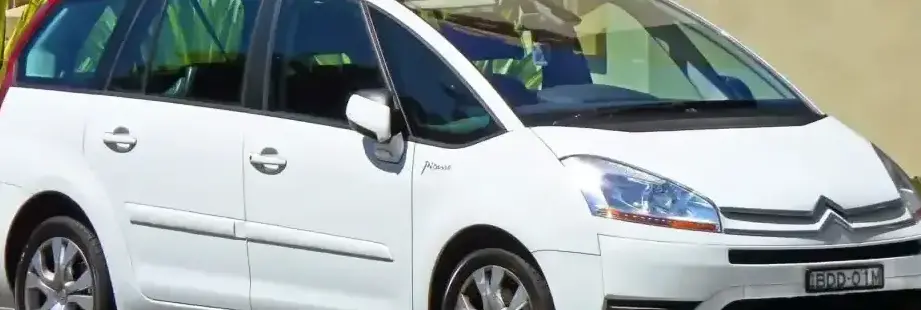
The Citroën C4 Grand Picasso 2.0 HDi 136 FAP EGS, produced between 2006 and 2008, represents a significant iteration within the first generation (C4 I) of Citroën’s popular MPV. Positioned as a mid-range offering in the Grand Picasso lineup, this variant aimed to balance fuel efficiency, practicality, and a reasonable level of performance for family transport. It was primarily marketed in Europe, where MPVs enjoyed considerable popularity, offering a spacious and versatile alternative to traditional station wagons or hatchbacks. The “Phase I” designation refers to the initial styling and feature set of this generation, preceding later updates and revisions. This model is built on the PSA Group’s EMP2 platform, known for its modularity and focus on interior space.
Technical Specifications
| Brand | Citroen |
| Model | C4 |
| Generation | C4 I Grand Picasso (Phase I, 2006) |
| Type (Engine) | 2.0 HDi (136 Hp) FAP EGS |
| Start of production | 2006 |
| End of production | 2008 |
| Powertrain Architecture | Internal Combustion engine |
| Body type | Minivan, MPV |
| Seats | 7 |
| Doors | 5 |
| Fuel consumption (urban) | 7.9 l/100 km (29.8 US mpg, 35.8 UK mpg, 12.7 km/l) |
| Fuel consumption (extra urban) | 5.1 l/100 km (46.1 US mpg, 55.4 UK mpg, 19.6 km/l) |
| Fuel consumption (combined) | 6.1 l/100 km (38.6 US mpg, 46.3 UK mpg, 16.4 km/l) |
| CO2 emissions | 159 g/km |
| Fuel Type | Diesel |
| Acceleration 0 – 100 km/h | 12.5 sec |
| Acceleration 0 – 62 mph | 12.5 sec |
| Acceleration 0 – 60 mph | 11.9 sec |
| Maximum speed | 195 km/h (121.17 mph) |
| Emission standard | Euro 4 |
| Weight-to-power ratio | 11.9 kg/Hp, 84 Hp/tonne |
| Weight-to-torque ratio | 5.1 kg/Nm, 197.5 Nm/tonne |
| Power | 136 Hp @ 4000 rpm |
| Power per litre | 68.1 Hp/l |
| Torque | 320 Nm @ 2000 rpm (236.02 lb.-ft. @ 2000 rpm) |
| Engine layout | Front, Transverse |
| Engine Model/Code | RHR DW10BTED4 |
| Engine displacement | 1997 cm3 (121.86 cu. in.) |
| Number of cylinders | 4 |
| Engine configuration | Inline |
| Cylinder Bore | 85 mm (3.35 in.) |
| Piston Stroke | 88 mm (3.46 in.) |
| Compression ratio | 17.6:1 |
| Number of valves per cylinder | 4 |
| Fuel injection system | Diesel Commonrail |
| Engine aspiration | Turbocharger, Intercooler |
| Valvetrain | DOHC |
| Engine oil capacity | 5.25 l (5.55 US qt | 4.62 UK qt) |
| Coolant | 8 l (8.45 US qt | 7.04 UK qt) |
| Kerb Weight | 1620 kg (3571.49 lbs.) |
| Max. weight | 2320 kg (5114.72 lbs.) |
| Max load | 700 kg (1543.24 lbs.) |
| Trunk (boot) space – minimum | 208 l (7.35 cu. ft.) |
| Trunk (boot) space – maximum | 1951 l (68.9 cu. ft.) |
| Fuel tank capacity | 60 l (15.85 US gal | 13.2 UK gal) |
| Max. roof load | 80 kg (176.37 lbs.) |
| Permitted trailer load with brakes (8%) | 1700 kg (3747.86 lbs.) |
| Permitted trailer load with brakes (12%) | 1500 kg (3306.93 lbs.) |
| Permitted trailer load without brakes | 750 kg (1653.47 lbs.) |
| Permitted towbar download | 70 kg (154.32 lbs.) |
| Length | 4590 mm (180.71 in.) |
| Width | 1830 mm (72.05 in.) |
| Width including mirrors | 2100 mm (82.68 in.) |
| Height | 1660-1710 mm (65.35 – 67.32 in.) |
| Wheelbase | 2728 mm (107.4 in.) |
| Front track | 1505 mm (59.25 in.) |
| Rear (Back) track | 1539 mm (60.59 in.) |
| Front overhang | 995 mm (39.17 in.) |
| Rear overhang | 867 mm (34.13 in.) |
| Drag coefficient (Cd) | 0.31 |
| Minimum turning circle (turning diameter) | 11.85 m (38.88 ft.) |
| Drivetrain Architecture | The Internal combustion engine (ICE) drives the front wheels of the vehicle. |
| Drive wheel | Front wheel drive |
| Number of gears and type of gearbox | 6 gears, automatic transmission EGS |
| Front suspension | Independent, type McPherson with coil spring and anti-roll bar |
| Rear suspension | Semi-independent, coil spring |
| Front brakes | Ventilated discs |
| Rear brakes | Disc |
| Assisting systems | ABS (Anti-lock braking system) |
| Steering type | Steering rack and pinion |
| Tires size | 215/55 R16 |
| Wheel rims size | 16 |
Powertrain & Engine Architecture
The heart of this C4 Grand Picasso is the DW10BTED4 engine, a 2.0-liter four-cylinder diesel engine. This engine, commonly found in PSA Group vehicles of the era, is characterized by its robust construction and relatively simple design. The ‘RHR’ engine code specifically denotes a variant equipped with a Diesel Particulate Filter (DPF), or “FAP” in French (Filtre à Particules), to meet increasingly stringent European emission standards. The engine utilizes a common rail direct injection system, delivering fuel at extremely high pressure for optimized combustion and reduced noise. A turbocharger with an intercooler further enhances performance by forcing more air into the cylinders. The engine produces 136 horsepower at 4000 rpm and 320 Nm (236 lb-ft) of torque at 2000 rpm. The EGS (Electronically Controlled Gearbox) transmission is a semi-automatic gearbox, essentially a conventional manual transmission with automated clutch and gear shifting. It differs from a traditional torque converter automatic, offering quicker shifts but sometimes exhibiting less smoothness.
Driving Characteristics
The 2.0 HDi 136 hp with the EGS transmission delivers adequate, though not exhilarating, performance. Acceleration from 0-100 km/h (0-62 mph) takes around 12.5 seconds, making it suitable for relaxed family motoring. The EGS transmission, while offering convenience, can feel somewhat jerky at lower speeds and during stop-start traffic. Compared to the manual transmission versions of the same engine, the EGS sacrifices some responsiveness for ease of use. Higher output versions, such as the 163 hp variant, offered noticeably quicker acceleration and a more engaging driving experience. The gear ratios are tuned for fuel efficiency rather than outright performance, prioritizing comfortable cruising over spirited driving. The torque, however, is readily available from low engine speeds, making it easy to maintain momentum in everyday driving situations.
Equipment & Trim Levels
The 2.0 HDi 136 FAP EGS Grand Picasso typically came equipped with a reasonable level of standard features. These included air conditioning, power windows, central locking, and an integrated audio system. Higher trim levels, often denoted by additional suffixes, added features such as alloy wheels, rear parking sensors, automatic headlights and wipers, and upgraded interior trim. The interior upholstery was typically cloth, with options for leather available at an extra cost. The Grand Picasso’s modular interior allowed for flexible seating configurations, with individual seats that could be folded flat or removed entirely to maximize cargo space. Optional extras included a panoramic sunroof, navigation system, and a DVD entertainment system for rear passengers.
Chassis & Braking
The C4 Grand Picasso features a McPherson strut front suspension and a semi-independent coil spring rear suspension. This setup provides a comfortable ride quality, absorbing bumps and imperfections in the road surface effectively. The front brakes are ventilated discs, providing ample stopping power, while the rear brakes are solid discs. Anti-lock Braking System (ABS) is standard, enhancing safety during emergency braking maneuvers. The steering is a rack and pinion system, offering precise and responsive control. Stabilizer bars are fitted to both the front and rear axles to reduce body roll during cornering.
Market Reception & Comparison
The Citroën C4 Grand Picasso 2.0 HDi 136 FAP EGS was generally well-received by automotive critics. It was praised for its spacious interior, comfortable ride, and fuel efficiency. However, the EGS transmission received mixed reviews, with some testers finding it clunky and unresponsive. Compared to other MPVs in its class, such as the Renault Scenic and Volkswagen Touran, the C4 Grand Picasso offered a distinctive design and a focus on practicality. The 2.0 HDi engine provided a good balance between performance and economy, although the 163 hp version was often preferred by those seeking more power. Fuel economy figures of around 6.1 l/100 km (38.6 US mpg) were competitive for the segment.
Legacy
The DW10BTED4 engine, in its various iterations, proved to be a reliable and durable powerplant. While the EGS transmission can be prone to occasional issues, regular maintenance and careful driving can help to mitigate these risks. Today, the C4 Grand Picasso 2.0 HDi 136 FAP EGS can be found on the used car market at relatively affordable prices. It remains a practical and versatile option for families seeking a spacious and economical MPV. The model’s enduring popularity is a testament to its well-rounded design and its ability to meet the needs of modern families.