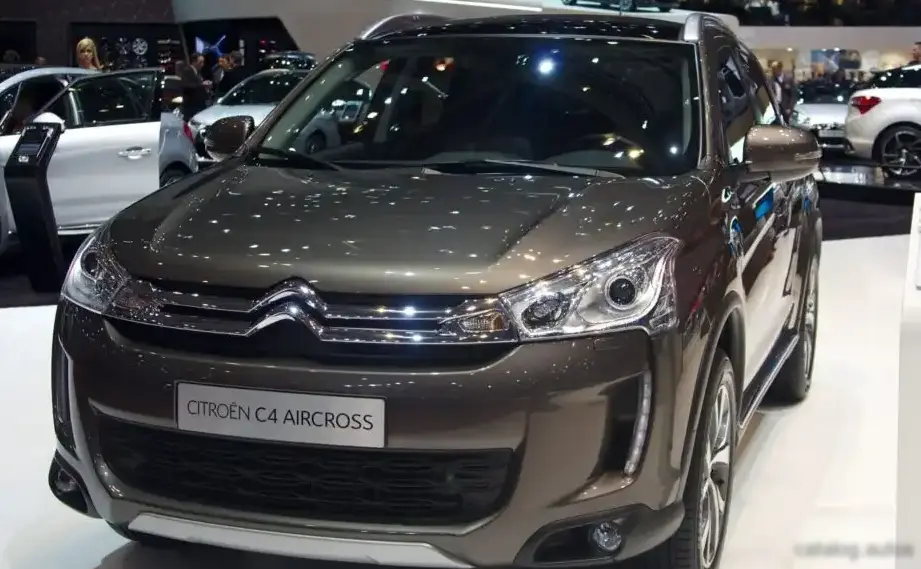
The Citroen C4 I Grand Picasso 2.0 HDi 150 FAP, produced between 2009 and 2010, represents a significant iteration within the first generation (2006-2013) of Citroen’s popular MPV. Positioned as a mid-to-high trim level within the C4 Grand Picasso range, this variant offered a blend of practicality, space, and performance geared towards families and those requiring a versatile vehicle. It was primarily marketed in Europe, where MPVs held a strong market share, offering a compelling alternative to traditional station wagons and smaller SUVs. This model is based on the PSA Group’s EMP1 platform, shared with the Peugeot 308 and other contemporary vehicles.
Technical Specifications
| Brand | Citroen |
| Model | C4 |
| Generation | C4 I Grand Picasso (Phase I, 2006) |
| Type (Engine) | 2.0 HDi (150 Hp) FAP |
| Start of production | 2009 |
| End of production | 2010 |
| Powertrain Architecture | Internal Combustion engine |
| Body type | Minivan, MPV |
| Seats | 7 |
| Doors | 5 |
| Fuel consumption (urban) | 7.5 l/100 km (31.4 US mpg, 37.7 UK mpg, 13.3 km/l) |
| Fuel consumption (extra urban) | 4.9 l/100 km (48 US mpg, 57.6 UK mpg, 20.4 km/l) |
| Fuel consumption (combined) | 5.9 l/100 km (39.9 US mpg, 47.9 UK mpg, 16.9 km/l) |
| CO2 emissions | 154 g/km |
| Fuel Type | Diesel |
| Acceleration 0 – 100 km/h | 11 sec |
| Acceleration 0 – 62 mph | 11 sec |
| Acceleration 0 – 60 mph | 10.5 sec |
| Maximum speed | 195 km/h (121.17 mph) |
| Emission standard | Euro 4 |
| Weight-to-power ratio | 10.8 kg/Hp, 93 Hp/tonne |
| Weight-to-torque ratio | 4.7 kg/Nm, 210.8 Nm/tonne |
| Power | 150 Hp @ 3750 rpm |
| Power per litre | 75.1 Hp/l |
| Torque | 340 Nm @ 2000 rpm (250.77 lb.-ft. @ 2000 rpm) |
| Engine layout | Front, Transverse |
| Engine Model/Code | RHE DW10CTED4 |
| Engine displacement | 1997 cm3 (121.86 cu. in.) |
| Number of cylinders | 4 |
| Engine configuration | Inline |
| Cylinder Bore | 85 mm (3.35 in.) |
| Piston Stroke | 88 mm (3.46 in.) |
| Compression ratio | 16:1 |
| Number of valves per cylinder | 4 |
| Fuel injection system | Diesel Commonrail |
| Engine aspiration | Turbocharger, Intercooler |
| Valvetrain | DOHC |
| Engine oil capacity | 5 l (5.28 US qt | 4.4 UK qt) |
| Coolant | 8 l (8.45 US qt | 7.04 UK qt) |
| Kerb Weight | 1613 kg (3556.06 lbs.) |
| Max. weight | 2308 kg (5088.27 lbs.) |
| Max load | 695 kg (1532.21 lbs.) |
| Trunk (boot) space – minimum | 208 l (7.35 cu. ft.) |
| Trunk (boot) space – maximum | 1951 l (68.9 cu. ft.) |
| Fuel tank capacity | 60 l (15.85 US gal | 13.2 UK gal) |
| Max. roof load | 80 kg (176.37 lbs.) |
| Permitted trailer load with brakes (8%) | 1400 kg (3086.47 lbs.) |
| Permitted trailer load without brakes | 750 kg (1653.47 lbs.) |
| Permitted towbar download | 60 kg (132.28 lbs.) |
| Length | 4590 mm (180.71 in.) |
| Width | 1830 mm (72.05 in.) |
| Width including mirrors | 2100 mm (82.68 in.) |
| Height | 1660-1710 mm (65.35 – 67.32 in.) |
| Wheelbase | 2728 mm (107.4 in.) |
| Front track | 1505 mm (59.25 in.) |
| Rear (Back) track | 1539 mm (60.59 in.) |
| Front overhang | 995 mm (39.17 in.) |
| Rear overhang | 867 mm (34.13 in.) |
| Drag coefficient (Cd) | 0.31 |
| Minimum turning circle (turning diameter) | 11.85 m (38.88 ft.) |
| Drivetrain Architecture | The Internal combustion engine (ICE) drives the front wheels of the vehicle. |
| Drive wheel | Front wheel drive |
| Number of gears and type of gearbox | 6 gears, manual transmission |
| Front suspension | Independent, type McPherson with coil spring and anti-roll bar |
| Rear suspension | Semi-independent, coil spring |
| Front brakes | Ventilated discs |
| Rear brakes | Disc |
| Assisting systems | ABS (Anti-lock braking system) |
| Steering type | Steering rack and pinion |
| Tires size | 215/50 R17 |
| Wheel rims size | 17 |
INTRODUCTION
The Citroen C4 I Grand Picasso 2.0 HDi 150 FAP, launched in 2009, was a key variant within the second phase of the C4 Grand Picasso’s lifecycle. Building upon the innovative design of the original C4 Picasso, the Grand Picasso offered seven-seat capability, addressing the needs of larger families. The 2.0 HDi 150 FAP engine represented a strong mid-range offering, balancing performance with fuel efficiency and meeting increasingly stringent European emission standards. The “FAP” designation indicates the inclusion of a Diesel Particulate Filter, a crucial component for reducing soot emissions.
Powertrain & Engine Architecture
At the heart of this variant lies the DW10CTED4 engine, a 2.0-liter four-cylinder diesel engine. This engine, a product of PSA Group’s engineering, utilizes a common rail direct injection system, delivering fuel at extremely high pressure for optimized combustion. The engine benefits from a turbocharger with an intercooler, boosting power output and improving torque delivery. The engine produces 150 horsepower at 3750 rpm and 340 Nm (250.77 lb-ft) of torque at 2000 rpm. The engine features a double overhead camshaft (DOHC) valvetrain with four valves per cylinder, enhancing breathing and contributing to its performance. The 6-speed manual transmission was standard, providing a good balance between fuel economy and driver control. The engine’s architecture was designed for refinement and reduced noise, vibration, and harshness (NVH) compared to earlier diesel engines.
Driving Characteristics
The C4 Grand Picasso 2.0 HDi 150 FAP offered a comfortable and composed driving experience. While not a sports-oriented vehicle, the 150 hp engine provided adequate power for everyday driving and highway cruising, even when fully loaded with passengers and luggage. Acceleration from 0-60 mph took around 10.5 seconds, and top speed was approximately 121 mph. The manual transmission allowed for precise gear selection, and the engine’s strong low-end torque made it easy to navigate urban environments. Compared to the lower-powered 1.6 HDi variants, the 2.0 HDi offered noticeably more responsive acceleration and effortless highway performance. However, it didn’t match the outright performance of the more expensive petrol-powered options.
Equipment & Trim Levels
The 2.0 HDi 150 FAP trim typically included a generous level of standard equipment. This often encompassed features such as air conditioning, a CD stereo with MP3 compatibility, electric front and rear windows, remote central locking, and alloy wheels. Higher trim levels, available as options, added features like a panoramic sunroof, leather upholstery, parking sensors, and a more advanced navigation system. Interior upholstery was typically cloth, with options for partial leather trim. The dashboard layout was modern and functional, with a focus on ergonomics and ease of use.
Chassis & Braking
The C4 Grand Picasso utilized an independent McPherson strut suspension at the front, providing a comfortable ride and good handling characteristics. The rear suspension employed a semi-independent coil spring setup. The front brakes were ventilated discs, offering strong stopping power, while the rear brakes were solid discs. Anti-lock Braking System (ABS) was standard, enhancing safety and stability during emergency braking. The steering was a rack and pinion system, providing precise and responsive control. Stabilizer bars were fitted to both the front and rear axles to reduce body roll during cornering.
Market Reception & Comparison
The Citroen C4 Grand Picasso 2.0 HDi 150 FAP was generally well-received by automotive critics. It was praised for its spacious interior, comfortable ride, and fuel efficiency. The 2.0 HDi engine was considered a good compromise between performance and economy. Compared to the 1.6 HDi variants, the 2.0 HDi offered a more refined driving experience and better performance, justifying the higher price point. However, some critics noted that the interior plastics could feel somewhat low-rent in certain areas. Fuel economy was a strong point, averaging around 39.9 US mpg in combined driving.
Legacy
The Citroen C4 I Grand Picasso 2.0 HDi 150 FAP remains a popular choice in the used car market. The DW10CTED4 engine is known for its durability and reliability, provided it has been properly maintained. Regular servicing, including oil changes and filter replacements, is crucial for ensuring long-term reliability. The FAP (Diesel Particulate Filter) can be a potential point of failure if not properly maintained, requiring periodic regeneration or eventual replacement. Overall, this variant offers a compelling combination of practicality, comfort, and fuel efficiency, making it a sensible choice for families seeking a versatile MPV.