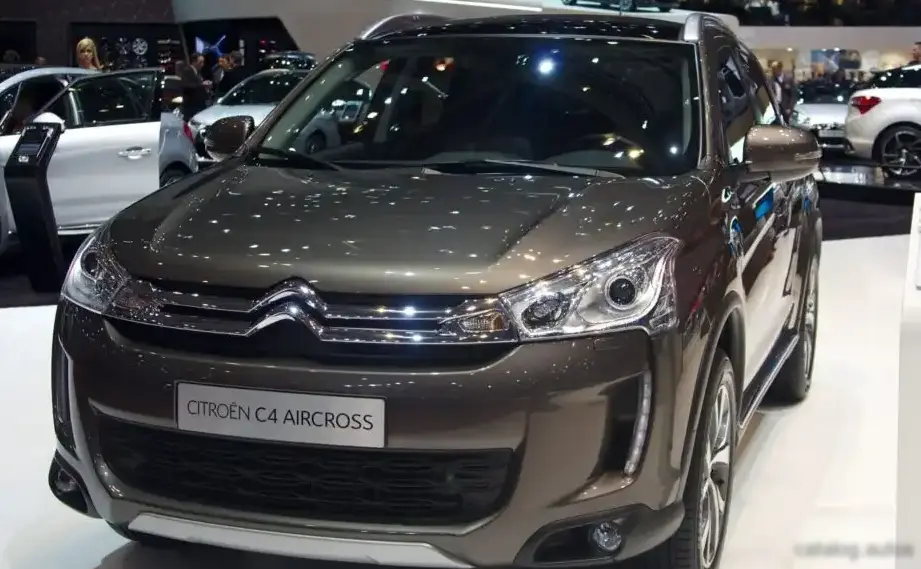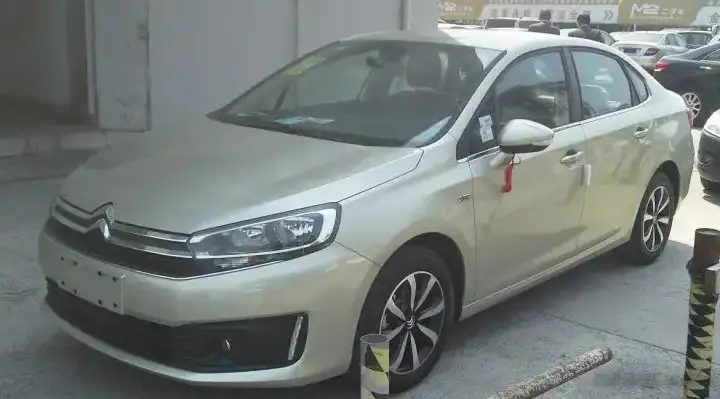
The Citroën C4 I Hatchback, launched in 2004, represented a significant departure for the French automaker, moving away from the traditional hatchback shape towards a more contemporary and spacious design. The Phase I model, produced from 2004 to 2008, was offered with a range of engines and trim levels, aiming to appeal to a broad customer base. Among these, the 1.4i 16V variant, producing 88 horsepower, served as an entry-level option, prioritizing fuel efficiency and affordability. This model occupied the lower end of the C4 lineup, positioned below the more powerful 1.6i and 2.0i petrol engines, as well as the diesel options. It was primarily targeted at buyers seeking a practical and economical family car for urban and suburban driving.
Technical Specifications
| Brand | Citroën |
| Model | C4 |
| Generation | C4 I Hatchback (Phase I, 2004) |
| Type (Engine) | 1.4i 16V (88 Hp) |
| Start of production | 2004 |
| End of production | 2008 |
| Powertrain Architecture | Internal Combustion engine |
| Body type | Hatchback |
| Seats | 5 |
| Doors | 5 |
| Fuel consumption (urban) | 8.7 l/100 km (27 US mpg, 32.5 UK mpg, 11.5 km/l) |
| Fuel consumption (extra urban) | 5.2 l/100 km (45.2 US mpg, 54.3 UK mpg, 19.2 km/l) |
| Fuel consumption (combined) | 6.4 l/100 km (36.8 US mpg, 44.1 UK mpg, 15.6 km/l) |
| CO2 emissions | 153 g/km |
| Fuel Type | Petrol (Gasoline) |
| Acceleration 0 – 100 km/h | 14.2 sec |
| Acceleration 0 – 62 mph | 14.2 sec |
| Acceleration 0 – 60 mph | 13.5 sec |
| Maximum speed | 182 km/h (113.09 mph) |
| Emission standard | Euro 4 |
| Weight-to-power ratio | 13.4 kg/Hp, 74.5 Hp/tonne |
| Weight-to-torque ratio | 8.9 kg/Nm, 112.5 Nm/tonne |
| Power | 88 Hp @ 5250 rpm |
| Power per litre | 64.7 Hp/l |
| Torque | 133 Nm @ 3250 rpm (98.1 lb.-ft. @ 3250 rpm) |
| Engine layout | Front, Transverse |
| Engine Model/Code | KFU ET3J4 |
| Engine displacement | 1361 cm3 (83.05 cu. in.) |
| Number of cylinders | 4 |
| Engine configuration | Inline |
| Cylinder Bore | 75 mm (2.95 in.) |
| Piston Stroke | 77 mm (3.03 in.) |
| Compression ratio | 10.2:1 |
| Number of valves per cylinder | 4 |
| Fuel injection system | Multi-port manifold injection |
| Engine aspiration | Naturally aspirated engine |
| Valvetrain | DOHC |
| Engine oil capacity | 3 l (3.17 US qt | 2.64 UK qt) |
| Coolant | 5.8 l (6.13 US qt | 5.1 UK qt) |
| Kerb Weight | 1182 kg (2605.86 lbs.) |
| Max. weight | 1702 kg (3752.27 lbs.) |
| Max load | 520 kg (1146.4 lbs.) |
| Trunk (boot) space – minimum | 320 l (11.3 cu. ft.) |
| Trunk (boot) space – maximum | 1023 l (36.13 cu. ft.) |
| Fuel tank capacity | 60 l (15.85 US gal | 13.2 UK gal) |
| Max. roof load | 75 kg (165.35 lbs.) |
| Permitted trailer load with brakes (8%) | 1500 kg (3306.93 lbs.) |
| Permitted trailer load with brakes (12%) | 1200 kg (2645.55 lbs.) |
| Permitted trailer load without brakes | 628 kg (1384.5 lbs.) |
| Permitted towbar download | 63 kg (138.89 lbs.) |
| Length | 4260 mm (167.72 in.) |
| Width | 1773 mm (69.8 in.) |
| Width including mirrors | 1964 mm (77.32 in.) |
| Height | 1471 mm (57.91 in.) |
| Wheelbase | 2608 mm (102.68 in.) |
| Front track | 1497 mm (58.94 in.) |
| Rear (Back) track | 1510 mm (59.45 in.) |
| Front overhang | 935 mm (36.81 in.) |
| Rear overhang | 717 mm (28.23 in.) |
| Drag coefficient (Cd) | 0.29 |
| Minimum turning circle (turning diameter) | 11.3 m (37.07 ft.) |
| Drivetrain Architecture | The Internal combustion engine (ICE) drives the front wheels of the vehicle. |
| Drive wheel | Front wheel drive |
| Number of gears and type of gearbox | 5 gears, manual transmission |
| Front suspension | Independent, type McPherson with coil spring and anti-roll bar |
| Rear suspension | Semi-independent, coil spring |
| Front brakes | Ventilated discs |
| Rear brakes | Disc |
| Assisting systems | ABS (Anti-lock braking system) |
| Steering type | Steering rack and pinion |
| Power steering | Electric Steering |
| Tires size | 195/65 R15 |
| Wheel rims size | 6J x 15 |
Powertrain & Engine Architecture
The heart of this C4 variant is the KFU (ET3J4) 1.4-liter inline-four cylinder engine. This engine, a staple in many PSA Group vehicles of the era, features a double overhead camshaft (DOHC) valvetrain operating four valves per cylinder. Fuel delivery is managed by a multi-port fuel injection system, providing a balance between efficiency and performance. The engine’s 10.2:1 compression ratio contributes to its modest power output. The engine is transversely mounted, driving the front wheels. The transmission is a five-speed manual gearbox, chosen for its simplicity and cost-effectiveness in this entry-level model. While an automatic transmission was offered on other C4 variants, it wasn’t available with the 1.4i 16V engine.
Driving Characteristics
The 1.4i 16V C4, with its 88 horsepower and 133 Nm of torque, offered adequate, but not exhilarating, performance. Acceleration from 0 to 60 mph took around 13.5 seconds, and top speed was limited to 113 mph. The engine felt somewhat strained when pushed hard, particularly when fully loaded or tackling inclines. The five-speed gearbox was well-matched to the engine’s characteristics, allowing for reasonable progress in everyday driving. Compared to the more powerful 1.6i and 2.0i models, the 1.4i felt noticeably slower, but it provided a smoother and more economical driving experience. The manual transmission offered more driver engagement than the automatic options available on higher-spec C4s.
Equipment & Trim Levels
The 1.4i 16V C4 typically came equipped with a basic, yet functional, level of standard features. These included central locking, power steering, electric front windows, and an ABS anti-lock braking system. Interior upholstery was typically cloth, and the dashboard featured a straightforward layout with easy-to-use controls. Optional extras, such as air conditioning, alloy wheels, and a CD stereo, were available, allowing buyers to customize their vehicle to some extent. The trim level was generally considered the base model, focusing on providing essential features at an affordable price point.
Chassis & Braking
The C4 I utilized a McPherson strut front suspension setup with a coil spring and anti-roll bar, providing a comfortable ride and predictable handling. The rear suspension employed a semi-independent coil spring arrangement. Braking duties were handled by ventilated discs at the front and solid discs at the rear. The braking system, combined with ABS, offered adequate stopping power for everyday driving conditions. The relatively lightweight nature of the 1.4i variant contributed to its nimble handling characteristics.
Market Reception & Comparison
The 1.4i 16V C4 was generally well-received as a practical and economical family car. Critics praised its comfortable ride, spacious interior, and fuel efficiency. However, its modest performance was often cited as a drawback. Compared to the 1.6i and 2.0i models, the 1.4i offered significantly lower running costs but lacked the same level of performance. The diesel variants, while more expensive to purchase, provided superior fuel economy and torque. The 1.4i appealed to buyers prioritizing affordability and practicality over outright performance.
Legacy
The KFU engine, while not known for its exceptional durability, proved to be reasonably reliable with regular maintenance. Common issues included occasional oil leaks and sensor failures. Today, the 1.4i 16V C4 can be found on the used car market at very affordable prices. Its simplicity and relatively low running costs make it an attractive option for budget-conscious buyers. However, potential buyers should be aware of the engine’s limitations and ensure that the vehicle has been well-maintained. The C4 I, in general, helped establish Citroën as a maker of modern, comfortable, and practical hatchbacks, paving the way for future generations of the C4.