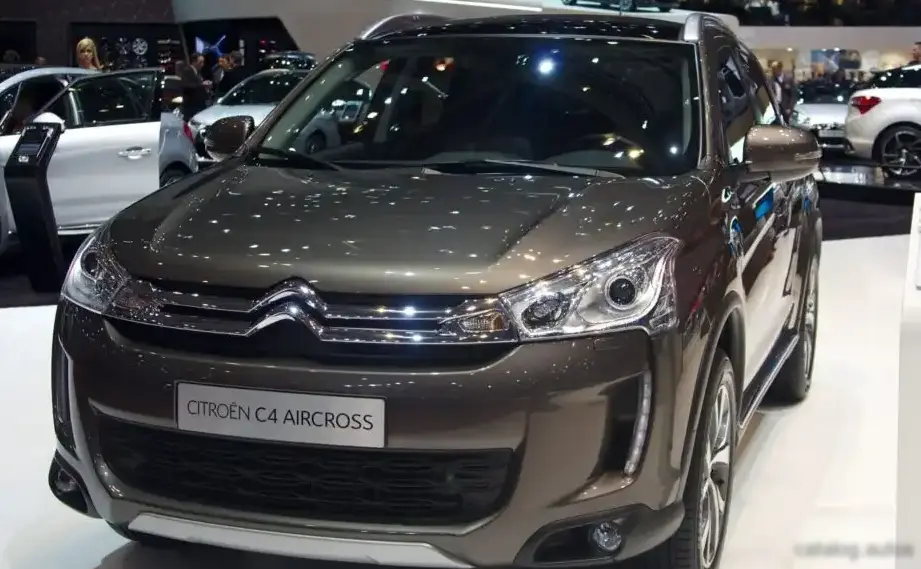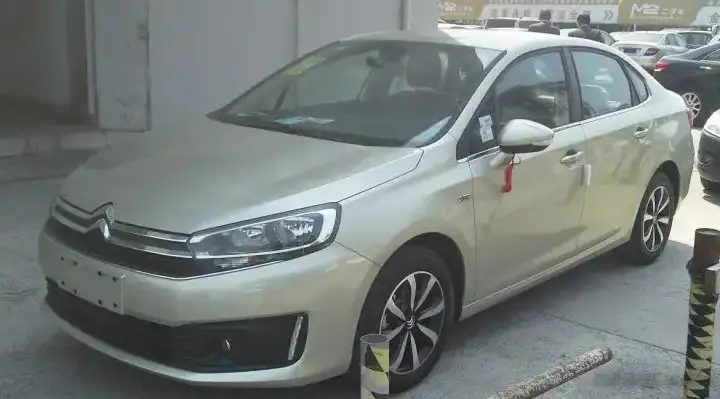
The Citroën C4 I Hatchback, specifically the 1.6 HDi 16V (109 hp) FAP EGS variant produced between 2006 and 2008, represented a key offering in Citroën’s compact family car lineup. Positioned as a fuel-efficient and practical option, this model was part of the first generation C4 (2004-2010), designated internally as the 1HX series. It aimed to provide a balance between affordability, comfort, and modern diesel technology, appealing to buyers seeking a sensible and economical hatchback. The “EGS” designation indicates the presence of an electronically controlled sequential manual gearbox, a somewhat unusual offering in this segment.
Technical Specifications
| Brand | Citroen |
| Model | C4 |
| Generation | C4 I Hatchback (Phase I, 2004) |
| Type (Engine) | 1.6 HDi 16V (109 Hp) FAP EGS |
| Start of production | 2006 |
| End of production | 2008 |
| Powertrain Architecture | Internal Combustion engine |
| Body type | Hatchback |
| Seats | 5 |
| Doors | 5 |
| Fuel consumption (urban) | 5.8 l/100 km (40.6 US mpg, 48.7 UK mpg, 17.2 km/l) |
| Fuel consumption (extra urban) | 3.8 l/100 km (61.9 US mpg, 74.3 UK mpg, 26.3 km/l) |
| Fuel consumption (combined) | 4.5 l/100 km (52.3 US mpg, 62.8 UK mpg, 22.2 km/l) |
| CO2 emissions | 120 g/km |
| Fuel Type | Diesel |
| Acceleration 0 – 100 km/h | 12.4 sec |
| Acceleration 0 – 62 mph | 12.4 sec |
| Acceleration 0 – 60 mph | 11.8 sec |
| Maximum speed | 192 km/h (119.3 mph) |
| Emission standard | Euro 4 |
| Weight-to-power ratio | 11.9 kg/Hp, 84.3 Hp/tonne |
| Weight-to-torque ratio | 5.4 kg/Nm, 185.6 Nm/tonne |
| Power | 109 Hp @ 4000 rpm |
| Power per litre | 69.9 Hp/l |
| Torque | 240 Nm @ 1750 rpm (177.01 lb.-ft. @ 1750 rpm) |
| Engine layout | Front, Transverse |
| Engine Model/Code | 9HZ DV6TED4 |
| Engine displacement | 1560 cm3 (95.2 cu. in.) |
| Number of cylinders | 4 |
| Engine configuration | Inline |
| Cylinder Bore | 75 mm (2.95 in.) |
| Piston Stroke | 88.3 mm (3.48 in.) |
| Compression ratio | 17.6:1 |
| Number of valves per cylinder | 4 |
| Fuel injection system | Diesel Commonrail |
| Engine aspiration | Turbocharger, Intercooler |
| Engine oil capacity | 3.75 l (3.96 US qt, 3.3 UK qt) |
| Coolant | 6.5 l (6.87 US qt, 5.72 UK qt) |
| Kerb Weight | 1293 kg (2850.58 lbs.) |
| Max. weight | 1800 kg (3968.32 lbs.) |
| Max load | 507 kg (1117.74 lbs.) |
| Trunk (boot) space – minimum | 320 l (11.3 cu. ft.) |
| Trunk (boot) space – maximum | 1023 l (36.13 cu. ft.) |
| Fuel tank capacity | 60 l (15.85 US gal, 13.2 UK gal) |
| Max. roof load | 75 kg (165.35 lbs.) |
| Permitted trailer load with brakes (8%) | 1300 kg (2866.01 lbs.) |
| Permitted trailer load with brakes (12%) | 1300 kg (2866.01 lbs.) |
| Permitted trailer load without brakes | 675 kg (1488.12 lbs.) |
| Permitted towbar download | 65 kg (143.3 lbs.) |
| Length | 4260 mm (167.72 in.) |
| Width | 1773 mm (69.8 in.) |
| Width including mirrors | 1964 mm (77.32 in.) |
| Height | 1471 mm (57.91 in.) |
| Wheelbase | 2608 mm (102.68 in.) |
| Front track | 1497 mm (58.94 in.) |
| Rear (Back) track | 1510 mm (59.45 in.) |
| Front overhang | 935 mm (36.81 in.) |
| Rear overhang | 717 mm (28.23 in.) |
| Drag coefficient (Cd) | 0.29 |
| Minimum turning circle | 11.3 m (37.07 ft.) |
| Drivetrain Architecture | The Internal combustion engine (ICE) drives the front wheels of the vehicle. |
| Drive wheel | Front wheel drive |
| Number of gears and type of gearbox | 6 gears, automatic transmission EGS |
| Front suspension | Independent, type McPherson with coil spring and anti-roll bar |
| Rear suspension | Semi-independent, coil spring |
| Front brakes | Ventilated discs |
| Rear brakes | Disc |
| Assisting systems | ABS (Anti-lock braking system) |
| Steering type | Steering rack and pinion |
| Power steering | Electric Steering |
| Tires size | 205/55 R16 |
| Wheel rims size | 6.5J x 16 |
INTRODUCTION
The Citroën C4 I, launched in 2004, was a significant departure for the French automaker, moving away from the traditional sedan-focused lineup towards a more modern, hatchback-centric approach. The 1.6 HDi 16V (109 hp) FAP EGS variant, introduced in 2006, was a key part of this strategy. It offered a diesel engine known for its fuel efficiency and torque, coupled with a unique electronically controlled sequential manual gearbox (EGS). This combination aimed to provide the economy of a diesel with the convenience of an automatic transmission, though the EGS system had its quirks. This trim level sat in the mid-range of the C4 lineup, offering a good balance of features and affordability.
Powertrain & Engine Architecture
The heart of this C4 variant is the 9HZ DV6TED4 engine, a 1.6-liter, four-cylinder diesel. This engine is part of the DV6 family, a widely used and relatively robust diesel engine developed jointly by PSA Peugeot Citroën and Ford. It features a common rail direct injection system, delivering fuel at high pressure for improved combustion and efficiency. The engine utilizes a turbocharger with an intercooler to boost power output and torque. The 16-valve cylinder head, with four valves per cylinder, enhances breathing and contributes to the engine’s performance. The EGS (Electronically Controlled Gearbox) is a five-speed sequential manual transmission. Unlike a traditional automatic, the EGS uses actuators to shift gears, controlled by the vehicle’s computer. It offers a degree of automation but doesn’t provide the smoothness of a torque converter automatic.
Driving Characteristics
The 109 hp and 240 Nm (177 lb-ft) of torque provided by the 1.6 HDi engine offered adequate performance for everyday driving. Acceleration from 0-60 mph took around 11.8 seconds, and top speed was approximately 119 mph. However, the EGS transmission significantly impacted the driving experience. Shifts were often slower and more noticeable than those of a conventional automatic, and could sometimes feel jerky, particularly at lower speeds. While the EGS offered a fuel-efficient alternative to a traditional automatic, it wasn’t known for its refinement. Compared to the more powerful 2.0 HDi variants, this 1.6L engine felt less responsive, especially when overtaking. The gear ratios were optimized for fuel economy rather than outright performance.
Equipment & Trim Levels
The 1.6 HDi 16V EGS typically came equipped with features such as air conditioning, power windows, central locking, and an RDS radio. Safety features included ABS brakes, front airbags, and seatbelt pretensioners. Higher trim levels offered options like alloy wheels, rear parking sensors, automatic headlights and rain-sensing wipers. Interior upholstery was typically cloth, with a functional and durable design. The dashboard layout was modern for its time, with a focus on ergonomics and ease of use. Optional extras included a panoramic sunroof and a navigation system.
Chassis & Braking
The C4 I utilized a McPherson strut front suspension and a semi-independent coil spring rear suspension. This setup provided a comfortable ride, absorbing bumps and imperfections in the road effectively. The front brakes were ventilated discs, offering good stopping power, while the rear brakes were solid discs. The electric power steering provided light and precise control. The car’s weight of around 1293 kg (2850 lbs) contributed to its relatively stable handling characteristics. Stabilizer bars were fitted to both the front and rear axles to reduce body roll during cornering.
Market Reception & Comparison
The Citroën C4 1.6 HDi 16V EGS was generally well-received for its fuel economy and practicality. Critics praised the engine’s efficiency and torque, but the EGS transmission drew mixed reviews. Many found it to be a compromise that didn’t fully deliver the smoothness of a traditional automatic. Compared to the 2.0 HDi variants, the 1.6L offered lower running costs but less performance. Against competitors like the Ford Focus, Volkswagen Golf, and Renault Mégane, the C4 offered a distinctive French design and a comfortable ride, but the EGS transmission was a potential drawback for some buyers. Fuel economy figures of around 52.3 US mpg combined were a major selling point.
Legacy
The 9HZ DV6TED4 engine proved to be a reliable unit when properly maintained. However, the EGS transmission is known to be more prone to issues than conventional automatics, with potential problems including actuator failures and software glitches. Today, these C4s are relatively affordable on the used car market. Finding a well-maintained example with a fully functional EGS transmission is crucial. The 1.6 HDi engine remains a popular choice for its fuel efficiency, but potential buyers should be aware of the potential maintenance costs associated with the EGS gearbox. The C4 I, in general, is remembered as a comfortable and practical family car that offered a unique blend of French style and diesel efficiency.