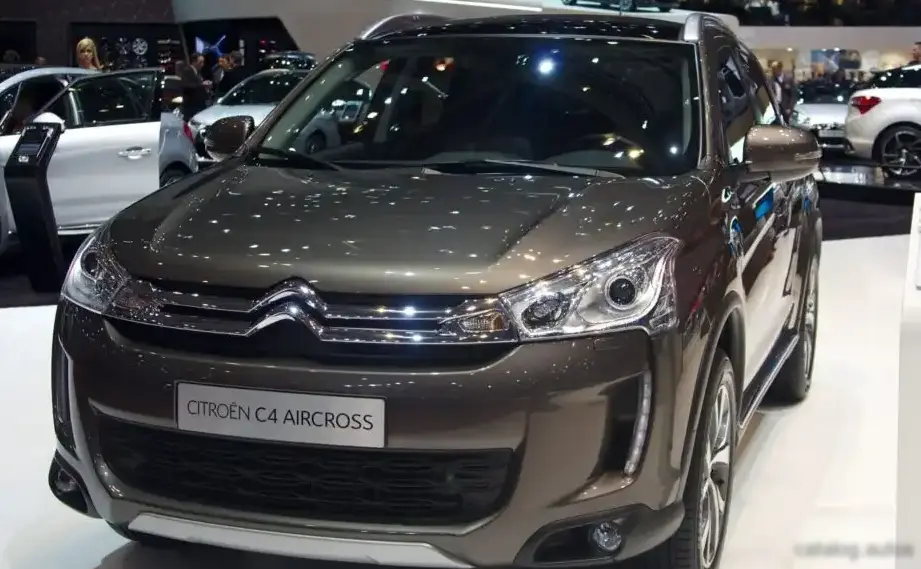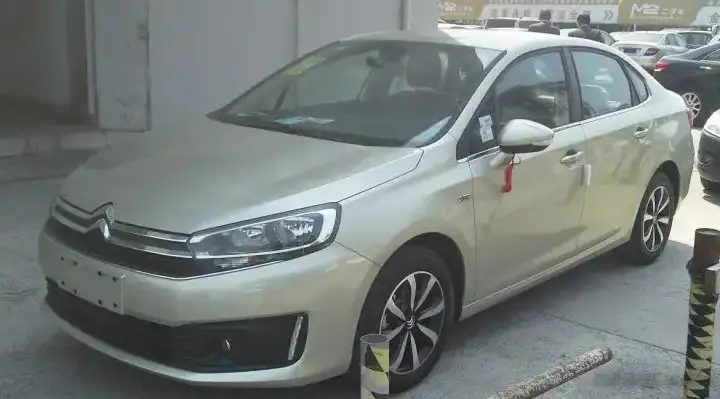
The Citroën C4 I Hatchback, launched in 2004, represented a significant departure for the French automaker, moving away from the traditional hatchback shape towards a more contemporary and spacious design. The Phase I models, produced from 2004 to 2008, were built on the PSA Group’s Platform 2, also known as the 1HX0 platform. Within the C4 range, the 2.0i 16V variant, producing 140 horsepower, occupied a mid-range position, offering a balance between performance and affordability. It served as a step up from the base 1.4L and 1.6L engines, while remaining more accessible than the later diesel options and the more focused sport models.
Technical Specifications
| Brand | Citroën |
| Model | C4 |
| Generation | C4 I Hatchback (Phase I, 2004) |
| Type (Engine) | 2.0i 16V (140 Hp) |
| Start of production | 2005 |
| End of production | 2008 |
| Powertrain Architecture | Internal Combustion engine |
| Body type | Hatchback |
| Seats | 5 |
| Doors | 5 |
| Fuel consumption (urban) | 10.7 l/100 km (22 US mpg, 26.4 UK mpg, 9.3 km/l) |
| Fuel consumption (extra urban) | 5.8 l/100 km (40.6 US mpg, 48.7 UK mpg, 17.2 km/l) |
| Fuel consumption (combined) | 7.6 l/100 km (30.9 US mpg, 37.2 UK mpg, 13.2 km/l) |
| CO2 emissions | 182 g/km |
| Fuel Type | Petrol (Gasoline) |
| Acceleration 0 – 100 km/h | 10.1 sec |
| Acceleration 0 – 62 mph | 10.1 sec |
| Acceleration 0 – 60 mph | 9.6 sec |
| Maximum speed | 207 km/h (128.62 mph) |
| Emission standard | Euro 4 |
| Weight-to-power ratio | 9.1 kg/Hp, 109.7 Hp/tonne |
| Weight-to-torque ratio | 6.4 kg/Nm, 156.7 Nm/tonne |
| Power | 140 Hp @ 6000 rpm |
| Power per litre | 70.1 Hp/l |
| Torque | 200 Nm @ 4000 rpm (147.51 lb.-ft. @ 4000 rpm) |
| Engine layout | Front, Transverse |
| Engine Model/Code | RFJ EW10A |
| Engine displacement | 1997 cm3 (121.86 cu. in.) |
| Number of cylinders | 4 |
| Engine configuration | Inline |
| Cylinder Bore | 85 mm (3.35 in.) |
| Piston Stroke | 88 mm (3.46 in.) |
| Compression ratio | 10.8:1 |
| Number of valves per cylinder | 4 |
| Fuel injection system | Multi-port manifold injection |
| Engine aspiration | Naturally aspirated engine |
| Engine oil capacity | 4.4 l (4.65 US qt | 3.87 UK qt) |
| Coolant | 8.8 l (9.3 US qt | 7.74 UK qt) |
| Kerb Weight | 1276 kg (2813.1 lbs.) |
| Max. weight | 1772 kg (3906.59 lbs.) |
| Max load | 496 kg (1093.49 lbs.) |
| Trunk (boot) space – minimum | 320 l (11.3 cu. ft.) |
| Trunk (boot) space – maximum | 1023 l (36.13 cu. ft.) |
| Fuel tank capacity | 60 l (15.85 US gal | 13.2 UK gal) |
| Max. roof load | 75 kg (165.35 lbs.) |
| Permitted trailer load with brakes (8%) | 1500 kg (3306.93 lbs.) |
| Permitted trailer load with brakes (12%) | 1300 kg (2866.01 lbs.) |
| Permitted trailer load without brakes | 675 kg (1488.12 lbs.) |
| Permitted towbar download | 62 kg (136.69 lbs.) |
| Length | 4260 mm (167.72 in.) |
| Width | 1773 mm (69.8 in.) |
| Width including mirrors | 1964 mm (77.32 in.) |
| Height | 1471 mm (57.91 in.) |
| Wheelbase | 2608 mm (102.68 in.) |
| Front track | 1497 mm (58.94 in.) |
| Rear (Back) track | 1510 mm (59.45 in.) |
| Front overhang | 935 mm (36.81 in.) |
| Rear overhang | 717 mm (28.23 in.) |
| Drag coefficient (Cd) | 0.29 |
| Minimum turning circle (turning diameter) | 11.3 m (37.07 ft.) |
| Drivetrain Architecture | The Internal combustion engine (ICE) drives the front wheels of the vehicle. |
| Drive wheel | Front wheel drive |
| Number of gears and type of gearbox | 5 gears, manual transmission |
| Front suspension | Independent, type McPherson with coil spring and anti-roll bar |
| Rear suspension | Semi-independent, coil spring |
| Front brakes | Ventilated discs |
| Rear brakes | Disc |
| Assisting systems | ABS (Anti-lock braking system) |
| Steering type | Steering rack and pinion |
| Power steering | Electric Steering |
| Tires size | 205/50 R17 |
| Wheel rims size | 6.5J x 17 |
Powertrain & Engine Architecture
The heart of the C4 2.0i 16V is the PSA Group’s EW10A engine, specifically the RFJ variant. This 1997cc inline-four cylinder engine utilizes a naturally aspirated configuration and a multi-port fuel injection system. The engine features a double overhead camshaft (DOHC) design with four valves per cylinder, contributing to its relatively high output for its displacement. The EW10A engine is known for its robust construction and generally reliable operation. The 140 horsepower peak is achieved at 6000 rpm, while the 200 Nm (147.51 lb-ft) of torque is available at 4000 rpm. The engine’s 10.8:1 compression ratio is a typical value for a naturally aspirated gasoline engine of this era. The five-speed manual transmission was the standard offering, providing a balance between fuel efficiency and performance.
Driving Characteristics
The C4 2.0i 16V offered a noticeable step up in performance compared to the lower-displacement engines in the range. While not a sports car, the 140 hp engine provided adequate acceleration for everyday driving and comfortable highway cruising. The 0-60 mph time of around 9.6 seconds and a top speed of 128.62 mph were respectable for a family hatchback of this period. The five-speed manual transmission allowed for reasonably precise gear changes, although the shift linkage wasn’t particularly sporty. The engine’s torque curve provided usable power throughout the rev range, making it easy to maintain speed on inclines and overtake slower vehicles. Compared to the later HDi diesel variants, the 2.0i 16V lacked the low-end grunt of the diesel, but offered a smoother and more refined driving experience.
Equipment & Trim Levels
The 2.0i 16V trim typically included features such as air conditioning, power windows, central locking, and an RDS stereo system. Higher trim levels, such as the Exclusive, added features like alloy wheels, automatic climate control, rain-sensing wipers, and a trip computer. Interior upholstery was typically cloth, with options for leather available on higher-spec models. The dashboard layout was modern for its time, with a centrally mounted instrument cluster and ergonomically designed controls. Optional extras included a panoramic sunroof, parking sensors, and a navigation system.
Chassis & Braking
The C4 I Hatchback utilized a McPherson strut front suspension and a semi-independent torsion beam rear suspension. This setup provided a comfortable ride quality, although it wasn’t particularly sporty in terms of handling. The front brakes were ventilated discs, while the rear brakes were solid discs, providing adequate stopping power for the vehicle’s weight and performance. ABS (Anti-lock Braking System) was standard equipment. The electric power steering offered light and precise steering feel, making it easy to maneuver in urban environments.
Market Reception & Comparison
The Citroën C4 2.0i 16V was generally well-received by automotive critics. It was praised for its comfortable ride, spacious interior, and stylish design. However, some critics noted that the engine lacked the refinement of some of its competitors, and the handling wasn’t as engaging as some other hatchbacks in its class. In terms of fuel economy, the 2.0i 16V offered around 30.9 US mpg on the combined cycle, which was comparable to other gasoline engines of similar displacement. The diesel variants offered significantly better fuel economy, but at a higher initial cost. Reliability was generally good, although some owners reported minor issues with the electrical system.
Legacy
The Citroën C4 I Hatchback, including the 2.0i 16V variant, established Citroën as a serious contender in the family hatchback segment. The EW10A engine proved to be a durable and reliable powerplant, and many examples are still on the road today. On the used car market, the 2.0i 16V offers a good balance of performance, comfort, and affordability. While it may not be as fuel-efficient as the diesel variants, it provides a smoother and more refined driving experience. Regular maintenance, including oil changes and timing belt replacements, is essential to ensure the long-term reliability of this powertrain.