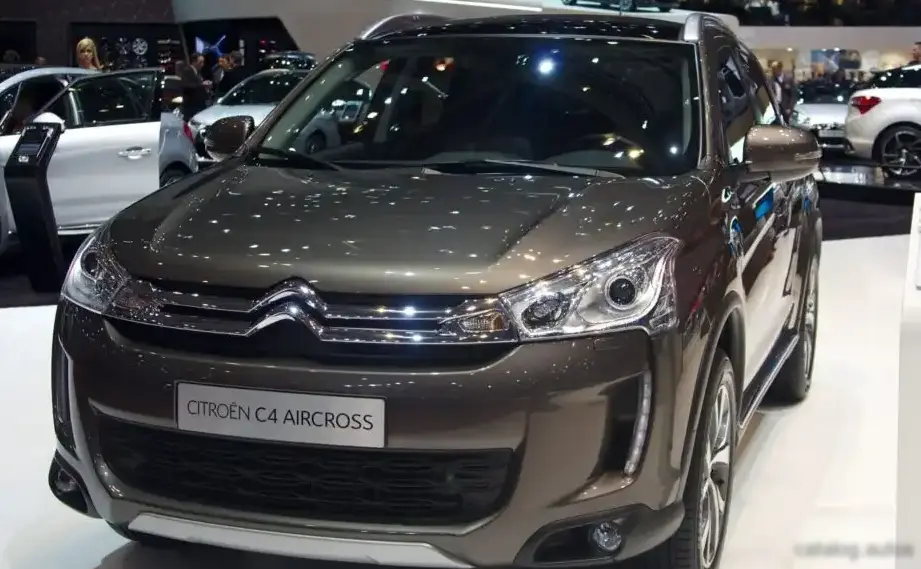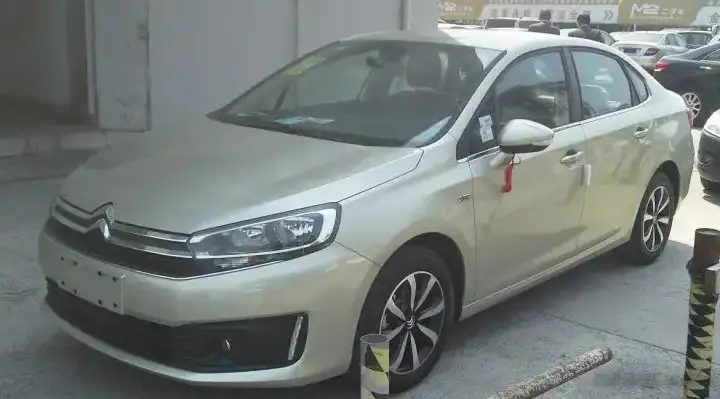
The Citroën C4 I Hatchback, specifically the Phase II model produced between 2008 and 2010, represented a significant offering in the compact family car segment. The 1.6 HDi variant, equipped with a 90 horsepower turbodiesel engine and a five-speed manual transmission, was a popular choice, particularly in European markets. This version occupied a mid-range position within the C4 lineup, offering a balance between fuel efficiency, affordability, and practicality. It was positioned below the more powerful HDi variants and petrol engines, and above the base-level petrol models.
Technical Specifications
| Brand | Citroën |
| Model | C4 |
| Generation | C4 I Hatchback (Phase II, 2008) |
| Type (Engine) | 1.6 HDi (90 Hp) FAP |
| Start of production | 2008 |
| End of production | 2010 |
| Powertrain Architecture | Internal Combustion engine |
| Body type | Hatchback |
| Seats | 5 |
| Doors | 5 |
| Fuel consumption (urban) | 6 l/100 km (39.2 US mpg, 47.1 UK mpg, 16.7 km/l) |
| Fuel consumption (extra urban) | 4 l/100 km (58.8 US mpg, 70.6 UK mpg, 25 km/l) |
| Fuel consumption (combined) | 4.7 l/100 km (50 US mpg, 60.1 UK mpg, 21.3 km/l) |
| CO2 emissions | 125 g/km |
| Fuel Type | Diesel |
| Acceleration 0 – 100 km/h | 12.5 sec |
| Acceleration 0 – 62 mph | 12.5 sec |
| Acceleration 0 – 60 mph | 11.9 sec |
| Maximum speed | 180 km/h (111.85 mph) |
| Emission standard | Euro 4 |
| Weight-to-power ratio | 14.2 kg/Hp, 70.3 Hp/tonne |
| Weight-to-torque ratio | 6 kg/Nm, 168 Nm/tonne |
| Power | 90 Hp @ 4000 rpm |
| Power per litre | 57.7 Hp/l |
| Torque | 215 Nm @ 1750 rpm (158.58 lb.-ft. @ 1750 rpm) |
| Engine layout | Front, Transverse |
| Engine Model/Code | 9HX DV6TED4 |
| Engine displacement | 1560 cm3 (95.2 cu. in.) |
| Number of cylinders | 4 |
| Engine configuration | Inline |
| Cylinder Bore | 75 mm (2.95 in.) |
| Piston Stroke | 88.3 mm (3.48 in.) |
| Compression ratio | 18:1 |
| Number of valves per cylinder | 4 |
| Fuel injection system | Diesel Commonrail |
| Engine aspiration | Turbocharger, Intercooler |
| Valvetrain | DOHC |
| Engine oil capacity | 3.8 l (4.02 US qt | 3.34 UK qt) |
| Coolant | 6.5 l (6.87 US qt | 5.72 UK qt) |
| Kerb Weight | 1280 kg (2821.92 lbs.) |
| Max. weight | 1800 kg (3968.32 lbs.) |
| Max load | 520 kg (1146.4 lbs.) |
| Trunk (boot) space – minimum | 320 l (11.3 cu. ft.) |
| Trunk (boot) space – maximum | 1023 l (36.13 cu. ft.) |
| Fuel tank capacity | 60 l (15.85 US gal | 13.2 UK gal) |
| Max. roof load | 75 kg (165.35 lbs.) |
| Permitted trailer load with brakes (8%) | 1300 kg (2866.01 lbs.) |
| Permitted trailer load with brakes (12%) | 1300 kg (2866.01 lbs.) |
| Permitted trailer load without brakes | 677 kg (1492.53 lbs.) |
| Permitted towbar download | 66 kg (145.51 lbs.) |
| Length | 4275 mm (168.31 in.) |
| Width | 1773 mm (69.8 in.) |
| Width including mirrors | 1964 mm (77.32 in.) |
| Height | 1496 mm (58.9 in.) |
| Wheelbase | 2608 mm (102.68 in.) |
| Front track | 1505 mm (59.25 in.) |
| Rear (Back) track | 1510 mm (59.45 in.) |
| Front overhang | 950 mm (37.4 in.) |
| Rear overhang | 717 mm (28.23 in.) |
| Drag coefficient (Cd) | 0.31 |
| Minimum turning circle (turning diameter) | 11.3 m (37.07 ft.) |
| Drivetrain Architecture | The Internal combustion engine (ICE) drives the front wheels of the vehicle. |
| Drive wheel | Front wheel drive |
| Number of gears and type of gearbox | 5 gears, manual transmission |
| Front suspension | Independent, type McPherson with coil spring and anti-roll bar |
| Rear suspension | Semi-independent, coil spring |
| Front brakes | Ventilated discs |
| Rear brakes | Disc |
| Assisting systems | ABS (Anti-lock braking system) |
| Steering type | Steering rack and pinion |
| Tires size | 205/55 R16 |
| Wheel rims size | 16 |
Powertrain & Engine Architecture
The heart of this C4 variant is the 1.6 HDi (High-Pressure Diesel Injection) engine, specifically the 9HX DV6TED4 unit. This engine is a member of the DW/DV family of diesel engines developed by PSA Peugeot Citroën (later Stellantis). It’s a four-cylinder, inline configuration with a displacement of 1560cc. The engine utilizes a common rail direct injection system, delivering fuel at extremely high pressure for optimized combustion. A turbocharger with an intercooler is employed to boost power and torque, providing 90 horsepower at 4000 rpm and 215 Nm (158.58 lb-ft) of torque at 1750 rpm. The engine features a double overhead camshaft (DOHC) valvetrain with four valves per cylinder. The five-speed manual transmission was the standard offering, providing a balance between fuel economy and drivability.
Driving Characteristics
The 1.6 HDi 90 hp model offered a practical and economical driving experience. Acceleration was adequate for everyday driving, with a 0-60 mph time of around 11.9 seconds, but it wasn’t particularly sporty. The engine’s torque was readily available from low revs, making it easy to navigate city traffic and maintain comfortable cruising speeds on the highway. The five-speed gearbox was well-matched to the engine’s characteristics, although higher-output versions with six-speed transmissions felt more refined at motorway speeds. Compared to the more powerful 1.6 HDi 110 hp or the petrol variants, this version prioritized fuel efficiency over outright performance. The gear ratios were optimized for economy, resulting in a slightly less engaging driving experience than its more potent siblings.
Equipment & Trim Levels
The 1.6 HDi 90 hp variant typically came with a reasonable level of standard equipment. This included central locking, electric front windows, power steering, and an ABS anti-lock braking system. Air conditioning was often included, but sometimes offered as an optional extra. Interior upholstery was typically cloth, with a functional and durable design. Higher trim levels, such as the Exclusive, added features like alloy wheels, rear parking sensors, automatic headlights and rain-sensing wipers, and upgraded interior trim. Optional extras included a panoramic sunroof, satellite navigation, and a CD stereo system.
Chassis & Braking
The C4 I Hatchback utilized a McPherson strut front suspension and a semi-independent coil spring rear suspension. This setup provided a comfortable ride quality, absorbing bumps and imperfections in the road surface effectively. The front brakes were ventilated discs, offering good stopping power, while the rear brakes were solid discs. The steering was a rack and pinion system, providing precise and responsive handling. The suspension was tuned for comfort rather than outright sportiness, prioritizing ride quality over sharp handling. Stabilizer bars were fitted to both the front and rear axles to reduce body roll during cornering.
Market Reception & Comparison
The Citroën C4 1.6 HDi 90 hp was well-received by critics and consumers alike, particularly for its fuel efficiency and low running costs. It was often praised for its comfortable ride and practical interior. Compared to the 1.6 HDi 110 hp variant, the 90 hp model offered a lower purchase price and slightly better fuel economy, but at the expense of performance. The petrol variants were generally less fuel-efficient but offered a smoother and quieter engine. The C4 competed with other popular compact hatchbacks such as the Ford Focus, Volkswagen Golf, and Renault Mégane.
Legacy
The 9HX DV6TED4 engine proved to be a reliable and durable unit, and many examples are still on the road today. However, like all diesel engines, it’s susceptible to issues related to the diesel particulate filter (DPF), particularly if the vehicle is primarily used for short journeys. Regular servicing and the use of high-quality diesel fuel are essential for maintaining the engine’s longevity. In the used car market, the 1.6 HDi 90 hp C4 remains a popular choice for buyers seeking an affordable and economical family car. Its reputation for reliability and fuel efficiency continues to make it a compelling option.