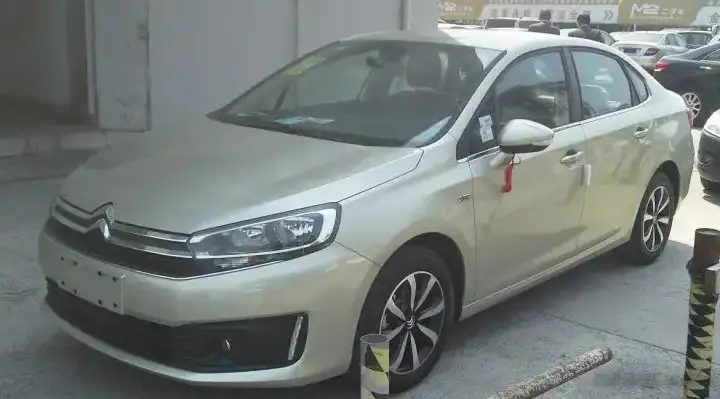
The Citroën C4 I Picasso 2.0 HDi 150 FAP, produced between 2009 and 2010, represents a significant iteration within the first generation (2007-2013) of Citroën’s popular compact minivan. Positioned as a mid-range offering within the C4 Picasso lineup, this variant aimed to balance fuel efficiency, performance, and practicality for family transport. It was primarily marketed in Europe, where the demand for diesel-powered MPVs was particularly strong. This model falls within the Phase I refresh of the C4 Picasso, characterized by subtle styling updates and refinements to the interior. The “FAP” designation indicates the inclusion of a particulate filter, a key feature for meeting increasingly stringent European emission standards.
Technical Specifications
| Brand | Citroen |
| Model | C4 |
| Generation | C4 I Picasso (Phase I, 2007) |
| Type (Engine) | 2.0 HDi (150 Hp) FAP |
| Start of production | 2009 |
| End of production | 2010 |
| Powertrain Architecture | Internal Combustion engine |
| Body type | Minivan, MPV |
| Seats | 5 |
| Doors | 5 |
| Fuel consumption (urban) | 7.5 l/100 km (31.4 US mpg, 37.7 UK mpg, 13.3 km/l) |
| Fuel consumption (extra urban) | 4.9 l/100 km (48 US mpg, 57.6 UK mpg, 20.4 km/l) |
| Fuel consumption (combined) | 5.9 l/100 km (39.9 US mpg, 47.9 UK mpg, 16.9 km/l) |
| CO2 emissions | 154 g/km |
| Fuel Type | Diesel |
| Acceleration 0 – 100 km/h | 10.7 sec |
| Acceleration 0 – 62 mph | 10.7 sec |
| Acceleration 0 – 60 mph | 10.2 sec |
| Maximum speed | 195 km/h (121.17 mph) |
| Emission standard | Euro 4 |
| Weight-to-power ratio | 10.7 kg/Hp, 93.2 Hp/tonne |
| Weight-to-torque ratio | 4.7 kg/Nm, 211.2 Nm/tonne |
| Power | 150 Hp @ 3750 rpm |
| Power per litre | 75.1 Hp/l |
| Torque | 340 Nm @ 2000 rpm (250.77 lb.-ft. @ 2000 rpm) |
| Engine layout | Front, Transverse |
| Engine Model/Code | RHE DW10CTED4 |
| Engine displacement | 1997 cm3 (121.86 cu. in.) |
| Number of cylinders | 4 |
| Engine configuration | Inline |
| Cylinder Bore | 85 mm (3.35 in.) |
| Piston Stroke | 88 mm (3.46 in.) |
| Compression ratio | 16:1 |
| Number of valves per cylinder | 4 |
| Fuel injection system | Diesel Commonrail |
| Engine aspiration | Turbocharger, Intercooler |
| Valvetrain | DOHC |
| Engine oil capacity | 5 l (5.28 US qt | 4.4 UK qt) |
| Coolant | 8 l (8.45 US qt | 7.04 UK qt) |
| Kerb Weight | 1610 kg (3549.44 lbs.) |
| Max. weight | 2130 kg (4695.85 lbs.) |
| Max load | 520 kg (1146.4 lbs.) |
| Trunk (boot) space – minimum | 500 l (17.66 cu. ft.) |
| Trunk (boot) space – maximum | 1734 l (61.24 cu. ft.) |
| Fuel tank capacity | 60 l (15.85 US gal | 13.2 UK gal) |
| Max. roof load | 80 kg (176.37 lbs.) |
| Permitted towbar download | 60 kg (132.28 lbs.) |
| Length | 4470 mm (175.98 in.) |
| Width | 1830 mm (72.05 in.) |
| Width including mirrors | 2100 mm (82.68 in.) |
| Height | 1660-1680 mm (65.35 – 66.14 in.) |
| Wheelbase | 2728 mm (107.4 in.) |
| Front track | 1505 mm (59.25 in.) |
| Rear (Back) track | 1539 mm (60.59 in.) |
| Front overhang | 995 mm (39.17 in.) |
| Rear overhang | 747 mm (29.41 in.) |
| Drag coefficient (Cd) | 0.31 |
| Minimum turning circle | 11.33 m (37.17 ft.) |
| Drivetrain Architecture | Front wheel drive |
| Number of gears and type of gearbox | 6 gears, manual transmission |
| Front suspension | Independent, type McPherson with coil spring and anti-roll bar |
| Rear suspension | Semi-independent, coil spring |
| Front brakes | Ventilated discs |
| Rear brakes | Disc |
| Assisting systems | ABS (Anti-lock braking system) |
| Steering type | Steering rack and pinion |
| Tires size | 215/50 R17 |
| Wheel rims size | 17 |
Powertrain & Engine Architecture
The heart of the C4 Picasso 2.0 HDi 150 FAP is the DW10CTED4 engine, a 1997cc inline-four cylinder diesel. This engine is a product of PSA Peugeot Citroën’s extensive diesel engine development program. It utilizes a common rail direct injection system, delivering fuel at extremely high pressure for optimized combustion. The turbocharger, coupled with an intercooler, forces more air into the cylinders, boosting power output. The engine features a double overhead camshaft (DOHC) valvetrain with four valves per cylinder, enhancing breathing and contributing to its relatively high specific output. The inclusion of a Diesel Particulate Filter (DPF) – indicated by the “FAP” designation – was crucial for meeting Euro 4 emission standards, trapping soot particles from the exhaust. The 6-speed manual transmission was the standard offering, providing a good balance between fuel economy and drivability.
Driving Characteristics
The 2.0 HDi 150 FAP offered a respectable driving experience for a family MPV. With 150 horsepower and 340 Nm (250 lb-ft) of torque, it provided adequate acceleration for everyday driving and highway cruising. While not a sporty vehicle, the engine’s torque delivery made overtaking relatively effortless. The 6-speed manual transmission allowed drivers to keep the engine in its optimal power band. Compared to the lower-powered 1.6 HDi variants, the 2.0 HDi offered noticeably more performance, especially when fully loaded with passengers and luggage. However, it didn’t match the responsiveness of the petrol-powered options, nor the outright power of higher-output HDi versions. The gear ratios were tuned for fuel efficiency, meaning the engine could feel slightly strained at very high speeds.
Equipment & Trim Levels
The C4 Picasso 2.0 HDi 150 FAP typically came equipped with a reasonable level of standard features. These included air conditioning, power windows, central locking, and an integrated audio system. Higher trim levels, such as Exclusive, added features like automatic climate control, rain-sensing wipers, rear parking sensors, and alloy wheels. Interior upholstery was typically cloth, with options for leather upgrades. A panoramic sunroof was a popular optional extra, enhancing the airy feel of the cabin. Safety features included ABS, electronic brakeforce distribution, and front and side airbags.
Chassis & Braking
The C4 Picasso utilized a McPherson strut front suspension and a semi-independent coil spring rear suspension. This setup provided a comfortable ride, absorbing bumps and imperfections in the road surface effectively. The front brakes were ventilated discs, offering good stopping power, while the rear brakes were solid discs. The steering was a rack and pinion system, providing precise and responsive handling. Stabilizer bars were fitted to both the front and rear axles to reduce body roll during cornering.
Market Reception & Comparison
The Citroën C4 Picasso 2.0 HDi 150 FAP was generally well-received by automotive critics. It was praised for its spacious interior, comfortable ride, and fuel efficiency. The 2.0 HDi engine was considered a good compromise between performance and economy. Compared to the 1.6 HDi variants, the 2.0 HDi offered a more refined driving experience and better performance, justifying the higher price tag. However, some critics noted that the interior plastics felt somewhat low-rent in places. Fuel economy was a strong point, consistently achieving around 39.9 US mpg in combined driving.
Legacy
The DW10CTED4 engine, found in the C4 Picasso 2.0 HDi 150 FAP, is generally considered a reliable unit, provided it has been properly maintained. Regular servicing, including oil changes and DPF regeneration, is crucial for long-term durability. Common issues can include DPF clogging (particularly with frequent short journeys) and potential problems with the fuel injection system. On the used car market, these C4 Picassos represent good value for money, offering a practical and economical family transport solution. However, potential buyers should carefully check the service history and ensure that the DPF has been properly maintained.