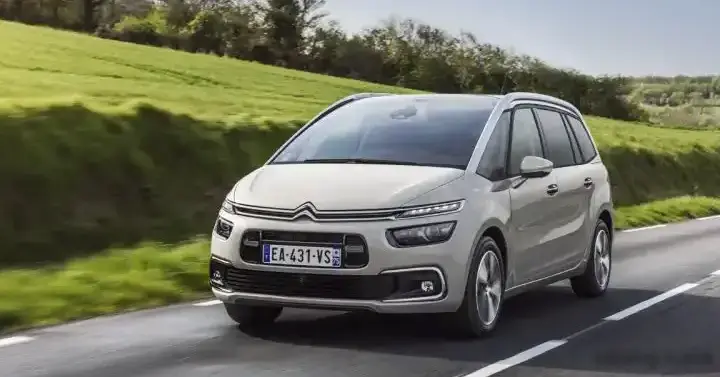
The Citroen C4 II Grand Picasso (Phase II), specifically the 2.0 BlueHDI 150 Stop & Start variant produced between 2016 and 2018, represents a significant iteration of Citroen’s popular MPV. Positioned as a mid-range offering within the second-generation C4 Picasso lineup, this model aimed to balance fuel efficiency, practicality, and a reasonable level of performance for family transport. It builds upon the foundation of the original C4 Picasso (launched in 2006) and the subsequent C4 II (2013), incorporating design refinements and updated engine technology. The Phase II update, introduced in 2016, brought styling changes, enhanced interior features, and improvements to the vehicle’s overall refinement. This variant was primarily marketed in Europe, where MPVs remained a popular choice for families.
Technical Specifications
| Brand | Citroen |
| Model | C4 |
| Generation | C4 II Grand Picasso (Phase II, 2016) |
| Type (Engine) | 2.0 BlueHDI (150 Hp) S&S |
| Start of production | 2016 |
| End of production | 2018 |
| Powertrain Architecture | Internal Combustion engine |
| Body type | Minivan, MPV |
| Seats | 7 |
| Doors | 5 |
| Fuel consumption (urban) | 4.7-5.1 l/100 km (50 – 46.1 US mpg) |
| Fuel consumption (extra urban) | 3.7-3.8 l/100 km (63.6 – 61.9 US mpg) |
| Fuel consumption (combined) | 4.1-4.3 l/100 km (57.4 – 54.7 US mpg) |
| CO2 emissions | 106-111 g/km |
| Fuel Type | Diesel |
| Acceleration 0 – 100 km/h | 9.8 sec |
| Acceleration 0 – 62 mph | 9.8 sec |
| Acceleration 0 – 60 mph | 9.3 sec |
| Maximum speed | 210 km/h (130.49 mph) |
| Emission standard | Euro 6 |
| Weight-to-power ratio | 9.5 kg/Hp |
| Weight-to-torque ratio | 3.9 kg/Nm |
| Power | 150 Hp @ 4000 rpm |
| Torque | 370 Nm @ 2000 rpm (272.9 lb.-ft. @ 2000 rpm) |
| Engine layout | Front, Transverse |
| Engine Model/Code | AHX DW10FD |
| Engine displacement | 1997 cm3 (121.86 cu. in.) |
| Number of cylinders | 4 |
| Engine configuration | Inline |
| Cylinder Bore | 85 mm (3.35 in.) |
| Piston Stroke | 88 mm (3.46 in.) |
| Compression ratio | 16.7:1 |
| Number of valves per cylinder | 4 |
| Fuel injection system | Diesel Commonrail |
| Engine aspiration | Turbocharger, Intercooler |
| Engine oil capacity | 6 l (6.34 US qt | 5.28 UK qt) |
| Kerb Weight | 1430 kg (3152.61 lbs.) |
| Max. weight | 2250 kg (4960.4 lbs.) |
| Max load | 820 kg (1807.79 lbs.) |
| Trunk (boot) space – minimum | 165 l (5.83 cu. ft.) |
| Trunk (boot) space – maximum | 2181 l (77.02 cu. ft.) |
| Fuel tank capacity | 55 l (14.53 US gal | 12.1 UK gal) |
| AdBlue tank | 17 l (4.49 US gal | 3.74 UK gal) |
| Max. roof load | 80 kg (176.37 lbs.) |
| Permitted trailer load with brakes (12%) | 1400 kg (3086.47 lbs.) |
| Permitted trailer load without brakes | 750 kg (1653.47 lbs.) |
| Permitted towbar download | 70 kg (154.32 lbs.) |
| Length | 4602 mm (181.18 in.) |
| Width | 1826 mm (71.89 in.) |
| Width with mirrors folded | 1971 mm (77.6 in.) |
| Width including mirrors | 2117 mm (83.35 in.) |
| Height | 1638-1644 mm (64.49 – 64.72 in.) |
| Wheelbase | 2840 mm (111.81 in.) |
| Front track | 1573-1587 mm (61.93 – 62.48 in.) |
| Rear (Back) track | 1576-1590 mm (62.05 – 62.6 in.) |
| Front overhang | 889 mm (35 in.) |
| Rear overhang | 873 mm (34.37 in.) |
| Minimum turning circle | 11.3 m (37.07 ft.) |
| Drivetrain Architecture | Front wheel drive |
| Number of gears and type of gearbox | 6 gears, manual transmission |
| Front suspension | Independent, type McPherson with coil spring and anti-roll bar |
| Rear suspension | Semi-independent, coil spring |
| Front brakes | Ventilated discs |
| Rear brakes | Disc |
| Assisting systems | ABS (Anti-lock braking system) |
| Steering type | Steering rack and pinion |
| Power steering | Electric Steering |
| Tires size | 205/55 R17; 225/45 R18 |
| Wheel rims size | 17; 18 |
INTRODUCTION
The Citroen C4 II Grand Picasso 2.0 BlueHDI 150 S&S, launched in 2016 as part of the Phase II refresh, is a seven-seat MPV designed to cater to the needs of modern families. Built on the EMP2 platform (shared with Peugeot and DS Automobiles), the Grand Picasso offered a spacious interior, modular seating arrangements, and a focus on comfort. The “BlueHDI” designation signifies the use of Citroen’s diesel particulate filter (DPF) technology, aimed at reducing harmful emissions and meeting stringent Euro 6 standards. The “S&S” indicates the inclusion of a Start & Stop system, further enhancing fuel economy. This particular variant occupied a sweet spot in the range, offering a balance between performance, economy, and price, making it a popular choice for those seeking a practical and efficient family vehicle.
Powertrain & Engine Architecture
At the heart of the C4 Grand Picasso 2.0 BlueHDI 150 S&S lies the DW10FD engine, a 2.0-liter inline-four cylinder diesel engine. This engine, identified by the code AHX, is a common rail direct injection diesel, benefiting from advancements in fuel injection technology for improved efficiency and reduced noise. The engine produces 150 horsepower at 4000 rpm and a substantial 370 Nm (272.9 lb-ft) of torque at 2000 rpm. This torque output is particularly beneficial for a family vehicle, providing strong pulling power for fully loaded conditions or when towing. The engine features a turbocharger with an intercooler to enhance performance. The Stop & Start system automatically shuts off the engine when the vehicle comes to a halt (e.g., at traffic lights) and restarts it instantly when the driver depresses the clutch or selects ‘Drive’. The engine is paired with a 6-speed manual transmission, chosen for its efficiency and driver engagement. While an automatic transmission was available on other C4 Picasso variants, it wasn’t offered with this specific engine/trim combination.
Driving Characteristics
The 2.0 BlueHDI 150 S&S offers a composed and comfortable driving experience. While not a performance-oriented vehicle, the 150 hp and 370 Nm of torque provide adequate acceleration for everyday driving and highway cruising. The 0-62 mph (0-100 km/h) time of 9.8 seconds is respectable for a seven-seat MPV. The manual transmission allows for precise control, and the gear ratios are well-suited to maximizing fuel efficiency. Compared to the lower-powered 1.6 BlueHDI variants, the 2.0-liter engine delivers noticeably more punch, particularly when overtaking or climbing hills. However, it doesn’t offer the same level of responsiveness as the more powerful petrol engines found in other C4 Picasso models. The suspension is tuned for comfort, absorbing bumps and imperfections in the road effectively. Steering is light and precise, making it easy to maneuver in urban environments.
Equipment & Trim Levels
The C4 Grand Picasso 2.0 BlueHDI 150 S&S typically came equipped with a generous level of standard features. These included air conditioning, a touchscreen infotainment system with Bluetooth connectivity, USB ports, and steering wheel-mounted audio controls. Safety features such as ABS, ESP (Electronic Stability Program), and multiple airbags were standard. Higher trim levels offered additional features such as panoramic sunroof, leather upholstery, navigation system, and advanced driver assistance systems (ADAS) like lane departure warning and automatic emergency braking. The interior typically featured comfortable seating with durable fabric upholstery. The modular seating arrangement allowed for flexible configuration, with the rear seats folding flat to create a large cargo area.
Chassis & Braking
The C4 Grand Picasso utilizes a McPherson strut front suspension and a semi-independent coil spring rear suspension. This setup provides a good balance between ride comfort and handling. The front brakes are ventilated discs, while the rear brakes are solid discs, providing adequate stopping power for the vehicle’s weight. The electric power steering offers a light and responsive feel. The vehicle’s relatively low weight (1430 kg / 3152.61 lbs) contributes to its agility and fuel efficiency. Stabilizer bars are fitted to both the front and rear axles to reduce body roll during cornering.
Market Reception & Comparison
The Citroen C4 Grand Picasso 2.0 BlueHDI 150 S&S was generally well-received by automotive critics. It was praised for its spacious interior, comfortable ride, and fuel efficiency. The 2.0-liter engine was considered a good compromise between performance and economy. Compared to the 1.6 BlueHDI variants, the 2.0-liter offered a more refined driving experience and better performance, but at a slightly higher price point. Compared to competitors like the Renault Scenic and Ford C-Max, the C4 Grand Picasso stood out with its distinctive styling and innovative interior features. Fuel economy figures of 4.1-4.3 l/100 km (57.4 – 54.7 US mpg) were competitive within its class.
Legacy
The DW10FD engine, while generally reliable, is known to require regular maintenance, particularly regarding the DPF system. Proper servicing and the use of high-quality diesel fuel are crucial to prevent DPF blockages. The C4 Grand Picasso 2.0 BlueHDI 150 S&S remains a popular choice in the used car market, offering a practical and affordable family vehicle. Its spacious interior, comfortable ride, and fuel efficiency continue to appeal to buyers seeking a versatile MPV. However, potential buyers should be aware of the potential maintenance costs associated with the diesel particulate filter and ensure the vehicle has been properly serviced throughout its life.