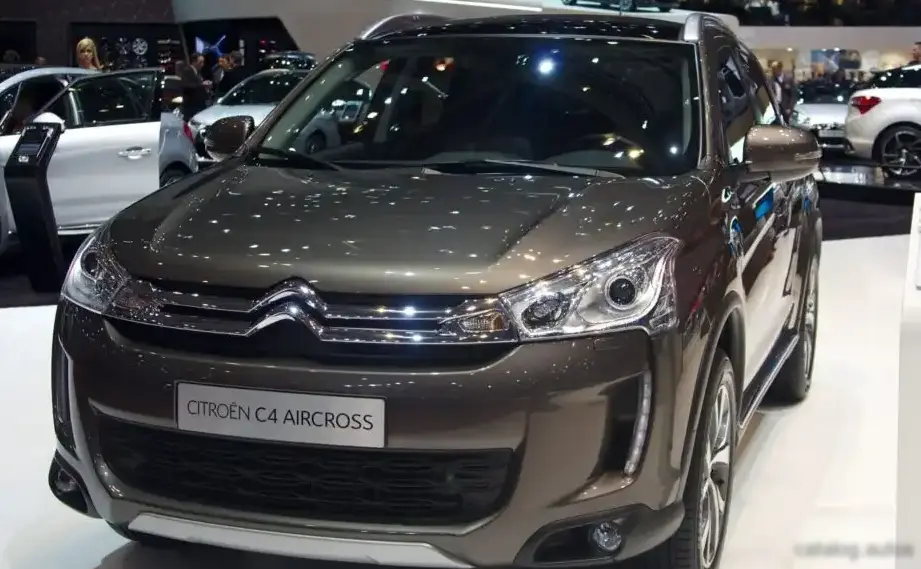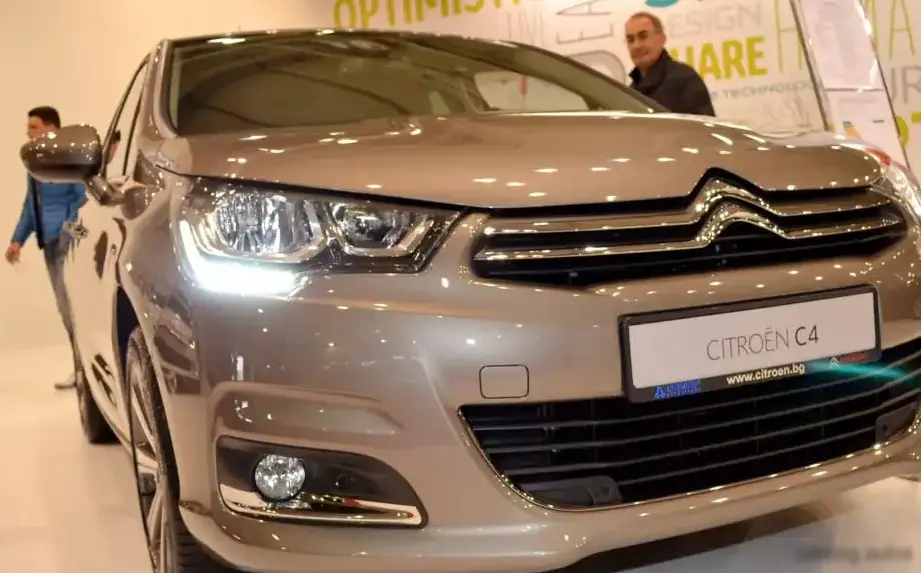
The Citroen C4 II Hatchback, specifically the 1.6 BlueHDi variant producing 99 horsepower, was a key model in Citroen’s lineup from 2015 to 2018. This version represented a significant part of the Phase II refresh of the second-generation C4 (B7 platform), aimed at offering an economical and practical option within the competitive European compact hatchback segment. Positioned as an entry-to-mid-range trim, it catered to buyers prioritizing fuel efficiency and lower running costs over outright performance. The 1.6 BlueHDi 99 hp model was particularly popular in Europe, where diesel engines held a substantial market share due to favorable taxation and fuel economy regulations.
Technical Specifications
| Brand | Citroen |
| Model | C4 |
| Generation | C4 II Hatchback (Phase II, 2015) |
| Type (Engine) | 1.6 BlueHDi (99 Hp) |
| Start of production | 2015 |
| End of production | 2018 |
| Powertrain Architecture | Internal Combustion engine |
| Body type | Hatchback |
| Seats | 5 |
| Doors | 5 |
| Fuel consumption (urban) | 4.4-4.5 l/100 km (53.5 – 52.3 US mpg, 64.2 – 62.8 UK mpg, 22.7 – 22.2 km/l) |
| Fuel consumption (extra urban) | 3.2-3.4 l/100 km (73.5 – 69.2 US mpg, 88.3 – 83.1 UK mpg, 31.3 – 29.4 km/l) |
| Fuel consumption (combined) | 3.6-3.8 l/100 km (65.3 – 61.9 US mpg, 78.5 – 74.3 UK mpg, 27.8 – 26.3 km/l) |
| CO2 emissions | 95-98 g/km |
| Fuel Type | Diesel |
| Acceleration 0 – 100 km/h | 11.9 sec |
| Acceleration 0 – 62 mph | 11.9 sec |
| Acceleration 0 – 60 mph | 11.3 sec |
| Maximum speed | 177 km/h (109.98 mph) |
| Emission standard | Euro 6 |
| Weight-to-power ratio | 12.1 kg/Hp, 82.5 Hp/tonne |
| Weight-to-torque ratio | 4.7 kg/Nm, 211.7 Nm/tonne |
| Power | 99 Hp @ 3750 rpm |
| Power per litre | 63.5 Hp/l |
| Torque | 254 Nm @ 1750 rpm (187.34 lb.-ft. @ 1750 rpm) |
| Engine layout | Front, Transverse |
| Engine Model/Code | BHY DV6FD |
| Engine displacement | 1560 cm3 (95.2 cu. in.) |
| Number of cylinders | 4 |
| Engine configuration | Inline |
| Cylinder Bore | 75 mm (2.95 in.) |
| Piston Stroke | 88.3 mm (3.48 in.) |
| Compression ratio | 16:1 |
| Number of valves per cylinder | 2 |
| Fuel injection system | Diesel Commonrail |
| Engine aspiration | Turbocharger, Intercooler |
| Engine oil capacity | 3.75 l (3.96 US qt | 3.3 UK qt) |
| Coolant | 6.5 l (6.87 US qt | 5.72 UK qt) |
| Kerb Weight | 1200 kg (2645.55 lbs.) |
| Max. weight | 1830 kg (4034.46 lbs.) |
| Max load | 630 kg (1388.91 lbs.) |
| Trunk (boot) space – minimum | 408 l (14.41 cu. ft.) |
| Trunk (boot) space – maximum | 1183 l (41.78 cu. ft.) |
| Fuel tank capacity | 60 l (15.85 US gal | 13.2 UK gal) |
| AdBlue tank | 17 l (4.49 US gal | 3.74 UK gal) |
| Permitted trailer load with brakes (12%) | 1550 kg (3417.17 lbs.) |
| Permitted trailer load without brakes | 635 kg (1399.94 lbs.) |
| Length | 4329 mm (170.43 in.) |
| Width | 1789 mm (70.43 in.) |
| Width including mirrors | 2050 mm (80.71 in.) |
| Height | 1489-1502 mm (58.62 – 59.13 in.) |
| Wheelbase | 2608 mm (102.68 in.) |
| Front track | 1522-1536 mm (59.92 – 60.47 in.) |
| Rear (Back) track | 1515-1529 mm (59.65 – 60.2 in.) |
| Front overhang | 935 mm (36.81 in.) |
| Rear overhang | 786 mm (30.94 in.) |
| Drag coefficient (Cd) | 0.30 |
| Minimum turning circle (turning diameter) | 10.7 m (35.1 ft.) |
| Drivetrain Architecture | The Internal combustion engine (ICE) drives the front wheels of the vehicle. |
| Drive wheel | Front wheel drive |
| Number of gears and type of gearbox | 5 gears, manual transmission |
| Front suspension | Independent, type McPherson with coil spring and anti-roll bar |
| Rear suspension | Semi-independent, coil spring |
| Front brakes | Ventilated discs |
| Rear brakes | Disc |
| Assisting systems | ABS (Anti-lock braking system) |
| Steering type | Steering rack and pinion |
| Tires size | 205/55 R16; 225/45 R17 |
| Wheel rims size | 16; 17 |
Powertrain & Engine Architecture
The heart of this C4 variant is the 1.6-liter (1560 cc) BlueHDi engine, specifically the BHY DV6FD code. This engine belongs to the PSA Group’s DV6 family, known for its compact size and efficiency. It’s a four-cylinder, inline diesel engine featuring a turbocharger with an intercooler to enhance power and torque. The engine utilizes a common-rail direct fuel injection system, delivering fuel directly into the cylinders at high pressure for optimized combustion. The BHY engine incorporates a Diesel Particulate Filter (DPF) to reduce particulate matter emissions, complying with stringent Euro 6 emission standards. The engine produces 99 horsepower at 3750 rpm and 254 Nm (187 lb-ft) of torque at 1750 rpm. This torque figure, available at relatively low engine speeds, is a key characteristic of diesel engines and contributes to good drivability. The engine is transversely mounted at the front of the vehicle. The 5-speed manual transmission was the standard offering for this trim level, chosen for its simplicity and contribution to fuel economy.
Driving Characteristics
The 1.6 BlueHDi 99 hp C4 offers a practical and economical driving experience. Acceleration is not its strong suit, with a 0-62 mph (0-100 km/h) time of around 11.9 seconds. However, the readily available torque makes it feel more responsive in everyday driving situations, such as overtaking or merging onto highways. The 5-speed gearbox is well-matched to the engine’s characteristics, providing adequate spacing between gears. Compared to higher-output versions of the C4, like those with the 1.6 BlueHDi 115 hp or the petrol engines, this variant feels less powerful, particularly when fully loaded or climbing hills. However, it excels in fuel economy, consistently achieving combined fuel consumption figures of 3.6-3.8 l/100 km (65.3-61.9 US mpg). The steering is light and precise, making it easy to maneuver in urban environments.
Equipment & Trim Levels
The 1.6 BlueHDi 99 hp C4 typically came equipped with a reasonable level of standard features. These included air conditioning, electric front windows, a basic audio system with USB connectivity, and ABS brakes. Higher trim levels, such as Exclusive or Shine, offered additional features like alloy wheels, rear parking sensors, automatic headlights and wipers, a touchscreen infotainment system, and cruise control. Interior upholstery was typically cloth, with a functional and durable design. Optional extras included a panoramic sunroof, leather upholstery, and a navigation system.
Chassis & Braking
The C4 II utilizes a McPherson strut front suspension and a semi-independent coil spring rear suspension. This setup provides a comfortable ride quality, absorbing bumps and imperfections in the road surface effectively. The front brakes are ventilated discs, offering good stopping power, while the rear brakes are solid discs. ABS (Anti-lock Braking System) is standard, enhancing safety during emergency braking situations. Stabilizer bars are fitted to both the front and rear axles to reduce body roll during cornering.
Market Reception & Comparison
The Citroen C4 1.6 BlueHDi 99 hp was generally well-received by critics for its fuel efficiency and low running costs. It was seen as a sensible choice for drivers covering high mileages or those prioritizing economy over performance. Compared to the more powerful diesel variants, it offered a lower purchase price and potentially lower insurance costs. However, some reviewers noted its lack of outright performance and the somewhat basic interior trim. Against competitors like the Volkswagen Golf, Ford Focus, and Peugeot 308, the C4 offered a competitive package in terms of price and fuel economy, but often lagged behind in terms of perceived build quality and brand prestige.
Legacy
The 1.6 BlueHDi engine, in its various iterations, proved to be a reliable and durable powertrain. While early versions of the DV6 engine had some issues with DPF clogging, these were largely addressed in later models like the BHY. Today, used examples of the C4 1.6 BlueHDi 99 hp are readily available and generally offer good value for money. Regular maintenance, including timely oil changes and DPF regeneration, is crucial for ensuring long-term reliability. The engine’s fuel efficiency and relatively low maintenance costs continue to make it an attractive option for budget-conscious buyers.