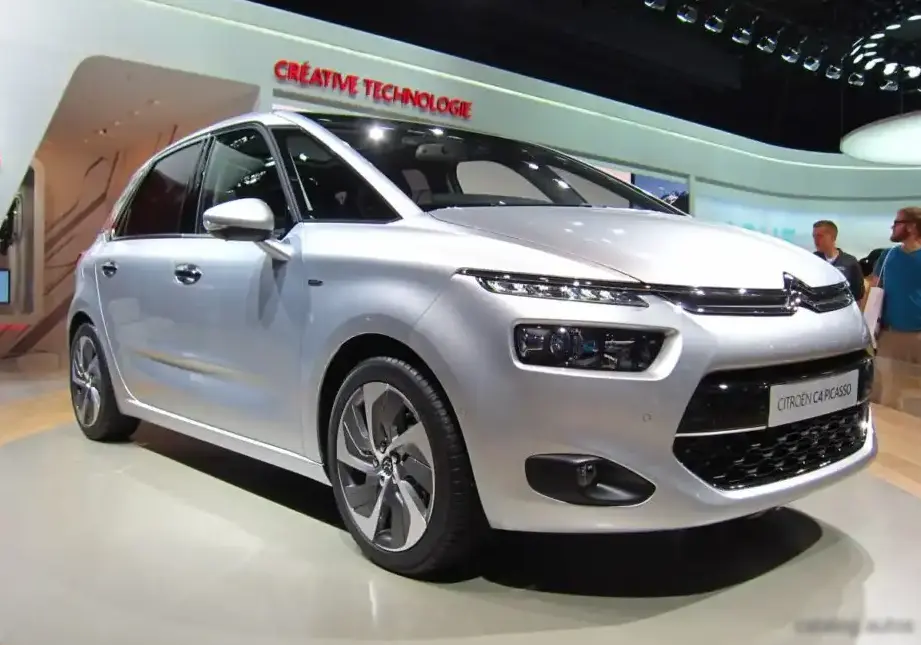
The Citroen C4 II Picasso 1.6 THP 156 S&S, produced between 2013 and 2014, represents a mid-range offering within the second generation of Citroen’s popular compact MPV. Positioned as a balance between affordability and performance, this variant aimed to appeal to families seeking a practical and reasonably efficient vehicle. It falls within the Phase I update of the C4 Picasso, built on the EMP2 platform shared with Peugeot and other Stellantis brands. This generation marked a significant departure from its predecessor, offering a more modern design, improved interior space, and a focus on lightweight construction. The “S&S” designation indicates the inclusion of Citroen’s Stop & Start system, designed to improve fuel economy in urban driving conditions.
Technical Specifications
| Brand | Citroen |
| Model | C4 |
| Generation | C4 II Picasso (Phase I, 2013) |
| Type (Engine) | 1.6 THP (156 Hp) S&S |
| Start of production | 2013 |
| End of production | 2014 |
| Powertrain Architecture | Internal Combustion engine |
| Body type | Minivan, MPV |
| Seats | 5 |
| Doors | 5 |
| Fuel consumption (urban) | 8.1 l/100 km (29 US mpg, 34.9 UK mpg, 12.3 km/l) |
| Fuel consumption (extra urban) | 4.7-4.9 l/100 km (50-48 US mpg, 60.1-57.6 UK mpg, 21.3-20.4 km/l) |
| Fuel consumption (combined) | 5.9-6.1 l/100 km (39.9-38.6 US mpg, 47.9-46.3 UK mpg, 16.9-16.4 km/l) |
| CO2 emissions | 137-140 g/km |
| Fuel Type | Petrol (Gasoline) |
| Acceleration 0 – 100 km/h | 9 sec |
| Acceleration 0 – 62 mph | 9 sec |
| Acceleration 0 – 60 mph | 8.6 sec |
| Maximum speed | 209 km/h (129.87 mph) |
| Emission standard | Euro 5 |
| Weight-to-power ratio | 8.3 kg/Hp, 120.4 Hp/tonne |
| Weight-to-torque ratio | 5.4 kg/Nm, 185.2 Nm/tonne |
| Power | 156 Hp @ 6000 rpm |
| Power per litre | 97.6 Hp/l |
| Torque | 240 Nm @ 1400 rpm (177.01 lb.-ft. @ 1400 rpm) |
| Engine layout | Front, Transverse |
| Engine Model/Code | 5FV EP6CDT |
| Engine displacement | 1598 cm3 (97.52 cu. in.) |
| Number of cylinders | 4 |
| Engine configuration | Inline |
| Cylinder Bore | 77 mm (3.03 in.) |
| Piston Stroke | 85.8 mm (3.38 in.) |
| Compression ratio | 11:1 |
| Number of valves per cylinder | 4 |
| Fuel injection system | Direct injection |
| Engine aspiration | Turbocharger, Intercooler |
| Engine oil capacity | 4.25 l (4.49 US qt, 3.74 UK qt) |
| Kerb Weight | 1296 kg (2857.19 lbs.) |
| Max. weight | 1940 kg (4276.97 lbs.) |
| Max load | 644 kg (1419.78 lbs.) |
| Trunk (boot) space – minimum | 537 l (18.96 cu. ft.) |
| Trunk (boot) space – maximum | 1710 l (60.39 cu. ft.) |
| Fuel tank capacity | 57 l (15.06 US gal, 12.54 UK gal) |
| Permitted trailer load with brakes (12%) | 1420 kg (3130.56 lbs.) |
| Permitted trailer load without brakes | 685 kg (1510.17 lbs.) |
| Permitted towbar download | 70 kg (154.32 lbs.) |
| Length | 4428 mm (174.33 in.) |
| Width | 1826 mm (71.89 in.) |
| Width with mirrors folded | 1971 mm (77.6 in.) |
| Width including mirrors | 2117 mm (83.35 in.) |
| Height | 1610-1625 mm (63.39 – 63.98 in.) |
| Wheelbase | 2785 mm (109.65 in.) |
| Front track | 1573-1587 mm (61.93 – 62.48 in.) |
| Rear (Back) track | 1576-1590 mm (62.05 – 62.6 in.) |
| Front overhang | 879 mm (34.61 in.) |
| Rear overhang | 764 mm (30.08 in.) |
| Minimum turning circle | 11.1 m (36.42 ft.) |
| Drivetrain Architecture | Front wheel drive |
| Number of gears and type of gearbox | 6 gears, manual transmission |
| Front suspension | Independent, type McPherson with coil spring and anti-roll bar |
| Rear suspension | Semi-independent, coil spring |
| Front brakes | Ventilated discs |
| Rear brakes | Disc |
| Assisting systems | ABS (Anti-lock braking system) |
| Steering type | Steering rack and pinion |
| Power steering | Electric Steering |
| Tires size | 205/60 R16; 205/55 R17; 225/45 R18 |
| Wheel rims size | 16; 17; 18 |
INTRODUCTION
The Citroen C4 II Picasso 1.6 THP 156 S&S, launched in 2013, was a key variant in the refreshed second-generation C4 Picasso lineup. Building upon the foundation laid by the original C4 Picasso, this model aimed to offer a more refined and efficient driving experience. The 1.6 THP engine, developed in collaboration with BMW, was a significant upgrade over the earlier naturally aspirated engines, providing a noticeable boost in performance. The inclusion of the Stop & Start system further enhanced its appeal to environmentally conscious buyers. This variant occupied a middle ground in the C4 Picasso range, offering a compelling alternative to the lower-powered diesel options and the more expensive, higher-specification petrol models.
Powertrain & Engine Architecture
At the heart of the C4 II Picasso 1.6 THP 156 S&S lies the EP6CDT engine, a 1.6-liter turbocharged four-cylinder petrol engine. This engine, part of the Prince engine family co-developed by PSA Peugeot Citroen and BMW, utilizes direct fuel injection and a twin-scroll turbocharger to deliver a respectable 156 horsepower at 6000 rpm and 240 Nm (177 lb-ft) of torque at a low 1400 rpm. The engine features a 11:1 compression ratio and four valves per cylinder. The direct injection system, coupled with the turbocharging, allows for efficient combustion and a broad torque curve. The “S&S” system automatically shuts off the engine when the vehicle comes to a stop, restarting it instantly when the driver depresses the clutch or selects Drive. This variant was typically paired with a six-speed manual transmission, although an optional six-speed automatic transmission was also available. The automatic transmission, while offering convenience, slightly impacted fuel economy and acceleration compared to the manual.
Driving Characteristics
The 1.6 THP 156 S&S offered a noticeable improvement in performance over the base-level engines. Acceleration from 0 to 100 km/h (0-62 mph) took around 9 seconds, making it feel adequately brisk for everyday driving. The turbocharger provided a surge of power in the mid-range, making overtaking maneuvers relatively effortless. The six-speed manual transmission allowed drivers to keep the engine in its optimal power band, while the automatic transmission offered smooth gear changes but could sometimes feel hesitant. Compared to the 1.8L petrol engine found in earlier C4 Picasso models, the 1.6 THP offered significantly more power and torque, resulting in a more responsive and enjoyable driving experience. However, it didn’t quite match the effortless pull of the higher-output diesel variants, such as the 2.0 HDi.
Equipment & Trim Levels
The C4 II Picasso 1.6 THP 156 S&S typically came equipped with a generous level of standard features. These included air conditioning, electric front and rear windows, a touchscreen infotainment system with Bluetooth connectivity, and a multi-function steering wheel. Higher trim levels added features such as automatic climate control, parking sensors, a panoramic sunroof, and leather upholstery. Interior upholstery was generally cloth, with options for partial leather or full leather available. The dashboard layout was modern and functional, with a focus on ergonomics and ease of use. Optional extras included a navigation system, a premium audio system, and advanced driver-assistance systems like lane departure warning.
Chassis & Braking
The C4 II Picasso featured a McPherson strut front suspension and a semi-independent torsion beam rear suspension. This setup provided a comfortable ride quality, absorbing bumps and imperfections in the road effectively. The front brakes were ventilated discs, while the rear brakes were solid discs. ABS (Anti-lock Braking System) was standard, providing enhanced braking performance and stability. The steering was electric power-assisted, offering a light and precise feel. Stabilizer bars were fitted to both the front and rear axles to reduce body roll during cornering.
Market Reception & Comparison
The Citroen C4 II Picasso 1.6 THP 156 S&S was generally well-received by automotive critics. It was praised for its comfortable ride, spacious interior, and efficient engine. However, some reviewers noted that the automatic transmission could be slow to respond at times. Compared to the diesel variants, the 1.6 THP offered a more refined driving experience but slightly higher fuel consumption. Against competitors like the Renault Scenic and the Ford C-Max, the C4 Picasso stood out with its distinctive styling and comfortable interior. Fuel economy figures of around 39-40 mpg combined were typical, making it a reasonably economical option for families.
Legacy
The 1.6 THP engine, while generally reliable, has been known to exhibit issues with carbon buildup on the intake valves, particularly in vehicles that primarily undertake short journeys. Regular servicing and the use of quality fuel can help mitigate this risk. The C4 II Picasso 1.6 THP 156 S&S remains a popular choice in the used car market, offering a good balance of practicality, comfort, and performance. Its spacious interior, comfortable ride, and relatively low running costs make it an attractive option for families seeking a versatile and affordable MPV. The EMP2 platform proved to be a robust and adaptable design, underpinning several successful models from the Stellantis group.