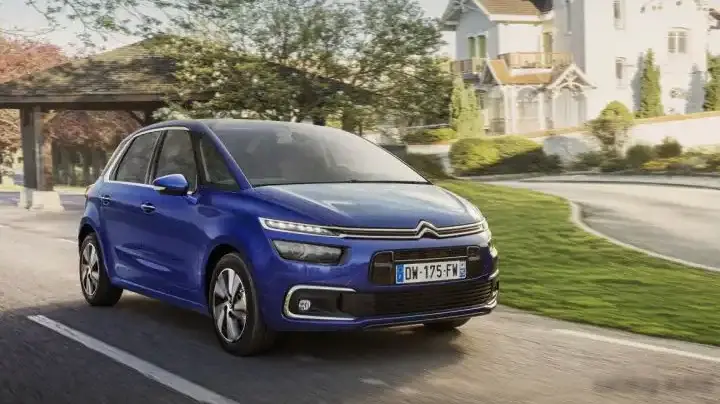
The Citroen C4 II Picasso 2.0 BlueHDi 150 S&S, produced between 2016 and 2018, represents a mid-cycle refresh of the second-generation C4 Picasso (internally known as the B78). This variant occupied a significant position in the C4 Picasso lineup, offering a balance between fuel efficiency, performance, and practicality for families. It was primarily marketed in Europe as a competitor to other compact MPVs like the Renault Scenic and Volkswagen Touran. The “S&S” designation indicates the inclusion of Citroen’s Stop & Start system, aimed at reducing fuel consumption in urban driving. This model year saw updates to the front fascia, interior trim, and technology features, enhancing the overall appeal of the C4 Picasso.
Technical Specifications
| Brand | Citroen |
| Model | C4 |
| Generation | C4 II Picasso (Phase II, 2016) |
| Type (Engine) | 2.0 BlueHDI (150 Hp) S&S |
| Start of production | 2016 |
| End of production | 2018 |
| Powertrain Architecture | Internal Combustion engine |
| Body type | Minivan, MPV |
| Seats | 5 |
| Doors | 5 |
| Fuel consumption (urban) | 4.7-5.1 l/100 km (50 – 46.1 US mpg) |
| Fuel consumption (extra urban) | 3.7-3.8 l/100 km (63.6 – 61.9 US mpg) |
| Fuel consumption (combined) | 4.1-4.3 l/100 km (57.4 – 54.7 US mpg) |
| CO2 emissions | 106-111 g/km |
| Fuel Type | Diesel |
| Acceleration 0 – 100 km/h | 9.7 sec |
| Acceleration 0 – 62 mph | 9.7 sec |
| Acceleration 0 – 60 mph | 9.2 sec |
| Maximum speed | 210 km/h (130.49 mph) |
| Emission standard | Euro 6 |
| Weight-to-power ratio | 9.4 kg/Hp |
| Weight-to-torque ratio | 3.8 kg/Nm |
| Power | 150 Hp @ 4000 rpm |
| Torque | 370 Nm @ 2000 rpm (272.9 lb.-ft. @ 2000 rpm) |
| Engine layout | Front, Transverse |
| Engine Model/Code | AHX DW10FD |
| Engine displacement | 1997 cm3 (121.86 cu. in.) |
| Number of cylinders | 4 |
| Engine configuration | Inline |
| Cylinder Bore | 85 mm (3.35 in.) |
| Piston Stroke | 88 mm (3.46 in.) |
| Compression ratio | 16.7:1 |
| Number of valves per cylinder | 4 |
| Fuel injection system | Diesel Commonrail |
| Engine aspiration | Turbocharger, Intercooler |
| Engine oil capacity | 6 l (6.34 US qt | 5.28 UK qt) |
| Kerb Weight | 1415 kg (3119.54 lbs.) |
| Max. weight | 2030 kg (4475.38 lbs.) |
| Max load | 615 kg (1355.84 lbs.) |
| Trunk (boot) space – minimum | 630 l (22.25 cu. ft.) |
| Trunk (boot) space – maximum | 1851 l (65.37 cu. ft.) |
| Fuel tank capacity | 55 l (14.53 US gal | 12.1 UK gal) |
| AdBlue tank | 17 l (4.49 US gal | 3.74 UK gal) |
| Max. roof load | 80 kg (176.37 lbs.) |
| Permitted trailer load with brakes (12%) | 1500 kg (3306.93 lbs.) |
| Permitted trailer load without brakes | 745 kg (1642.44 lbs.) |
| Permitted towbar download | 70 kg (154.32 lbs.) |
| Length | 4438 mm (174.72 in.) |
| Width | 1826 mm (71.89 in.) |
| Width with mirrors folded | 1971 mm (77.6 in.) |
| Width including mirrors | 2117 mm (83.35 in.) |
| Height | 1610-1625 mm (63.39 – 63.98 in.) |
| Wheelbase | 2785 mm (109.65 in.) |
| Front track | 1573-1587 mm (61.93 – 62.48 in.) |
| Rear (Back) track | 1576-1590 mm (62.05 – 62.6 in.) |
| Front overhang | 889 mm (35 in.) |
| Rear overhang | 764 mm (30.08 in.) |
| Minimum turning circle | 11.1 m (36.42 ft.) |
| Drivetrain Architecture | Front wheel drive |
| Number of gears and type of gearbox | 6 gears, manual transmission |
| Front suspension | Independent, type McPherson with coil spring and anti-roll bar |
| Rear suspension | Semi-independent, coil spring |
| Front brakes | Ventilated discs |
| Rear brakes | Disc |
| Assisting systems | ABS (Anti-lock braking system) |
| Steering type | Steering rack and pinion |
| Power steering | Electric Steering |
| Tires size | 205/55 R17; 225/45 R18 |
| Wheel rims size | 17; 18 |
Powertrain & Engine Architecture
The heart of the C4 II Picasso 2.0 BlueHDi 150 is the DW10FD engine, a four-cylinder diesel engine displacing 1997cc. This engine, identified by the code AHX, is a member of the PSA Group’s (Peugeot Citroen) BlueHDi family, known for its focus on reducing NOx emissions through Selective Catalytic Reduction (SCR) technology utilizing AdBlue. The engine features a common rail direct injection system, delivering fuel at pressures up to 1800 bar for optimized combustion. A turbocharger with an intercooler further enhances performance. The engine produces 150 horsepower at 4000 rpm and a substantial 370 Nm (272.9 lb-ft) of torque at 2000 rpm. This engine was paired with a six-speed manual transmission, providing a good balance between fuel economy and drivability. The Stop & Start system automatically shuts off the engine when the vehicle is stationary, further improving fuel efficiency.
Driving Characteristics
The 2.0 BlueHDi 150 offered a comfortable and refined driving experience. While not a performance-oriented variant, the engine provided ample power for everyday driving and overtaking maneuvers. The six-speed manual transmission allowed for precise gear selection, and the torque-rich engine meant that frequent downshifts weren’t necessary. Acceleration from 0 to 100 km/h (0-62 mph) took approximately 9.7 seconds. Compared to lower-powered versions of the C4 Picasso, this variant offered noticeably more responsiveness. However, it didn’t match the agility of lighter, more compact hatchbacks. The suspension was tuned for comfort, absorbing bumps and imperfections in the road effectively, making it a pleasant vehicle for long journeys.
Equipment & Trim Levels
The C4 II Picasso 2.0 BlueHDi 150 S&S typically came well-equipped, reflecting its position as a mid-range offering. Standard features included air conditioning, a touchscreen infotainment system with Bluetooth connectivity, cruise control, and electric windows. Higher trim levels added features such as panoramic sunroof, leather upholstery, navigation system, and advanced driver-assistance systems like lane departure warning and automatic emergency braking. Interior upholstery was typically cloth, with options for partial leather or full leather available. The dashboard layout was modern and functional, with a focus on ergonomics.
Chassis & Braking
The C4 II Picasso featured a McPherson strut front suspension and a semi-independent coil spring rear suspension. This setup provided a good balance between ride comfort and handling. The front brakes were ventilated discs, while the rear brakes were solid discs. ABS (Anti-lock Braking System) was standard, enhancing safety during emergency braking. The steering was electric power-assisted, providing light and precise control. The vehicle’s weight of around 1415 kg (3119.54 lbs) influenced its handling characteristics, making it feel planted and stable on the road.
Market Reception & Comparison
The Citroen C4 II Picasso 2.0 BlueHDi 150 S&S was generally well-received by automotive critics. It was praised for its fuel efficiency, comfortable ride, and spacious interior. However, some critics noted that the styling was somewhat conservative and that the infotainment system could be slow to respond at times. Compared to the 1.6 BlueHDi variants, the 2.0-liter engine offered significantly more power and refinement. It also provided better fuel economy than the petrol-powered versions. Against competitors like the Renault Scenic and Volkswagen Touran, the C4 Picasso offered a compelling combination of value, practicality, and comfort.
Legacy
The DW10FD engine, in general, has proven to be a reliable and durable unit when properly maintained. The 2.0 BlueHDi 150 variant of the C4 Picasso has maintained a reasonable reputation for reliability in the used car market. Common issues, if any, are typically related to the diesel particulate filter (DPF) and the AdBlue system, particularly if the vehicle has been primarily used for short journeys. Regular servicing and the use of high-quality oil are crucial for ensuring the longevity of this powertrain. Today, these vehicles represent a good value proposition for buyers seeking a spacious, fuel-efficient, and comfortable MPV.