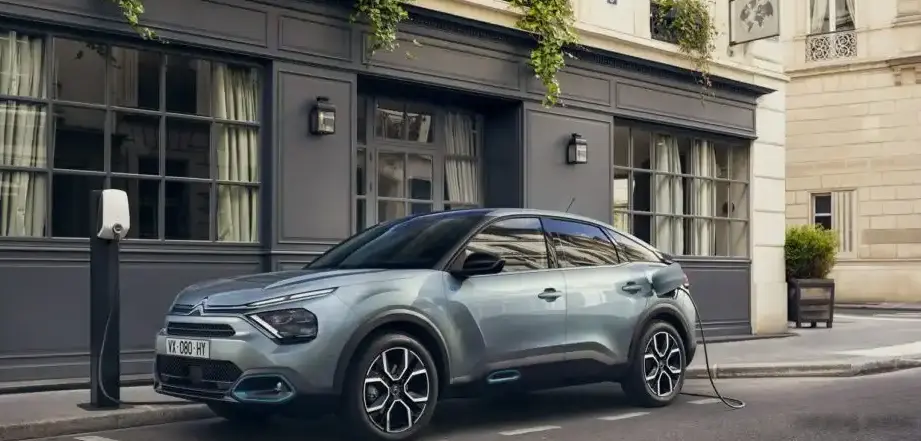
The Citroen C4 III, launched in 2020, represented a significant departure for the French automaker, blending elements of a traditional hatchback with the elevated ride height and styling cues of an SUV. Within the C4 III range, the 1.2 PureTech 101 horsepower Mild Hybrid e-DSC variant, produced from April to October 2024, occupied a key position as an efficient and accessible entry point into the model line. This version aimed to balance fuel economy with reasonable performance, appealing to buyers seeking a practical and modern compact vehicle. It’s built on the CMP (Common Modular Platform) shared with other Stellantis brands like Peugeot and Opel/Vauxhall.
Technical Specifications
| Brand | Citroen |
| Model | C4 |
| Generation | C4 III (Phase I, 2020) |
| Type (Engine) | 1.2 (101 Hp) Mild Hybrid e-DSC |
| Start of production | April, 2024 |
| End of production | October, 2024 |
| Powertrain Architecture | MHEV (Mild Hybrid Electric Vehicle) |
| Body type | Coupe, SUV |
| Seats | 5 |
| Doors | 5 |
| Fuel consumption at Low speed (WLTP) | 4.0 l/100 km (58.8 US mpg, 70.6 UK mpg, 25 km/l) |
| Fuel consumption at Medium speed (WLTP) | 4.4 l/100 km (53.5 US mpg, 64.2 UK mpg, 22.7 km/l) |
| Fuel consumption at high speed (WLTP) | 4.3 l/100 km (54.7 US mpg, 65.7 UK mpg, 23.3 km/l) |
| Fuel consumption at very high speed (WLTP) | 5.6 l/100 km (42 US mpg, 50.4 UK mpg, 17.9 km/l) |
| Combined fuel consumption (WLTP) | 4.7-4.8 l/100 km (50 – 49 US mpg, 60.1 – 58.9 UK mpg, 21.3 – 20.8 km/l) |
| CO2 emissions (WLTP) | 107 g/km |
| Fuel Type | Petrol (Gasoline) |
| Acceleration 0 – 100 km/h | 7 sec |
| Acceleration 0 – 62 mph | 7 sec |
| Acceleration 0 – 60 mph | 6.7 sec |
| Maximum speed | 192 km/h (119.3 mph) |
| Emission standard | Euro 6e |
| Weight-to-power ratio | 13.1 kg/Hp, 76.3 Hp/tonne |
| Weight-to-torque ratio | 6.5 kg/Nm, 154.8 Nm/tonne |
| Gross battery capacity | 0.89 kWh |
| Battery voltage | 48 V |
| Battery technology | Lithium-ion (Li-Ion) |
| Electric motor power | 21 Hp @ 4264 rpm (51 Nm / 37.62 lb.-ft.) |
| Electric motor location | Integrated into the transmission |
| Electric motor type | Synchronous |
| Power | 101 Hp @ 5500 rpm |
| Torque | 205 Nm @ 1750 rpm (151.2 lb.-ft. @ 1750 rpm) |
| Engine layout | Front, Transverse |
| Engine Model/Code | HN09 |
| Engine displacement | 1199 cm3 (73.17 cu. in.) |
| Number of cylinders | 3 |
| Engine configuration | Inline |
| Cylinder Bore | 75 mm (2.95 in.) |
| Piston Stroke | 90.5 mm (3.56 in.) |
| Number of valves per cylinder | 4 |
| Fuel injection system | Direct injection |
| Engine aspiration | Turbocharger, Intercooler |
| Engine systems | Start & Stop System, Particulate filter |
| Kerb Weight | 1324-1397 kg (2918.92 – 3079.86 lbs.) |
| Max. weight | 1810 kg (3990.37 lbs.) |
| Max load | 413-486 kg (910.51 – 1071.45 lbs.) |
| Trunk (boot) space – minimum | 380 l (13.42 cu. ft.) |
| Trunk (boot) space – maximum | 1250 l (44.14 cu. ft.) |
| Fuel tank capacity | 44 l (11.62 US gal, 9.68 UK gal) |
| Permitted trailer load with brakes (12%) | 1200 kg (2645.55 lbs.) |
| Permitted trailer load without brakes | 695 kg (1532.21 lbs.) |
| Permitted towbar download | 61 kg (134.48 lbs.) |
| Length | 4355 mm (171.46 in.) |
| Width | 1800 mm (70.87 in.) |
| Width with mirrors folded | 1834 mm (72.2 in.) |
| Width including mirrors | 2032 mm (80 in.) |
| Height | 1525 mm (60.04 in.) |
| Wheelbase | 2670 mm (105.12 in.) |
| Front track | 1545-1560 mm (60.83 – 61.42 in.) |
| Rear (Back) track | 1545-1560 mm (60.83 – 61.42 in.) |
| Drivetrain Architecture | Front wheel drive. MHEV. ICE and electric motor drive front wheels. |
| Drive wheel | Front wheel drive |
| Number of gears and type of gearbox | 6 gears, automatic transmission e-DSC |
| Front suspension | Independent type McPherson |
| Rear suspension | Torsion |
| Front brakes | Ventilated discs |
| Rear brakes | Disc |
| Assisting systems | ABS (Anti-lock braking system) |
| Steering type | Steering rack and pinion |
| Power steering | Electric Steering |
| Tires size | 195/60 R18 96H |
| Wheel rims size | 18 |
INTRODUCTION
The Citroen C4 III 1.2 PureTech 101 hp Mild Hybrid e-DSC, introduced in 2020, is a front-wheel-drive compact vehicle positioned as a versatile option within the C4 lineup. It represents Citroen’s move towards electrification, utilizing a 48-volt mild hybrid system to enhance fuel efficiency. This variant aimed to appeal to buyers seeking a comfortable, practical, and relatively economical vehicle for daily commuting and family use. The “e-DSC” designation refers to the electronically controlled dual-clutch transmission, a key component of the mild hybrid system. It slots into the range below the more powerful PureTech 130 and diesel options, offering a more affordable entry point.
Powertrain & Engine Architecture
At the heart of the C4 III 1.2 PureTech 101 hp is the HN09 engine, a three-cylinder, 1.2-liter turbocharged gasoline engine. This engine utilizes direct fuel injection and a turbocharger with an intercooler to deliver a balance of power and efficiency. The engine produces 101 horsepower at 5500 rpm and 205 Nm (151.2 lb-ft) of torque at 1750 rpm. The mild hybrid system consists of a 48V battery and a small electric motor integrated with the six-speed e-DSC automatic transmission. This electric motor provides a power boost during acceleration and allows for regenerative braking, capturing energy that would otherwise be lost during deceleration. The system isn’t capable of fully electric driving, but it assists the engine, reducing load and improving fuel economy. The e-DSC transmission itself is a six-speed dual-clutch unit, offering quicker and smoother gear changes compared to a traditional automatic.
Driving Characteristics
The 1.2 PureTech 101 hp Automatic C4 offers a comfortable and refined driving experience. While not particularly sporty, the engine provides adequate power for everyday driving situations. The mild hybrid system provides a noticeable boost during initial acceleration, making it feel more responsive than its horsepower figure might suggest. The e-DSC transmission shifts smoothly and efficiently, contributing to a relaxed driving experience. Compared to the more powerful 130 hp version, the 101 hp model feels less eager to accelerate, particularly when fully loaded or tackling steep inclines. However, the fuel economy benefits are significant. The gear ratios are tuned for efficiency, prioritizing fuel savings over outright performance. The electric motor assist helps to fill in torque gaps, making the engine feel more flexible at lower speeds.
Equipment & Trim Levels
The C4 III 1.2 PureTech 101 hp Mild Hybrid e-DSC typically came equipped with a respectable level of standard features. These included air conditioning, a touchscreen infotainment system with Apple CarPlay and Android Auto compatibility, cruise control, and a suite of safety features such as automatic emergency braking, lane departure warning, and traffic sign recognition. Higher trim levels offered additional features such as a larger touchscreen, navigation system, panoramic sunroof, and upgraded interior upholstery. Interior materials were generally of good quality, with a focus on comfort and practicality. The dashboard layout was modern and user-friendly, with a clear and intuitive interface.
Chassis & Braking
The C4 III utilizes a McPherson strut front suspension and a torsion beam rear suspension. This setup provides a good balance of ride comfort and handling. The suspension is tuned to prioritize comfort, absorbing bumps and imperfections in the road surface effectively. The front brakes are ventilated discs, while the rear brakes are solid discs. ABS (Anti-lock Braking System) is standard, providing enhanced braking performance and stability. The steering is electric power-assisted, offering a light and precise feel. Stabilizer bars are fitted to both the front and rear axles to reduce body roll during cornering.
Market Reception & Comparison
The Citroen C4 III 1.2 PureTech 101 hp Mild Hybrid e-DSC was generally well-received by critics for its fuel efficiency, comfortable ride, and practical interior. It was seen as a strong competitor to other compact hatchbacks and crossovers, such as the Volkswagen Golf, Peugeot 308, and Opel Astra. Compared to the more powerful PureTech 130 version, the 101 hp model offered a more affordable price point and better fuel economy, but at the expense of performance. The diesel variants offered even better fuel economy, but were becoming less popular due to environmental concerns. The mild hybrid system was praised for its effectiveness in reducing emissions and improving fuel efficiency without significantly impacting the driving experience.
Legacy
The Citroen C4 III 1.2 PureTech 101 hp Mild Hybrid e-DSC represents an important step in Citroen’s transition towards electrification. While the 1.2 PureTech engine has had some reported issues with timing chain wear in other applications, the mild hybrid system itself has proven to be relatively reliable. On the used car market, these models offer a good value proposition for buyers seeking a fuel-efficient and comfortable compact vehicle. Regular maintenance, including oil changes and timing chain inspections, is crucial to ensure long-term reliability. The C4 III’s blend of comfort, practicality, and efficiency continues to make it a popular choice among used car buyers.