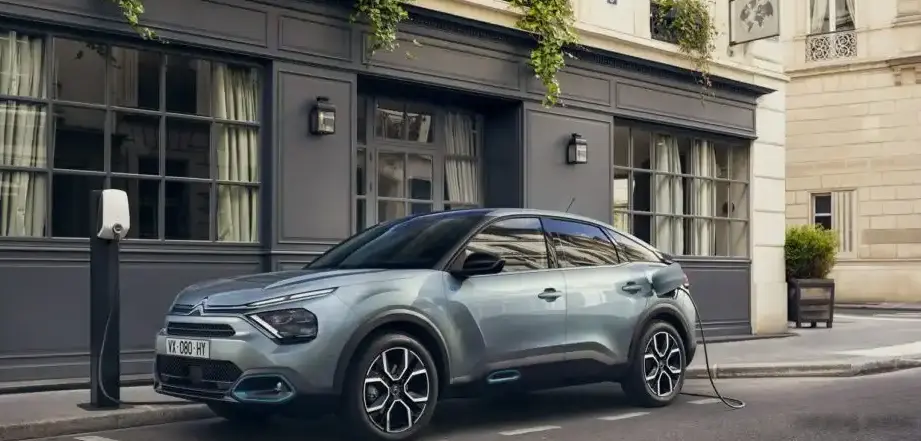
The Citroën C4 III, launched in 2020, represents the third generation of Citroën’s compact hatchback. This generation marked a significant departure from its predecessors, embracing a more crossover-inspired design and offering a range of powertrain options focused on efficiency and reduced emissions. The 1.2 PureTech 136 hp Mild Hybrid e-DSC variant, produced from January to October 2024, occupied a key position in the C4 III lineup, bridging the gap between entry-level petrol models and the more expensive plug-in hybrid offerings. It was designed to appeal to buyers seeking a balance of fuel economy, performance, and affordability within the increasingly competitive compact car segment. This model is built on the CMP (Common Modular Platform) shared with other Stellantis brands like Peugeot and Opel/Vauxhall.
Technical Specifications
| Brand | Citroen |
| Model | C4 |
| Generation | C4 III (Phase I, 2020) |
| Type (Engine) | 1.2 (136 Hp) Mild Hybrid e-DSC |
| Start of production | January, 2024 |
| End of production | October, 2024 |
| Powertrain Architecture | MHEV (Mild Hybrid Electric Vehicle) |
| Body type | Coupe, SUV |
| Seats | 5 |
| Doors | 5 |
| Fuel consumption at Low speed (WLTP) | 4.3-4.4 l/100 km (54.7 – 53.5 US mpg) |
| Fuel consumption at Medium speed (WLTP) | 4.2-4.3 l/100 km (56 – 54.7 US mpg) |
| Fuel consumption at high speed (WLTP) | 4.3-4.4 l/100 km (54.7 – 53.5 US mpg) |
| Fuel consumption at very high speed (WLTP) | 5.6 l/100 km (42 US mpg) |
| Combined fuel consumption (WLTP) | 4.7-4.8 l/100 km (50 – 49 US mpg) |
| CO2 emissions (WLTP) | 107-108 g/km |
| Fuel Type | Petrol (Gasoline) |
| Acceleration 0 – 100 km/h | 8 sec |
| Acceleration 0 – 62 mph | 8 sec |
| Acceleration 0 – 60 mph | 7.6 sec |
| Maximum speed | 206 km/h (128 mph) |
| Emission standard | Euro 6e |
| Weight-to-power ratio | 9.8 kg/Hp |
| Weight-to-torque ratio | 5.8 kg/Nm |
| Gross battery capacity | 0.89 kWh |
| Battery voltage | 48 V |
| Battery technology | Lithium-ion (Li-Ion) |
| Electric motor power | 21 Hp @ 4264 rpm |
| Electric motor Torque | 51 Nm (37.62 lb.-ft.) |
| Electric motor location | Integrated into the transmission |
| Electric motor type | Synchronous |
| Power | 136 Hp @ 5500 rpm |
| Torque | 230 Nm @ 1750 rpm (169.64 lb.-ft. @ 1750 rpm) |
| Engine layout | Front, Transverse |
| Engine Model/Code | HN09 |
| Engine displacement | 1199 cm3 (73.17 cu. in.) |
| Number of cylinders | 3 |
| Engine configuration | Inline |
| Cylinder Bore | 75 mm (2.95 in.) |
| Piston Stroke | 90.5 mm (3.56 in.) |
| Number of valves per cylinder | 4 |
| Fuel injection system | Direct injection |
| Engine aspiration | Turbocharger, Intercooler |
| Engine oil capacity | 3.5 l (3.7 US qt | 3.08 UK qt) |
| Kerb Weight | 1335-1407 kg (2943.17 – 3101.9 lbs.) |
| Max. weight | 1810 kg (3990.37 lbs.) |
| Max load | 403-475 kg (888.46 – 1047.2 lbs.) |
| Trunk (boot) space – minimum | 380 l (13.42 cu. ft.) |
| Trunk (boot) space – maximum | 1250 l (44.14 cu. ft.) |
| Fuel tank capacity | 50 l (13.21 US gal | 11 UK gal) |
| Permitted trailer load with brakes (12%) | 1100 kg (2425.08 lbs.) |
| Permitted trailer load without brakes | 705 kg (1554.26 lbs.) |
| Permitted towbar download | 61 kg (134.48 lbs.) |
| Length | 4355 mm (171.46 in.) |
| Width | 1800 mm (70.87 in.) |
| Width with mirrors folded | 1834 mm (72.2 in.) |
| Width including mirrors | 2032 mm (80 in.) |
| Height | 1525 mm (60.04 in.) |
| Wheelbase | 2670 mm (105.12 in.) |
| Front track | 1545-1560 mm (60.83 – 61.42 in.) |
| Rear (Back) track | 1545-1560 mm (60.83 – 61.42 in.) |
| Drivetrain Architecture | Front wheel drive. MHEV. ICE and electric motor drive the front wheels. |
| Drive wheel | Front wheel drive |
| Number of gears and type of gearbox | 6 gears, automatic transmission e-DSC |
| Front suspension | Independent type McPherson |
| Rear suspension | Torsion |
| Front brakes | Ventilated discs |
| Rear brakes | Disc |
| Assisting systems | ABS (Anti-lock braking system) |
| Steering type | Steering rack and pinion |
| Power steering | Electric Steering |
| Tires size | 195/60 R18 96H |
| Wheel rims size | 18 |
Powertrain & Engine Architecture
The heart of this C4 variant is the PSA (now Stellantis) HN09 1.2-liter turbocharged three-cylinder petrol engine. This engine is part of the PureTech family, known for its efficiency and surprisingly punchy performance for its size. The 136 hp output is achieved through a combination of turbocharging, direct fuel injection, and variable valve timing. The engine utilizes a single-scroll turbocharger and an intercooler to manage intake air temperature. The ‘e-DSC’ designation signifies the inclusion of a 48-volt mild hybrid system. This system comprises a small electric motor (21 hp and 51 Nm of torque) integrated with the dual-clutch six-speed automatic transmission (e-DSC). The mild hybrid system doesn’t provide full electric drive capability but assists the engine during acceleration, allows for regenerative braking to recoup energy, and enables a smoother start-stop system. The engine management system seamlessly blends the power from the internal combustion engine and the electric motor.
Driving Characteristics
The 1.2 PureTech 136 hp automatic C4 offers a comfortable and refined driving experience. While not overtly sporty, the engine provides adequate power for everyday driving situations. Acceleration to 60 mph takes around 7.6 seconds, and the car feels responsive in most scenarios. The e-DSC transmission contributes to smooth gear changes, and the mild hybrid system helps to fill in torque gaps during acceleration. Compared to the more powerful 155 hp version of the same engine, this variant feels slightly less eager, but the fuel economy benefits are noticeable. Against diesel alternatives, the 1.2 PureTech offers a quieter and smoother experience, though it may not match the low-end torque of a diesel engine. The automatic transmission is well-tuned for urban driving, and the regenerative braking system adds to the overall efficiency.
Equipment & Trim Levels
The 1.2 PureTech 136 hp Mild Hybrid e-DSC was typically offered in mid-range trim levels, such as ‘Feel’ or ‘Shine’. Standard equipment generally included a 10-inch touchscreen infotainment system with Apple CarPlay and Android Auto compatibility, automatic climate control, rear parking sensors, and a suite of safety features including lane departure warning and automatic emergency braking. Higher trim levels added features like a digital instrument cluster, adaptive cruise control, and premium upholstery. Optional extras included a panoramic sunroof, upgraded audio system, and keyless entry.
Chassis & Braking
The C4 III utilizes a McPherson strut front suspension and a torsion beam rear suspension. This setup provides a good balance between ride comfort and handling. The steering is light and precise, making the car easy to maneuver in urban environments. Braking is handled by ventilated discs at the front and solid discs at the rear. ABS (Anti-lock Braking System) is standard, along with electronic brake-force distribution and emergency brake assist. The suspension is tuned for comfort, prioritizing a smooth ride over sporty handling.
Market Reception & Comparison
The Citroën C4 III 1.2 PureTech 136 hp Mild Hybrid e-DSC was generally well-received by automotive critics. It was praised for its fuel efficiency, comfortable ride, and refined powertrain. However, some reviewers noted that the engine could feel strained when fully loaded or during steep climbs. Compared to other engines in the C4 lineup, this variant offered a compelling balance of performance and economy. The 1.5 BlueHDi diesel engine provided better fuel economy but lacked the smoothness of the petrol-hybrid. The more powerful 155 hp petrol engine offered more performance but at the expense of fuel efficiency.
Legacy
The 1.2 PureTech engine, despite some early reports of timing chain issues, has proven to be a relatively reliable unit when properly maintained. The mild hybrid system adds a layer of complexity, but it has generally been dependable. In the used car market, the C4 III 1.2 PureTech 136 hp Mild Hybrid e-DSC represents a good value proposition for buyers seeking a comfortable, efficient, and well-equipped compact car. Regular servicing, including oil changes and timing chain inspections, is crucial to ensure long-term reliability.