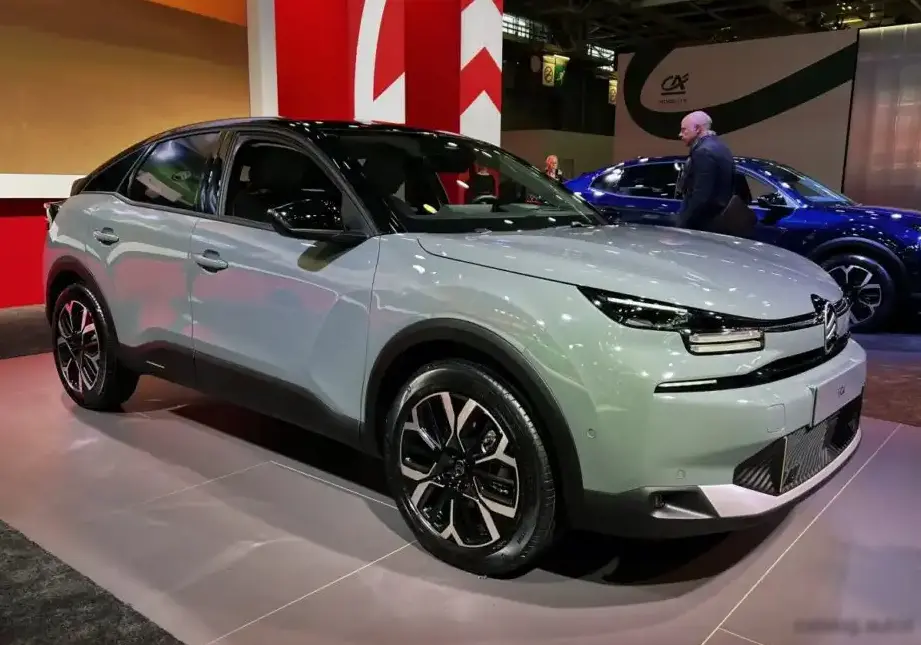
The Citroen C4 III Phase II, specifically the 1.2 PureTech 100 hp Mild Hybrid e-DCS variant, represents a significant update to Citroen’s compact offering, launched in October 2024 and running through March 2025. This model falls within the third generation of the C4 (internally designated as B71), which debuted in 2020, blending elements of a traditional hatchback with SUV styling cues. The Phase II refresh brought styling updates and a focus on enhanced efficiency, with the 1.2L Mild Hybrid being a key component of that strategy. Positioned as a mid-range option within the C4 lineup, it aimed to provide a balance between affordability, fuel economy, and acceptable performance for everyday driving.
Technical Specifications
| Brand | Citroen |
| Model | C4 |
| Generation | C4 III (Phase II, 2024) |
| Type (Engine) | 1.2 (100 Hp) Mild Hybrid e-DCS |
| Start of production | October, 2024 |
| End of production | March, 2025 |
| Powertrain Architecture | MHEV (Mild Hybrid Electric Vehicle) |
| Body type | Coupe, SUV |
| Seats | 5 |
| Doors | 5 |
| Fuel consumption at Low speed (WLTP) | 4.1 l/100 km (57.4 US mpg) |
| Fuel consumption at Medium speed (WLTP) | 4.5 l/100 km (52.3 US mpg) |
| Fuel consumption at high speed (WLTP) | 4.3 l/100 km (54.7 US mpg) |
| Fuel consumption at very high speed (WLTP) | 5.7 l/100 km (41.3 US mpg) |
| Combined fuel consumption (WLTP) | 4.8 l/100 km (49 US mpg) |
| CO2 emissions (WLTP) | 108 g/km |
| Fuel Type | Petrol (Gasoline) |
| Acceleration 0 – 100 km/h | 10.7 sec |
| Acceleration 0 – 62 mph | 10.7 sec |
| Acceleration 0 – 60 mph | 10.2 sec |
| Maximum speed | 192 km/h (119.3 mph) |
| Emission standard | Euro 6e |
| Weight-to-power ratio | 13.2 kg/Hp |
| Weight-to-torque ratio | 6.5 kg/Nm |
| Gross battery capacity | 0.89 kWh |
| Net (usable) battery capacity | 0.432 kWh |
| Battery voltage | 48 V |
| Battery technology | Lithium-ion (Li-Ion) |
| Electric motor power | 28 Hp |
| Electric motor Torque | 55 Nm (40.57 lb.-ft.) |
| Power | 100 Hp @ 5500 rpm |
| Torque | 205 Nm @ 1750 rpm (151.2 lb.-ft. @ 1750 rpm) |
| Engine displacement | 1199 cm3 (73.17 cu. in.) |
| Number of cylinders | 3 |
| Cylinder Bore | 75 mm (2.95 in.) |
| Piston Stroke | 90.5 mm (3.56 in.) |
| Kerb Weight | 1324-1397 kg (2918.92 – 3079.86 lbs.) |
| Max. weight | 1805-1810 kg (3979.34 – 3990.37 lbs.) |
| Trunk (boot) space – minimum | 380 l (13.42 cu. ft.) |
| Trunk (boot) space – maximum | 1250 l (44.14 cu. ft.) |
| Fuel tank capacity | 44 l (11.62 US gal) |
| Number of gears | 6 |
| Gearbox type | automatic transmission e-DCS |
Powertrain & Engine Architecture
The heart of this C4 variant is the PSA (now Stellantis) 1.2 PureTech three-cylinder gasoline engine, specifically tuned to produce 100 horsepower at 5500 rpm and 205 Nm (151.2 lb-ft) of torque at 1750 rpm. This engine utilizes direct fuel injection and a turbocharger with an intercooler to enhance efficiency and power output. The ‘e-DCS’ designation refers to the dual-clutch six-speed automatic transmission, which is paired with a 48-volt mild hybrid system. This system incorporates a small electric motor and battery pack (0.89 kWh gross, 0.432 kWh net) located under the front seats. The mild hybrid system provides engine start-stop functionality, regenerative braking, and a limited amount of electric assistance during acceleration, improving fuel economy and reducing emissions. The engine itself features a DOHC valvetrain and adheres to Euro 6e emission standards.
Driving Characteristics
The 1.2L 100 hp automatic C4 offers a comfortable, if not particularly exhilarating, driving experience. Acceleration from 0-100 km/h (0-62 mph) takes approximately 10.7 seconds, making it suitable for urban and suburban commuting. The e-DCS transmission provides smooth gear changes, although it can occasionally feel hesitant during quick acceleration. The mild hybrid system contributes to a refined start-stop experience and a slight boost during initial acceleration. Compared to the more powerful 1.5 BlueHDi diesel or the 1.6 PureTech gasoline variants, this model prioritizes fuel efficiency over outright performance. The gear ratios are tuned for economy, meaning the engine can feel strained when climbing hills or overtaking at higher speeds.
Equipment & Trim Levels
The 1.2 PureTech 100 hp Mild Hybrid e-DCS typically came equipped with a reasonable level of standard features. These included air conditioning, a 10-inch touchscreen infotainment system with Apple CarPlay and Android Auto compatibility, digital instrument cluster, and a suite of safety features such as automatic emergency braking, lane departure warning, and traffic sign recognition. Higher trim levels offered additional features like automatic climate control, a panoramic sunroof, leather upholstery, and advanced driver-assistance systems. Interior upholstery was generally cloth, with options for upgraded materials on higher trims. The dashboard layout was modern and minimalist, emphasizing the touchscreen interface.
Chassis & Braking
The C4 III utilizes a McPherson strut front suspension and a torsion beam rear suspension. This setup provides a comfortable ride quality, absorbing bumps and imperfections in the road effectively. The front brakes are ventilated discs, while the rear brakes are discs. The steering is electric power-assisted, offering light and precise control. Stabilizer bars are fitted to both the front and rear axles to reduce body roll during cornering. The weight of the vehicle (1324-1397 kg) is relatively moderate, contributing to manageable handling characteristics.
Market Reception & Comparison
The Citroen C4 III 1.2 PureTech 100 hp Mild Hybrid e-DCS was generally well-received by critics for its fuel efficiency and comfortable ride. However, some reviewers noted the engine’s lack of outright power and the occasional hesitation of the e-DCS transmission. Compared to the diesel variants, the 1.2L offered lower running costs but less torque. Against the more powerful gasoline engines, it provided better fuel economy but slower acceleration. Its main competitors included the Volkswagen Golf, Ford Focus, and Peugeot 308, all of which offered similar levels of equipment and performance.
Legacy
The 1.2 PureTech engine, while generally reliable, has been subject to some reports of timing chain issues in certain applications. Regular maintenance, including oil changes and adherence to the manufacturer’s service schedule, is crucial for ensuring the longevity of this powertrain. The mild hybrid system has proven to be relatively robust, contributing to improved fuel economy and reduced emissions. In the used car market, this variant represents a good value proposition for buyers seeking a fuel-efficient and comfortable compact car. Its blend of practicality, affordability, and modern technology makes it a competitive option in its segment.