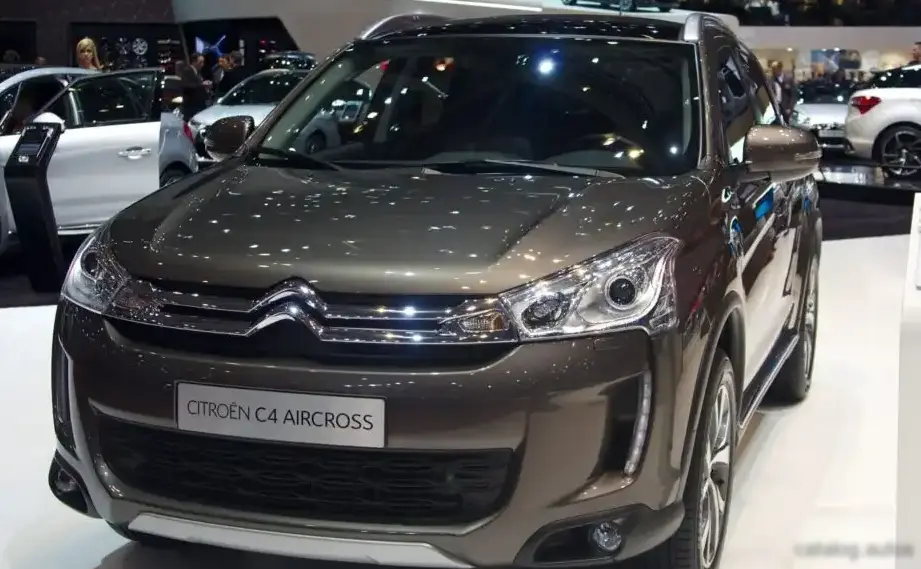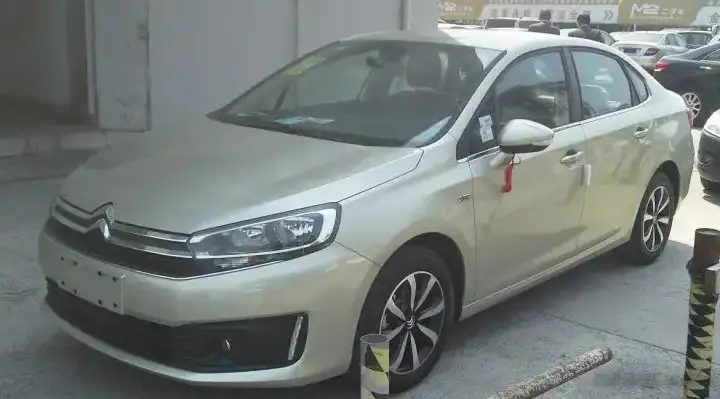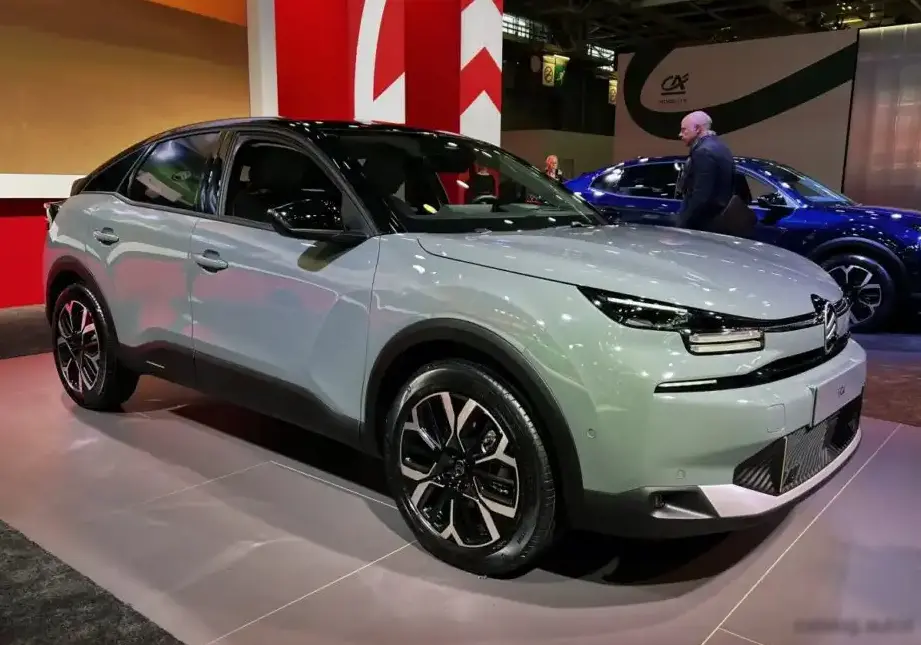
The Citroën C4 III Phase II, specifically the 1.2 (110 hp) Mild Hybrid e-DCS variant, represents a significant evolution in Citroën’s compact vehicle lineup. Introduced in March 2025, this model blends a traditional internal combustion engine with a 48-volt mild hybrid system, aiming to improve fuel efficiency and reduce emissions while maintaining a comfortable driving experience. Positioned as a mid-range offering within the C4 III range, it slots between the lower-powered petrol engines and the plug-in hybrid variants. The C4 III itself is built on the Stellantis CMP (Common Modular Platform) and is marketed as a crossover, blurring the lines between traditional hatchback and SUV designs.
Technical Specifications
| Brand | Citroen |
| Model | C4 |
| Generation | C4 III (Phase II, 2024) |
| Type (Engine) | 1.2 (110 Hp) Mild Hybrid e-DCS |
| Start of production | March, 2025 |
| Powertrain Architecture | MHEV (Mild Hybrid Electric Vehicle) |
| Body type | Coupe, SUV |
| Seats | 5 |
| Doors | 5 |
| Fuel consumption at Low speed (WLTP) | 4.1 l/100 km (57.4 US mpg, 68.9 UK mpg, 24.4 km/l) |
| Fuel consumption at Medium speed (WLTP) | 4.5 l/100 km (52.3 US mpg, 62.8 UK mpg, 22.2 km/l) |
| Fuel consumption at high speed (WLTP) | 4.3 l/100 km (54.7 US mpg, 65.7 UK mpg, 23.3 km/l) |
| Fuel consumption at very high speed (WLTP) | 5.7 l/100 km (41.3 US mpg, 49.6 UK mpg, 17.5 km/l) |
| Combined fuel consumption (WLTP) | 4.8 l/100 km (49 US mpg, 58.9 UK mpg, 20.8 km/l) |
| CO2 emissions (WLTP) | 108 g/km |
| Fuel Type | Petrol (Gasoline) |
| Acceleration 0 – 100 km/h | 10.7 sec |
| Acceleration 0 – 62 mph | 10.7 sec |
| Acceleration 0 – 60 mph | 10.2 sec |
| Maximum speed | 191 km/h (118.68 mph) |
| Emission standard | Euro 6e |
| Weight-to-power ratio | 12.1 kg/Hp, 82.8 Hp/tonne |
| Weight-to-torque ratio | 6.5 kg/Nm, 154.4 Nm/tonne |
| Gross battery capacity | 0.89 kWh |
| Battery voltage | 48 V |
| Battery technology | Lithium-ion (Li-Ion) |
| Battery location | Under the front seats |
| Electric motor power | 21 Hp @ 4264 rpm (51 Nm / 37.62 lb.-ft.) |
| Electric motor location | Integrated into the transmission |
| Electric motor type | Synchronous |
| System power | 110 Hp |
| System torque | 205 Nm @ 1750 rpm (151.2 lb.-ft. @ 1750 rpm) |
| Power | 101 Hp @ 5500 rpm |
| Torque | 205 Nm @ 1750 rpm (151.2 lb.-ft. @ 1750 rpm) |
| Engine layout | Front, Transverse |
| Engine Model/Code | HN09 |
| Engine displacement | 1199 cm3 (73.17 cu. in.) |
| Number of cylinders | 3 |
| Engine configuration | Inline |
| Cylinder Bore | 75 mm (2.95 in.) |
| Piston Stroke | 90.5 mm (3.56 in.) |
| Number of valves per cylinder | 4 |
| Fuel injection system | Direct injection |
| Engine aspiration | Turbocharger, Intercooler |
| Engine oil capacity | 3.5 l (3.7 US qt | 3.08 UK qt) |
| Kerb Weight | 1328-1400 kg (2927.74 – 3086.47 lbs.) |
| Max. weight | 1805 kg (3979.34 lbs.) |
| Max load | 405-477 kg (892.87 – 1051.6 lbs.) |
| Trunk (boot) space – minimum | 380 l (13.42 cu. ft.) |
| Trunk (boot) space – maximum | 1250 l (44.14 cu. ft.) |
| Fuel tank capacity | 44 l (11.62 US gal | 9.68 UK gal) |
| Permitted trailer load with brakes (12%) | 1000 kg (2204.62 lbs.) |
| Permitted trailer load without brakes | 700 kg (1543.24 lbs.) |
| Permitted towbar download | 61 kg (134.48 lbs.) |
| Length | 4350 mm (171.26 in.) |
| Width | 1800 mm (70.87 in.) |
| Width with mirrors folded | 1834 mm (72.2 in.) |
| Width including mirrors | 2032 mm (80 in.) |
| Height | 1525 mm (60.04 in.) |
| Wheelbase | 2670 mm (105.12 in.) |
| Front track | 1545-1560 mm (60.83 – 61.42 in.) |
| Rear (Back) track | 1545-1560 mm (60.83 – 61.42 in.) |
| Front overhang | 870 mm (34.25 in.) |
| Rear overhang | 810 mm (31.89 in.) |
| Drivetrain Architecture | Front wheel drive. MHEV. ICE and electric motor drive the front wheels. |
| Drive wheel | Front wheel drive |
| Number of gears and type of gearbox | 6 gears, automatic transmission e-DCS |
| Front suspension | Independent, type McPherson with coil spring and anti-roll bar |
| Rear suspension | Coil spring, Torsion |
| Front brakes | Ventilated discs |
| Rear brakes | Disc |
Powertrain & Engine Architecture
At the heart of the C4 III 1.2 Mild Hybrid e-DCS lies the HN09, a 1.2-liter, three-cylinder turbocharged gasoline engine. This engine produces 101 horsepower at 5500 rpm and 205 Nm (151.2 lb-ft) of torque at 1750 rpm. The engine utilizes direct fuel injection and a turbocharger with an intercooler to enhance efficiency and power output. The “Mild Hybrid” aspect comes from a 48-volt electrical system and a small electric motor (21 hp and 51 Nm of torque) integrated with the e-DCS (electric Dual-Clutch System) six-speed automatic transmission. This system allows for regenerative braking, capturing energy during deceleration to recharge the 0.89 kWh lithium-ion battery located under the front seats. The electric motor provides a power boost during acceleration and enables a limited electric-only driving mode at low speeds. The e-DCS transmission is a key component, offering smooth gear changes and contributing to the overall efficiency of the powertrain.
Driving Characteristics
The 1.2-liter Mild Hybrid powertrain delivers a balanced driving experience. While not exceptionally quick – achieving 0-60 mph in approximately 10.2 seconds – it provides adequate performance for everyday driving. The electric motor assist noticeably improves responsiveness during acceleration, particularly from a standstill. The e-DCS transmission shifts smoothly, and the mild hybrid system contributes to a quieter cabin experience, especially during low-speed maneuvers. Compared to the standard 1.2-liter petrol version without the hybrid system, the 1.2 Mild Hybrid offers improved fuel economy and slightly better acceleration. It doesn’t match the performance of the more powerful petrol engines or the plug-in hybrid variants, but it provides a more refined and economical alternative.
Equipment & Trim Levels
The 1.2 (110 hp) Mild Hybrid e-DCS trim typically includes a generous level of standard equipment. This generally encompasses features like a 10-inch touchscreen infotainment system with Apple CarPlay and Android Auto compatibility, automatic climate control, rear parking sensors, and a suite of safety features including lane departure warning, automatic emergency braking, and traffic sign recognition. Higher trim levels add features such as a digital instrument cluster, advanced driver-assistance systems (adaptive cruise control, blind-spot monitoring), and premium interior materials. Interior upholstery is typically cloth, with options for leather or Alcantara on higher trims. Dashboard design is modern and minimalist, emphasizing the touchscreen interface.
Chassis & Braking
The C4 III utilizes a McPherson strut front suspension and a torsion beam rear suspension. This setup provides a comfortable ride quality, absorbing bumps and imperfections in the road effectively. The front brakes are ventilated discs, while the rear brakes are solid discs. The steering is electric power-assisted, offering a light and responsive feel. Stabilizer bars are fitted to both the front and rear axles to reduce body roll during cornering. The suspension tuning is geared towards comfort rather than sporty handling, making it well-suited for everyday driving and long journeys.
Market Reception & Comparison
The Citroën C4 III 1.2 Mild Hybrid e-DCS has been generally well-received by automotive critics. It’s praised for its fuel efficiency, comfortable ride, and refined powertrain. Compared to the non-hybrid 1.2-liter petrol version, the mild hybrid offers a noticeable improvement in fuel economy, making it an attractive option for drivers seeking lower running costs. Against the plug-in hybrid variant, it offers a lower purchase price but lacks the extended electric-only range. Reliability reports are still emerging, but the HN09 engine has proven to be relatively robust in other Stellantis vehicles.
Legacy
The Citroën C4 III 1.2 Mild Hybrid e-DCS represents a step towards electrification for the Citroën brand. While not a fully electric vehicle, it demonstrates Citroën’s commitment to reducing emissions and improving fuel efficiency. The powertrain’s long-term reliability remains to be fully assessed, but the combination of a proven engine architecture and a relatively simple mild hybrid system suggests a reasonable level of durability. On the used car market, this variant is expected to hold its value well due to its fuel efficiency and the growing demand for hybrid vehicles.