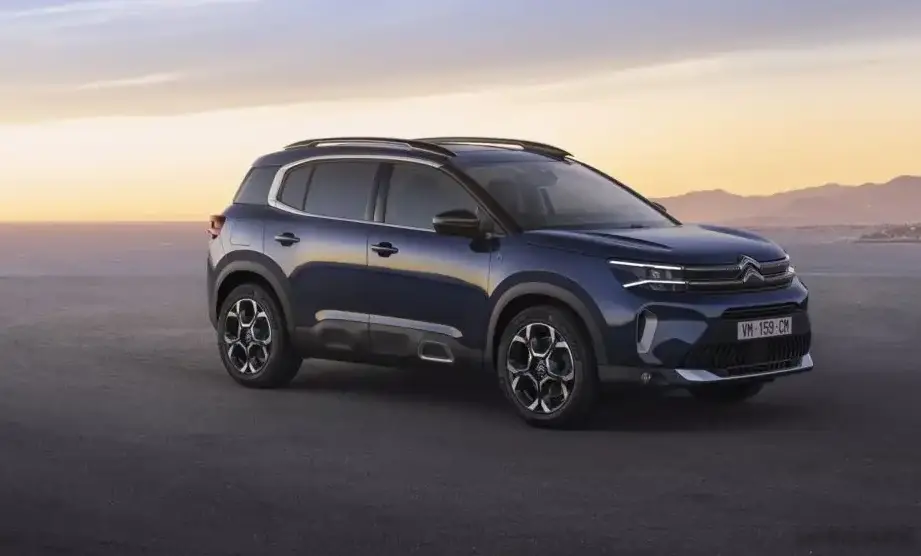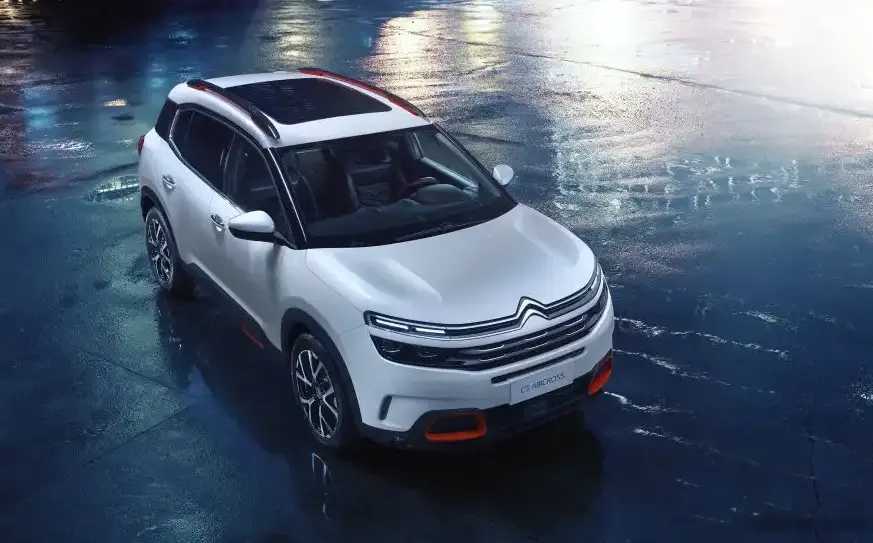
The Citroën C5 Aircross Hybrid 225, launched in December 2019 and produced through February 2022, represents Citroën’s entry into the plug-in hybrid SUV market. Positioned as a mid-to-upper trim level within the first generation (Phase I) C5 Aircross range, this variant combined a 1.6-liter turbocharged gasoline engine with an electric motor, offering a combined system output of 225 horsepower. It was designed to appeal to buyers seeking improved fuel efficiency and the ability to drive short distances on electric power alone, while still maintaining the practicality and space of a conventional SUV. The C5 Aircross itself was a key model for Citroën, intended to revitalize the brand’s presence in the competitive European C-segment SUV market.
Technical Specifications
| Brand | Citroen |
| Model | C5 Aircross |
| Generation | C5 Aircross I (Phase I, 2017) |
| Type (Engine) | Hybrid 225 (225 Hp) Plug-in Hybrid Automatic |
| Start of production | December, 2019 |
| End of production | February, 2022 |
| Powertrain Architecture | PHEV (Plug-in Hybrid Electric Vehicle) |
| Body type | SUV |
| Seats | 5 |
| Doors | 5 |
| Combined fuel consumption (WLTP) | 1.4-1.5 l/100 km (168 – 156.8 US mpg, 201.8 – 188.3 UK mpg, 71.4 – 66.7 km/l) |
| CO2 emissions (WLTP) | 31-33 g/km |
| Fuel consumption (economy) – combined | 1.8 l/100 km (130.7 US mpg, 156.9 UK mpg, 55.6 km/l) |
| CO2 emissions | 39 g/km |
| Fuel Type | Petrol / electricity |
| Acceleration 0 – 100 km/h | 8.9 sec |
| Acceleration 0 – 62 mph | 8.9 sec |
| Acceleration 0 – 60 mph | 8.5 sec |
| Maximum speed | 225 km/h (139.81 mph) |
| Emission standard | Euro 6d |
| Weight-to-power ratio | 7.8 kg/Hp, 128.6 Hp/tonne |
| Weight-to-torque ratio | 4.9 kg/Nm, 205.7 Nm/tonne |
| Gross battery capacity | 13.2 kWh |
| Net (usable) battery capacity | 11.5 kWh |
| Battery voltage | 200 V |
| Battery technology | Lithium-ion (Li-Ion) |
| Battery location | Below the floor, under the rear seats |
| All-electric range (WLTP) | 50 km (31.07 mi) / 60 km (37.28 mi) |
| Average Energy consumption (WLTP) | 15.6-15.9 kWh/100 km (25.11 – 25.59 kWh/100 mi, 134 – 132 MPGe, 6.4 – 6.3 km/kWh, 4 – 3.9 mi/kWh) |
| Max speed (electric) | 135 km/h (83.89 mph) |
| Electric motor power | 110 Hp @ 2500 rpm (320 Nm @ 500-2500 rpm / 236.02 lb.-ft. @ 500-2500 rpm) |
| System power | 225 Hp |
| System torque | 360 Nm (265.52 lb.-ft.) |
| Power | 181 Hp @ 5500 rpm (113.3 Hp/l) |
| Torque | 300 Nm @ 3000 rpm (221.27 lb.-ft. @ 3000 rpm) |
| Engine layout | Front, Transverse |
| Engine Model/Code | EP6FADTXD |
| Engine displacement | 1598 cm3 (97.52 cu. in.) |
| Number of cylinders | 4 |
| Engine configuration | Inline |
| Cylinder Bore | 77 mm (3.03 in.) |
| Piston Stroke | 85.8 mm (3.38 in.) |
| Compression ratio | 10.2:1 |
| Number of valves per cylinder | 4 |
| Fuel injection system | Direct injection |
| Engine aspiration | Turbocharger, Intercooler |
| Valvetrain | DOHC |
| Engine oil capacity | 4.25 l (4.49 US qt | 3.74 UK qt) |
| Kerb Weight | 1750 kg (3858.09 lbs.) |
| Trunk (boot) space – minimum | 460 l (16.24 cu. ft.) |
| Trunk (boot) space – maximum | 1510 l (53.33 cu. ft.) |
| Fuel tank capacity | 43 l (11.36 US gal | 9.46 UK gal) |
| Permitted trailer load with brakes (12%) | 1300 kg (2866.01 lbs.) |
| Permitted trailer load without brakes | 750 kg (1653.47 lbs.) |
| Permitted towbar download | 65 kg (143.3 lbs.) |
| Length | 4500 mm (177.17 in.) |
| Width | 1969 mm (77.52 in.) |
| Width including mirrors | 2099 mm (82.64 in.) |
| Height | 1689 mm (66.5 in.) |
| Wheelbase | 2730 mm (107.48 in.) |
| Front track | 1579-1601 mm (62.17 – 63.03 in.) |
| Rear (Back) track | 1608-1630 mm (63.31 – 64.17 in.) |
| Front overhang | 917 mm (36.1 in.) |
| Rear overhang | 853 mm (33.58 in.) |
| Ride height (ground clearance) | 230 mm (9.06 in.) |
| Minimum turning circle (turning diameter) | 10.7 m (35.1 ft.) |
| Drivetrain Architecture | The Internal combustion engine (ICE) and electric motor drive the front wheels of the car with the ability to work in full electric or mixed mode. |
| Drive wheel | Front wheel drive |
| Number of gears and type of gearbox | 8 gears, automatic transmission |
| Front suspension | Independent type McPherson |
| Rear suspension | Hydraulic elements |
| Front brakes | Ventilated discs |
| Rear brakes | Disc |
| Assisting systems | ABS (Anti-lock braking system) |
| Tires size | 215/65 R17; 225/55 R18; 205/55 R19 |
| Wheel rims size | 17; 18; 19 |
Powertrain & Engine Architecture
The C5 Aircross Hybrid 225 utilizes a powertrain centered around Citroën’s EP6FADTXD 1.6-liter turbocharged four-cylinder gasoline engine. This engine, part of the PureTech family, produces 181 horsepower and 300 Nm (221 lb-ft) of torque. It features direct fuel injection and a twin-scroll turbocharger for improved responsiveness. The engine is paired with an 8-speed automatic transmission (Aisin D8) which is known for its smooth shifting and efficiency. An 80 kW (110 hp) electric motor, producing 320 Nm (236 lb-ft) of torque, is integrated between the engine and the transmission. This configuration allows for both electric-only driving and combined operation. The 13.2 kWh lithium-ion battery pack is located under the rear seats, minimizing impact on passenger space. The hybrid system allows for three driving modes: Zero Emissions (electric only), Hybrid, and Sport, adjusting the powertrain’s behavior for optimal efficiency or performance.
Driving Characteristics
The Hybrid 225 offers a noticeably different driving experience compared to the standard gasoline-powered C5 Aircross variants. In electric mode, the vehicle provides near-silent acceleration and a smooth, refined ride. The 8-speed automatic transmission is well-matched to the hybrid system, providing seamless gear changes. The combined system output of 225 hp delivers brisk acceleration, with a 0-60 mph time of around 8.5 seconds. While not a sports SUV, the Hybrid 225 offers sufficient power for everyday driving and highway overtaking. The electric motor’s instant torque provides a boost in responsiveness, particularly at lower speeds. Compared to the 1.2-liter PureTech engine options, the Hybrid 225 feels significantly more powerful. However, the added weight of the battery pack (approximately 200 kg) does slightly impact handling agility compared to lighter models.
Equipment & Trim Levels
The C5 Aircross Hybrid 225 was typically offered in higher trim levels, often including features like Citroën’s Advanced Comfort seats, an 8-inch touchscreen infotainment system with Apple CarPlay and Android Auto compatibility, and a digital instrument cluster. Standard safety equipment included automatic emergency braking, lane departure warning, and traffic sign recognition. Optional extras included a panoramic sunroof, a hands-free power tailgate, and a premium sound system. Interior upholstery was typically a combination of cloth and leather, with a focus on comfort and practicality. The dashboard layout was consistent with other C5 Aircross models, featuring a clean and modern design.
Chassis & Braking
The C5 Aircross Hybrid 225 utilizes a McPherson strut front suspension and a torsion beam rear suspension, optimized for ride comfort. The suspension setup is tuned to absorb bumps and provide a smooth ride, even on uneven surfaces. The vehicle is equipped with ventilated disc brakes at the front and solid discs at the rear. ABS (Anti-lock Braking System) is standard, along with electronic brake-force distribution and emergency brake assist. The added weight of the hybrid components necessitated slightly stiffer spring rates compared to the standard C5 Aircross models, but the overall focus remained on comfort.
Market Reception & Comparison
The C5 Aircross Hybrid 225 was generally well-received by automotive critics, who praised its fuel efficiency, comfortable ride, and refined driving experience. However, some reviewers noted that the electric-only range was relatively limited compared to some competitors. Compared to the gasoline-powered C5 Aircross variants, the Hybrid 225 offered significantly improved fuel economy, particularly for urban driving. The hybrid model also benefited from lower CO2 emissions, making it eligible for government incentives in some markets. Against rivals like the Peugeot 3008 Hybrid and the Toyota C-HR Hybrid, the C5 Aircross Hybrid 225 offered a compelling combination of practicality, comfort, and efficiency.
Legacy
The Citroën C5 Aircross Hybrid 225 represented an important step for Citroën in its transition towards electrification. While production was relatively short-lived, the model helped establish the brand’s presence in the growing plug-in hybrid SUV segment. The powertrain, while not without its complexities, has proven to be reasonably reliable in real-world use. On the used car market, the Hybrid 225 commands a premium over the standard gasoline models, reflecting its fuel efficiency and environmental benefits. The C5 Aircross Hybrid 225 remains a viable option for buyers seeking a comfortable, practical, and efficient SUV with the added benefit of electric driving capability.