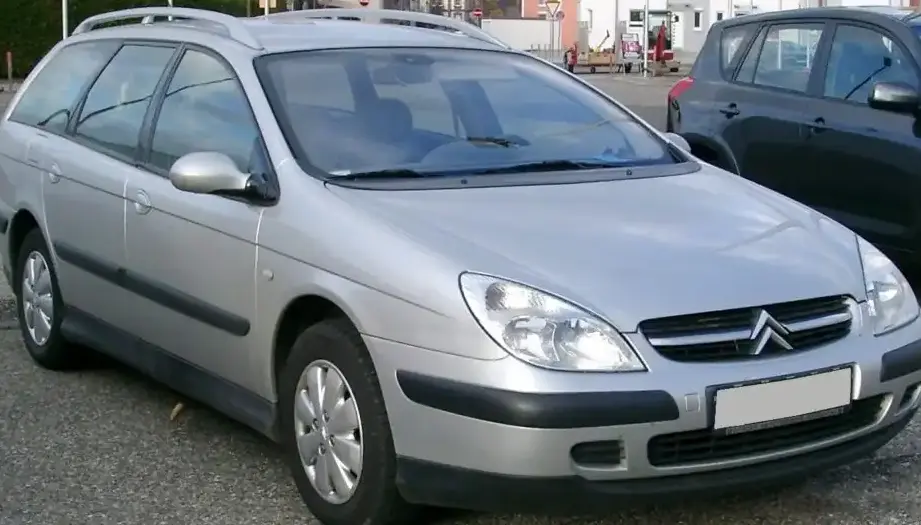
The Citroën C5 I Break (Phase I), specifically the 3.0i V6 24V Carlsson variant produced between 2003 and 2004, represents a unique offering within the first generation of the C5 estate (Break) model line. Positioned as a premium trim, it combined a powerful V6 engine with a four-speed automatic transmission, aiming to deliver a blend of performance and comfort. This variant was primarily marketed in Europe, where large, comfortable estates were – and remain – popular, offering a more luxurious alternative to mainstream family cars. The C5 I Break, launched in 2000, was Citroën’s attempt to recapture the large family car market, building on the success of its predecessors while incorporating advanced technology for the time, particularly in its hydropneumatic suspension system.
Technical Specifications
| Brand | Citroën |
| Model | C5 |
| Generation | C5 I Break (Phase I, 2000) |
| Type (Engine) | 3.0i V6 24V Carlsson (235 Hp) |
| Start of production | 2003 |
| End of production | 2004 |
| Powertrain Architecture | Internal Combustion engine |
| Body type | Station wagon (estate) |
| Seats | 5 |
| Doors | 5 |
| Fuel Type | Petrol (Gasoline) |
| Acceleration 0 – 100 km/h | 8.5 sec |
| Acceleration 0 – 62 mph | 8.5 sec |
| Acceleration 0 – 60 mph | 8.1 sec |
| Maximum speed | 245 km/h (152.24 mph) |
| Weight-to-power ratio | 6.9 kg/Hp, 145.2 Hp/tonne |
| Weight-to-torque ratio | 5.1 kg/Nm, 197.7 Nm/tonne |
| Power | 235 Hp @ 6000 rpm |
| Power per litre | 79.8 Hp/l |
| Torque | 320 Nm @ 3750 rpm (236.02 lb.-ft. @ 3750 rpm) |
| Engine layout | Front, Transverse |
| Engine Model/Code | XFX ES9J4S |
| Engine displacement | 2946 cm3 (179.78 cu. in.) |
| Number of cylinders | 6 |
| Engine configuration | V-engine |
| Cylinder Bore | 87 mm (3.43 in.) |
| Piston Stroke | 82.6 mm (3.25 in.) |
| Compression ratio | 10.9:1 |
| Number of valves per cylinder | 4 |
| Fuel injection system | Multi-port manifold injection |
| Engine aspiration | Naturally aspirated engine |
| Engine oil capacity | 5.3 l (5.6 US qt | 4.66 UK qt) |
| Coolant | 14 l (14.79 US qt | 12.32 UK qt) |
| Kerb Weight | 1619 kg (3569.28 lbs) |
| Max. weight | 2179 kg (4803.87 lbs) |
| Max load | 560 kg (1234.59 lbs) |
| Trunk (boot) space – minimum | 563 l (19.88 cu. ft.) |
| Trunk (boot) space – maximum | 1658 l (58.55 cu. ft.) |
| Fuel tank capacity | 66 l (17.44 US gal | 14.52 UK gal) |
| Length | 4760 mm (187.4 in.) |
| Width | 1770 mm (69.69 in.) |
| Width including mirrors | 2100 mm (82.68 in.) |
| Height | 1520-1560 mm (59.84 – 61.42 in.) |
| Wheelbase | 2750 mm (108.27 in.) |
| Front track | 1540 mm (60.63 in.) |
| Rear (Back) track | 1510 mm (59.45 in.) |
| Front overhang | 970 mm (38.19 in.) |
| Rear overhang | 1040 mm (40.94 in.) |
| Minimum turning circle | 12.46 m (40.88 ft.) |
| Drivetrain Architecture | Front wheel drive |
| Number of gears and type of gearbox | 4 gears, automatic transmission |
| Front suspension | Independent type McPherson |
| Rear suspension | Semi-independent, coil spring |
| Front brakes | Ventilated discs |
| Rear brakes | Disc |
| Assisting systems | ABS (Anti-lock braking system) |
| Steering type | Steering rack and pinion |
| Power steering | Hydraulic Steering |
| Tires size | 225/40 R18 |
| Wheel rims size | 18 |
Powertrain & Engine Architecture
The heart of the C5 I Break 3.0i V6 Carlsson is the XFX ES9J4S engine, a 2.9-liter naturally aspirated V6. This engine, part of the ES9J family, was known for its smooth operation and relatively high output for its displacement. It featured a cast iron block and aluminum cylinder heads, with four valves per cylinder operated by double overhead camshafts. Fuel delivery was handled by a multi-port fuel injection system, providing precise control over the air-fuel mixture. The engine produced 235 horsepower at 6000 rpm and 320 Nm (236 lb-ft) of torque at 3750 rpm. This power was delivered to the front wheels through a four-speed automatic transmission. While not the most modern transmission by today’s standards, it was designed to provide smooth shifts and comfortable cruising, aligning with the C5’s focus on ride quality. The four-speed automatic was chosen to provide a more relaxed driving experience compared to the manual options available on other C5 variants.
Driving Characteristics
The 3.0i V6 Automatic C5 Break offered a distinctly different driving experience compared to the lower-powered, four-cylinder versions. Acceleration was brisk, with a 0-60 mph time of around 8.1 seconds, making it one of the quicker estate cars of its time. The automatic transmission, while smooth, did result in some power loss compared to the manual gearbox. Gear ratios were tuned for comfortable cruising rather than outright performance. The engine provided ample torque for effortless overtaking and maintaining highway speeds. However, the car’s weight (1619 kg / 3569 lbs) was noticeable, particularly during spirited driving. The C5’s renowned hydropneumatic suspension system played a crucial role in the driving experience, providing a remarkably smooth and comfortable ride, even on uneven surfaces. This suspension setup, combined with the V6 engine, made the C5 a capable long-distance cruiser.
Equipment & Trim Levels
The Carlsson trim level, even within the Phase I C5 range, represented a step up in terms of standard equipment. Typically, these models included features such as leather upholstery, automatic climate control, power windows and mirrors, and a high-quality audio system. Alloy wheels were standard, and the Carlsson trim often featured unique interior trim details. Optional extras could include a sunroof, satellite navigation (a relatively new feature at the time), and upgraded audio systems. The interior design focused on comfort and ergonomics, with supportive seats and a well-laid-out dashboard.
Chassis & Braking
The C5 I Break utilized an independent McPherson strut suspension at the front and a semi-independent coil spring suspension at the rear. This setup, combined with the hydropneumatic system, provided excellent ride comfort and handling. The braking system consisted of ventilated discs at the front and solid discs at the rear, providing adequate stopping power for the car’s weight and performance. Anti-lock braking system (ABS) was standard, enhancing safety. The steering was rack and pinion with hydraulic power assistance, offering precise and responsive control.
Market Reception & Comparison
The C5 I Break 3.0i V6 Automatic was generally well-received by automotive critics. It was praised for its comfortable ride, spacious interior, and refined engine. However, some critics noted that the four-speed automatic transmission felt dated compared to newer transmissions with more gears. Compared to the 1.8L and 2.0L four-cylinder versions, the V6 offered significantly more performance but came at a higher price and with slightly lower fuel economy. The V6 was also more expensive to maintain due to the increased complexity of the engine and its associated components. Compared to rivals like the Volvo V70 and Audi A6 Avant, the C5 offered a unique blend of comfort, style, and value.
Legacy
The Citroën C5 I Break 3.0i V6 Carlsson, while not a high-volume seller, has developed a following among enthusiasts who appreciate its unique character and comfortable ride. The ES9J4S V6 engine is generally considered reliable, although regular maintenance is essential. The hydropneumatic suspension system requires specialized knowledge and can be expensive to repair if neglected. Today, these cars are relatively affordable on the used market, but finding well-maintained examples can be challenging. The C5 I Break 3.0i V6 represents a high point in Citroën’s history, showcasing the brand’s commitment to innovation and comfort.