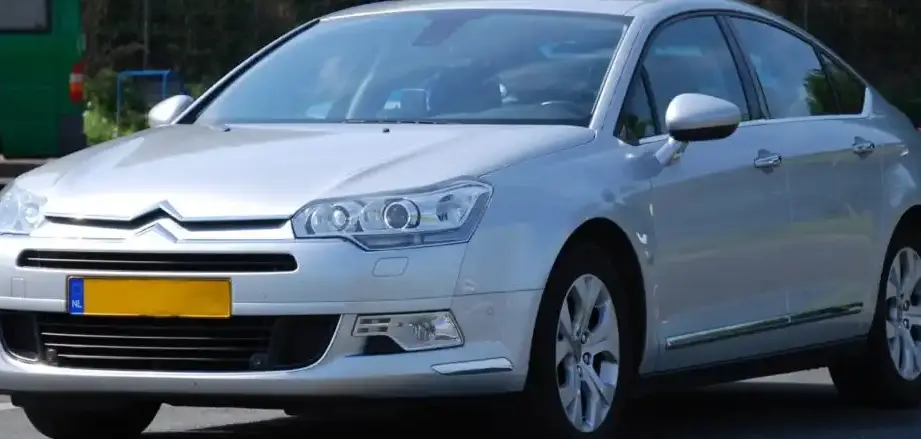
The Citroën C5 II, launched in 2008, represented a significant evolution for Citroën’s flagship sedan. The Phase I models, produced from 2008 through 2012, built upon the success of the original C5, offering improved comfort, technology, and a wider range of engine options. Among these, the 1.6 HDi 110 horsepower variant with a manual transmission, introduced around 2010, occupied an important position as an entry-level diesel offering, aimed at maximizing fuel efficiency and providing a balance between performance and affordability. This model was primarily marketed in Europe, where diesel engines held a substantial market share due to favorable taxation and fuel economy.
Technical Specifications
| Brand | Citroen |
| Model | C5 |
| Generation | C5 II (Phase I, 2008) |
| Type (Engine) | 1.6 HDi (110 Hp) FAP |
| Start of production | 2010 |
| End of production | 2012 |
| Powertrain Architecture | Internal Combustion engine |
| Body type | Sedan |
| Seats | 5 |
| Doors | 4 |
| Fuel consumption (urban) | 6.6 l/100 km (35.6 US mpg, 42.8 UK mpg, 15.2 km/l) |
| Fuel consumption (extra urban) | 4.6 l/100 km (51.1 US mpg, 61.4 UK mpg, 21.7 km/l) |
| Fuel consumption (combined) | 5.3 l/100 km (44.4 US mpg, 53.3 UK mpg, 18.9 km/l) |
| CO2 emissions | 140 g/km |
| Fuel Type | Diesel |
| Acceleration 0 – 100 km/h | 11.6 sec |
| Acceleration 0 – 62 mph | 11.6 sec |
| Acceleration 0 – 60 mph | 11 sec |
| Maximum speed | 190 km/h (118.06 mph) |
| Emission standard | Euro 5 |
| Weight-to-power ratio | 13.7 kg/Hp, 73 Hp/tonne |
| Weight-to-torque ratio | 6 kg/Nm, 166 Nm/tonne |
| Power | 110 Hp @ 3500 rpm |
| Power per litre | 70.5 Hp/l |
| Torque | 250 Nm @ 1750 rpm (184.39 lb.-ft. @ 1750 rpm) |
| Engine layout | Front, Transverse |
| Engine Model/Code | 9HL DV6C |
| Engine displacement | 1560 cm3 (95.2 cu. in.) |
| Number of cylinders | 4 |
| Engine configuration | Inline |
| Cylinder Bore | 75 mm (2.95 in.) |
| Piston Stroke | 88.3 mm (3.48 in.) |
| Compression ratio | 18:1 |
| Number of valves per cylinder | 4 |
| Fuel injection system | Diesel Commonrail |
| Engine aspiration | Turbocharger, Intercooler |
| Engine oil capacity | 3.75 l (3.96 US qt | 3.3 UK qt) |
| Coolant | 7.8 l (8.24 US qt | 6.86 UK qt) |
| Kerb Weight | 1506 kg (3320.16 lbs.) |
| Max. weight | 2041 kg (4499.63 lbs.) |
| Max load | 535 kg (1179.47 lbs.) |
| Trunk (boot) space – minimum | 439 l (15.5 cu. ft.) |
| Fuel tank capacity | 71 l (18.76 US gal | 15.62 UK gal) |
| Max. roof load | 80 kg (176.37 lbs.) |
| Permitted trailer load with brakes (12%) | 1100 kg (2425.08 lbs.) |
| Permitted trailer load without brakes | 750 kg (1653.47 lbs.) |
| Permitted towbar download | 55 kg (121.25 lbs.) |
| Length | 4779 mm (188.15 in.) |
| Width | 1860 mm (73.23 in.) |
| Width including mirrors | 2096 mm (82.52 in.) |
| Height | 1451-1458 mm (57.13 – 57.4 in.) |
| Wheelbase | 2815 mm (110.83 in.) |
| Front track | 1586 mm (62.44 in.) |
| Rear (Back) track | 1557 mm (61.3 in.) |
| Front overhang | 1054 mm (41.5 in.) |
| Rear overhang | 910 mm (35.83 in.) |
| Minimum turning circle | 11.7 m (38.39 ft.) |
| Drivetrain Architecture | Front wheel drive |
| Drive wheel | Front wheel drive |
| Number of gears and type of gearbox | 5 gears, manual transmission |
| Front suspension | Double wishbone |
| Rear suspension | Independent multi-link suspension |
| Front brakes | Ventilated discs |
| Rear brakes | Disc |
| Assisting systems | ABS (Anti-lock braking system) |
| Steering type | Steering rack and pinion |
| Power steering | Hydraulic Steering |
| Tires size | 225/60 R16 |
| Wheel rims size | 16 |
Powertrain & Engine Architecture
The C5 II 1.6 HDi utilized the PSA Group’s DV6 engine family, specifically the 9HL (DV6C) variant. This 1.6-liter, four-cylinder diesel engine was a common sight in various Peugeot and Citroën models. It featured a cast iron block and aluminum cylinder head, a configuration chosen for its balance of durability and weight. The engine employed a common rail direct injection system, delivering fuel at extremely high pressures for optimized combustion. A turbocharger with an intercooler was standard, boosting power output and improving torque across a wider rev range. The engine’s valvetrain consisted of two overhead camshafts (DOHC) operating four valves per cylinder. The 110 horsepower output was achieved at 3500 rpm, while peak torque of 250 Nm (184 lb-ft) was available from just 1750 rpm, emphasizing the engine’s focus on low-end drivability. The manual transmission was a five-speed unit, chosen for its simplicity and cost-effectiveness.
Driving Characteristics
The 1.6 HDi 110 hp version of the C5 II offered a comfortable, if not particularly sporty, driving experience. Acceleration from 0-100 km/h (0-62 mph) took around 11.6 seconds, which was adequate for everyday driving but noticeably slower than the more powerful 2.0 HDi or petrol variants. The engine’s strong low-end torque made it well-suited for relaxed cruising and overtaking on highways, but it could feel strained when pushed hard. The five-speed manual transmission was well-matched to the engine’s characteristics, with gear ratios optimized for fuel efficiency. Compared to the 2.0 HDi models, the 1.6 HDi felt less refined and had more noticeable engine noise, particularly at higher speeds. However, the lower weight of the 1.6-liter engine contributed to slightly improved handling and reduced understeer.
Equipment & Trim Levels
The 1.6 HDi 110 hp variant typically represented a mid-range trim level within the C5 II lineup. Standard equipment generally included air conditioning, power windows, central locking, a CD player with MP3 compatibility, and ABS brakes. Higher trim levels added features such as alloy wheels, a multi-function steering wheel, cruise control, and a more sophisticated audio system. Interior upholstery was typically cloth, with options for leather upgrades. The dashboard layout was functional and ergonomically designed, prioritizing ease of use. Optional extras included a navigation system, parking sensors, and a panoramic sunroof.
Chassis & Braking
The C5 II featured a sophisticated chassis design aimed at maximizing ride comfort. The front suspension utilized a double wishbone setup, while the rear employed an independent multi-link system. This configuration provided excellent wheel control and minimized body roll. The 1.6 HDi models typically used ventilated disc brakes at the front and solid discs at the rear. ABS (Anti-lock Braking System) was standard. The steering was a hydraulic power-assisted rack and pinion system, offering a good balance of feel and assistance. Stabilizer bars were fitted to both the front and rear axles to further reduce body roll during cornering.
Market Reception & Comparison
The Citroën C5 II 1.6 HDi 110 hp was generally well-received by automotive critics as a practical and fuel-efficient family sedan. It was praised for its comfortable ride, spacious interior, and low running costs. However, some reviewers criticized its lack of outright performance and its relatively basic interior trim compared to some of its competitors. Compared to the 2.0 HDi models, the 1.6 HDi offered significantly better fuel economy, but at the expense of performance. The 1.6 HDi also proved to be more reliable than some of the more complex engine options in the C5 II range, making it a popular choice in the used car market.
Legacy
The 1.6 HDi engine, in its various iterations, became a mainstay of the PSA Group’s lineup for many years. While later versions of the engine experienced some reliability issues related to the diesel particulate filter (DPF), the earlier 9HL (DV6C) variant found in the C5 II proved to be relatively robust. Today, used examples of the C5 II 1.6 HDi 110 hp remain affordable and represent a good value for buyers seeking a comfortable and economical family car. Regular maintenance, including timely DPF regeneration, is crucial to ensure the long-term reliability of these vehicles.