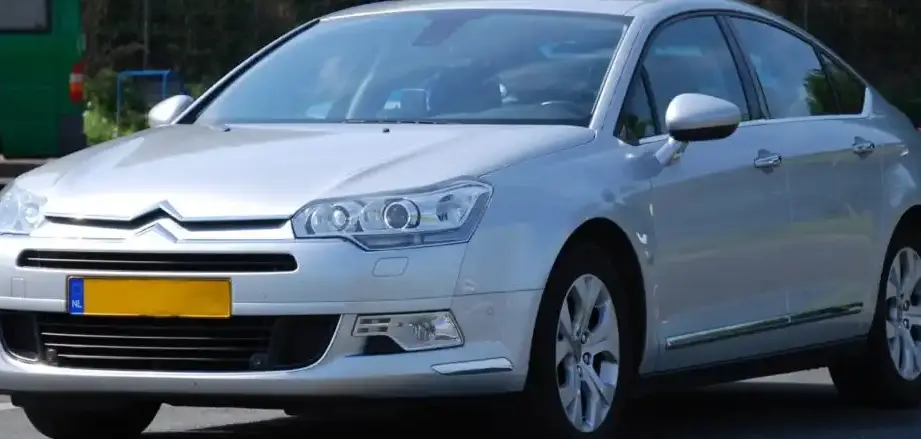
The Citroën C5 II, launched in 2008, represented a significant evolution for Citroën’s flagship sedan. The Phase I models, produced from 2008 to 2010, offered a range of engine and transmission options designed to appeal to a broad European market. Among these, the 1.8 16V variant, producing 125 horsepower, occupied a crucial mid-range position in the lineup. This version, typically paired with a five-speed manual transmission, aimed to balance affordability with reasonable performance and fuel economy, making it a popular choice for family transportation and long-distance cruising. It was built on the PSA Group’s Platform 2, also known as the 1HX0 platform, shared with the Peugeot 407.
Technical Specifications
| Brand | Citroen |
| Model | C5 |
| Generation | C5 II (Phase I, 2008) |
| Type (Engine) | 1.8 16V (125 Hp) |
| Start of production | 2008 |
| End of production | 2010 |
| Powertrain Architecture | Internal Combustion engine |
| Body type | Sedan |
| Seats | 5 |
| Doors | 4 |
| Fuel consumption (urban) | 10.8 l/100 km (21.8 US mpg, 26.2 UK mpg, 9.3 km/l) |
| Fuel consumption (extra urban) | 6.2 l/100 km (37.9 US mpg, 45.6 UK mpg, 16.1 km/l) |
| Fuel consumption (combined) | 7.9 l/100 km (29.8 US mpg, 35.8 UK mpg, 12.7 km/l) |
| CO2 emissions | 188 g/km |
| Fuel Type | Petrol (Gasoline) |
| Acceleration 0 – 100 km/h | 12.2 sec |
| Acceleration 0 – 62 mph | 12.2 sec |
| Acceleration 0 – 60 mph | 11.6 sec |
| Maximum speed | 200 km/h (124.27 mph) |
| Emission standard | Euro 4 |
| Weight-to-power ratio | 12.1 kg/Hp, 82.8 Hp/tonne |
| Weight-to-torque ratio | 8.9 kg/Nm, 112.6 Nm/tonne |
| Power | 125 Hp @ 6000 rpm |
| Power per litre | 71.5 Hp/l |
| Torque | 170 Nm @ 3750 rpm (125.39 lb.-ft. @ 3750 rpm) |
| Engine layout | Front, Transverse |
| Engine Model/Code | 6FY EW7A |
| Engine displacement | 1749 cm3 (106.73 cu. in.) |
| Number of cylinders | 4 |
| Engine configuration | Inline |
| Cylinder Bore | 82.7 mm (3.26 in.) |
| Piston Stroke | 81.4 mm (3.2 in.) |
| Compression ratio | 11:1 |
| Number of valves per cylinder | 4 |
| Fuel injection system | Multi-port manifold injection |
| Engine aspiration | Naturally aspirated engine |
| Engine oil capacity | 5 l (5.28 US qt | 4.4 UK qt) |
| Coolant | 8.8 l (9.3 US qt | 7.74 UK qt) |
| Kerb Weight | 1510 kg (3328.98 lbs.) |
| Max. weight | 2015 kg (4442.31 lbs.) |
| Max load | 505 kg (1113.33 lbs.) |
| Trunk (boot) space – minimum | 439 l (15.5 cu. ft.) |
| Fuel tank capacity | 71 l (18.76 US gal | 15.62 UK gal) |
| Max. roof load | 80 kg (176.37 lbs.) |
| Permitted trailer load with brakes (12%) | 1300 kg (2866.01 lbs.) |
| Permitted trailer load without brakes | 750 kg (1653.47 lbs.) |
| Permitted towbar download | 62 kg (136.69 lbs.) |
| Length | 4779 mm (188.15 in.) |
| Width | 1860 mm (73.23 in.) |
| Width including mirrors | 2096 mm (82.52 in.) |
| Height | 1451-1458 mm (57.13 – 57.4 in.) |
| Wheelbase | 2815 mm (110.83 in.) |
| Front track | 1586 mm (62.44 in.) |
| Rear (Back) track | 1557 mm (61.3 in.) |
| Front overhang | 1054 mm (41.5 in.) |
| Rear overhang | 910 mm (35.83 in.) |
| Minimum turning circle (turning diameter) | 11.7 m (38.39 ft.) |
| Drivetrain Architecture | The Internal combustion engine (ICE) drives the front wheels of the vehicle. |
| Drive wheel | Front wheel drive |
| Number of gears and type of gearbox | 5 gears, manual transmission |
| Front suspension | Double wishbone |
| Rear suspension | Independent multi-link suspension |
| Front brakes | Ventilated discs |
| Rear brakes | Disc |
| Assisting systems | ABS (Anti-lock braking system) |
| Steering type | Steering rack and pinion |
| Power steering | Hydraulic Steering |
| Tires size | 225/55 R17 |
| Wheel rims size | 17 |
Powertrain & Engine Architecture
The heart of this C5 variant is the 6FY (EW7A) 1.8-liter inline-four cylinder engine. This engine, a product of PSA’s collaboration with Renault, is a naturally aspirated unit featuring a cast iron block and aluminum cylinder head. It utilizes a multi-point fuel injection system, delivering fuel directly into the intake ports. The engine’s 16 valves (four per cylinder) are actuated by a single overhead camshaft, contributing to its relatively simple and reliable design. The EW7A engine is known for its durability and relatively straightforward maintenance. The five-speed manual transmission, a common unit in PSA vehicles of the era, provides a balance between fuel efficiency and driver control. Gear ratios are tuned for comfortable cruising rather than outright performance.
Driving Characteristics
The 1.8 16V C5 II offers a comfortable, rather than sporty, driving experience. With 125 horsepower and 170 Nm of torque, acceleration is adequate for everyday driving, but it won’t provide exhilarating performance. The 0-60 mph time of around 11.6 seconds reflects this. The engine feels most responsive in the mid-range, making it suitable for overtaking on highways. The manual transmission allows for a degree of driver engagement, but the long gear ratios prioritize fuel economy over rapid acceleration. Compared to the more powerful 2.0L or V6 variants, the 1.8 feels noticeably less potent, but it also offers better fuel efficiency and lower running costs.
Equipment & Trim Levels
The 1.8 16V C5 II typically came equipped with a reasonable level of standard features. These included power windows, central locking, air conditioning, and an RDS stereo system. Higher trim levels, such as Exclusive, added features like automatic climate control, alloy wheels, and upgraded interior trim. Optional extras included a navigation system, leather upholstery, and parking sensors. Interior upholstery was typically cloth, with a focus on comfort and durability. The dashboard layout is functional and ergonomically designed, prioritizing ease of use.
Chassis & Braking
The C5 II features a sophisticated suspension system designed for ride comfort. The front suspension utilizes a double wishbone setup, while the rear employs an independent multi-link arrangement. This combination provides a smooth and controlled ride, even on uneven surfaces. Braking duties are handled by ventilated discs at the front and solid discs at the rear, assisted by an Anti-lock Braking System (ABS). The hydraulic power steering provides light and precise steering feel. The C5 II’s chassis is designed to prioritize comfort and stability over sporty handling.
Market Reception & Comparison
The Citroën C5 II 1.8 16V was generally well-received by critics as a practical and comfortable family car. It was praised for its ride quality, spacious interior, and reasonable fuel economy. However, some reviewers noted that the engine lacked outright power, particularly when fully loaded. Compared to the 2.0L HDi diesel variant, the 1.8 petrol offered less torque and higher fuel consumption, but it was quieter and smoother. Against competitors like the Ford Mondeo and Volkswagen Passat, the C5 II offered a unique blend of French comfort and distinctive styling.
Legacy
The 6FY (EW7A) 1.8-liter engine has proven to be a relatively reliable unit, with many examples still on the road today. Common issues include occasional oil leaks and sensor failures, but these are generally straightforward to address. The C5 II 1.8 16V remains a popular choice in the used car market, particularly for buyers seeking a comfortable and affordable family sedan. Its simple mechanical design and readily available parts contribute to its ongoing appeal. While not a performance icon, the 1.8L C5 II represents a well-rounded and practical vehicle that continues to provide reliable transportation for many owners.