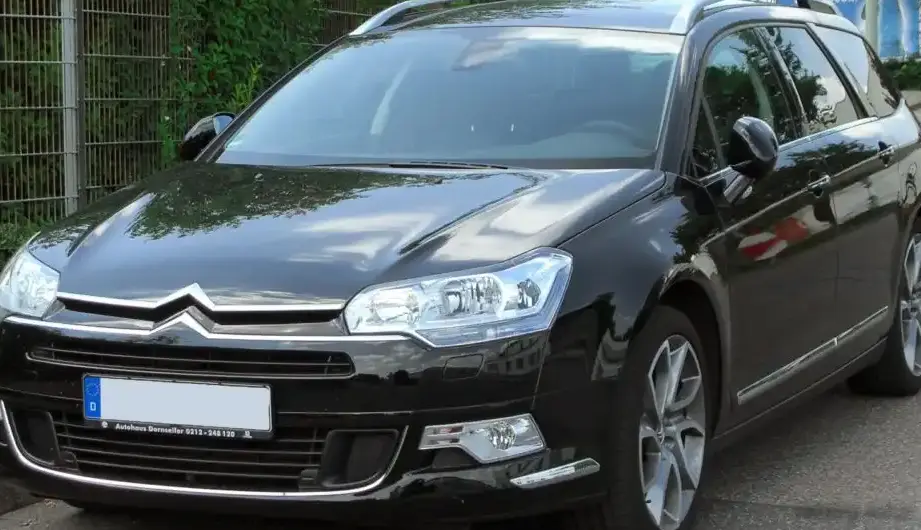
The Citroën C5 II Tourer 2.0 HDi 140 FAP, produced between 2008 and 2009, represents a significant iteration of Citroën’s large family car, positioned within the second generation (C5 II) of the C5 line. This variant, a station wagon (estate) body style, was primarily aimed at the European market, offering a blend of comfort, practicality, and fuel efficiency. It sat in the mid-range of the C5 Tourer lineup, offering a step up in performance from the lower-powered diesel options while remaining more accessible than the flagship petrol engines. The “FAP” designation indicates the inclusion of a particulate filter, a key component in meeting increasingly stringent European emission standards.
Technical Specifications
| Brand | Citroen |
| Model | C5 |
| Generation | C5 II Tourer (Phase I, 2008) |
| Type (Engine) | 2.0 HDi (140 Hp) FAP |
| Start of production | 2008 |
| End of production | 2009 |
| Powertrain Architecture | Internal Combustion engine |
| Body type | Station wagon (estate) |
| Seats | 5 |
| Doors | 5 |
| Fuel consumption (urban) | 7.6 l/100 km (30.9 US mpg, 37.2 UK mpg, 13.2 km/l) |
| Fuel consumption (extra urban) | 4.9 l/100 km (48 US mpg, 57.6 UK mpg, 20.4 km/l) |
| Fuel consumption (combined) | 5.9 l/100 km (39.9 US mpg, 47.9 UK mpg, 16.9 km/l) |
| CO2 emissions | 155 g/km |
| Fuel Type | Diesel |
| Acceleration 0 – 100 km/h | 12.1 sec |
| Acceleration 0 – 62 mph | 12.1 sec |
| Acceleration 0 – 60 mph | 11.5 sec |
| Maximum speed | 200 km/h (124.27 mph) |
| Emission standard | Euro 4 |
| Weight-to-power ratio | 11.8 kg/Hp, 84.6 Hp/tonne |
| Weight-to-torque ratio | 5.2 kg/Nm, 193.4 Nm/tonne |
| Power | 140 Hp @ 4000 rpm |
| Power per litre | 70.1 Hp/l |
| Torque | 320 Nm @ 2000 rpm (236.02 lb.-ft. @ 2000 rpm) |
| Engine layout | Front, Transverse |
| Engine Model/Code | RHF DW10BTED4 |
| Engine displacement | 1997 cm3 (121.86 cu. in.) |
| Number of cylinders | 4 |
| Engine configuration | Inline |
| Cylinder Bore | 85 mm (3.35 in.) |
| Piston Stroke | 88 mm (3.46 in.) |
| Compression ratio | 17.6:1 |
| Number of valves per cylinder | 4 |
| Fuel injection system | Diesel Commonrail |
| Engine aspiration | Turbocharger, Intercooler |
| Valvetrain | DOHC |
| Engine oil capacity | 5.25 l (5.55 US qt, 4.62 UK qt) |
| Coolant | 10.8 l (11.41 US qt, 9.5 UK qt) |
| Kerb Weight | 1655 kg (3648.65 lbs.) |
| Max. weight | 2276 kg (5017.72 lbs.) |
| Max load | 621 kg (1369.07 lbs.) |
| Trunk (boot) space – minimum | 505 l (17.83 cu. ft.) |
| Trunk (boot) space – maximum | 1462 l (51.63 cu. ft.) |
| Fuel tank capacity | 71 l (18.76 US gal, 15.62 UK gal) |
| Max. roof load | 80 kg (176.37 lbs.) |
| Permitted trailer load with brakes (12%) | 1500 kg (3306.93 lbs.) |
| Permitted trailer load without brakes | 750 kg (1653.47 lbs.) |
| Permitted towbar download | 72 kg (158.73 lbs.) |
| Length | 4829 mm (190.12 in.) |
| Width | 1860 mm (73.23 in.) |
| Width including mirrors | 2096 mm (82.52 in.) |
| Height | 1491-1495 mm (58.7 – 58.86 in.) |
| Wheelbase | 2815 mm (110.83 in.) |
| Front track | 1586 mm (62.44 in.) |
| Rear (Back) track | 1557 mm (61.3 in.) |
| Front overhang | 1054 mm (41.5 in.) |
| Rear overhang | 960 mm (37.8 in.) |
| Minimum turning circle | 11.7 m (38.39 ft.) |
| Drivetrain Architecture | Front wheel drive |
| Number of gears and type of gearbox | 6 gears, manual transmission |
| Front suspension | Double wishbone |
| Rear suspension | Independent multi-link suspension |
| Front brakes | Ventilated discs |
| Rear brakes | Disc |
| Assisting systems | ABS (Anti-lock braking system) |
| Steering type | Steering rack and pinion |
| Power steering | Hydraulic Steering |
| Tires size | 225/55 R17 |
| Wheel rims size | 17 |
INTRODUCTION
The Citroën C5 II Tourer 2.0 HDi 140 FAP, launched in 2008 as part of the Phase I refresh of the C5 II generation, built upon the success of its predecessor. The C5 II, based on the PSA Group’s Platform 4 (also known as the 1HX0/A3 platform), aimed to provide a sophisticated and comfortable driving experience. The Tourer (estate) variant specifically targeted families and those requiring increased cargo capacity. This 2.0 HDi 140 FAP model offered a balance between performance and economy, making it a popular choice in the European market where diesel engines dominated the large family car segment. It was positioned as a practical and refined option, appealing to buyers seeking a comfortable long-distance cruiser with ample space.
Powertrain & Engine Architecture
At the heart of the C5 II Tourer 2.0 HDi 140 FAP lies the DW10BTED4 engine, a 1997cc four-cylinder diesel engine. This engine, a common sight in PSA Group vehicles of the era, utilizes a common rail direct injection system, delivering fuel at extremely high pressure for optimized combustion. The engine code ‘RHF’ further identifies specific calibration and emission control features. A turbocharger with an intercooler is employed to boost power output, providing 140 horsepower at 4000 rpm and a substantial 320 Nm (236 lb-ft) of torque at just 2000 rpm. The engine features a double overhead camshaft (DOHC) valvetrain with four valves per cylinder, enhancing breathing and contributing to its efficiency. The FAP (Filtre à Particules) or diesel particulate filter, is a crucial component, trapping soot particles to reduce harmful emissions. This engine was typically paired with a six-speed manual transmission, although an automatic option was also available, albeit less common.
Driving Characteristics
The 2.0 HDi 140 FAP-equipped C5 II Tourer offered a relaxed and comfortable driving experience. The engine’s strong low-end torque made it well-suited for everyday driving and effortless overtaking. While not a particularly sporty vehicle, the 140 horsepower output provided adequate performance for cruising on highways and carrying a full load of passengers and luggage. The six-speed manual transmission allowed for precise gear selection and helped to maximize fuel efficiency. Compared to the higher-output 2.2 HDi variants, the 2.0 HDi felt less urgent in its acceleration, but it compensated with improved fuel economy. The automatic transmission, when equipped, offered convenience but often resulted in slightly slower acceleration and a less engaging driving experience. The C5’s renowned hydropneumatic suspension (depending on the specific trim level) contributed to a remarkably smooth and comfortable ride, absorbing bumps and imperfections in the road with ease.
Equipment & Trim Levels
The C5 II Tourer 2.0 HDi 140 FAP typically came equipped with a respectable level of standard features. These included air conditioning, power windows, central locking, and an integrated audio system. Higher trim levels, such as Exclusive, added features like leather upholstery, automatic climate control, parking sensors, and a more advanced infotainment system. Optional extras included a panoramic sunroof, xenon headlights, and a navigation system. Interior upholstery was generally cloth on the base models, with leather options available on higher trims. The dashboard layout was functional and ergonomically designed, prioritizing ease of use.
Chassis & Braking
The C5 II Tourer featured a robust chassis designed for comfort and stability. The front suspension utilized a double wishbone setup, while the rear employed an independent multi-link suspension, contributing to the car’s smooth ride quality. Braking duties were handled by ventilated discs at the front and solid discs at the rear. Anti-lock Braking System (ABS) was standard, enhancing safety during emergency braking situations. Steering was rack and pinion with hydraulic power assistance, providing a responsive and precise feel. The car rode on 17-inch alloy wheels, typically fitted with 225/55 R17 tires.
Market Reception & Comparison
The Citroën C5 II Tourer 2.0 HDi 140 FAP was generally well-received by automotive critics. It was praised for its comfortable ride, spacious interior, and fuel efficiency. However, some critics noted that the interior design, while functional, lacked the visual flair of some competitors. Compared to other diesel variants in the C5 lineup, the 2.0 HDi 140 FAP offered a good balance between performance and economy. The 1.6 HDi models were more affordable but lacked the power for long-distance cruising, while the 2.2 HDi offered more performance but at a higher price point and with slightly lower fuel economy. Against competitors like the Ford Mondeo Estate and Volkswagen Passat Estate, the C5 II Tourer distinguished itself with its unique hydropneumatic suspension (where equipped) and its focus on comfort.
Legacy
The DW10BTED4 engine, found in the C5 II Tourer 2.0 HDi 140 FAP, has proven to be a relatively reliable unit when properly maintained. Common issues include potential problems with the FAP (diesel particulate filter) requiring periodic regeneration or eventual replacement, and occasional issues with the turbocharger. However, these are not uncommon for diesel engines of this era. Today, the C5 II Tourer 2.0 HDi 140 FAP represents an affordable and practical used car option. Its spacious interior, comfortable ride, and reasonable fuel economy continue to appeal to buyers seeking a versatile family vehicle. While not a collector’s item, well-maintained examples are still relatively common on the used car market, offering a comfortable and reliable mode of transportation.