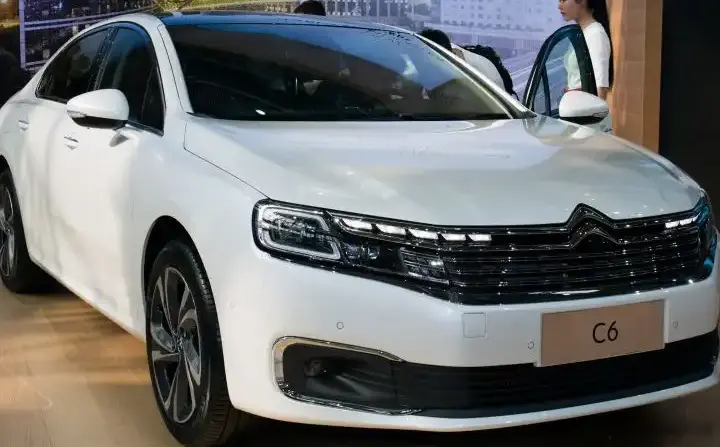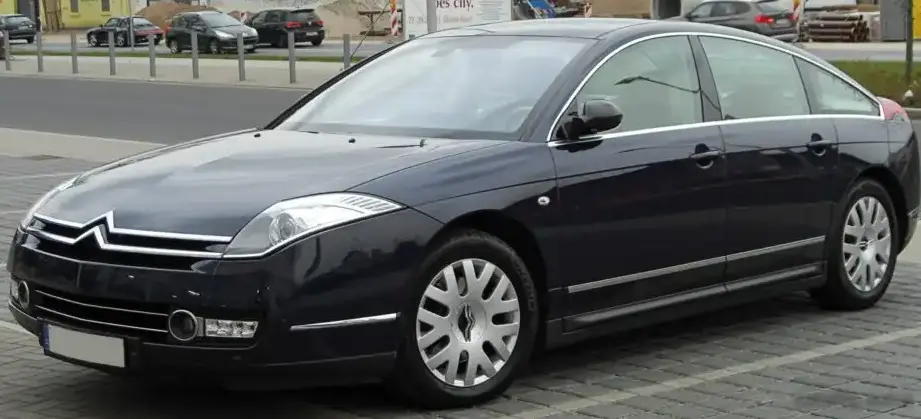
The Citroën C6 I 3.0i V6 Automatic, produced between 2005 and 2012, represents a unique and ambitious offering from the French automaker. Positioned as a flagship sedan, the C6 aimed to blend luxury, innovation, and distinctive styling. This particular variant, powered by the ES9A XFV 3.0-liter V6 engine paired with a six-speed automatic transmission, occupied a mid-to-upper range within the C6 lineup, offering a balance of performance and comfort. It was a key model in Citroën’s attempt to recapture a segment of the market traditionally dominated by German manufacturers.
Technical Specifications
| Brand | Citroen |
| Model | C6 |
| Generation | C6 I |
| Type (Engine) | 3.0i V6 (211 Hp) Automatic |
| Start of production | 2005 |
| End of production | 2012 |
| Powertrain Architecture | Internal Combustion engine |
| Body type | Sedan |
| Seats | 5 |
| Doors | 4 |
| Fuel consumption (urban) | 16.3 l/100 km (14.4 US mpg, 17.3 UK mpg, 6.1 km/l) |
| Fuel consumption (extra urban) | 8.2 l/100 km (28.7 US mpg, 34.4 UK mpg, 12.2 km/l) |
| Fuel consumption (combined) | 11.2 l/100 km (21 US mpg, 25.2 UK mpg, 8.9 km/l) |
| CO2 emissions | 266 g/km |
| Fuel Type | Petrol (Gasoline) |
| Acceleration 0 – 100 km/h | 10 sec |
| Acceleration 0 – 62 mph | 10 sec |
| Acceleration 0 – 60 mph | 9.5 sec |
| Maximum speed | 230 km/h (142.92 mph) |
| Emission standard | Euro 4 |
| Weight-to-power ratio | 8.6 kg/Hp, 116.2 Hp/tonne |
| Weight-to-torque ratio | 6.3 kg/Nm, 159.7 Nm/tonne |
| Power | 211 Hp @ 6000 rpm |
| Power per litre | 71.6 Hp/l |
| Torque | 290 Nm @ 3750 rpm (213.89 lb.-ft. @ 3750 rpm) |
| Engine layout | Front, Transverse |
| Engine Model/Code | ES9A XFV |
| Engine displacement | 2946 cm3 (179.78 cu. in.) |
| Number of cylinders | 6 |
| Engine configuration | V-engine |
| Cylinder Bore | 87 mm (3.43 in.) |
| Piston Stroke | 82.6 mm (3.25 in.) |
| Compression ratio | 10.9:1 |
| Number of valves per cylinder | 4 |
| Fuel injection system | Multi-port manifold injection |
| Engine aspiration | Naturally aspirated engine |
| Engine oil capacity | 4.7 l (4.97 US qt | 4.14 UK qt) |
| Coolant | 11.3 l (11.94 US qt | 9.94 UK qt) |
| Kerb Weight | 1816 kg (4003.59 lbs.) |
| Max. weight | 2271 kg (5006.7 lbs.) |
| Max load | 455 kg (1003.1 lbs.) |
| Trunk (boot) space – minimum | 407 l (14.37 cu. ft.) |
| Fuel tank capacity | 72 l (19.02 US gal | 15.84 UK gal) |
| Max. roof load | 80 kg (176.37 lbs.) |
| Permitted trailer load with brakes (8%) | 1700 kg (3747.86 lbs.) |
| Permitted trailer load with brakes (12%) | 1400 kg (3086.47 lbs.) |
| Permitted trailer load without brakes | 750 kg (1653.47 lbs.) |
| Permitted towbar download | 70 kg (154.32 lbs.) |
| Length | 4908 mm (193.23 in.) |
| Width | 1860 mm (73.23 in.) |
| Width including mirrors | 2081 mm (81.93 in.) |
| Height | 1464 mm (57.64 in.) |
| Wheelbase | 2900 mm (114.17 in.) |
| Front track | 1586 mm (62.44 in.) |
| Rear (Back) track | 1558 mm (61.34 in.) |
| Front overhang | 1124 mm (44.25 in.) |
| Rear overhang | 884 mm (34.8 in.) |
| Minimum turning circle | 12.43 m (40.78 ft.) |
| Drivetrain Architecture | The Internal combustion engine (ICE) drives the front wheels of the vehicle. |
| Drive wheel | Front wheel drive |
| Number of gears and type of gearbox | 6 gears, automatic transmission |
| Front suspension | Independent multi-link suspension |
| Rear suspension | Independent multi-link suspension |
| Front brakes | Ventilated discs |
| Rear brakes | Ventilated discs |
| Assisting systems | ABS (Anti-lock braking system) |
| Steering type | Steering rack and pinion |
| Power steering | Hydraulic Steering |
| Tires size | 225/55 R17; 245/45 R18 |
| Wheel rims size | 17; 18 |
Powertrain & Engine Architecture
The heart of this C6 variant is the ES9A XFV 3.0-liter V6 engine. This naturally aspirated powerplant, a product of PSA Peugeot Citroën’s engineering, features a 60-degree V-configuration and utilizes a multi-port fuel injection system. The engine’s aluminum alloy cylinder block and heads contribute to weight reduction. The valvetrain employs four valves per cylinder, enhancing breathing and overall efficiency. The six-speed automatic transmission, sourced from Aisin, was chosen for its smoothness and responsiveness. This transmission features adaptive shift logic, adjusting gear changes based on driving style and conditions. While not a particularly advanced transmission by modern standards, it was considered a good match for the engine’s characteristics.
Driving Characteristics
The 3.0i V6 Automatic C6 offered a comfortable and refined driving experience. With 211 horsepower and 290 Nm (213.89 lb-ft) of torque, acceleration was adequate, achieving 0-60 mph in around 9.5 seconds. However, it wasn’t a particularly sporty car. The automatic transmission, while smooth, could feel somewhat hesitant during quick overtaking maneuvers. The focus was clearly on providing a relaxed and composed ride, aided by the C6’s sophisticated hydropneumatic suspension system. This suspension, a Citroën hallmark, effectively isolated passengers from road imperfections, delivering a uniquely comfortable ride quality. Compared to the more powerful V6 variants or the diesel options, this version prioritized fuel economy and ease of use over outright performance.
Equipment & Trim Levels
The 3.0i V6 Automatic typically came well-equipped, reflecting its position in the C6 range. Standard features included leather upholstery, automatic climate control, a premium audio system, and parking sensors. Higher trim levels added features like navigation, heated seats, and a sunroof. The interior design emphasized luxury and spaciousness, with high-quality materials and a driver-focused layout. The dashboard featured a blend of analog gauges and a central information display. Optional extras allowed buyers to personalize their C6, further enhancing its comfort and convenience.
Chassis & Braking
The C6 I utilized an independent multi-link suspension system at both the front and rear axles. This setup, combined with the hydropneumatic suspension, provided exceptional ride comfort and handling stability. The braking system consisted of ventilated discs on all four wheels, offering ample stopping power. Anti-lock braking system (ABS) was standard, enhancing safety. The steering was a hydraulic rack and pinion system, providing precise and responsive control. The C6’s chassis was designed to prioritize comfort and refinement, rather than outright sportiness.
Market Reception & Comparison
The Citroën C6, in general, received mixed reviews. Critics praised its innovative design, luxurious interior, and exceptional ride comfort. However, it was often criticized for its complex technology, which could lead to reliability issues, and its relatively high price compared to its German rivals. The 3.0i V6 Automatic variant was seen as a good compromise between performance and fuel economy. Compared to the more powerful V6 models, it offered lower running costs and a more relaxed driving experience. However, it lacked the outright performance of its more potent siblings. The diesel variants, particularly the 2.7 HDi, were often favored by those prioritizing fuel efficiency and torque.
Legacy
The Citroën C6 I, while not a commercial success, remains a significant vehicle in Citroën’s history. It represented a bold attempt to create a truly unique and luxurious sedan. The 3.0i V6 Automatic variant, while not the most popular version, offered a compelling blend of comfort, refinement, and reasonable performance. Today, the C6 I is gaining recognition as a modern classic, appreciated for its distinctive styling and innovative technology. The ES9A engine, while not known for being exceptionally durable, can provide reliable service with proper maintenance. Finding well-maintained examples is becoming increasingly difficult, but the C6 I continues to appeal to enthusiasts seeking a distinctive and comfortable grand tourer.