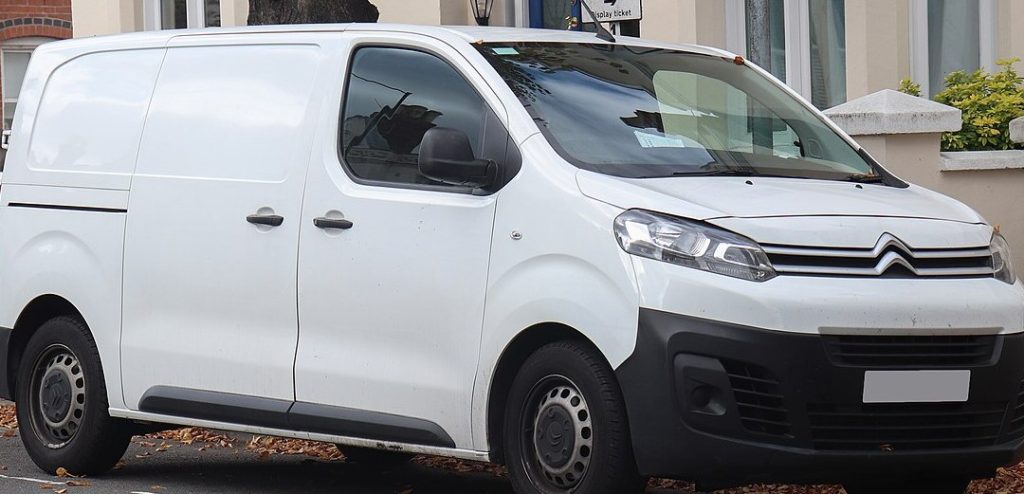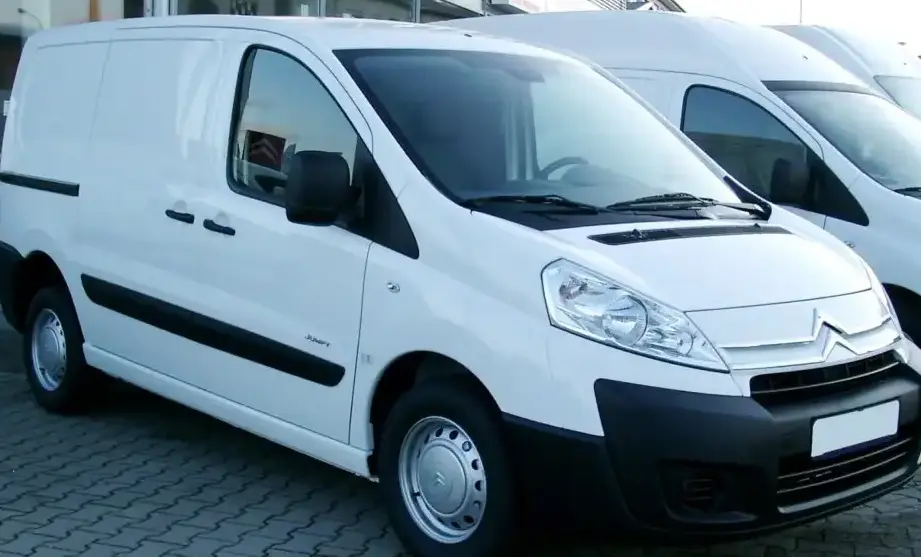
The Citroen Jumpy II 1.6 HDi 90 hp variant, produced from 2010 to 2011, represents an entry-level offering within the second generation of Citroen’s popular light commercial vehicle. Positioned as a practical and economical choice for businesses and tradespeople, this version of the Jumpy II (also known as the Dispatch in some markets) focused on providing a functional workhorse rather than outright performance. It was built on the 1HX platform, shared with the Peugeot Expert and Fiat Scudo, and served as a key component in Citroen’s commercial vehicle lineup in Europe.
Technical Specifications
| Brand | Citroen |
| Model | Jumpy |
| Generation | Jumpy II |
| Type (Engine) | 1.6 HDi (90 Hp) L1H1 DPF |
| Start of production | 2010 |
| End of production | 2011 |
| Powertrain Architecture | Internal Combustion engine |
| Body type | Minivan |
| Seats | 3 |
| Doors | 4 |
| Fuel consumption (urban) | 8.0 l/100 km (29.4 US mpg, 35.3 UK mpg, 12.5 km/l) |
| Fuel consumption (extra urban) | 6.3 l/100 km (37.3 US mpg, 44.8 UK mpg, 15.9 km/l) |
| Fuel consumption (combined) | 6.9 l/100 km (34.1 US mpg, 40.9 UK mpg, 14.5 km/l) |
| CO2 emissions | 182 g/km |
| Fuel Type | Diesel |
| Maximum speed | 145 km/h (90.1 mph) |
| Emission standard | Euro 5 |
| Weight-to-power ratio | 18.5 kg/Hp, 54.2 Hp/tonne |
| Weight-to-torque ratio | 9.2 kg/Nm, 108.4 Nm/tonne |
| Power | 90 Hp @ 4000 rpm |
| Power per litre | 57.7 Hp/l |
| Torque | 180 Nm @ 1500 rpm (132.76 lb.-ft. @ 1500 rpm) |
| Engine layout | Front, Transverse |
| Engine Model/Code | 9HU DV6UTED4 |
| Engine displacement | 1560 cm3 (95.2 cu. in.) |
| Number of cylinders | 4 |
| Engine configuration | Inline |
| Cylinder Bore | 75 mm (2.95 in.) |
| Piston Stroke | 88.3 mm (3.48 in.) |
| Number of valves per cylinder | 4 |
| Fuel injection system | Diesel Commonrail |
| Engine aspiration | Turbocharger, Intercooler |
| Engine oil capacity | 5 l (5.28 US qt | 4.4 UK qt) |
| Kerb Weight | 1661 kg (3661.88 lbs.) |
| Max. weight | 2661 kg (5866.5 lbs.) |
| Max load | 1000 kg (2204.62 lbs.) |
| Trunk (boot) space – maximum | 5000 l (176.57 cu. ft.) |
| Fuel tank capacity | 80 l (21.13 US gal | 17.6 UK gal) |
| Max. roof load | 170 kg (374.79 lbs.) |
| Permitted trailer load with brakes (12%) | 1672 kg (3686.13 lbs.) |
| Permitted trailer load without brakes | 750 kg (1653.47 lbs.) |
| Permitted towbar download | 70 kg (154.32 lbs.) |
| Length | 4805 mm (189.17 in.) |
| Width | 1895 mm (74.61 in.) |
| Width with mirrors folded | 1986 mm (78.19 in.) |
| Width including mirrors | 2194 mm (86.38 in.) |
| Height | 1880 mm (74.02 in.) |
| Wheelbase | 3000 mm (118.11 in.) |
| Front track | 1570 mm (61.81 in.) |
| Rear (Back) track | 1604 mm (63.15 in.) |
| Front overhang | 975 mm (38.39 in.) |
| Rear overhang | 830 mm (32.68 in.) |
| Drivetrain Architecture | The Internal combustion engine (ICE) drives the front wheels of the vehicle. |
| Drive wheel | Front wheel drive |
| Number of gears and type of gearbox | 5 gears, manual transmission |
| Front suspension | Independent, type McPherson with coil spring and anti-roll bar |
| Rear suspension | Semi-dependent beam with stabilizer lateral stability |
| Front brakes | Ventilated discs, 280×28 mm |
| Rear brakes | Drum |
| Assisting systems | ABS (Anti-lock braking system) |
| Steering type | Steering rack and pinion |
| Tires size | 215/65 R15 |
| Wheel rims size | 15 |
INTRODUCTION
The Citroen Jumpy II 1.6 HDi 90 hp, produced between 2010 and 2011, was a core component of Citroen’s light commercial vehicle range. This variant, designated as the L1H1, refers to the body length and height respectively – a compact configuration ideal for urban deliveries and trades requiring maneuverability. It was designed to appeal to businesses seeking a cost-effective and reliable van for everyday tasks. The Jumpy II, alongside its Peugeot Expert and Fiat Scudo siblings, represented a significant step forward in terms of practicality, comfort, and safety compared to its predecessor.
Powertrain & Engine Architecture
At the heart of this Jumpy II variant lies the 1.6-liter HDi (High-Pressure Diesel Injection) engine, specifically the 9HU (DV6UTED4) engine code. This engine is a four-cylinder, inline diesel unit featuring a turbocharger and intercooler to enhance power and efficiency. The engine utilizes a common rail direct injection system, delivering fuel directly into the combustion chamber at extremely high pressure for optimized combustion. The 9HU engine is known for its relatively simple design, contributing to its robustness and ease of maintenance. The 90 horsepower output is achieved at 4000 rpm, while peak torque of 180 Nm (132.76 lb-ft) is available from just 1500 rpm, providing good low-end pulling power. This engine was paired with a five-speed manual transmission, chosen for its durability and cost-effectiveness. While an automatic transmission was offered on other Jumpy II variants, it wasn’t available with this specific 90 hp engine.
Driving Characteristics
The 1.6 HDi 90 hp engine, coupled with the five-speed manual gearbox, delivers a driving experience focused on practicality rather than performance. Acceleration is modest, and the van is best suited for urban and suburban driving rather than high-speed motorway journeys. The engine’s torque characteristics mean that it feels reasonably responsive at lower speeds, making it suitable for carrying loads and navigating city traffic. The gear ratios are geared towards fuel efficiency, with fifth gear designed for comfortable cruising at legal highway speeds. Compared to the more powerful 2.0-liter HDi variants, the 1.6 HDi 90 hp feels noticeably slower, particularly when fully loaded. However, this trade-off is offset by improved fuel economy and lower running costs.
Equipment & Trim Levels
The Jumpy II 1.6 HDi 90 hp L1H1 typically came with a basic but functional equipment level. Standard features included a driver’s airbag, ABS brakes, power steering, and a basic audio system. The interior was primarily focused on durability and practicality, with hard-wearing plastics and a functional dashboard layout. The cabin typically featured seating for three occupants. Optional extras included air conditioning, electric windows, and a passenger airbag. The trim level was generally considered entry-level, aimed at businesses prioritizing functionality and affordability over luxury features.
Chassis & Braking
The Jumpy II utilizes a front-wheel-drive layout, contributing to its relatively low weight and improved fuel efficiency. The front suspension consists of independent McPherson struts with coil springs and an anti-roll bar, providing a comfortable ride and stable handling. The rear suspension employs a semi-dependent beam axle with a stabilizer bar, offering a good balance between load-carrying capacity and ride quality. Braking duties are handled by ventilated discs at the front and drum brakes at the rear. ABS (Anti-lock Braking System) is standard, enhancing safety during emergency braking situations.
Market Reception & Comparison
The Citroen Jumpy II 1.6 HDi 90 hp was generally well-received by critics as a practical and economical light commercial vehicle. It was praised for its fuel efficiency, reliability, and maneuverability. However, some reviewers noted that the engine lacked power, particularly when carrying heavy loads or driving on steep inclines. Compared to the 2.0-liter HDi variants, the 1.6 HDi offered lower running costs but compromised on performance. The 1.9 TDI versions of competitor vans, like the Volkswagen Transporter, offered a similar level of performance and economy, but the Jumpy II often proved more affordable.
Legacy
The 1.6 HDi engine, in various iterations, proved to be a reliable and durable powertrain. While not without its issues (like potential DPF clogging with frequent short journeys), the 9HU engine is generally considered robust and relatively inexpensive to maintain. In the used car market, the Jumpy II 1.6 HDi 90 hp remains a popular choice for businesses and individuals seeking a cost-effective and practical van. Its affordability, fuel efficiency, and relatively simple mechanicals make it an attractive option, particularly for those who prioritize functionality over outright performance. The Jumpy II, in all its variants, helped solidify Citroen’s reputation as a leading manufacturer of light commercial vehicles in Europe.