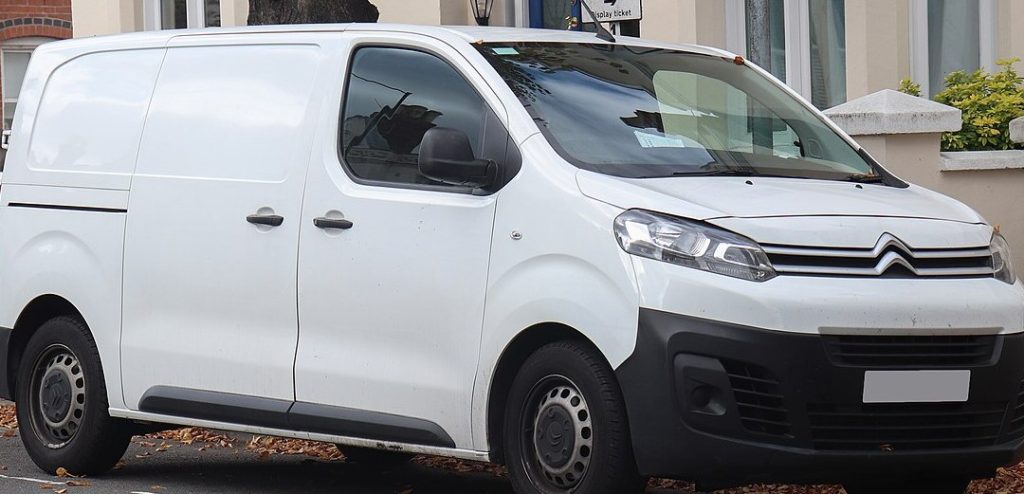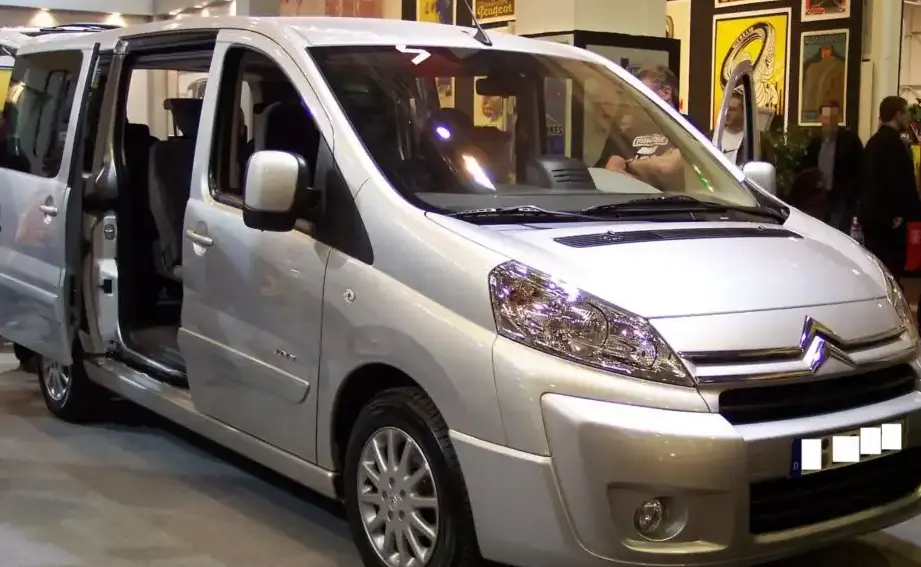
The Citroen Jumpy II Multispace 2.0 16V (140 hp) L2 9-Seat, produced between 2008 and 2010, represents a versatile offering within the second generation of Citroen’s popular Jumpy line. Positioned as a mid-range trim within the Multispace variant – Citroen’s passenger-focused version of the Jumpy – this configuration aimed to balance practicality, space, and reasonable performance for family and commercial use. The Jumpy II, built on the Peugeot-Citroen X7 platform (shared with the Fiat Scudo and Peugeot Expert), was designed to provide a spacious and adaptable vehicle for a variety of needs, from transporting large families to serving as a flexible commercial vehicle. This particular L2 (long wheelbase) 9-seat version catered to those requiring maximum passenger capacity combined with a manageable vehicle footprint.
Technical Specifications
| Brand | Citroen |
| Model | Jumpy |
| Generation | Jumpy II Multispace |
| Type | 2.0 16V (140 Hp) L2 9 Seat |
| Start of production | 2008 |
| End of production | 2010 |
| Powertrain Architecture | Internal Combustion engine |
| Body type | Minivan |
| Seats | 8-9 |
| Doors | 4 |
| Fuel consumption (urban) | 13.3 l/100 km (17.7 US mpg, 21.2 UK mpg, 7.5 km/l) |
| Fuel consumption (extra urban) | 8.2 l/100 km (28.7 US mpg, 34.4 UK mpg, 12.2 km/l) |
| Fuel consumption (combined) | 10.1 l/100 km (23.3 US mpg, 28 UK mpg, 9.9 km/l) |
| CO2 emissions | 241 g/km |
| Fuel Type | Petrol (Gasoline) |
| Acceleration 0 – 100 km/h | 13.4 sec |
| Acceleration 0 – 62 mph | 13.4 sec |
| Acceleration 0 – 60 mph | 12.7 sec |
| Maximum speed | 165 km/h (102.53 mph) |
| Emission standard | Euro 4 |
| Weight-to-power ratio | 13.2 kg/Hp, 76 Hp/tonne |
| Weight-to-torque ratio | 10.2 kg/Nm, 97.7 Nm/tonne |
| Power | 140 Hp @ 6000 rpm |
| Power per litre | 70.1 Hp/l |
| Torque | 180 Nm @ 2500 rpm (132.76 lb.-ft. @ 2500 rpm) |
| Engine layout | Front, Transverse |
| Engine Model/Code | RFH EW10A |
| Engine displacement | 1997 cm3 (121.86 cu. in.) |
| Number of cylinders | 4 |
| Engine configuration | Inline |
| Cylinder Bore | 85 mm (3.35 in.) |
| Piston Stroke | 88 mm (3.46 in.) |
| Number of valves per cylinder | 4 |
| Fuel injection system | Multi-port manifold injection |
| Engine aspiration | Naturally aspirated engine |
| Engine oil capacity | 5 l (5.28 US qt | 4.4 UK qt) |
| Kerb Weight | 1843 kg (4063.12 lbs.) |
| Max. weight | 2771 kg (6109.01 lbs.) |
| Max load | 928 kg (2045.89 lbs.) |
| Trunk (boot) space – minimum | 770 l (27.19 cu. ft.) |
| Trunk (boot) space – maximum | 4124 l (145.64 cu. ft.) |
| Fuel tank capacity | 80 l (21.13 US gal | 17.6 UK gal) |
| Max. roof load | 170 kg (374.79 lbs.) |
| Permitted trailer load with brakes (12%) | 2000 kg (4409.25 lbs.) |
| Permitted trailer load without brakes | 750 kg (1653.47 lbs.) |
| Permitted towbar download | 80 kg (176.37 lbs.) |
| Length | 5135 mm (202.17 in.) |
| Width | 1895 mm (74.61 in.) |
| Width with mirrors folded | 1986 mm (78.19 in.) |
| Width including mirrors | 2194 mm (86.38 in.) |
| Height | 1880 mm (74.02 in.) |
| Wheelbase | 3122 mm (122.91 in.) |
| Front track | 1562 mm (61.5 in.) |
| Rear (Back) track | 1596 mm (62.83 in.) |
| Front overhang | 975 mm (38.39 in.) |
| Rear overhang | 1038 mm (40.87 in.) |
| Minimum turning circle | 12.6 m (41.34 ft.) |
| Drivetrain | Front wheel drive |
| Number of gears and type of gearbox | 5 gears, manual transmission |
| Front suspension | Independent, type McPherson with coil spring and anti-roll bar |
| Rear suspension | Semi-dependent beam with stabilizer lateral stability |
| Front brakes | Ventilated discs |
| Rear brakes | Disc |
| Assisting systems | ABS (Anti-lock braking system) |
| Steering type | Steering rack and pinion |
| Tires size | 215/60 R16 |
| Wheel rims size | 16 |
Powertrain & Engine Architecture
The heart of the Jumpy II Multispace 2.0 16V is the PSA Group’s RFH (also known as EW10A) engine. This 1997cc inline-four cylinder engine is a naturally aspirated unit featuring a multi-point fuel injection system. The ‘16V’ designation indicates the engine’s four valves per cylinder, contributing to improved breathing and power output. The RFH engine is known for its relative simplicity and durability, though it isn’t particularly known for being a high-performance unit. The engine produces 140 horsepower at 6000 rpm and 180 Nm (132.76 lb-ft) of torque at 2500 rpm. The engine’s design prioritizes usability and fuel efficiency over outright power. The five-speed manual transmission was the standard offering, providing adequate gear ratios for everyday driving. While an automatic transmission was available on some Jumpy II models, it was less common with the 2.0 16V engine.
Driving Characteristics
The 140 hp 2.0 16V engine, coupled with the five-speed manual transmission, delivers adequate, but not exhilarating, performance. Acceleration from 0-100 km/h (0-62 mph) takes around 13.4 seconds, and top speed is rated at 165 km/h (102.53 mph). The engine feels most comfortable in the mid-range, providing sufficient power for overtaking and highway cruising. Compared to the more powerful diesel variants (like the 2.0 HDi), the petrol engine feels noticeably less responsive, particularly when fully loaded. The manual gearbox is generally smooth and precise, although the shift linkage can feel a little vague. The L2 wheelbase provides a stable and comfortable ride, even on uneven surfaces.
Equipment & Trim Levels
The Jumpy II Multispace 2.0 16V L2 9-Seat typically came equipped with features aimed at family comfort and practicality. Standard equipment included air conditioning, power steering, electric front windows, and a basic audio system. The 9-seat configuration featured a flexible seating arrangement with individual seats that could be folded or removed to create more cargo space. Higher trim levels offered options such as alloy wheels, rear parking sensors, upgraded audio systems, and cruise control. Interior upholstery was typically cloth, with durable and easy-to-clean materials used throughout the cabin.
Chassis & Braking
The Jumpy II utilizes a McPherson strut front suspension and a semi-independent beam rear suspension. This setup provides a good balance between ride comfort and handling. The front brakes are ventilated discs, while the rear brakes are solid discs. ABS (Anti-lock Braking System) is standard, enhancing safety during emergency braking. The steering is rack and pinion, providing reasonably precise control. The L2 wheelbase contributes to a stable and predictable driving experience, although the vehicle’s size can make maneuvering in tight spaces challenging.
Market Reception & Comparison
The Citroen Jumpy II Multispace 2.0 16V L2 9-Seat was generally well-received as a practical and versatile family vehicle. Critics praised its spacious interior, flexible seating arrangement, and comfortable ride. However, the petrol engine was often criticized for its relatively low power output and higher fuel consumption compared to the diesel alternatives. The diesel models, particularly the 2.0 HDi, were more popular due to their superior fuel economy and torque. The petrol version appealed to those who preferred the smoother operation and quieter engine note of a gasoline engine, and those who didn’t anticipate covering high annual mileages.
Legacy
The RFH engine, while not known for being exceptionally groundbreaking, proved to be a relatively reliable unit when properly maintained. Common issues include occasional oil leaks and sensor failures. The Jumpy II Multispace, in general, has a reputation for being a durable and practical vehicle. Today, the 2.0 16V variant can be found on the used car market at relatively affordable prices. Its appeal lies in its spaciousness, practicality, and relatively simple mechanical design. However, potential buyers should be aware of the higher fuel consumption compared to diesel models and the potential for age-related maintenance issues.