
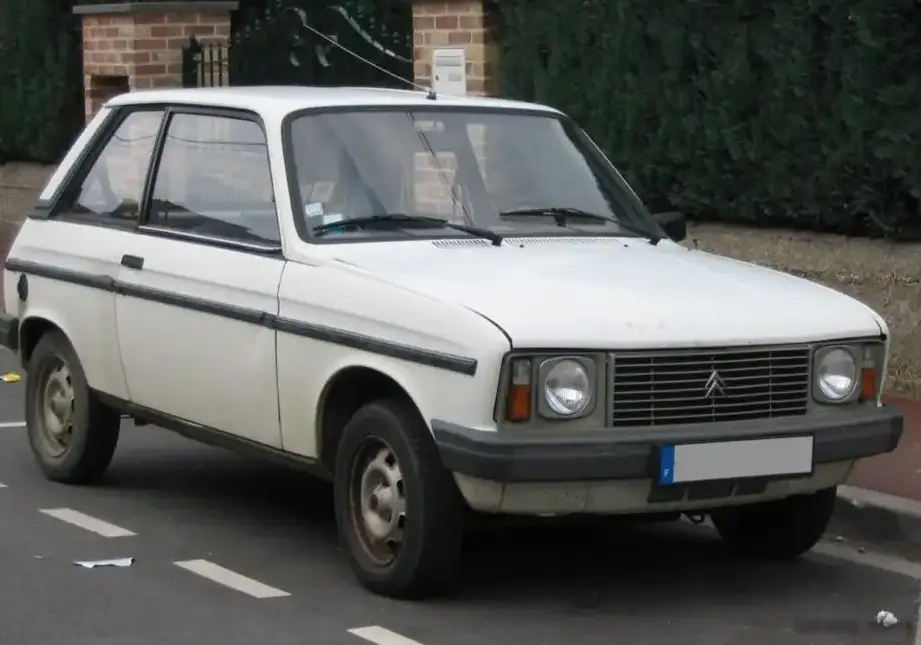
The Citroën LNA 1.1, produced between 1982 and 1985, was a modestly equipped, economical hatchback positioned as the entry-level model within the Citroën LN range. Built upon the Peugeot 104 platform – a collaboration between the two French automakers – the LNA aimed to provide affordable transportation during a period of economic uncertainty. This variant, powered by a 1.1-liter engine producing 50 horsepower, represented a significant portion of LNA sales, appealing to buyers prioritizing fuel efficiency and low running costs over outright performance. It was a key component of Citroën’s strategy to offer a practical and accessible vehicle in the supermini segment.
Technical Specifications
| Brand | Citroën |
| Model | LN |
| Generation | LNA |
| Type (Engine) | 1.1 (50 Hp) |
| Start of production | 1982 |
| End of production | 1985 |
| Powertrain Architecture | Internal Combustion engine |
| Body type | Hatchback |
| Seats | 4 |
| Doors | 3 |
| Fuel Type | Petrol (Gasoline) |
| Maximum speed | 140 km/h (86.99 mph) |
| Weight-to-power ratio | 15.2 kg/Hp, 65.8 Hp/tonne |
| Power | 50 Hp @ 5500 rpm |
| Power per litre | 44.5 Hp/l |
| Engine Model/Code | 109/5F |
| Engine displacement | 1123 cm3 (68.53 cu. in.) |
| Number of cylinders | 4 |
| Engine configuration | Inline |
| Cylinder Bore | 72 mm (2.83 in.) |
| Piston Stroke | 69 mm (2.72 in.) |
| Compression ratio | 9.7:1 |
| Engine aspiration | Naturally aspirated engine |
| Engine oil capacity | 5 l (5.28 US qt | 4.4 UK qt) |
| Coolant | 6.5 l (6.87 US qt | 5.72 UK qt) |
| Kerb Weight | 760 kg (1675.51 lbs.) |
| Max. weight | 1040 kg (2292.81 lbs.) |
| Max load | 280 kg (617.29 lbs.) |
| Max. roof load | 50 kg (110.23 lbs.) |
| Permitted trailer load with brakes (12%) | 750 kg (1653.47 lbs.) |
| Permitted trailer load without brakes | 370 kg (815.71 lbs.) |
| Length | 3384 mm (133.23 in.) |
| Width | 1522 mm (59.92 in.) |
| Height | 1373 mm (54.06 in.) |
| Wheelbase | 2230 mm (87.8 in.) |
| Front track | 1292 mm (50.87 in.) |
| Rear (Back) track | 1269 mm (49.96 in.) |
| Front overhang | 641 mm (25.24 in.) |
| Rear overhang | 513 mm (20.2 in.) |
| Drivetrain Architecture | The Internal combustion engine (ICE) drives the front wheels of the vehicle. |
| Drive wheel | Front wheel drive |
| Number of gears and type of gearbox | 4 gears, manual transmission |
| Front suspension | Independent, type McPherson with coil spring and anti-roll bar |
| Rear suspension | Spring Strut, Trailing arm |
| Front brakes | Disc |
| Rear brakes | Drum |
| Steering type | Steering rack and pinion |
Powertrain & Engine Architecture
The Citroën LNA 1.1 was powered by the 109/5F engine, a 1124cc inline-four cylinder petrol engine. This engine, derived from the Peugeot 104’s unit, featured a relatively simple design with a single overhead camshaft operating two valves per cylinder. Fuel delivery was managed by a single Solex carburetor, a common setup for vehicles of this era aiming for affordability. The engine produced a modest 50 horsepower at 5500 rpm and 66 lb-ft of torque. The engine’s compression ratio was 9.7:1. The LNA utilized a four-speed manual transmission, chosen for its simplicity and cost-effectiveness. This transmission was known for its light shift action, but its limited number of gears meant that the engine often needed to be revved to maintain speed, especially when loaded.
Driving Characteristics
The driving experience in the LNA 1.1 was characterized by its light weight and nimble handling. With a kerb weight of just 760 kg (1675 lbs), the 50 horsepower engine provided adequate, though not exhilarating, performance. Acceleration was leisurely, and overtaking required careful planning. The four-speed gearbox, while easy to use, lacked the versatility of a five-speed unit, resulting in a noticeable engine drone at highway speeds. The suspension, featuring a McPherson strut front setup and a trailing arm rear, provided a comfortable ride on most road surfaces, though it wasn’t particularly sporty. The steering, utilizing a rack and pinion system, was light and precise, making the LNA easy to maneuver in urban environments.
Equipment & Trim Levels
The LNA 1.1 was deliberately positioned as a basic, no-frills vehicle. Standard equipment included cloth upholstery, basic instrumentation (speedometer, fuel gauge, and temperature gauge), and manually operated windows and door locks. The interior was functional and durable, prioritizing practicality over luxury. Optional extras were limited, typically including a radio, upgraded upholstery, and occasionally, a sunroof. The dashboard layout was simple and straightforward, reflecting the car’s overall ethos of affordability and ease of use. The LNA lacked many of the features that were becoming increasingly common on other vehicles of the time, such as central locking or power steering.
Chassis & Braking
The LNA’s chassis was based on the Peugeot 104 platform, utilizing a monocoque construction. The front suspension employed independent McPherson struts with coil springs and an anti-roll bar, providing a reasonable level of comfort and handling. The rear suspension utilized a simpler trailing arm setup with coil springs. Braking was handled by disc brakes at the front and drum brakes at the rear. While adequate for the car’s weight and performance, the braking system wasn’t particularly powerful. The steering system was a rack and pinion setup, providing light and precise steering feel.
Market Reception & Comparison
The Citroën LNA 1.1 was generally well-received by critics as an affordable and practical city car. Its fuel efficiency was a major selling point, particularly during the early 1980s when fuel prices were rising. However, its lack of power and limited equipment were often criticized. Compared to other models in the Citroën lineup, such as the more powerful and better-equipped Visa, the LNA represented a significant step down in terms of performance and features. However, it was considerably cheaper to purchase and operate. Against competitors like the Renault 5 and Peugeot 104, the LNA offered a similar level of practicality and economy, with its appeal often coming down to brand preference.
Legacy
The Citroën LNA 1.1, while not a particularly groundbreaking vehicle, played an important role in providing affordable transportation to a wide range of buyers. The 109/5F engine, while simple, proved to be relatively reliable, and many examples are still on the road today. However, finding parts can be challenging due to the car’s age and limited production numbers. In the used car market, the LNA 1.1 is often sought after by enthusiasts looking for a classic French hatchback or a project car. Its simplicity and affordability make it an attractive option for those interested in learning about automotive mechanics. While not a high-performance vehicle, the LNA 1.1 remains a charming and practical reminder of a bygone era of automotive design.
