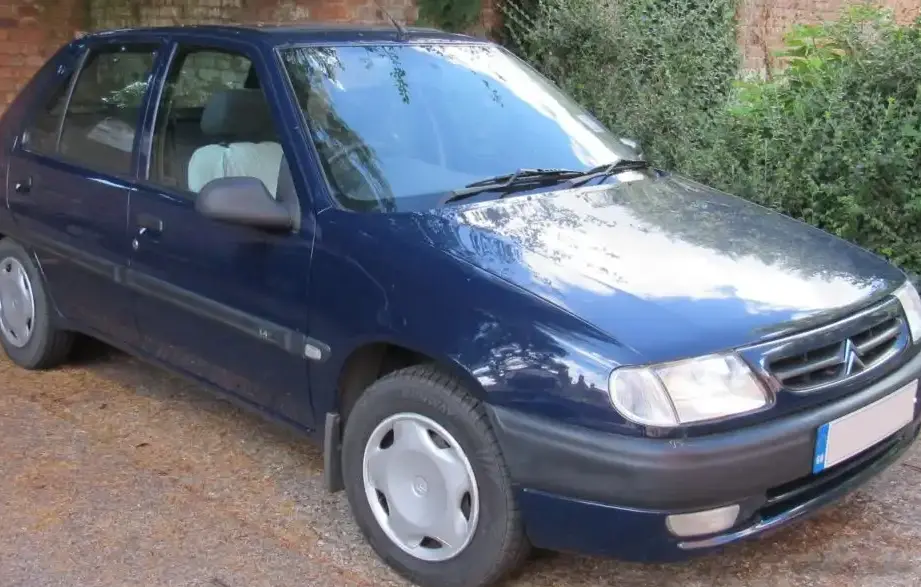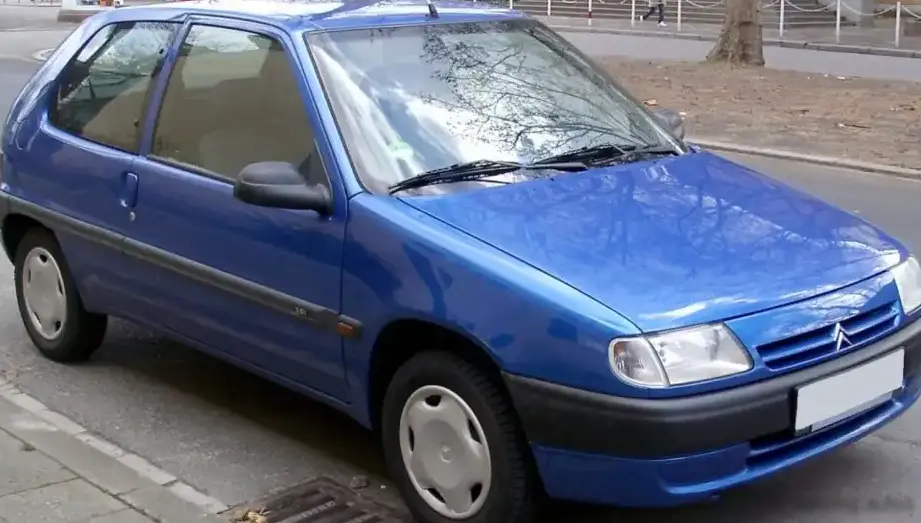
The Citroen Saxo 1.4, produced between 1996 and 1999 as part of the Phase I generation, represented an entry-level offering within the Saxo range. Built as a practical and affordable supermini, the 3-door 1.4 model with 75 horsepower aimed at buyers prioritizing economy and usability over outright performance. The Saxo itself was a collaborative effort, sharing its platform (the X15) and many components with the Peugeot 106. This partnership allowed Citroen to enter the competitive small car segment with a relatively low-cost, well-engineered vehicle. The 1.4L engine and manual transmission combination was a mainstay of the early Saxo lineup, providing a balance between cost and functionality.
Technical Specifications
| Brand | Citroen |
| Model | Saxo |
| Generation | Saxo (Phase I, 1996) 3-door |
| Type (Engine) | 1.4 (75 Hp) |
| Start of production | 1996 |
| End of production | 1999 |
| Powertrain Architecture | Internal Combustion engine |
| Body type | Hatchback |
| Seats | 5 |
| Doors | 3 |
| Fuel consumption (urban) | 7.9 l/100 km (29.8 US mpg, 35.8 UK mpg, 12.7 km/l) |
| Fuel consumption (extra urban) | 5 l/100 km (47 US mpg, 56.5 UK mpg, 20 km/l) |
| Fuel consumption (combined) | 6.5 l/100 km (36.2 US mpg, 43.5 UK mpg, 15.4 km/l) |
| Fuel Type | Petrol (Gasoline) |
| Acceleration 0 – 100 km/h | 11.2 sec |
| Acceleration 0 – 62 mph | 11.2 sec |
| Acceleration 0 – 60 mph | 10.6 sec |
| Maximum speed | 175 km/h (108.74 mph) |
| Weight-to-power ratio | 10.9 kg/Hp, 92 Hp/tonne |
| Weight-to-torque ratio | 7.3 kg/Nm, 136.2 Nm/tonne |
| Power | 75 Hp @ 5500 rpm |
| Power per litre | 55.1 Hp/l |
| Torque | 111 Nm @ 3400 rpm (81.87 lb.-ft. @ 3400 rpm) |
| Engine layout | Front, Transverse |
| Engine Model/Code | TU3JP |
| Engine displacement | 1360 cm3 (82.99 cu. in.) |
| Number of cylinders | 4 |
| Engine configuration | Inline |
| Cylinder Bore | 75 mm (2.95 in.) |
| Piston Stroke | 77 mm (3.03 in.) |
| Compression ratio | 10.2:1 |
| Number of valves per cylinder | 2 |
| Fuel injection system | Multi-port manifold injection |
| Engine aspiration | Naturally aspirated engine |
| Valvetrain | OHC |
| Engine oil capacity | 3.5 l (3.7 US qt | 3.08 UK qt) |
| Coolant | 6.1 l (6.45 US qt | 5.37 UK qt) |
| Kerb Weight | 815 kg (1796.77 lbs.) |
| Max. weight | 1320 kg (2910.1 lbs.) |
| Max load | 505 kg (1113.33 lbs.) |
| Trunk (boot) space – minimum | 280 l (9.89 cu. ft.) |
| Trunk (boot) space – maximum | 953 l (33.65 cu. ft.) |
| Fuel tank capacity | 45 l (11.89 US gal | 9.9 UK gal) |
| Max. roof load | 50 kg (110.23 lbs.) |
| Permitted trailer load with brakes (12%) | 700 kg (1543.24 lbs.) |
| Permitted trailer load without brakes | 407 kg (897.28 lbs.) |
| Permitted towbar download | 50 kg (110.23 lbs.) |
| Length | 3718 mm (146.38 in.) |
| Width | 1595 mm (62.8 in.) |
| Height | 1390 mm (54.72 in.) |
| Wheelbase | 2385 mm (93.9 in.) |
| Front track | 1401 mm (55.16 in.) |
| Rear (Back) track | 1321 mm (52.01 in.) |
| Front overhang | 748 mm (29.45 in.) |
| Rear overhang | 585 mm (23.03 in.) |
| Drivetrain Architecture | The Internal combustion engine (ICE) drives the front wheels of the vehicle. |
| Drive wheel | Front wheel drive |
| Number of gears and type of gearbox | 5 gears, manual transmission |
| Front suspension | Independent type McPherson, Transverse stabilizer |
| Rear suspension | Trailing arm, Torsion |
| Front brakes | Disc |
| Rear brakes | Drum |
| Assisting systems | ABS (Anti-lock braking system) |
| Steering type | Steering rack and pinion |
| Power steering | Hydraulic Steering |
| Tires size | 165/70 R13 |
Powertrain & Engine Architecture
The heart of the Saxo 1.4 was the Citroen TU3JP engine, a 1.4-liter inline-four cylinder petrol engine. This engine was a staple in many Peugeot and Citroen models of the era. The TU3 series was known for its simplicity and durability, though not for its high performance. The 75 horsepower output was achieved through a relatively modest 10.2:1 compression ratio and a multi-port fuel injection system. The engine featured a single overhead camshaft (OHC) operating two valves per cylinder. The TU3JP was a naturally aspirated engine, meaning it did not utilize a turbocharger or supercharger. The engine was transversely mounted in the front of the vehicle, driving the front wheels. The standard transmission was a five-speed manual gearbox, chosen for its efficiency and affordability. The engine’s design prioritized fuel economy and reliability over outright power.
Driving Characteristics
The Saxo 1.4 offered modest performance. Acceleration from 0-60 mph took around 10.6 seconds, and the top speed was approximately 108.74 mph. The 111 Nm of torque, available at 3400 rpm, provided adequate pulling power for everyday driving, but overtaking maneuvers required careful planning. Compared to the more powerful Saxo variants, such as those equipped with the 1.6-liter engine, the 1.4 felt noticeably slower. The five-speed manual transmission was well-matched to the engine’s characteristics, allowing drivers to keep the engine in its optimal power band. The gear ratios were relatively long, further emphasizing fuel efficiency. The Saxo 1.4’s handling was generally considered nimble and responsive, thanks to its lightweight construction and well-tuned suspension. However, the rear drum brakes, standard on this trim level, offered less stopping power than the disc brakes found on higher-spec models.
Equipment & Trim Levels
The Saxo 1.4 typically came with a basic level of equipment. Standard features included power steering, central locking, and a basic stereo system. Interior upholstery was typically cloth, and the dashboard was constructed from durable plastics. Optional extras included electric windows, a sunroof, and upgraded audio systems. The 1.4 trim level was positioned as the entry point to the Saxo range, appealing to buyers seeking a no-frills, affordable supermini. The interior was functional and practical, prioritizing space and usability over luxury.
Chassis & Braking
The Saxo utilized a McPherson strut front suspension and a trailing arm rear suspension. This setup provided a comfortable ride and predictable handling. The front brakes were discs, while the rear brakes were drums, a cost-saving measure for the base model. Anti-lock braking system (ABS) was available as an option, enhancing safety. The Saxo’s chassis was relatively lightweight, contributing to its nimble handling characteristics. Stabilizer bars were fitted to both the front and rear axles to reduce body roll during cornering.
Market Reception & Comparison
The Citroen Saxo 1.4 was generally well-received by critics as a practical and affordable supermini. Its fuel economy was a major selling point, and its reliability was considered good. However, its performance was often criticized as being underwhelming, particularly when compared to more powerful rivals. Compared to the Peugeot 106, which shared the same platform and engine options, the Saxo offered a slightly more comfortable ride. The 1.6-liter Saxo variants provided significantly more performance, but at a higher price point. The Saxo 1.4 competed with other superminis such as the Renault Clio, Ford Fiesta, and Volkswagen Polo.
Legacy
The Citroen Saxo 1.4, while not a performance icon, proved to be a reliable and economical small car. The TU3JP engine is known for its durability, and many examples are still on the road today. In the used car market, the Saxo 1.4 remains an affordable option for those seeking a basic, practical city car. Its simplicity and low running costs make it an attractive choice for first-time drivers or those on a tight budget. The Saxo’s legacy lies in its ability to provide affordable transportation to a wide range of buyers, cementing its place as a popular supermini of the 1990s.