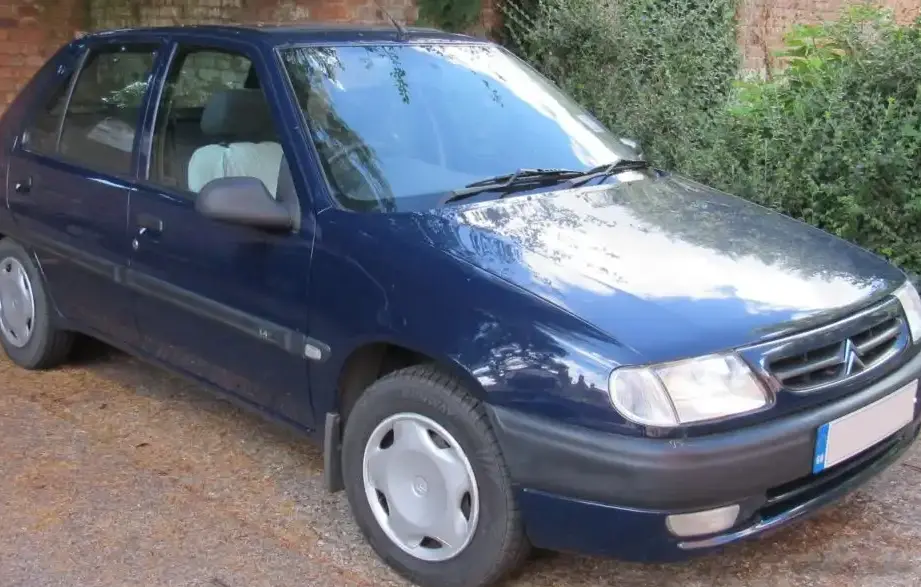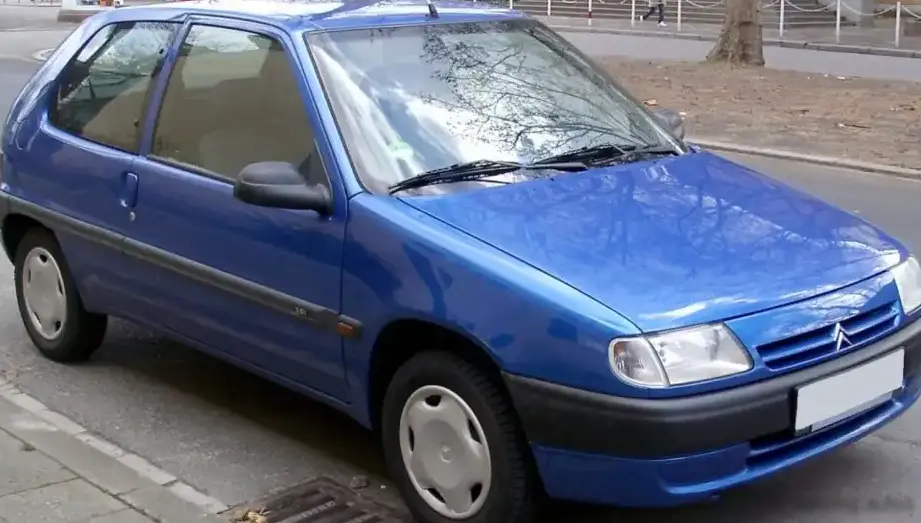
The Citroen Saxo Electric, introduced in 1997 as part of the Phase I Saxo range, represents a relatively early foray into mass-produced electric vehicles by a major European manufacturer. Produced between 1997 and 1999, this 3-door hatchback variant utilized a 12 kWh electric powertrain, delivering a modest 27 horsepower. It was primarily developed and sold in France as part of a fleet trial program, aimed at assessing the viability of electric vehicles for urban transportation. The Saxo Electric was built on the X1A/X1B platform, shared with the Peugeot 106, and served as a testbed for Citroen’s early electric vehicle technology.
Technical Specifications
| Brand | Citroen |
| Model | Saxo |
| Generation | Saxo (Phase I, 1996) 3-door |
| Type (Engine) | 12 kWh (27 Hp) |
| Start of production | 1997 |
| End of production | 1999 |
| Powertrain Architecture | BEV (Electric Vehicle) |
| Body type | Hatchback |
| Seats | 4 |
| Doors | 3 |
| Fuel Type | Electricity |
| Maximum speed | 91 km/h (56.54 mph) |
| Weight-to-power ratio | 37.8 kg/Hp, 26.5 Hp/tonne |
| Weight-to-torque ratio | 8 kg/Nm, 124.5 Nm/tonne |
| Gross battery capacity | 12 kWh |
| Battery voltage | 120 V |
| Battery weight | 274 kg (604.07 lbs.) |
| Battery location | Under the rear seats |
| All-electric range | 75 km (46.6 mi) |
| Electric motor power | 27 Hp @ 1600-5500 rpm |
| Electric motor Torque | 127 Nm @ 0-1600 rpm (93.67 lb.-ft. @ 0-1600 rpm) |
| Electric motor location | Front axle, Transverse |
| System power | 27 Hp @ 1600-5500 rpm |
| System torque | 127 Nm @ 0-1600 rpm (93.67 lb.-ft. @ 0-1600 rpm) |
| Kerb Weight | 1020 kg (2248.72 lbs.) |
| Max. weight | 1395 kg (3075.45 lbs.) |
| Max load | 375 kg (826.73 lbs.) |
| Trunk (boot) space – minimum | 187 l (6.6 cu. ft.) |
| Trunk (boot) space – maximum | 830 l (29.31 cu. ft.) |
| Length | 3718 mm (146.38 in.) |
| Width | 1595 mm (62.8 in.) |
| Height | 1390 mm (54.72 in.) |
| Wheelbase | 2385 mm (93.9 in.) |
| Front track | 1336 mm (52.6 in.) |
| Rear (Back) track | 1390 mm (54.72 in.) |
| Front overhang | 748 mm (29.45 in.) |
| Rear overhang | 585 mm (23.03 in.) |
| Minimum turning circle | 11.6 m (38.06 ft.) |
| Drivetrain Architecture | One electric motor drives the front wheels. |
| Drive wheel | Front wheel drive |
| Number of gears and type of gearbox | 1 gears, automatic transmission |
| Front suspension | Independent type McPherson |
| Rear suspension | Torsion |
| Front brakes | Disc |
| Rear brakes | Drum |
| Steering type | Steering rack and pinion |
| Power steering | Electric Steering |
| Tires size | 165/70 R13 |
Powertrain & Engine Architecture
The Citroen Saxo Electric’s powertrain centered around a 12 kWh battery pack, utilizing lead-acid technology. This battery pack was positioned under the rear seats, impacting rear passenger space and contributing significantly to the vehicle’s overall weight. The electric motor, delivering 27 horsepower and 127 Nm (93.67 lb-ft) of torque, was transversely mounted at the front of the vehicle, driving the front wheels. The motor operated within a voltage range of 120V. The single-speed automatic transmission provided a straightforward driving experience, prioritizing simplicity over performance. The electric motor’s torque curve, peaking from 0-1600 rpm, provided reasonable acceleration at lower speeds, typical of electric motors.
Driving Characteristics
The Saxo Electric’s performance was understandably limited by its modest power output. Acceleration was slow, and the top speed was restricted to 91 km/h (56.54 mph). However, the instant torque delivery of the electric motor made it surprisingly nimble in urban environments. The single-speed automatic transmission meant there was no gear shifting, resulting in a smooth, albeit uninspiring, driving experience. Compared to the petrol-powered Saxo variants, the Electric model lacked the responsiveness and higher top speed, but offered near-silent operation and zero tailpipe emissions. The weight distribution, affected by the rear-mounted battery pack, likely altered the handling characteristics compared to its internal combustion engine counterparts.
Equipment & Trim Levels
The Saxo Electric was generally equipped with a basic level of trim, reflecting its role as a fleet vehicle and technology demonstrator. Standard features included power steering, front disc brakes, and a relatively simple interior. Upholstery was typically cloth, and the dashboard layout was similar to other Saxo models, though often lacking some of the more luxurious options available on higher-spec petrol variants. Optional extras were limited, focusing primarily on practical features like upgraded audio systems or basic security enhancements.
Chassis & Braking
The Saxo Electric retained the MacPherson strut front suspension and torsion beam rear suspension found in the standard Saxo range. However, the added weight of the battery pack necessitated some adjustments to the suspension tuning to maintain acceptable ride quality and handling. The front brakes were disc brakes, providing adequate stopping power, while the rear brakes were drum brakes, a cost-saving measure common in this class of vehicle. The electric power steering offered light and easy steering, suitable for urban driving conditions.
Market Reception & Comparison
The Citroen Saxo Electric received limited public attention, primarily being used by French utility companies and government agencies for fleet trials. Critics acknowledged the vehicle’s environmental benefits and smooth driving experience, but also highlighted its limited range, slow speed, and relatively high cost compared to conventional petrol-powered cars. Compared to other Saxo variants, such as the 1.4L or 1.6L petrol models, the Electric version offered significantly lower performance but zero emissions. The 1.9 diesel variant provided better fuel economy and performance, but at the cost of increased noise and emissions.
Legacy
The Citroen Saxo Electric, while not a commercial success, played a valuable role in Citroen’s early development of electric vehicle technology. It provided valuable data on battery performance, motor efficiency, and driver behavior in real-world conditions. The lessons learned from the Saxo Electric program informed Citroen’s subsequent electric vehicle projects. Today, the Saxo Electric is a rare and collectible vehicle, sought after by enthusiasts interested in the history of electric vehicles. Its long-term reliability is generally good, although sourcing replacement parts for the electric powertrain can be challenging. The vehicle represents a significant, if modest, step in the evolution of electric mobility.