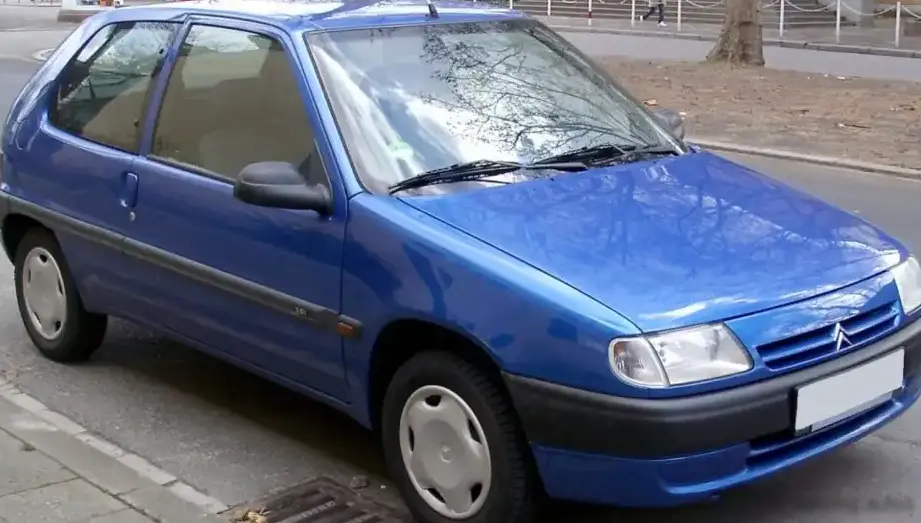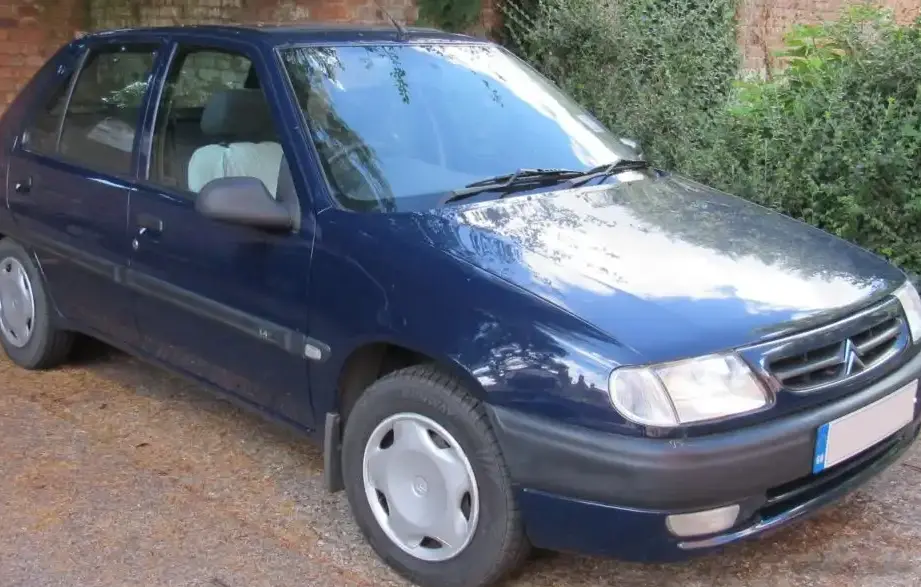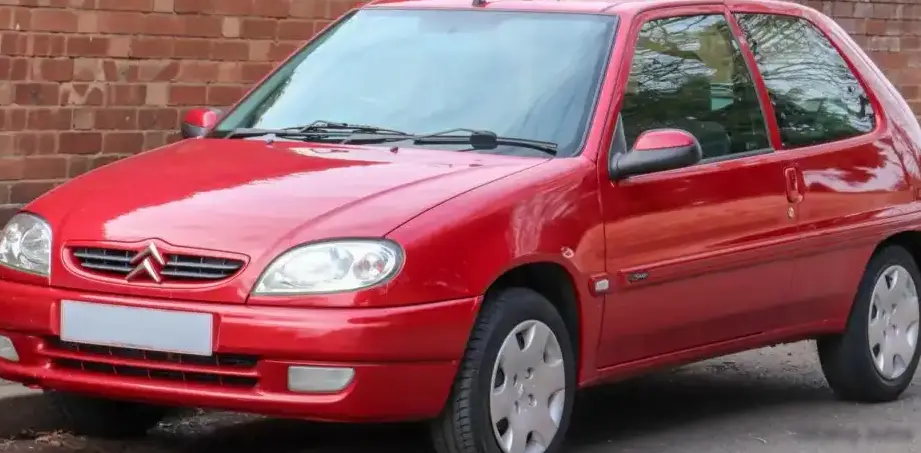
The Citroën Saxo 1.6, produced between 2001 and 2003 as part of the Phase II refresh of the Saxo model range, represented a performance-oriented variant within the supermini class. Positioned as a step up from the base 1.4-liter models, the 1.6 offered a noticeable increase in power and a more engaging driving experience. This 3-door hatchback was primarily sold in European markets, offering an affordable and sporty option for younger drivers or those seeking a nimble city car. It sat below the more focused Citroën Sport models, offering a balance between practicality and performance.
Technical Specifications
| Brand | Citroën |
| Model | Saxo |
| Generation | Saxo (Phase II, 1999) 3-door |
| Type (Engine) | 1.6 (98 Hp) |
| Start of production | 2001 |
| End of production | June, 2003 |
| Powertrain Architecture | Internal Combustion engine |
| Body type | Hatchback |
| Seats | 5 |
| Doors | 3 |
| Fuel consumption (urban) | 8.8 l/100 km (26.7 US mpg, 32.1 UK mpg, 11.4 km/l) |
| Fuel consumption (extra urban) | 5.5 l/100 km (42.8 US mpg, 51.4 UK mpg, 18.2 km/l) |
| Fuel consumption (combined) | 6.7 l/100 km (35.1 US mpg, 42.2 UK mpg, 14.9 km/l) |
| CO2 emissions | 159 g/km |
| Fuel Type | Petrol (Gasoline) |
| Acceleration 0 – 100 km/h | 10.5 sec |
| Acceleration 0 – 62 mph | 10.5 sec |
| Acceleration 0 – 60 mph | 10 sec |
| Maximum speed | 193 km/h (119.92 mph) |
| Weight-to-power ratio | 9.4 kg/Hp |
| Weight-to-torque ratio | 6.8 kg/Nm |
| Power | 98 Hp @ 5700 rpm |
| Torque | 135 Nm @ 3000 rpm (99.57 lb.-ft. @ 3000 rpm) |
| Engine layout | Front, Transverse |
| Engine Model/Code | NFT TU5JP4 |
| Engine displacement | 1587 cm3 (96.84 cu. in.) |
| Number of cylinders | 4 |
| Engine configuration | Inline |
| Cylinder Bore | 78.5 mm (3.09 in.) |
| Piston Stroke | 82 mm (3.23 in.) |
| Compression ratio | 9.6:1 |
| Number of valves per cylinder | 2 |
| Fuel injection system | Multi-port manifold injection |
| Engine aspiration | Naturally aspirated |
| Valvetrain | SOHC |
| Engine oil capacity | 3.5 l (3.7 US qt | 3.08 UK qt) |
| Coolant capacity | 6.1 l (6.45 US qt | 5.37 UK qt) |
| Kerb Weight | 920 kg (2028.25 lbs.) |
| Max. weight | 1360 kg (2998.29 lbs.) |
| Max load | 440 kg (970.03 lbs.) |
| Trunk (boot) space – minimum | 280 l (9.89 cu. ft.) |
| Trunk (boot) space – maximum | 953 l (33.65 cu. ft.) |
| Fuel tank capacity | 45 l (11.89 US gal | 9.9 UK gal) |
| Max. roof load | 50 kg (110.23 lbs.) |
| Permitted trailer load with brakes (12%) | 700 kg (1543.24 lbs.) |
| Permitted trailer load without brakes | 495 kg (1091.29 lbs.) |
| Permitted towbar download | 50 kg (110.23 lbs.) |
| Length | 3718 mm (146.38 in.) |
| Width | 1620 mm (63.78 in.) |
| Height | 1360 mm (53.54 in.) |
| Wheelbase | 2385 mm (93.9 in.) |
| Front track | 1401 mm (55.16 in.) |
| Rear track | 1321 mm (52.01 in.) |
| Minimum turning circle | 10.9 m (35.76 ft.) |
| Drivetrain | Front wheel drive |
| Number of gears | 5 |
| Gearbox type | Manual transmission |
| Front suspension | Independent type McPherson, Transverse stabilizer |
| Rear suspension | Trailing arm, Torsion |
| Front brakes | Ventilated discs |
| Rear brakes | Disc |
| Assisting systems | ABS (Anti-lock braking system) |
| Steering type | Steering rack and pinion |
| Power steering | Electric |
| Tires size | 185/55 R14 |
| Wheel rims size | 6J x 14 |
Powertrain & Engine Architecture
The heart of the Saxo 1.6 was the NFT (TU5JP4) engine, a 1.6-liter inline-four cylinder petrol engine. This engine was a common sight in various Peugeot and Citroën models of the era. It featured a single overhead camshaft (SOHC) valvetrain with two valves per cylinder. Fuel delivery was handled by a multi-port fuel injection system, providing a balance between efficiency and performance. The engine produced 98 horsepower at 5700 rpm and 135 Nm (99.57 lb-ft) of torque at 3000 rpm. This power was transmitted to the front wheels through a five-speed manual transmission, which was the standard offering. While an automatic transmission was available in some Saxo models, it was less common with the 1.6-liter engine due to the performance implications.
Driving Characteristics
The Saxo 1.6 offered a noticeable step up in performance compared to the lower-displacement models. The 0-60 mph sprint took around 10 seconds, and it could achieve a top speed of approximately 119.92 mph. The engine felt responsive, particularly in the mid-range, making it well-suited for both city driving and occasional highway excursions. The five-speed manual transmission allowed drivers to keep the engine in its optimal power band. Compared to the 1.4-liter Saxo, the 1.6 felt more confident when fully loaded or tackling inclines. While not a sports car, the Saxo 1.6 provided a fun and engaging driving experience, especially for its price point.
Equipment & Trim Levels
The Saxo 1.6 typically came with a reasonable level of standard equipment. This included central locking, power steering, and an adjustable steering column. Interior upholstery was typically cloth, and the dashboard featured a functional, if somewhat basic, design. Optional extras included air conditioning, electric windows, and a radio/CD player. Trim levels varied slightly depending on the market, but generally, the 1.6 occupied a mid-range position in the Saxo lineup, offering more features than the base models but falling short of the more luxurious or sporty trims.
Chassis & Braking
The Saxo 1.6 utilized a MacPherson strut independent suspension at the front and a trailing arm torsion beam suspension at the rear. This setup provided a good balance between ride comfort and handling. The front brakes were ventilated discs, while the rear brakes were solid discs, offering adequate stopping power for the vehicle’s weight and performance. Anti-lock Braking System (ABS) was standard, enhancing safety. The relatively lightweight nature of the Saxo contributed to its nimble handling characteristics.
Market Reception & Comparison
The Citroën Saxo 1.6 was generally well-received by automotive critics as a practical and affordable small car. It was praised for its lively engine, nimble handling, and reasonable fuel economy. Compared to other superminis of the time, such as the Renault Clio or Peugeot 206, the Saxo offered a competitive package, particularly in terms of value for money. The 1.4-liter Saxo was more economical but lacked the punch of the 1.6, while the higher-performance Saxo VTS models offered significantly more power but came at a higher price point. The 1.6 struck a good balance between performance, economy, and affordability.
Legacy
The Citroën Saxo 1.6 has proven to be a relatively reliable and durable vehicle. The TU5JP4 engine is known for its robustness, and with regular maintenance, it can withstand high mileage. Today, the Saxo 1.6 is a popular choice as an affordable used car, particularly for first-time drivers or those seeking a cheap and cheerful city runabout. While not a collector’s item, well-maintained examples are still relatively common on the roads, testament to the car’s enduring appeal and mechanical soundness.