
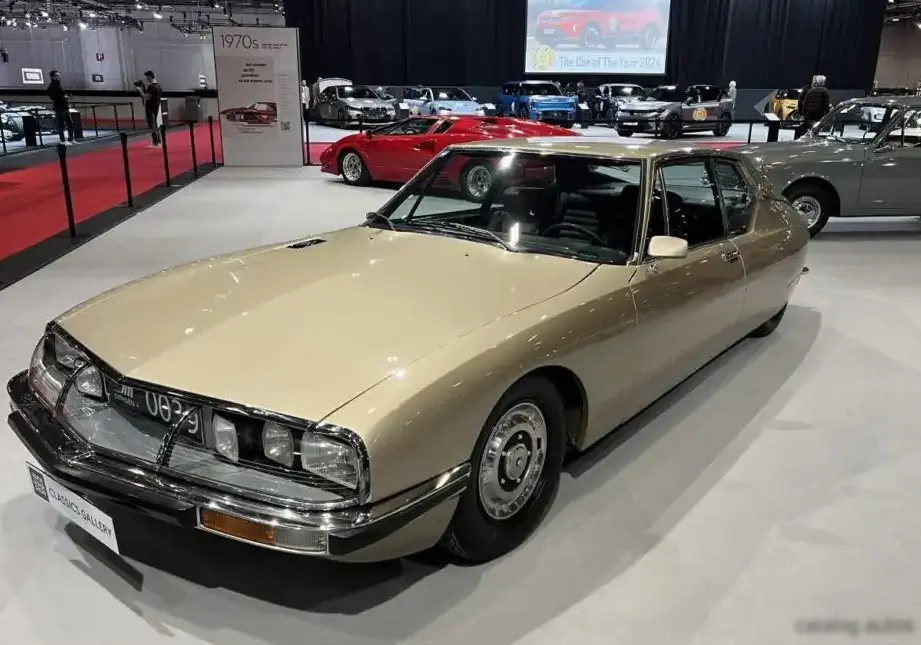
The Citroen SM 2.7 V6, produced between 1970 and 1972, represents a high point in Citroen’s engineering prowess and design innovation. This variant, powered by the Maserati-derived 2.7-liter V6 engine producing 170 horsepower, was the flagship model of the SM range. The SM (Sport/Maserati) was intended to be a grand tourer, blending Citroen’s advanced hydropneumatic suspension technology with a powerful and sophisticated engine. It occupied the top tier of the SM lineup, offering a more luxurious and performance-oriented experience than any other configuration available. The SM was built on Citroen’s Project S platform, a design intended to replace the aging DS, and it quickly gained a reputation for its unique blend of comfort, handling, and distinctive styling.
Technical Specifications
| Brand | Citroen |
| Model | SM |
| Generation | SM |
| Type (Engine) | 2.7 V6 (170 Hp) |
| Start of production | 1970 |
| End of production | 1972 |
| Powertrain Architecture | Internal Combustion engine |
| Body type | Coupe, Liftback |
| Seats | 4 |
| Doors | 3 |
| Fuel consumption (combined) | 12.5 l/100 km (18.8 US mpg, 22.6 UK mpg, 8 km/l) |
| Fuel Type | Petrol (Gasoline) |
| Acceleration 0 – 100 km/h | 8.9 sec |
| Acceleration 0 – 62 mph | 8.9 sec |
| Acceleration 0 – 60 mph | 8.5 sec |
| Maximum speed | 220 km/h (136.7 mph) |
| Weight-to-power ratio | 8.5 kg/Hp, 117.2 Hp/tonne |
| Weight-to-torque ratio | 6.3 kg/Nm, 158.6 Nm/tonne |
| Power | 170 Hp @ 5500 rpm |
| Power per litre | 63.7 Hp/l |
| Torque | 230 Nm @ 4000 rpm (169.64 lb.-ft. @ 4000 rpm) |
| Engine layout | Front, Longitudinal |
| Engine Model/Code | C 114-1 |
| Engine displacement | 2670 cm3 (162.93 cu. in.) |
| Number of cylinders | 6 |
| Engine configuration | V-engine |
| Cylinder Bore | 87 mm (3.43 in.) |
| Piston Stroke | 75 mm (2.95 in.) |
| Compression ratio | 9:1 |
| Number of valves per cylinder | 2 |
| Fuel injection system | Carburettor |
| Engine aspiration | Naturally aspirated engine |
| Valvetrain | DOHC |
| Engine oil capacity | 7 l (7.4 US qt | 6.16 UK qt) |
| Coolant | 13 l (13.74 US qt | 11.44 UK qt) |
| Kerb Weight | 1450 kg (3196.7 lbs.) |
| Max. weight | 1800 kg (3968.32 lbs.) |
| Max load | 350 kg (771.62 lbs.) |
| Fuel tank capacity | 90 l (23.78 US gal | 19.8 UK gal) |
| Length | 4893 mm (192.64 in.) |
| Width | 1836 mm (72.28 in.) |
| Height | 1324 mm (52.13 in.) |
| Ride height (ground clearance) | 155 mm (6.1 in.) |
| Drivetrain Architecture | The Internal combustion engine (ICE) drives the front wheels of the vehicle. |
| Drive wheel | Front wheel drive |
| Number of gears and type of gearbox | 5 gears, manual transmission |
| Front suspension | Hydro-pneumatic element |
| Rear suspension | Hydro-pneumatic element |
| Front brakes | Disc, 300 mm |
| Rear brakes | Disc, 256 mm |
| Steering type | Steering rack and pinion |
| Power steering | Hydraulic Steering |
| Tires size | 195/70 R15 |
Powertrain & Engine Architecture
The heart of the SM 2.7 V6 is its engine, a 2670cc, 60-degree V6. This engine wasn’t designed in-house by Citroen; it was sourced from Maserati, a company Citroen briefly owned during the 1960s. The engine, designated C 114-1, features a cast iron block and aluminum cylinder heads. It utilizes a single overhead camshaft (SOHC) per bank, operating two valves per cylinder. Fuel delivery is managed by three Weber 36 DCO carburetors, a somewhat unusual choice for a car of this caliber, but it contributed to the engine’s smooth power delivery. The engine’s longitudinal front-engine layout was a departure for Citroen, which traditionally favored front-wheel drive. The engine is paired with a five-speed manual transmission, providing precise control over the engine’s power.
Driving Characteristics
The SM 2.7 V6 offers a unique driving experience. The combination of the powerful V6 engine and Citroen’s innovative hydropneumatic suspension results in a remarkably comfortable and capable grand tourer. The suspension effectively isolates the cabin from road imperfections, providing a smooth and controlled ride even at high speeds. The steering, while not overly weighted, offers good feedback and precision. Acceleration is brisk, with the 0-60 mph sprint taking around 8.5 seconds, respectable for the early 1970s. The five-speed manual transmission allows the driver to fully exploit the engine’s powerband, while the relatively long gear ratios contribute to relaxed cruising at highway speeds. Compared to the later, less powerful 1.7L four-cylinder SM variants, the 2.7 V6 offers significantly more performance and a more refined driving experience.
Equipment & Trim Levels
The SM 2.7 V6 was well-equipped for its time. Standard features included power-assisted steering, disc brakes on all four wheels, and the aforementioned hydropneumatic suspension. The interior was typically finished in high-quality leather, with wood trim accents. The dashboard featured a comprehensive array of gauges, including a speedometer, tachometer, fuel gauge, oil pressure gauge, and coolant temperature gauge. Optional extras included air conditioning, a sunroof, and upgraded audio systems. The SM’s interior design was distinctly modern for the era, with a focus on ergonomics and driver comfort.
Chassis & Braking
The SM’s chassis is a monocoque construction, providing a rigid and lightweight platform. The hydropneumatic suspension system, a Citroen hallmark, utilizes self-leveling spheres and adjustable ride height. This system not only provides exceptional ride comfort but also allows for precise handling and stability. The braking system consists of disc brakes on all four wheels, offering excellent stopping power. The front brakes measure 300mm in diameter, while the rear brakes are slightly smaller at 256mm. Power assistance is standard, making braking effortless even during hard stops.
Market Reception & Comparison
The Citroen SM 2.7 V6 was generally well-received by automotive critics. It was praised for its innovative technology, comfortable ride, and strong performance. However, its complexity and relatively high price tag limited its sales success. Compared to other grand tourers of the era, such as the Jaguar E-Type and the Porsche 911, the SM offered a unique blend of comfort and performance. While it may not have been as overtly sporty as the Porsche, it provided a more comfortable and refined driving experience than either of its rivals. Fuel economy, at 12.5 l/100km, was typical for a V6 engine of this displacement in the early 1970s.
Legacy
The Citroen SM 2.7 V6 remains a highly sought-after classic car today. Its innovative technology, distinctive styling, and engaging driving experience have earned it a devoted following. While the SM was plagued by reliability issues in its early years, many of these problems have been addressed by dedicated owners and specialists. The Maserati-derived V6 engine is generally considered to be robust and reliable, provided it is properly maintained. The hydropneumatic suspension system, however, requires regular attention and can be expensive to repair. Today, the SM 2.7 V6 represents a unique and fascinating chapter in automotive history, a testament to Citroen’s engineering ambition and design flair. Finding well-maintained examples is becoming increasingly difficult, driving up their value in the collector car market.
