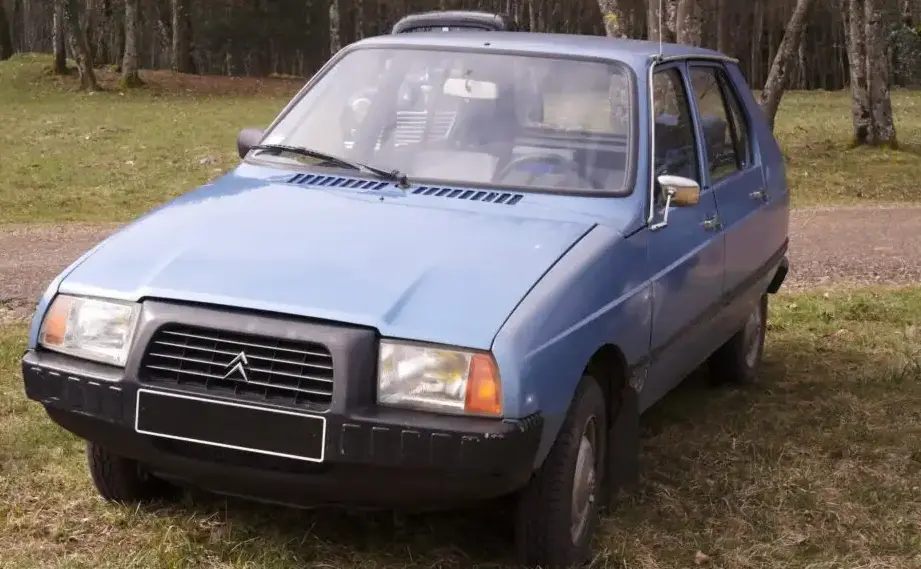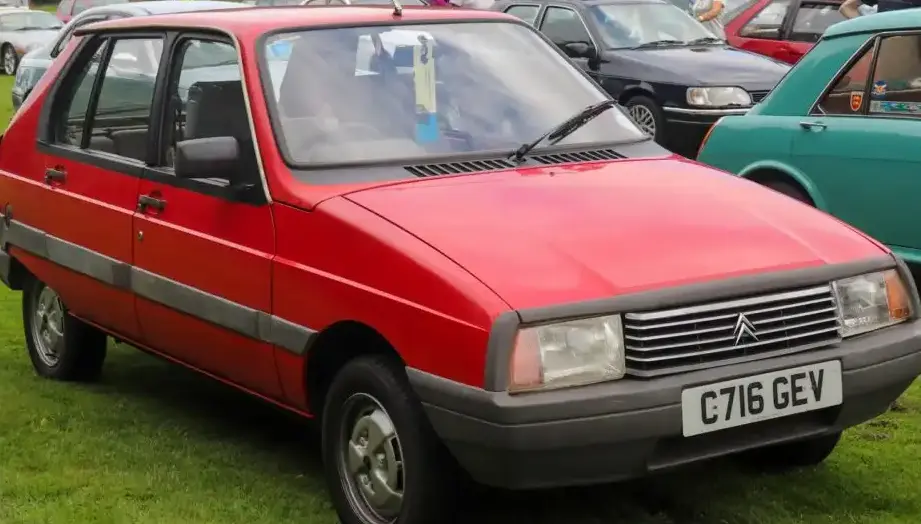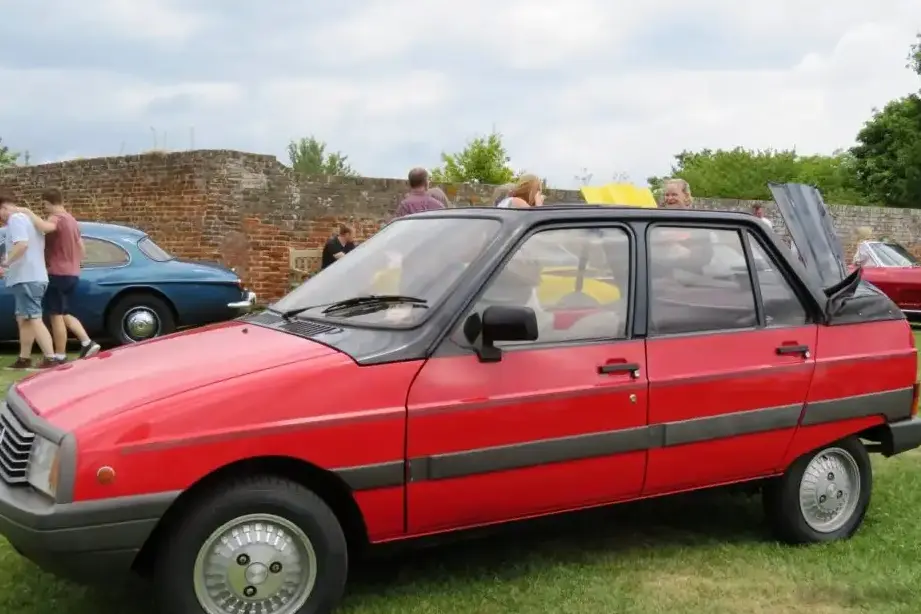
The Citroën Visa Cabriolet 11, produced between 1983 and 1985, represents a unique and relatively rare offering from the French automaker. Positioned as the entry-level variant of the Visa Cabriolet range, it aimed to provide affordable open-top motoring within the compact car segment. The Visa itself was a successor to the Citroën GS/GSA, utilizing a front-wheel-drive layout and a focus on practicality. The Cabriolet version, launched in 1984, was a collaborative effort with Pininfarina, who designed and manufactured the convertible top and body modifications. The “11” designation refers to the engine displacement, signifying the 1.1-liter engine producing 50 horsepower. This model played a role in broadening the Visa’s appeal, attracting buyers seeking a stylish and economical convertible.
Technical Specifications
| Brand | Citroën |
| Model | Visa |
| Generation | Visa Cabriolet |
| Type (Engine) | 11 (50 Hp) |
| Start of production | 1983 |
| End of production | 1985 |
| Powertrain Architecture | Internal Combustion engine |
| Body type | Cabriolet |
| Seats | 5 |
| Doors | 4 |
| Fuel Type | Petrol (Gasoline) |
| Maximum speed | 140 km/h (86.99 mph) |
| Weight-to-power ratio | 16.2 kg/Hp, 61.7 Hp/tonne |
| Power | 50 Hp @ 4800 rpm |
| Power per litre | 44.4 Hp/l |
| Engine layout | Front, Transverse |
| Engine Model/Code | 109 X |
| Engine displacement | 1125 cm3 (68.65 cu. in.) |
| Number of cylinders | 4 |
| Engine configuration | Inline |
| Cylinder Bore | 72 mm (2.83 in.) |
| Piston Stroke | 69 mm (2.72 in.) |
| Number of valves per cylinder | 2 |
| Fuel injection system | Carburettor |
| Engine aspiration | Naturally aspirated engine |
| Valvetrain | SOHC |
| Engine oil capacity | 4.5 l (4.76 US qt | 3.96 UK qt) |
| Coolant | 6.5 l (6.87 US qt | 5.72 UK qt) |
| Kerb Weight | 810 kg (1785.74 lbs.) |
| Max. weight | 1235 kg (2722.71 lbs.) |
| Max load | 425 kg (936.96 lbs.) |
| Fuel tank capacity | 40 l (10.57 US gal | 8.8 UK gal) |
| Permitted trailer load with brakes (12%) | 750 kg (1653.47 lbs.) |
| Permitted trailer load without brakes | 405 kg (892.87 lbs.) |
| Permitted towbar download | 45 kg (99.21 lbs.) |
| Length | 3690 mm (145.28 in.) |
| Width | 1535 mm (60.43 in.) |
| Height | 1410 mm (55.51 in.) |
| Wheelbase | 2430 mm (95.67 in.) |
| Front track | 1280 mm (50.39 in.) |
| Rear (Back) track | 1245 mm (49.02 in.) |
| Front overhang | 665 mm (26.18 in.) |
| Rear overhang | 595 mm (23.43 in.) |
| Drivetrain Architecture | The Internal combustion engine (ICE) drives the front wheels of the vehicle. |
| Drive wheel | Front wheel drive |
| Number of gears and type of gearbox | 4 gears, manual transmission |
| Front suspension | Independent coil spring, Transverse stabilizer |
| Rear suspension | Independent coil spring |
| Front brakes | Disc |
| Rear brakes | Drum |
| Steering type | Steering rack and pinion |
| Wheel rims size | 4.5J x 13 |
Powertrain & Engine Architecture
The Citroën Visa Cabriolet 11 was powered by the 109 X engine, a 1.1-liter (1125 cc) inline-four cylinder petrol engine. This engine was a relatively simple design, featuring a single overhead camshaft (SOHC) valvetrain with two valves per cylinder. Fuel delivery was managed by a single carburetor, a common feature for vehicles of this era aiming for affordability. The engine produced 50 horsepower at 4800 rpm, and while not particularly powerful, it was considered adequate for the Visa’s lightweight chassis. The engine was transversely mounted at the front of the vehicle, driving the front wheels. The four-speed manual transmission was the only gearbox option available for this variant. The engine’s design prioritized fuel economy and ease of maintenance over outright performance.
Driving Characteristics
The 1.8L/50 hp combination in the Visa Cabriolet resulted in a driving experience focused on relaxed cruising rather than spirited acceleration. The car’s relatively light weight (810 kg / 1785.74 lbs) helped mitigate the lack of power, but overtaking maneuvers required careful planning. The four-speed manual gearbox offered reasonable control, but the gear ratios were spaced to prioritize fuel efficiency. Compared to potential higher-spec Visa models (which were not offered in Cabriolet form), the “11” felt noticeably slower. The suspension, while providing a comfortable ride, wasn’t particularly sporty, leaning towards a softer setup suitable for everyday driving. The steering was light and easy to use, making it maneuverable in urban environments.
Equipment & Trim Levels
As the entry-level Cabriolet, the Visa 11 was equipped with a fairly basic level of standard features. The interior typically featured cloth upholstery, and a simple dashboard layout. Power steering and electric windows were not standard, though they could be added as optional extras. The convertible top was manually operated. The focus was on providing a functional and affordable open-top experience. Optional extras included upgraded audio systems and different interior trim colors. The trim level was largely defined by the engine choice, with the “11” representing the most economical and basic offering.
Chassis & Braking
The Visa Cabriolet utilized an independent coil spring suspension system at both the front and rear, incorporating a transverse stabilizer bar at the front to reduce body roll. The front brakes were disc brakes, providing adequate stopping power, while the rear brakes were drum brakes, a cost-saving measure common in vehicles of this class. The steering system employed a rack and pinion setup, offering precise and responsive steering. The car rode on 4.5J x 13 inch wheels. The chassis was reinforced to compensate for the loss of structural rigidity inherent in a convertible design, but it still exhibited some degree of flex compared to the hardtop Visa models.
Market Reception & Comparison
The Citroën Visa Cabriolet 11 was generally well-received as an affordable and stylish convertible. Critics praised its Pininfarina-designed body and the open-air driving experience it offered. However, the 50 hp engine was often criticized as being underpowered, particularly when the car was fully loaded with passengers and luggage. Compared to other convertibles available at the time, the Visa 11 offered a competitive price point, but its performance lagged behind more powerful options. Fuel economy was a strong point, making it an attractive option for budget-conscious buyers. Reliability was generally good, though the carburetor required periodic maintenance.
Legacy
The Citroën Visa Cabriolet 11, while not a high-volume seller, holds a special place in Citroën’s history as a unique and affordable convertible. Today, surviving examples are relatively rare and sought after by classic car enthusiasts. The 109 X engine is known for its simplicity and relative reliability, but parts availability can be a challenge. The Visa Cabriolet’s enduring appeal lies in its charming design, open-top motoring experience, and its representation of a bygone era of affordable and stylish cars. The car’s relatively simple mechanicals make it a viable project for home mechanics, and its lightweight construction contributes to a fun and engaging driving experience, even with the modest power output.