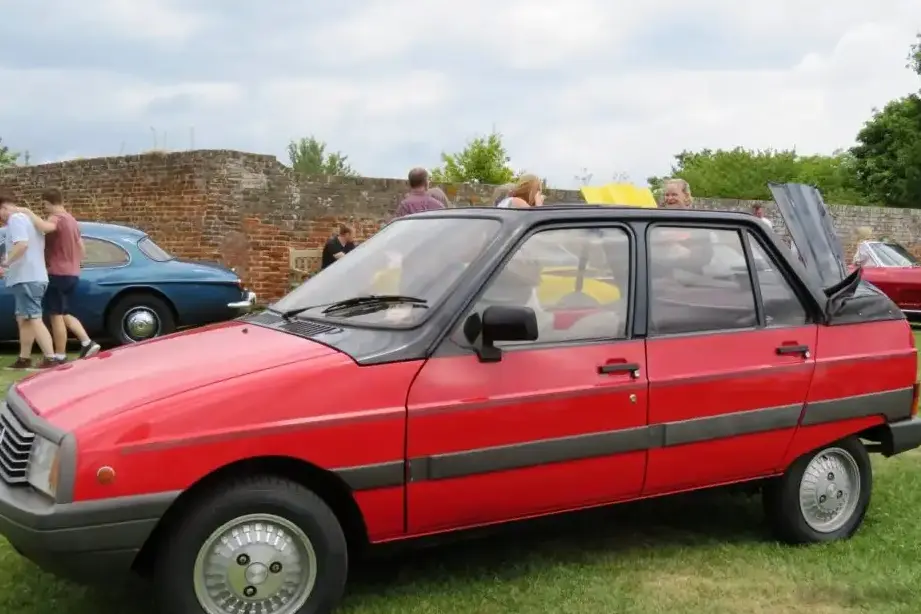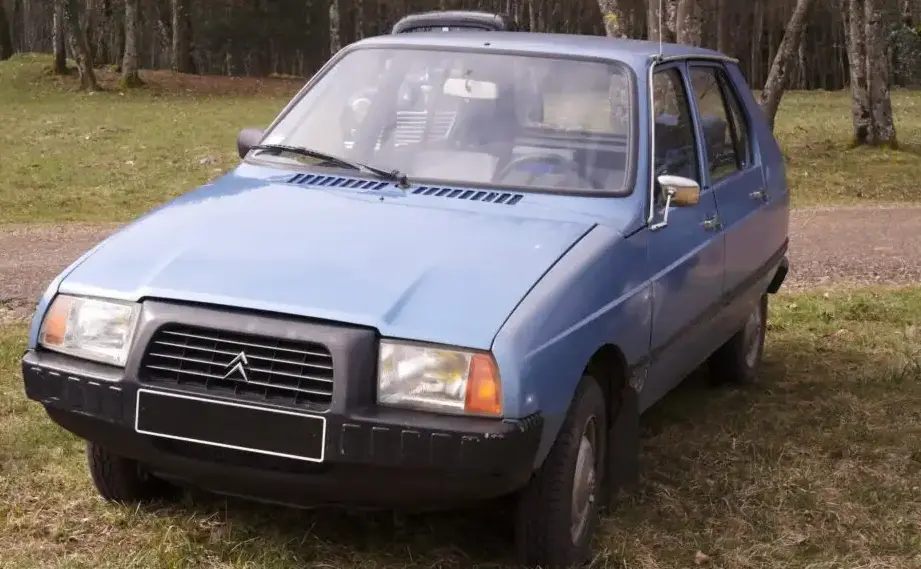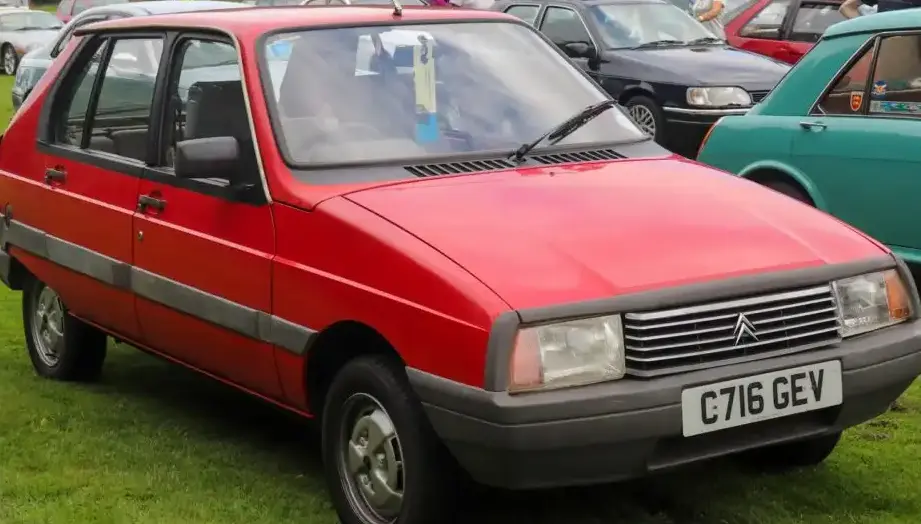
The Citroen Visa Phase II 17 RD, produced between 1984 and 1988, represents a significant iteration of Citroen’s compact hatchback. Positioned as an entry-level offering within the Visa range, the 17 RD utilized a diesel engine to provide economical transportation. It was a key model for Citroen in the European market, appealing to buyers seeking fuel efficiency and practicality in a small package. This variant distinguished itself from the gasoline-powered Visas and later, more powerful diesel versions, offering a distinct driving experience and price point. The Visa itself was designed as a more modern and affordable alternative to the larger Citroen GS and CX models.
Technical Specifications
| Brand | Citroen |
| Model | Visa |
| Generation | Visa (Phase II) |
| Type (Engine) | 17 RD (60 Hp) |
| Start of production | 1984 |
| End of production | 1988 |
| Powertrain Architecture | Internal Combustion engine |
| Body type | Hatchback |
| Seats | 5 |
| Doors | 5 |
| Fuel consumption (urban) | 6 l/100 km (39.2 US mpg, 47.1 UK mpg, 16.7 km/l) |
| Fuel consumption (extra urban) | 4.6 l/100 km (51.1 US mpg, 61.4 UK mpg, 21.7 km/l) |
| Fuel Type | Diesel |
| Acceleration 0 – 100 km/h | 15.6 sec |
| Acceleration 0 – 62 mph | 15.6 sec |
| Acceleration 0 – 60 mph | 14.8 sec |
| Maximum speed | 154 km/h (95.69 mph) |
| Weight-to-power ratio | 14.8 kg/Hp, 67.4 Hp/tonne |
| Weight-to-torque ratio | 7.9 kg/Nm, 125.8 Nm/tonne |
| Power | 60 Hp @ 4600 rpm |
| Power per litre | 33.9 Hp/l |
| Torque | 112 Nm @ 2000 rpm (82.61 lb.-ft. @ 2000 rpm) |
| Engine layout | Front, Transverse |
| Engine Model/Code | XUD7 161A |
| Engine displacement | 1769 cm3 (107.95 cu. in.) |
| Number of cylinders | 4 |
| Engine configuration | Inline |
| Cylinder Bore | 80 mm (3.15 in.) |
| Piston Stroke | 88 mm (3.46 in.) |
| Compression ratio | 23:1 |
| Number of valves per cylinder | 2 |
| Fuel injection system | Precombustion chamber injection |
| Engine aspiration | Naturally aspirated engine |
| Valvetrain | SOHC |
| Engine oil capacity | 4.6 l (4.86 US qt | 4.05 UK qt) |
| Coolant | 7.5 l (7.93 US qt | 6.6 UK qt) |
| Kerb Weight | 890 kg (1962.11 lbs.) |
| Max. weight | 1300 kg (2866.01 lbs.) |
| Max load | 410 kg (903.9 lbs.) |
| Trunk (boot) space – minimum | 300 l (10.59 cu. ft.) |
| Trunk (boot) space – maximum | 674 l (23.8 cu. ft.) |
| Fuel tank capacity | 43 l (11.36 US gal | 9.46 UK gal) |
| Max. roof load | 60 kg (132.28 lbs.) |
| Permitted trailer load with brakes (12%) | 750 kg (1653.47 lbs.) |
| Permitted trailer load without brakes | 445 kg (981.06 lbs.) |
| Length | 3725 mm (146.65 in.) |
| Width | 1555 mm (61.22 in.) |
| Height | 1400 mm (55.12 in.) |
| Wheelbase | 2420 mm (95.28 in.) |
| Minimum turning circle | 10.8 m (35.43 ft.) |
| Drivetrain Architecture | Front wheel drive |
| Number of gears and type of gearbox | 5 gears, manual transmission |
| Front suspension | Independent coil spring, Transverse stabilizer |
| Rear suspension | Independent coil spring |
| Front brakes | Disc |
| Rear brakes | Drum |
| Steering type | Steering rack and pinion |
Powertrain & Engine Architecture
The heart of the Visa 17 RD is the XUD7 161A engine, a 1.8-liter inline-four diesel. This engine was a mainstay of Citroen and Peugeot vehicles during the 1980s and early 1990s, known for its durability and fuel efficiency. The XUD7 utilizes precombustion chamber injection, a system where fuel is injected into a small chamber within the cylinder head, promoting more complete combustion. The engine features a single overhead camshaft (SOHC) valvetrain operating two valves per cylinder. The 60 horsepower output at 4600 rpm and 82.61 lb-ft of torque at 2000 rpm were modest, but sufficient for the Visa’s lightweight chassis. The engine was transversely mounted, contributing to the car’s compact footprint. The 17 RD was exclusively offered with a five-speed manual transmission, optimized for maximizing fuel economy and providing reasonable acceleration.
Driving Characteristics
The Visa 17 RD offered a utilitarian driving experience. Acceleration was slow, with a 0-60 mph time of around 14.8 seconds, but the engine’s torque delivery made it reasonably tractable in everyday driving. The five-speed gearbox allowed drivers to keep the engine in its optimal power band, although frequent shifting was often necessary. Compared to the gasoline-powered Visas, the 17 RD prioritized fuel economy over outright performance. It also differed significantly from the later, more powerful diesel Visas, which offered considerably more horsepower and torque. The suspension provided a comfortable ride, typical of Citroen’s emphasis on passenger comfort, but handling was not particularly sporty. The steering, while precise, lacked significant feedback.
Equipment & Trim Levels
The 17 RD was typically equipped with basic, functional features. Standard equipment included cloth upholstery, a simple dashboard layout, and manual windows and door locks. Optional extras were limited, reflecting the car’s entry-level positioning. These could include a radio, upgraded interior trim, and occasionally, a sunroof. The interior was designed for practicality, with durable materials and a focus on maximizing space within the compact cabin. The trim level was generally consistent across the 17 RD models, with minimal variations in standard features.
Chassis & Braking
The Visa 17 RD utilized a relatively simple chassis design. The front suspension featured independent coil springs and a transverse stabilizer bar, while the rear suspension employed independent coil springs. The braking system consisted of disc brakes at the front and drum brakes at the rear. This configuration was typical for cars in this weight class during the 1980s. The relatively light curb weight of 890 kg (1962.11 lbs) helped to compensate for the modest braking power. The steering system was a rack and pinion setup, providing reasonably precise control.
Market Reception & Comparison
The Citroen Visa 17 RD was well-received in the European market as an affordable and fuel-efficient option. Critics praised its economy and practicality, but noted its lack of performance. Compared to other cars in its class, such as the Renault 5 and Peugeot 205, the Visa offered a comfortable ride and a spacious interior. However, it lacked the sporty handling of some of its rivals. The 17 RD’s fuel economy was a key selling point, particularly during a period of rising fuel prices. Compared to the gasoline-powered Visas, the diesel version offered significantly better mileage, making it an attractive option for budget-conscious buyers.
Legacy
The XUD7 engine, found in the Visa 17 RD, is renowned for its durability and longevity. Many examples of this engine are still in service today, testament to its robust design. The Visa 17 RD, while not a particularly collectible car, has gained a following among enthusiasts who appreciate its simplicity and reliability. In the used car market, these Visas are typically affordable and represent a practical option for those seeking a classic European hatchback. The 17 RD’s legacy lies in its contribution to Citroen’s reputation for building fuel-efficient and dependable vehicles.