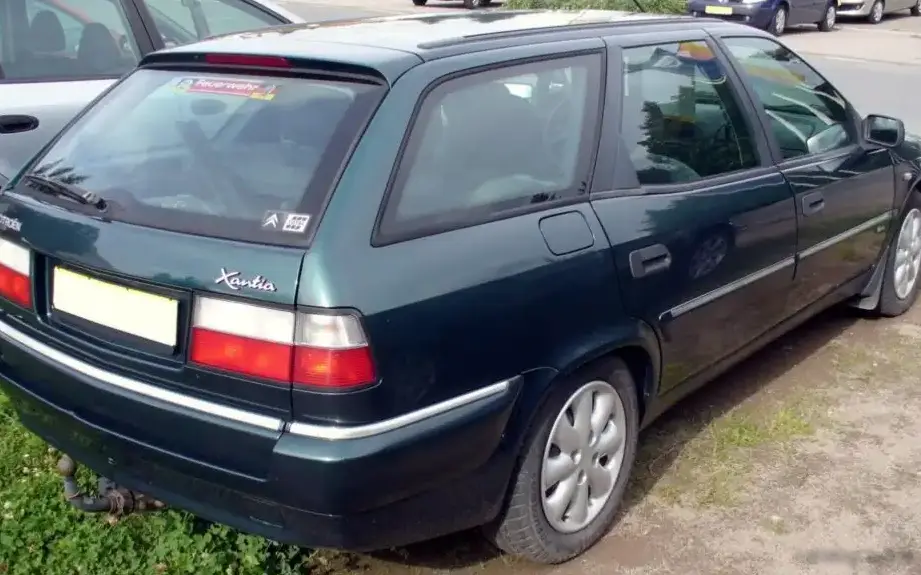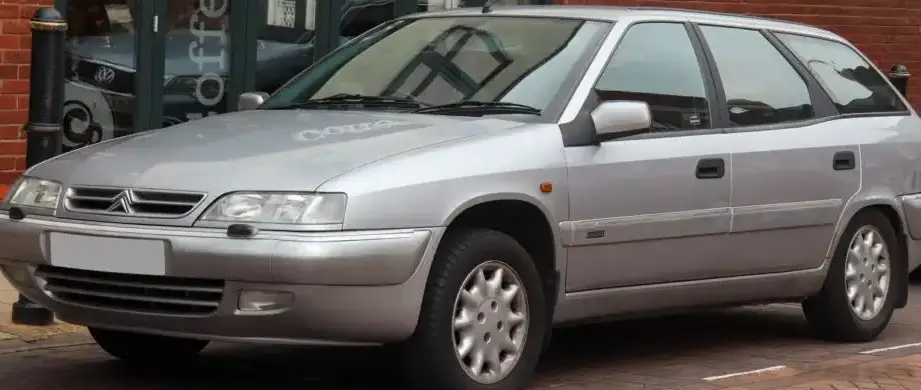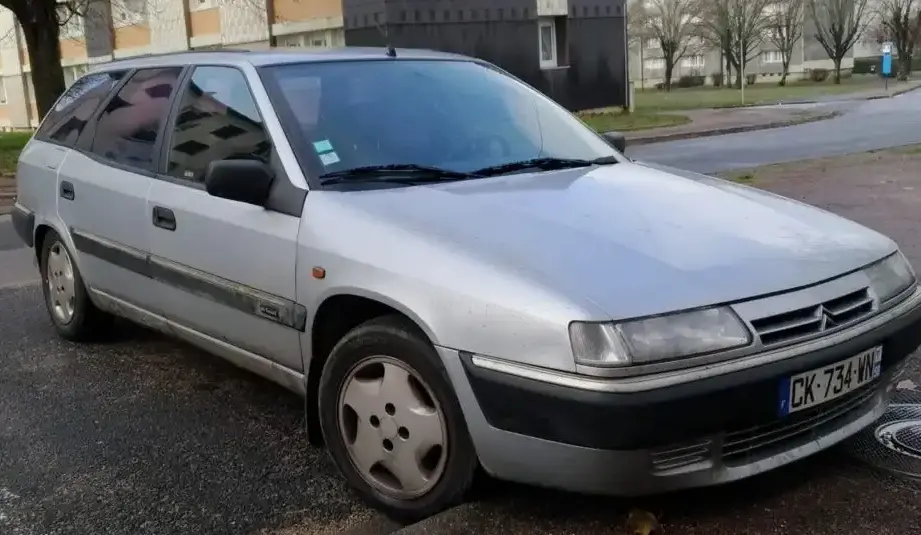
The Citroen Xantia Break 1.8 i, produced between 1995 and 1998, represents a compelling blend of practicality, comfort, and French engineering within the Xantia (X1) model range. Positioned as a mid-range offering, this variant catered to buyers seeking a spacious, family-oriented station wagon with reasonable performance and fuel efficiency. The Xantia Break, in general, was Citroen’s attempt to replace the aging BX, offering a more modern and aerodynamic design, coupled with the innovative hydropneumatic suspension system that Citroen was renowned for. This particular 1.8L engine and five-speed manual transmission combination aimed to provide a balance between affordability and usability, appealing to a broad segment of the European market.
Technical Specifications
| Brand | Citroen |
| Model | Xantia |
| Generation | Xantia Break (X1) |
| Type (Engine) | 1.8 i (103 Hp) |
| Start of production | 1995 |
| End of production | 1998 |
| Powertrain Architecture | Internal Combustion engine |
| Body type | Station wagon (estate) |
| Seats | 5 |
| Doors | 5 |
| Fuel consumption (urban) | 11 l/100 km (21.4 US mpg) |
| Fuel consumption (extra urban) | 6.2 l/100 km (37.9 US mpg) |
| Fuel Type | Petrol (Gasoline) |
| Maximum speed | 178 km/h (110.6 mph) |
| Power | 103 Hp |
| Power per litre | 58.5 Hp/l |
| Engine layout | Front, Transverse |
| Engine Model/Code | LFX XU7JP4 |
| Engine displacement | 1761 cm3 (107.46 cu. in.) |
| Number of cylinders | 4 |
| Engine configuration | Inline |
| Cylinder Bore | 83 mm (3.27 in.) |
| Piston Stroke | 81.4 mm (3.2 in.) |
| Number of valves per cylinder | 2 |
| Fuel injection system | Multi-port manifold injection |
| Engine aspiration | Naturally aspirated engine |
| Engine oil capacity | 4.75 l (5.02 US qt | 4.18 UK qt) |
| Coolant | 7 l (7.4 US qt | 6.16 UK qt) |
| Trunk (boot) space – minimum | 512 l (18.08 cu. ft.) |
| Trunk (boot) space – maximum | 1144 l (40.4 cu. ft.) |
| Fuel tank capacity | 65 l (17.17 US gal | 14.3 UK gal) |
| Max. roof load | 75 kg (165.35 lbs.) |
| Length | 4660 mm (183.46 in.) |
| Width | 1755 mm (69.09 in.) |
| Height | 1416 mm (55.75 in.) |
| Wheelbase | 2740 mm (107.87 in.) |
| Front track | 1488-1502 mm (58.58 – 59.13 in.) |
| Rear (Back) track | 1464 mm (57.64 in.) |
| Front overhang | 931 mm (36.65 in.) |
| Rear overhang | 989 mm (38.94 in.) |
| Drivetrain Architecture | The Internal combustion engine (ICE) drives the front wheels of the vehicle. |
| Drive wheel | Front wheel drive |
| Number of gears and type of gearbox | 5 gears, manual transmission |
| Front suspension | Independent type McPherson, Wishbone |
| Rear suspension | Hydro-pneumatic element |
| Front brakes | Ventilated discs |
| Rear brakes | Disc |
| Assisting systems | ABS (Anti-lock braking system) |
| Steering type | Steering rack and pinion |
| Power steering | Hydraulic Steering |
| Tires size | 175/70 R14 |
Powertrain & Engine Architecture
The heart of the Xantia Break 1.8 i is the Citroen LFX engine, a member of the XU7JP4 family. This 1.8-liter inline-four cylinder engine utilizes a naturally aspirated configuration and a multi-port fuel injection system. The engine produces 103 horsepower and is known for its relatively smooth operation and decent torque output for its displacement. The XU7JP4 engine is a robust design, featuring a cast iron block and an aluminum cylinder head. It employs a single overhead camshaft (SOHC) design with two valves per cylinder. The engine’s relatively simple design contributed to its reliability and ease of maintenance. The five-speed manual transmission paired with this engine offered precise shifts and helped to maximize fuel efficiency. The gear ratios were tuned for a balance of acceleration and cruising comfort.
Driving Characteristics
The Xantia Break 1.8 i offered a comfortable and composed driving experience. While not a performance-oriented variant, the 103 hp engine provided adequate power for everyday driving and highway cruising. Acceleration was respectable, but not particularly brisk. The five-speed manual transmission allowed drivers to keep the engine in its optimal power band. Compared to the more powerful 2.0-liter or V6 versions of the Xantia, the 1.8 i felt less eager to accelerate, but it also offered better fuel economy. The hydropneumatic suspension, a Citroen hallmark, provided a remarkably smooth and comfortable ride, absorbing bumps and imperfections in the road with ease. This suspension system also allowed for self-leveling, maintaining a consistent ride height regardless of load.
Equipment & Trim Levels
The 1.8 i Xantia Break typically came equipped with a reasonable level of standard features. These included power steering, central locking, electric front windows, and an adjustable steering column. Interior upholstery was typically cloth, with a functional and durable design. Optional extras included air conditioning, a sunroof, and upgraded audio systems. The dashboard layout was typical of Citroen designs of the era, with a focus on ergonomics and ease of use. The Xantia Break was designed with practicality in mind, offering a spacious interior and a large cargo area. The rear seats could be folded down to create an even larger loading space.
Chassis & Braking
The Xantia Break 1.8 i featured an independent McPherson strut front suspension and a unique hydropneumatic suspension system at the rear. This rear suspension provided exceptional ride comfort and handling characteristics. The braking system consisted of ventilated discs at the front and solid discs at the rear. Anti-lock braking system (ABS) was standard, enhancing safety and control during emergency braking situations. The steering was a rack and pinion system with hydraulic power assistance, providing precise and responsive steering feel. The tires were typically 175/70 R14, offering a good balance of grip and ride comfort.
Market Reception & Comparison
The Citroen Xantia Break 1.8 i was generally well-received by automotive critics. It was praised for its comfortable ride, spacious interior, and practical design. However, some critics noted that the 1.8-liter engine could feel underpowered, especially when fully loaded. Compared to other station wagons in its class, such as the Ford Mondeo Estate or the Volkswagen Passat Variant, the Xantia Break offered a unique driving experience thanks to its hydropneumatic suspension. Fuel economy was competitive, and the Xantia Break proved to be a reliable and durable vehicle. The 1.8L engine was considered a good compromise for those seeking lower running costs compared to the more powerful engine options.
Legacy
The Citroen Xantia Break 1.8 i remains a popular choice among enthusiasts and classic car collectors. The XU7JP4 engine is known for its reliability and longevity, and parts availability is generally good. While the hydropneumatic suspension system requires specialized maintenance, it is highly regarded for its exceptional ride quality. Today, well-maintained examples of the Xantia Break 1.8 i can be found in the used car market at affordable prices. It represents a unique and charming alternative to more mainstream station wagons, offering a blend of French flair, practicality, and comfort.