Technical Specifications
| Brand | Citroen |
| Model | Xantia |
| Generation | Xantia Break (X1) |
| Type (Engine) | 2.0 i (121 Hp) |
| Start of production | 1995 |
| End of production | 1998 |
| Powertrain Architecture | Internal Combustion engine |
| Body type | Station wagon (estate) |
| Seats | 5 |
| Doors | 5 |
| Fuel consumption (urban) | 12.7 l/100 km (18.5 US mpg, 22.2 UK mpg) |
| Fuel consumption (extra urban) | 6.8 l/100 km (34.6 US mpg, 41.5 UK mpg) |
| Fuel Type | Petrol (Gasoline) |
| Acceleration 0 – 100 km/h | 14.8 sec |
| Acceleration 0 – 62 mph | 14.8 sec |
| Acceleration 0 – 60 mph | 14.1 sec |
| Maximum speed | 193 km/h (119.92 mph) |
| Weight-to-power ratio | 11.1 kg/Hp |
| Weight-to-torque ratio | 7.7 kg/Nm |
| Power | 121 Hp @ 5750 rpm |
| Torque | 176 Nm @ 2750 rpm (129.81 lb.-ft. @ 2750 rpm) |
| Engine layout | Front, Transverse |
| Engine Model/Code | RFX XU10J2C |
| Engine displacement | 1998 cm3 (121.93 cu. in.) |
| Number of cylinders | 4 |
| Engine configuration | Inline |
| Cylinder Bore | 86 mm (3.39 in.) |
| Piston Stroke | 86 mm (3.39 in.) |
| Compression ratio | 9.5:1 |
| Number of valves per cylinder | 2 |
| Fuel injection system | Multi-port manifold injection |
| Engine aspiration | Naturally aspirated |
| Valvetrain | OHC |
| Engine oil capacity | 4.75 l (5.02 US qt | 4.18 UK qt) |
| Coolant capacity | 8 l (8.45 US qt | 7.04 UK qt) |
| Kerb Weight | 1348 kg (2971.83 lbs.) |
| Max. weight | 1960 kg (4321.06 lbs.) |
| Max load | 612 kg (1349.23 lbs.) |
| Trunk (boot) space – minimum | 512 l (18.08 cu. ft.) |
| Trunk (boot) space – maximum | 1144 l (40.4 cu. ft.) |
| Fuel tank capacity | 65 l (17.17 US gal | 14.3 UK gal) |
| Max. roof load | 75 kg (165.35 lbs.) |
| Permitted trailer load with brakes (12%) | 1200 kg (2645.55 lbs.) |
| Permitted trailer load without brakes | 670 kg (1477.1 lbs.) |
| Length | 4660 mm (183.46 in.) |
| Width | 1755 mm (69.09 in.) |
| Height | 1416 mm (55.75 in.) |
| Wheelbase | 2740 mm (107.87 in.) |
| Front track | 1488 mm (58.58 in.) |
| Rear track | 1442 mm (56.77 in.) |
| Front overhang | 931 mm (36.65 in.) |
| Rear overhang | 989 mm (38.94 in.) |
| Drivetrain Architecture | Front wheel drive |
| Number of gears | 4 |
| Gearbox type | Automatic transmission |
| Front suspension | Independent type McPherson, Wishbone |
| Rear suspension | Hydro-pneumatic element, Trailing arm |
| Front brakes | Ventilated discs |
| Rear brakes | Disc |
| Assisting systems | ABS (Anti-lock braking system) |
| Steering type | Steering rack and pinion |
| Power steering | Hydraulic |
| Tires size | 185/65 R14 |
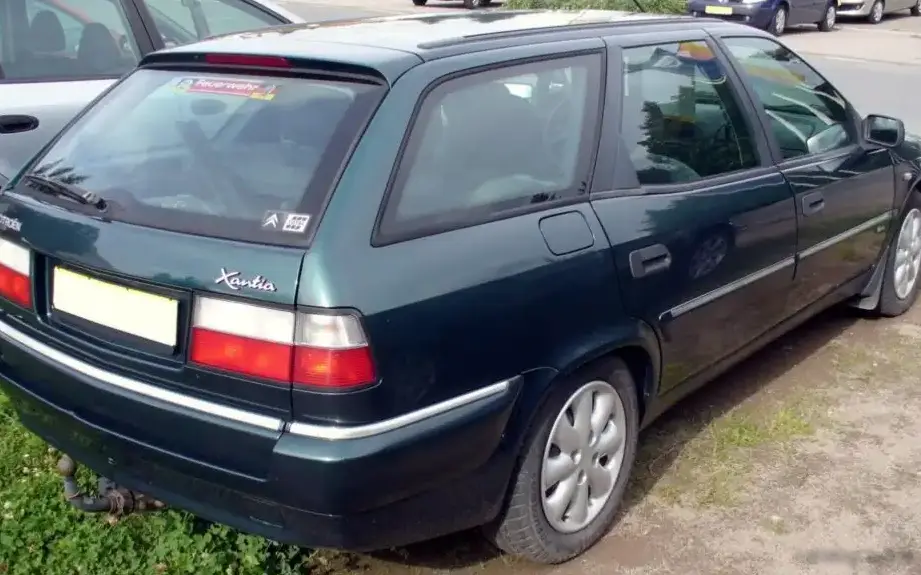
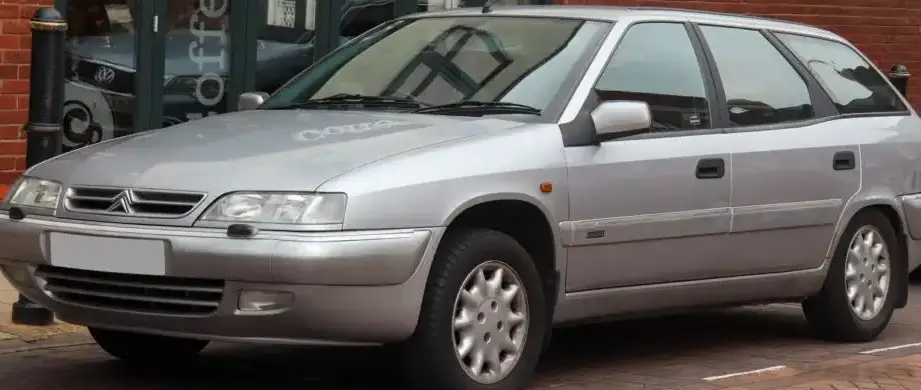
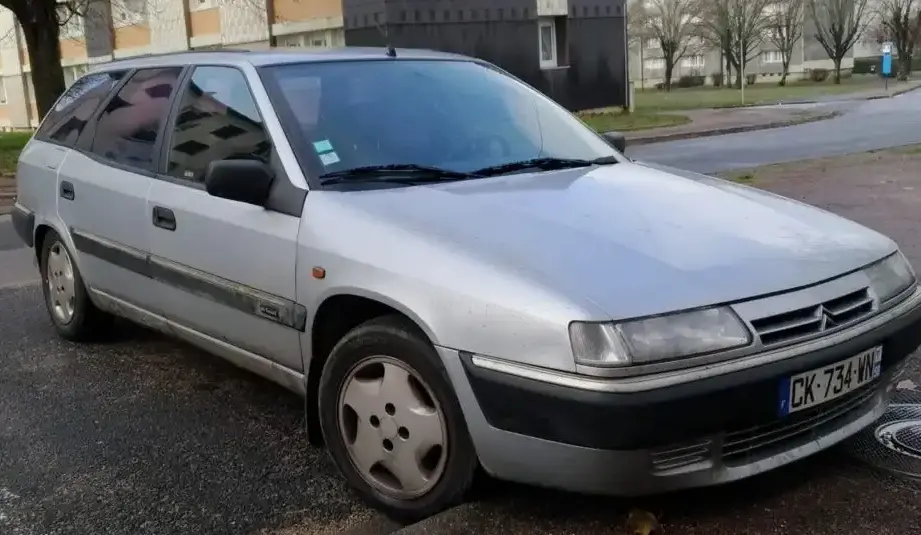
The Citroen Xantia Break 2.0i, produced between 1995 and 1998, represents a compelling blend of French engineering and practicality within the large family car segment. As a station wagon (estate) variant of the Xantia (X1) series, it offered increased cargo capacity and versatility compared to the sedan. This particular 2.0-liter, 121 horsepower configuration occupied a mid-range position in the Xantia Break lineup, offering a balance between performance and affordability. It served as a popular choice for families and those requiring a spacious and comfortable vehicle for long journeys, primarily in European markets.
Powertrain & Engine Architecture
The heart of the Xantia Break 2.0i is the RFX engine, a member of the PSA Group’s XU10J2C family. This 1998cc inline-four cylinder engine utilizes a naturally aspirated configuration and a multi-port fuel injection system. The engine features a single overhead camshaft (OHC) design operating two valves per cylinder. This configuration was chosen for its balance of simplicity, reliability, and reasonable performance. The XU10J2C engine is known for its durability, although it can be susceptible to head gasket issues if not properly maintained. The four-speed automatic transmission, while providing convenience, was not known for its sportiness or fuel efficiency compared to the available manual gearbox. It was a conventional hydraulic automatic, offering smooth but somewhat slow shifts.
Driving Characteristics
The 121 horsepower and 176 Nm (129.81 lb-ft) of torque delivered by the 2.0i engine, coupled with the four-speed automatic transmission, resulted in a comfortable but not particularly exhilarating driving experience. Acceleration from 0-100 km/h (0-62 mph) took around 14.8 seconds, and top speed was approximately 193 km/h (119.92 mph). Compared to the more powerful versions of the Xantia, such as those equipped with the 2.1-liter engine, the 2.0i felt noticeably slower. However, it offered a more relaxed driving experience, particularly in urban environments. The automatic transmission’s gear ratios were geared towards fuel economy and smooth cruising rather than rapid acceleration. The Xantia’s renowned hydropneumatic suspension provided a remarkably comfortable ride, absorbing bumps and imperfections in the road with ease, regardless of the engine configuration.
Equipment & Trim Levels
The Xantia Break 2.0i typically came equipped with a reasonable level of standard features. These included power steering, central locking, electric front windows, and an adjustable steering column. Interior upholstery was generally cloth, with options for upgraded materials available. Depending on the specific market and optional packages selected, features like air conditioning, a sunroof, and upgraded audio systems could be added. The dashboard layout was functional and ergonomically designed, typical of Citroen’s approach at the time. The Break (estate) body style, of course, provided a significantly larger cargo area than the sedan, making it ideal for families or those needing to transport bulky items.
Chassis & Braking
The Xantia Break 2.0i utilized an independent McPherson strut front suspension and a hydro-pneumatic rear suspension system. This unique rear suspension, a Citroen hallmark, provided exceptional ride comfort and self-leveling capabilities. The braking system consisted of ventilated discs on the front wheels and solid discs on the rear. Anti-lock Braking System (ABS) was standard, enhancing safety and control during emergency braking situations. The steering was a rack and pinion system with hydraulic power assistance, providing precise and responsive handling.
Market Reception & Comparison
The Xantia Break 2.0i was generally well-received by automotive critics as a practical and comfortable family car. It was praised for its spacious interior, comfortable ride, and distinctive styling. However, the automatic transmission was often criticized for its lack of responsiveness and impact on fuel economy. Compared to other station wagons in its class, such as the Ford Mondeo Estate or the Vauxhall/Opel Vectra Estate, the Xantia offered a unique driving experience thanks to its hydropneumatic suspension. The 2.0i variant offered a more affordable entry point into the Xantia Break range compared to the higher-powered models, making it accessible to a wider range of buyers.
Legacy
The Citroen Xantia Break 2.0i, while not the most powerful or sporty version of the Xantia, remains a fondly remembered vehicle. The XU10J2C engine is known for its robustness when properly maintained, and the hydropneumatic suspension continues to be lauded for its exceptional comfort. In the used car market, these models are relatively affordable and can provide a unique and comfortable driving experience for those willing to accept the maintenance requirements of a slightly older vehicle. Parts availability can be a concern, particularly for specialized components of the hydropneumatic system, but a dedicated community of enthusiasts helps to keep these cars on the road.