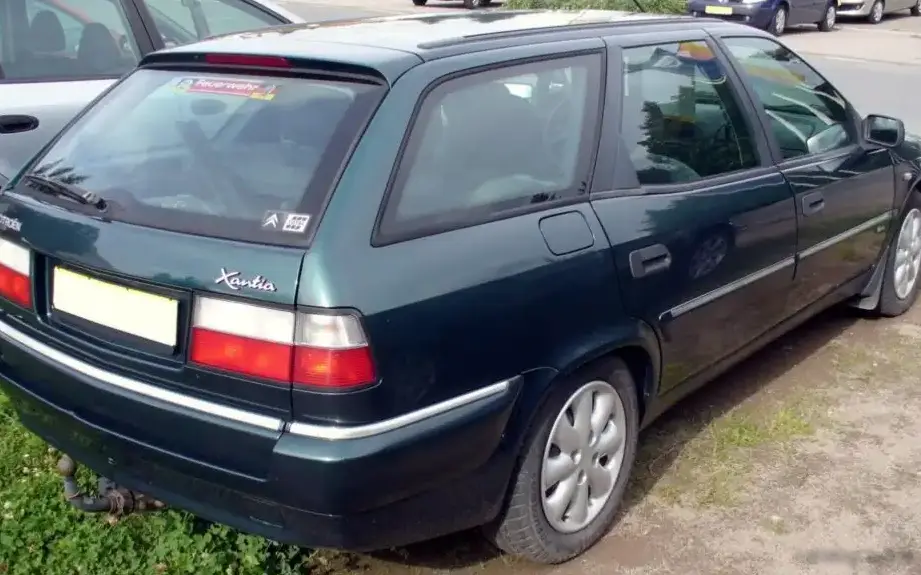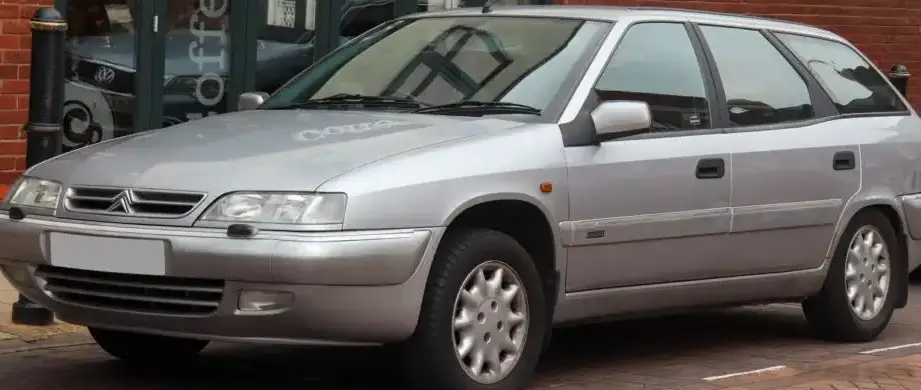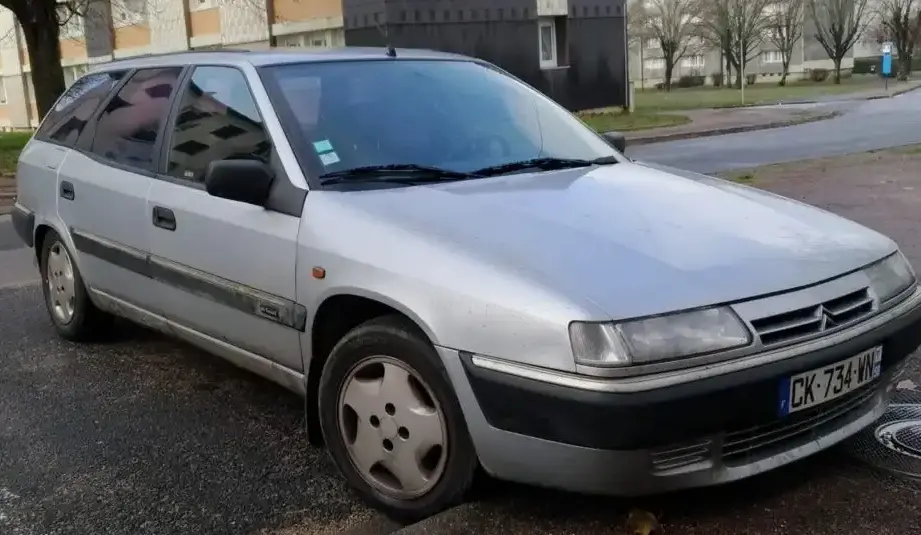
The Citroen Xantia Break 2.0 Turbo CT, produced between 1995 and 1998, represents a compelling blend of practicality, comfort, and performance within the Xantia (X1) range. As a station wagon (estate) variant, it catered to buyers needing increased cargo capacity without sacrificing the innovative technology and distinctive styling that characterized the Xantia. Positioned as a mid-to-upper trim level, the 2.0 Turbo CT offered a significant step up in power and refinement compared to the base models, appealing to those seeking a more engaging driving experience. The Xantia itself was a successor to the BX, continuing Citroen’s tradition of hydropneumatic suspension and advanced engineering.
Technical Specifications
| Brand | Citroen |
| Model | Xantia |
| Generation | Xantia Break (X1) |
| Type (Engine) | 2.0 Turbo CT (147 Hp) |
| Start of production | 1995 |
| End of production | 1998 |
| Powertrain Architecture | Internal Combustion engine |
| Body type | Station wagon (estate) |
| Seats | 5 |
| Doors | 5 |
| Fuel consumption (urban) | 12.7 l/100 km (18.5 US mpg, 22.2 UK mpg, 7.9 km/l) |
| Fuel consumption (extra urban) | 7 l/100 km (33.6 US mpg, 40.4 UK mpg, 14.3 km/l) |
| Fuel consumption (combined) | 9.4 l/100 km (25 US mpg, 30.1 UK mpg, 10.6 km/l) |
| Fuel Type | Petrol (Gasoline) |
| Acceleration 0 – 100 km/h | 10.8 sec |
| Acceleration 0 – 62 mph | 10.8 sec |
| Acceleration 0 – 60 mph | 10.3 sec |
| Maximum speed | 205 km/h (127.38 mph) |
| Weight-to-power ratio | 9.7 kg/Hp, 103.4 Hp/tonne |
| Weight-to-torque ratio | 6 kg/Nm, 165.4 Nm/tonne |
| Power | 147 Hp @ 5300 rpm |
| Power per litre | 73.6 Hp/l |
| Torque | 235 Nm @ 2500 rpm (173.33 lb.-ft. @ 2500 rpm) |
| Engine layout | Front, Transverse |
| Engine Model/Code | RGX XU10J2TE |
| Engine displacement | 1998 cm3 (121.93 cu. in.) |
| Number of cylinders | 4 |
| Engine configuration | Inline |
| Cylinder Bore | 86 mm (3.39 in.) |
| Piston Stroke | 86 mm (3.39 in.) |
| Compression ratio | 8:1 |
| Number of valves per cylinder | 2 |
| Fuel injection system | Multi-port manifold injection |
| Engine aspiration | Turbocharger |
| Valvetrain | OHC |
| Engine oil capacity | 4.75 l (5.02 US qt | 4.18 UK qt) |
| Coolant | 10.8 l (11.41 US qt | 9.5 UK qt) |
| Kerb Weight | 1421 kg (3132.77 lbs.) |
| Max. weight | 1980 kg (4365.15 lbs.) |
| Max load | 559 kg (1232.38 lbs.) |
| Trunk (boot) space – minimum | 512 l (18.08 cu. ft.) |
| Trunk (boot) space – maximum | 1144 l (40.4 cu. ft.) |
| Fuel tank capacity | 65 l (17.17 US gal | 14.3 UK gal) |
| Max. roof load | 75 kg (165.35 lbs.) |
| Permitted trailer load with brakes (12%) | 1200 kg (2645.55 lbs.) |
| Permitted trailer load without brakes | 710 kg (1565.28 lbs.) |
| Length | 4660 mm (183.46 in.) |
| Width | 1755 mm (69.09 in.) |
| Height | 1416 mm (55.75 in.) |
| Wheelbase | 2740 mm (107.87 in.) |
| Front track | 1488-1502 mm (58.58 – 59.13 in.) |
| Rear (Back) track | 1464 mm (57.64 in.) |
| Front overhang | 931 mm (36.65 in.) |
| Rear overhang | 989 mm (38.94 in.) |
| Drivetrain Architecture | The Internal combustion engine (ICE) drives the front wheels of the vehicle. |
| Drive wheel | Front wheel drive |
| Number of gears and type of gearbox | 5 gears, manual transmission |
| Front suspension | Independent type McPherson, Wishbone |
| Rear suspension | Hydro-pneumatic element, Trailing arm |
| Front brakes | Ventilated discs |
| Rear brakes | Disc |
| Assisting systems | ABS (Anti-lock braking system) |
| Steering type | Steering rack and pinion |
| Power steering | Hydraulic Steering |
| Tires size | 205/60 R15 |
Powertrain & Engine Architecture
The heart of the Xantia Break 2.0 Turbo CT is the RGX XU10J2TE engine, a 1.998-liter (121.93 cubic inches) inline-four cylinder gasoline engine. This engine is a product of Peugeot-Citroen’s collaboration and is known for its robust construction and potential for tuning. The XU10J2TE features a single overhead camshaft (OHC) valvetrain with two valves per cylinder. Fuel delivery is managed by a multi-port fuel injection system, ensuring precise fuel metering for optimal combustion. Crucially, the “Turbo” designation indicates the presence of a turbocharger, significantly boosting power output to 147 horsepower at 5300 rpm and 235 Nm (173.33 lb-ft) of torque at 2500 rpm. The turbocharger provides a noticeable increase in performance compared to naturally aspirated versions of the Xantia. The engine is transversely mounted in the front of the vehicle. The transmission is a 5-speed manual gearbox, chosen for its durability and driver engagement.
Driving Characteristics
The 2.0 Turbo CT offers a noticeably more spirited driving experience than the lower-powered Xantia variants. The turbocharger provides a surge of power in the mid-range, making overtaking and highway cruising effortless. While not a sports car, the Xantia Break 2.0 Turbo CT delivers respectable acceleration, achieving 0-60 mph in approximately 10.3 seconds and a top speed of 127.38 mph. The hydropneumatic suspension, a Citroen hallmark, provides a remarkably smooth and comfortable ride, absorbing bumps and imperfections in the road with ease. The steering is precise and well-weighted, contributing to a confident feel behind the wheel. The 5-speed manual transmission allows for good control over the engine’s power band, although the gear ratios are geared towards fuel efficiency rather than outright performance.
Equipment & Trim Levels
The “CT” designation signifies a well-equipped trim level. Standard features typically included central locking, electric front windows, power steering, an adjustable steering column, and a basic audio system. The interior upholstery was generally cloth, with options for upgraded materials. Air conditioning was a common option. The dashboard layout is functional and ergonomically designed, with clear instrumentation. Optional extras could include a sunroof, upgraded audio systems, and leather upholstery.
Chassis & Braking
The Xantia Break features an independent McPherson strut front suspension and a hydro-pneumatic rear suspension. The hydro-pneumatic system allows for self-leveling and adjustable ride height, further enhancing ride comfort and handling. The braking system consists of ventilated discs on the front wheels and discs on the rear wheels. Anti-lock Braking System (ABS) was standard, providing enhanced stopping power and stability in emergency braking situations. The tires are typically 205/60 R15, offering a good balance of grip and comfort.
Market Reception & Comparison
The Xantia Break 2.0 Turbo CT was generally well-received by automotive critics. It was praised for its comfortable ride, spacious interior, and strong performance. Compared to the base models, the 2.0 Turbo CT offered a significant improvement in driving enjoyment. Fuel economy was reasonable for a turbocharged engine of this era, averaging around 25 US mpg in combined driving. Reliability was generally good, although the complex hydropneumatic suspension system could require occasional maintenance. Compared to rivals like the Ford Mondeo and Vauxhall/Opel Vectra, the Xantia offered a unique blend of French flair and innovative technology.
Legacy
The Citroen Xantia Break 2.0 Turbo CT remains a popular choice among enthusiasts and collectors. The XU10J2TE engine is known for its durability and tunability, making it a relatively reliable powertrain. However, the hydropneumatic suspension requires regular maintenance to prevent leaks and ensure optimal performance. Today, well-maintained examples of the Xantia Break 2.0 Turbo CT are becoming increasingly rare, and their value is steadily appreciating. It represents a unique and innovative approach to the family estate car, offering a compelling alternative to more conventional rivals.