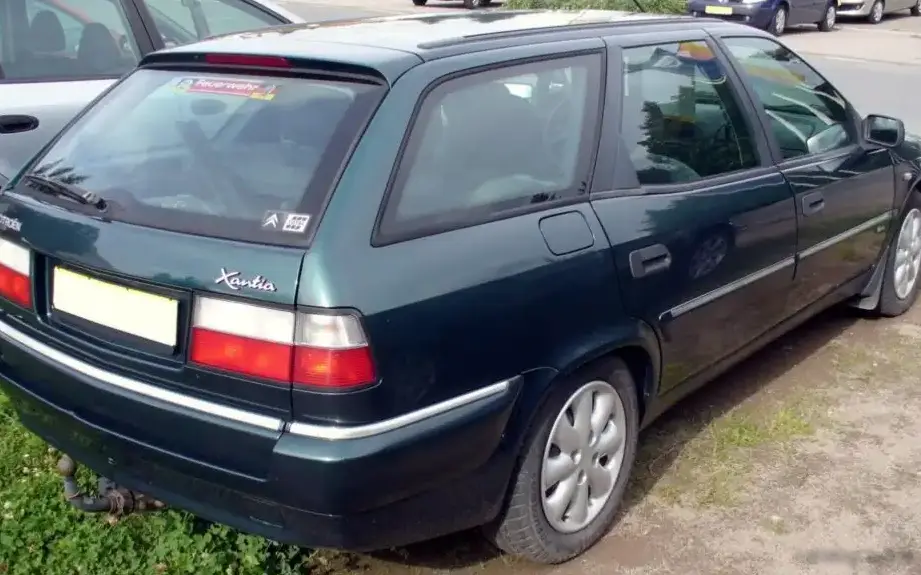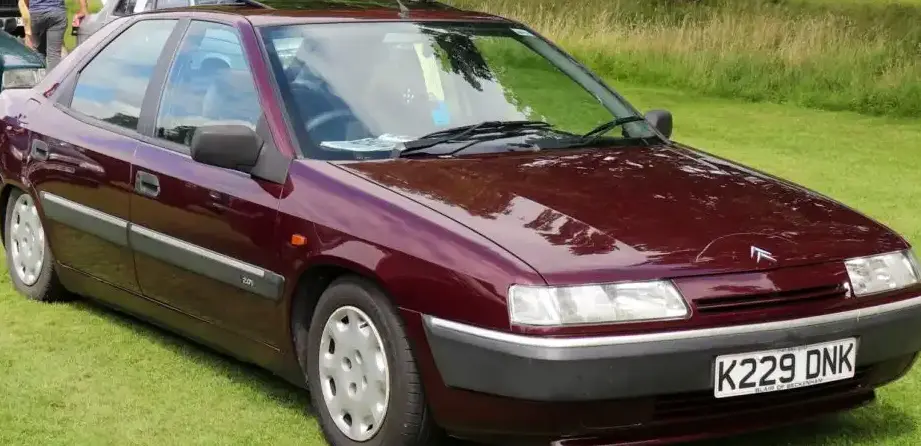
The Citroën Xantia 1.9 Turbo D, produced between 1994 and 1997, represented a compelling entry point into Citroën’s innovative large family car range, the X1 series. Positioned as a diesel-powered variant within the Xantia lineup, it offered a balance of fuel efficiency and practicality for European buyers. The Xantia itself was a successor to the BX, continuing Citroën’s tradition of comfortable, technologically advanced vehicles. This specific 1.9 Turbo D model, generating 90 horsepower, served as a popular choice for those prioritizing economy and long-distance cruising over outright performance, fitting neatly between the base non-turbo diesel and the more powerful petrol options.
Technical Specifications
| Brand | Citroen |
| Model | Xantia |
| Generation | Xantia (X1) |
| Type (Engine) | 1.9 Turbo D (90 Hp) |
| Start of production | 1994 |
| End of production | 1997 |
| Powertrain Architecture | Internal Combustion engine |
| Body type | Hatchback |
| Seats | 5 |
| Doors | 5 |
| Fuel consumption (urban) | 7.8 l/100 km (30.2 US mpg) |
| Fuel consumption (extra urban) | 5.2 l/100 km (45.2 US mpg) |
| Fuel Type | Diesel |
| Acceleration 0 – 100 km/h | 12.7 sec |
| Acceleration 0 – 62 mph | 12.7 sec |
| Acceleration 0 – 60 mph | 12.1 sec |
| Maximum speed | 177 km/h (109.98 mph) |
| Weight-to-power ratio | 13.9 kg/Hp |
| Weight-to-torque ratio | 6.3 kg/Nm |
| Power | 90 Hp @ 4000 rpm |
| Power per litre | 47.2 Hp/l |
| Torque | 200 Nm @ 2250 rpm (147.51 lb.-ft. @ 2250 rpm) |
| Maximum engine speed | 4500 rpm |
| Engine layout | Front, Transverse |
| Engine Model/Code | DHX XUD9 BTF |
| Engine displacement | 1905 cm3 (116.25 cu. in.) |
| Number of cylinders | 4 |
| Engine configuration | Inline |
| Cylinder Bore | 83 mm (3.27 in.) |
| Piston Stroke | 88 mm (3.46 in.) |
| Compression ratio | 21.8:1 |
| Number of valves per cylinder | 2 |
| Fuel injection system | Precombustion chamber injection |
| Engine aspiration | Turbocharger |
| Valvetrain | OHC |
| Engine oil capacity | 4.25 l (4.49 US qt | 3.74 UK qt) |
| Coolant | 9 l (9.51 US qt | 7.92 UK qt) |
| Kerb Weight | 1252 kg (2760.19 lbs.) |
| Max. weight | 1830 kg (4034.46 lbs.) |
| Max load | 578 kg (1274.27 lbs.) |
| Trunk (boot) space – minimum | 480 l (16.95 cu. ft.) |
| Trunk (boot) space – maximum | 878 l (31.01 cu. ft.) |
| Fuel tank capacity | 65 l (17.17 US gal | 14.3 UK gal) |
| Max. roof load | 75 kg (165.35 lbs.) |
| Permitted towbar download | 50 kg (110.23 lbs.) |
| Length | 4444 mm (174.96 in.) |
| Width | 1755 mm (69.09 in.) |
| Height | 1387 mm (54.61 in.) |
| Wheelbase | 2740 mm (107.87 in.) |
| Front track | 1482 mm (58.35 in.) |
| Rear (Back) track | 1442 mm (56.77 in.) |
| Front overhang | 931 mm (36.65 in.) |
| Rear overhang | 773 mm (30.43 in.) |
| Minimum turning circle | 11 m (36.09 ft.) |
| Drivetrain Architecture | Front wheel drive |
| Number of gears | 5 |
| Gearbox type | Manual transmission |
| Front suspension | Independent type McPherson, Wishbone |
| Rear suspension | Hydro-pneumatic element, Trailing arm |
| Front brakes | Ventilated discs |
| Rear brakes | Disc |
| Assisting systems | ABS (Anti-lock braking system) |
| Steering type | Steering rack and pinion |
| Power steering | Hydraulic Steering |
| Tires size | 185/65 R14 |
Powertrain & Engine Architecture
The heart of the Xantia 1.9 Turbo D is the DHX XUD9 BTF engine, a 1.9-liter inline-four cylinder diesel. This engine is a descendant of the long-running XUD family of diesel engines, known for their robustness and efficiency. The “BTF” designation indicates a specific iteration with a turbocharger and updated fuel injection. The engine utilizes a precombustion chamber injection system, a common design for diesels of this era, which improves combustion efficiency and reduces noise. The turbocharger significantly boosts power output compared to naturally aspirated versions of the XUD9, bringing it to 90 horsepower. The engine’s overhead camshaft (OHC) configuration simplifies the valvetrain, contributing to its reliability. The five-speed manual transmission was the standard offering for this variant, providing a good balance between fuel economy and drivability. While an automatic transmission was available on some Xantia models, it was less common with the 1.9 Turbo D engine.
Driving Characteristics
The Xantia 1.9 Turbo D offered a distinctly different driving experience compared to its petrol-powered siblings. While lacking the outright acceleration of the 2.0i or V6 models, it provided ample torque for comfortable cruising and overtaking. The turbocharger delivers a noticeable boost in power from around 2000 rpm, making it relatively easy to maintain highway speeds. The five-speed manual transmission allows drivers to keep the engine in its optimal power band. Compared to the non-turbo 1.9 diesel, the Turbo D felt significantly more responsive. However, it wasn’t a sporty car; the focus was on comfort and efficiency. The Xantia’s renowned hydropneumatic suspension, a Citroën hallmark, provided a remarkably smooth and controlled ride, even on uneven surfaces. The steering, while hydraulic, lacked the directness of some competitors.
Equipment & Trim Levels
The 1.9 Turbo D typically came with a reasonable level of standard equipment. This included central locking, power steering, and an adjustable steering column. Interior upholstery was typically cloth, with a practical and durable finish. Optional extras included air conditioning, electric windows, and a sunroof. Trim levels varied slightly depending on the market, but generally, the 1.9 Turbo D occupied a mid-range position in the Xantia lineup, offering a good balance of features and affordability. The dashboard layout was functional and ergonomically designed, typical of Citroën’s approach at the time.
Chassis & Braking
The Xantia’s chassis was designed to maximize comfort and handling. The front suspension utilized independent McPherson struts and wishbones, while the rear employed Citroën’s innovative hydropneumatic suspension system. This system allowed for self-leveling and adjustable ride height, providing a consistently smooth ride regardless of load. Braking was handled by ventilated discs at the front and solid discs at the rear. Anti-lock braking system (ABS) was standard, enhancing safety. The Xantia’s suspension setup contributed to its excellent stability and cornering ability, despite its relatively high center of gravity.
Market Reception & Comparison
The Citroën Xantia 1.9 Turbo D was well-received in European markets as a practical and economical family car. Critics praised its comfortable ride, spacious interior, and fuel efficiency. However, some noted that the engine could be somewhat noisy compared to petrol alternatives. Compared to the 2.0i petrol version, the 1.9 Turbo D offered significantly better fuel economy but less outright performance. The 1.9 Turbo D was also often compared to similar diesel-powered rivals from Peugeot, Renault, and Ford. Its hydropneumatic suspension gave it a unique advantage in terms of ride quality, setting it apart from many competitors.
Legacy
The Xantia 1.9 Turbo D has proven to be a relatively reliable vehicle, particularly the engine itself. The XUD9 engine is known for its durability, and with regular maintenance, it can cover high mileages. However, the hydropneumatic suspension system requires periodic attention and can be expensive to repair if neglected. Today, the Xantia 1.9 Turbo D is a popular choice among classic car enthusiasts who appreciate its unique features and comfortable ride. Parts availability can be a challenge, but a dedicated community of owners and specialists exists to support the continued maintenance and restoration of these vehicles. The Xantia remains a testament to Citroën’s innovative engineering and commitment to providing a distinctive driving experience.