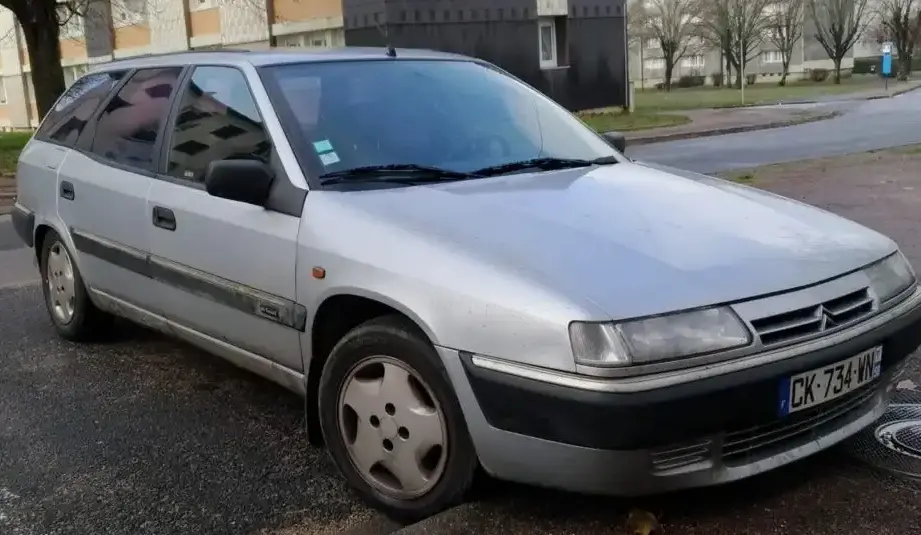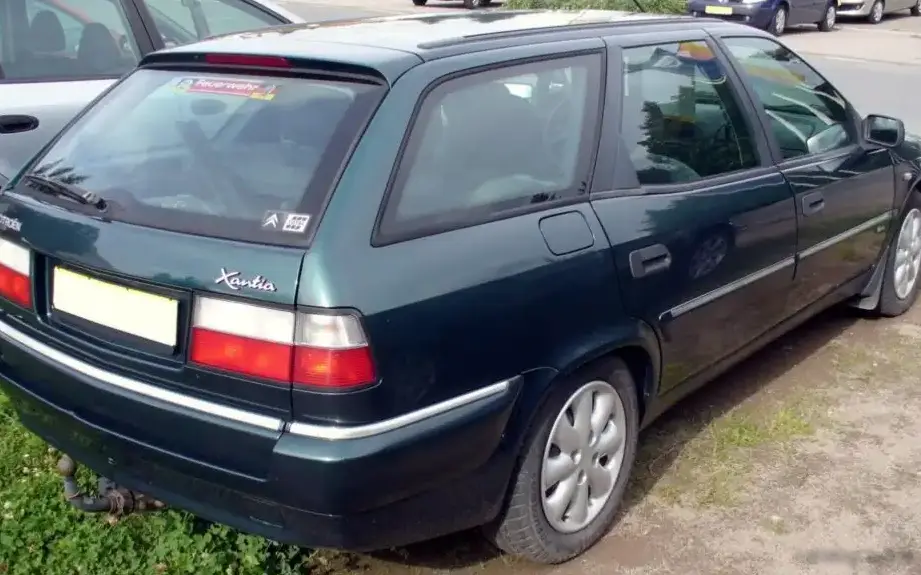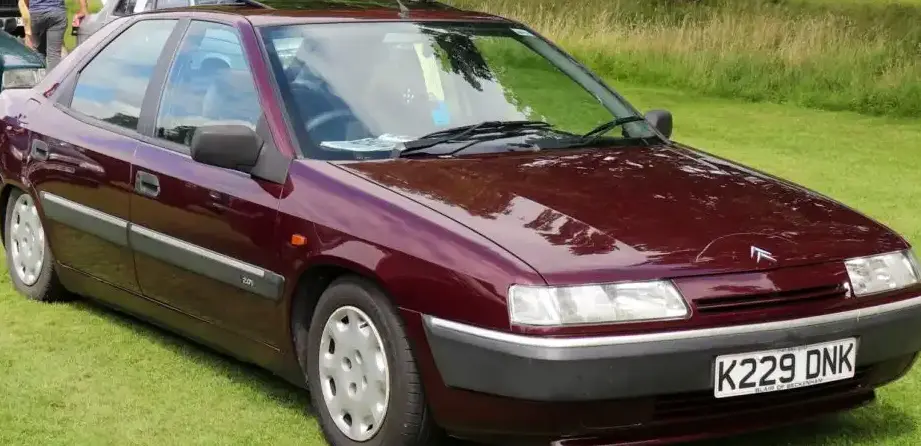
The Citroen Xantia 2.1 Turbo D 12V, produced between 1995 and 1997, represented a compelling blend of comfort, performance, and practicality within the Xantia (X1) range. Positioned as a mid-range offering, it catered to buyers seeking a more powerful diesel option than the base models, without the outright expense of the V6 petrol variants. The Xantia itself was Citroen’s replacement for the BX, continuing the brand’s tradition of innovative hydropneumatic suspension and distinctive styling. This particular 2.1 Turbo D model found a strong niche in European markets, particularly France, where diesel engines were – and continue to be – highly favored for their fuel efficiency and torque.
Technical Specifications
| Brand | Citroen |
| Model | Xantia |
| Generation | Xantia (X1) |
| Type (Engine) | 2.1 Turbo D 12V (109 Hp) |
| Start of production | 1995 |
| End of production | 1997 |
| Powertrain Architecture | Internal Combustion engine |
| Body type | Hatchback |
| Seats | 5 |
| Doors | 5 |
| Fuel consumption (combined) | 6.4 l/100 km (36.8 US mpg, 44.1 UK mpg, 15.6 km/l) |
| Fuel Type | Diesel |
| Acceleration 0 – 100 km/h | 11.2 sec |
| Acceleration 0 – 62 mph | 11.2 sec |
| Acceleration 0 – 60 mph | 10.6 sec |
| Maximum speed | 190 km/h (118.06 mph) |
| Weight-to-power ratio | 12.7 kg/Hp |
| Weight-to-torque ratio | 5.4 kg/Nm |
| Power | 109 Hp @ 4300 rpm |
| Power per litre | 52.2 Hp/l |
| Torque | 255 Nm @ 2000 rpm (188.08 lb.-ft. @ 2000 rpm) |
| Engine layout | Front, Transverse |
| Engine Model/Code | P8C XUD11BTE |
| Engine displacement | 2088 cm3 (127.42 cu. in.) |
| Number of cylinders | 4 |
| Engine configuration | Inline |
| Cylinder Bore | 85 mm (3.35 in.) |
| Piston Stroke | 92 mm (3.62 in.) |
| Compression ratio | 21.5:1 |
| Number of valves per cylinder | 3 |
| Fuel injection system | Precombustion chamber injection |
| Engine aspiration | Turbocharger |
| Valvetrain | OHC |
| Engine oil capacity | 4.75 l (5.02 US qt | 4.18 UK qt) |
| Coolant | 9 l (9.51 US qt | 7.92 UK qt) |
| Kerb Weight | 1385 kg (3053.4 lbs.) |
| Max. weight | 1980 kg (4365.15 lbs.) |
| Max load | 595 kg (1311.75 lbs.) |
| Trunk (boot) space – minimum | 480 l (16.95 cu. ft.) |
| Trunk (boot) space – maximum | 878 l (31.01 cu. ft.) |
| Fuel tank capacity | 65 l (17.17 US gal | 14.3 UK gal) |
| Max. roof load | 75 kg (165.35 lbs.) |
| Permitted towbar download | 50 kg (110.23 lbs.) |
| Length | 4444 mm (174.96 in.) |
| Width | 1755 mm (69.09 in.) |
| Height | 1377 mm (54.21 in.) |
| Wheelbase | 2740 mm (107.87 in.) |
| Front track | 1482 mm (58.35 in.) |
| Rear (Back) track | 1442 mm (56.77 in.) |
| Front overhang | 931 mm (36.65 in.) |
| Rear overhang | 773 mm (30.43 in.) |
| Minimum turning circle | 11 m (36.09 ft.) |
| Drivetrain Architecture | The Internal combustion engine (ICE) drives the front wheels. |
| Drive wheel | Front wheel drive |
| Number of gears and type of gearbox | 5 gears, manual transmission |
| Front suspension | Independent type McPherson, Wishbone |
| Rear suspension | Hydro-pneumatic element, Trailing arm |
| Front brakes | Ventilated discs |
| Rear brakes | Disc |
| Assisting systems | ABS (Anti-lock braking system) |
| Steering type | Steering rack and pinion |
| Power steering | Hydraulic Steering |
| Tires size | 185/65 R14 |
Powertrain & Engine Architecture
The heart of the Xantia 2.1 Turbo D 12V is the P8C XUD11BTE engine, a 2.1-liter inline-four cylinder diesel. This engine is a descendant of Peugeot-Citroen’s long-running XUD series, known for its robustness and relatively simple design. The “12V” designation indicates a 12-valve cylinder head, an upgrade over earlier XUD engines. The engine utilizes precombustion chamber injection, a system where fuel is injected into a small pre-chamber connected to the main combustion chamber, promoting more complete combustion and reducing noise. A turbocharger, coupled with an intercooler, forces more air into the engine, significantly boosting power output. The engine produces 109 horsepower at 4300 rpm and 255 Nm (188 lb-ft) of torque at 2000 rpm. The Xantia 2.1 Turbo D was typically paired with a five-speed manual transmission, although a four-speed automatic was also available, albeit less common.
Driving Characteristics
The 2.1 Turbo D offered a noticeable step up in performance compared to the naturally aspirated diesel Xantias. While not a sports car, the turbocharger provided strong mid-range acceleration, making it well-suited for highway cruising and overtaking. The five-speed manual transmission allowed drivers to keep the engine in its optimal power band. The automatic transmission, while offering convenience, did diminish performance somewhat, resulting in slightly slower acceleration and a less engaging driving experience. The Xantia’s renowned hydropneumatic suspension provided a remarkably comfortable ride, absorbing bumps and imperfections in the road with ease. Steering was light and precise, contributing to a relaxed driving experience.
Equipment & Trim Levels
The Xantia 2.1 Turbo D typically came equipped with features such as power steering, central locking, electric front windows, and an adjustable steering column. Higher trim levels added features like air conditioning, alloy wheels, a sunroof, and upgraded interior upholstery. Interior materials were generally of good quality, reflecting Citroen’s commitment to comfort. The dashboard layout was functional and ergonomically designed, with easy-to-read gauges and intuitive controls.
Chassis & Braking
The Xantia featured an independent McPherson strut front suspension and a unique hydro-pneumatic rear suspension. This system allowed for self-leveling, variable ride height, and exceptional ride comfort. Brakes were ventilated discs at the front and solid discs at the rear, providing adequate stopping power. Anti-lock braking system (ABS) was standard, enhancing safety. The Xantia’s chassis was well-balanced, contributing to stable handling and predictable cornering.
Market Reception & Comparison
The Xantia 2.1 Turbo D was generally well-received by automotive critics. It was praised for its comfortable ride, strong performance, and fuel efficiency. Compared to the petrol-powered Xantias, the 2.1 Turbo D offered significantly better fuel economy, making it a popular choice for high-mileage drivers. Against competitors like the Ford Mondeo and Vauxhall/Opel Vectra, the Xantia stood out for its unique hydropneumatic suspension and distinctive styling. However, some critics noted that the diesel engine was somewhat noisy compared to its petrol counterparts.
Legacy
The Xantia 2.1 Turbo D, and the XUD engine family as a whole, have earned a reputation for durability and reliability. While age and mileage inevitably take their toll, well-maintained examples can still provide years of reliable service. The Xantia’s innovative hydropneumatic suspension remains a hallmark of Citroen engineering, and the car is fondly remembered by enthusiasts for its unique character and comfortable ride. In the used car market, the 2.1 Turbo D models tend to command a premium over the lower-spec Xantias, reflecting their increased performance and desirability.