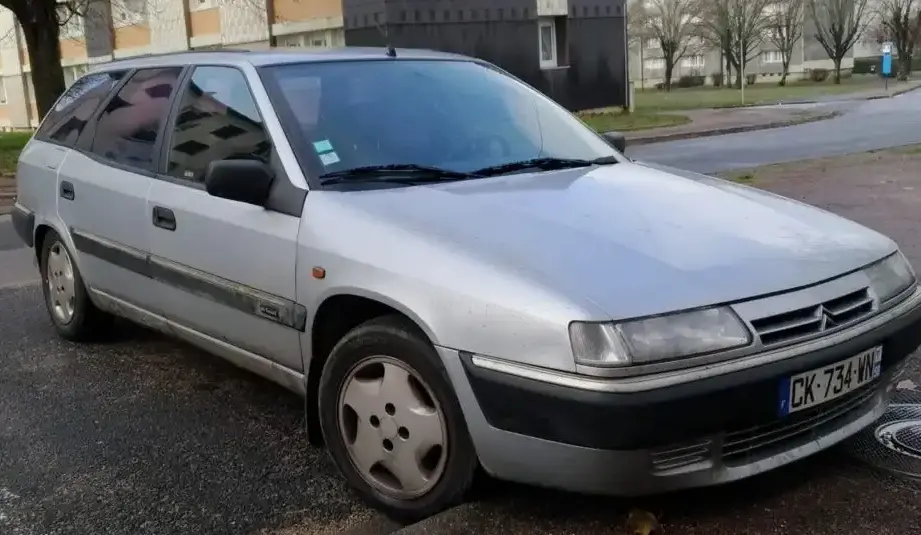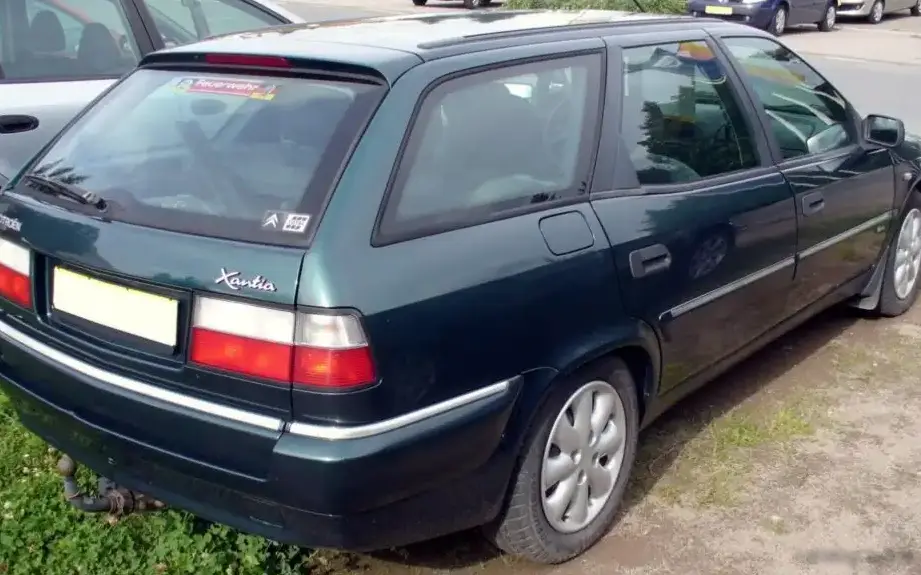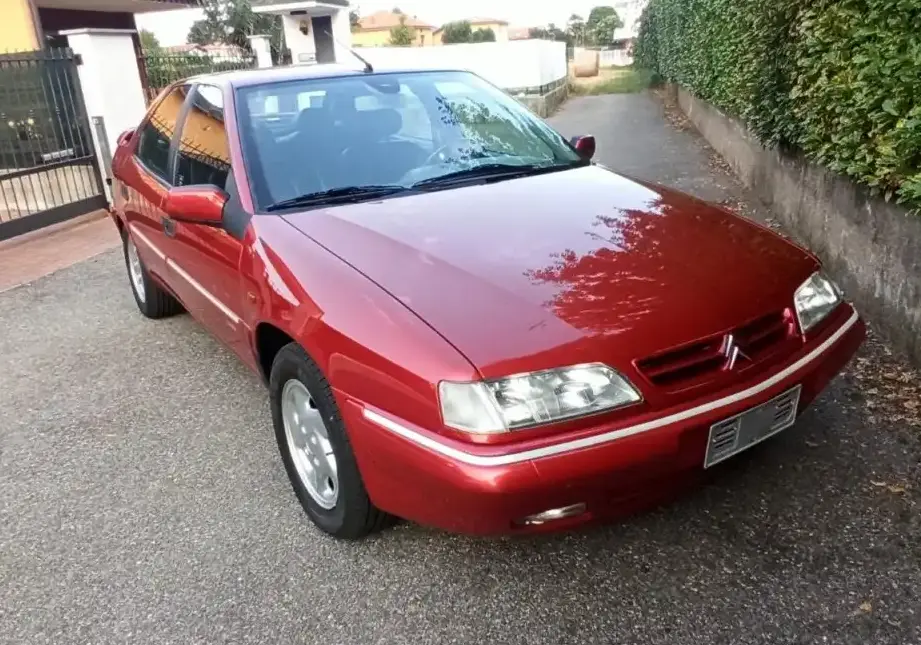
The Citroen Xantia (X2) 1.8 i 16V, produced between 1998 and 2001, represents a mid-range offering within the second generation of the Xantia line. Positioned as a practical and comfortable family hatchback, it aimed to provide a balance between performance and economy. Notably, this variant was frequently equipped for bi-fuel operation with LPG (Liquefied Petroleum Gas) conversions, offering owners an alternative fuel source. The Xantia X2 itself was built upon the PSA Group’s platform, sharing components with the Peugeot 406, and was a popular choice in European markets for its innovative suspension and spacious interior.
Technical Specifications
| Brand | Citroen |
| Model | Xantia |
| Generation | Xantia (X2) |
| Type (Engine) | 1.8 i 16V (112/106 Hp) LPG |
| Start of production | 1998 |
| End of production | 2001 |
| Powertrain Architecture | Internal Combustion engine |
| Body type | Hatchback |
| Seats | 5 |
| Doors | 4 |
| Fuel consumption (economy) – urban | 12.2 l/100 km (19.3 US mpg, 23.2 UK mpg, 8.2 km/l) |
| Fuel consumption (economy) – urban (LPG) | 15.3 l/100 km |
| Fuel consumption (economy) – extra urban | 6.7 l/100 km (35.1 US mpg, 42.2 UK mpg, 14.9 km/l) |
| Fuel consumption (economy) – extra urban (LPG) | 8.6 l/100 km |
| Fuel consumption (economy) – combined | 8.7 l/100 km (27 US mpg, 32.5 UK mpg, 11.5 km/l) |
| Fuel consumption (economy) – combined (LPG) | 11.1 l/100 km |
| CO2 emissions | 209 g/km |
| CO2 emissions (LPG) | 172 g/km |
| Fuel Type | Petrol / LPG |
| Acceleration 0 – 100 km/h | 12.9 sec |
| Acceleration 0 – 62 mph | 12.9 sec |
| Acceleration 0 – 100 km/h (LPG) | 13.4 sec |
| Acceleration 0 – 60 mph (Calculated) | 12.3 sec |
| Maximum speed | 187 km/h (116.2 mph) |
| Maximum speed (LPG) | 183 km/h |
| Emission standard | Euro 2 |
| Power | 112 Hp @ 5500 rpm |
| Power per litre | 63.6 Hp/l |
| Power (LPG) | 106 Hp @ 5500 rpm |
| Power per litre (LPG) | 60.2 Hp/l |
| Torque | 155 Nm @ 4250 rpm (114.32 lb.-ft. @ 4250 rpm) |
| Torque (LPG) | 155 Nm @ 4250 rpm |
| Engine layout | Front, Transverse |
| Engine displacement | 1761 cm3 (107.46 cu. in.) |
| Number of cylinders | 4 |
| Engine configuration | Inline |
| Cylinder Bore | 83 mm (3.27 in.) |
| Piston Stroke | 81.4 mm (3.2 in.) |
| Number of valves per cylinder | 4 |
| Fuel injection system | Multi-port manifold injection |
| Engine aspiration | Naturally aspirated |
| Valvetrain | DOHC |
| Engine oil capacity | 4.75 l (5.02 US qt, 4.18 UK qt) |
| Coolant capacity | 7.5 l (7.93 US qt, 6.6 UK qt) |
| Trunk (boot) space – minimum | 480 l (16.95 cu. ft.) |
| Trunk (boot) space – maximum | 878 l (31.01 cu. ft.) |
| Fuel tank capacity | 65 l (17.17 US gal, 14.3 UK gal) |
| Fuel tank capacity (LPG) | 58 l |
| Max. roof load | 75 kg (165.35 lbs.) |
| Permitted towbar download | 85 kg (187.39 lbs.) |
| Length | 4524 mm (178.11 in.) |
| Width | 1755 mm (69.09 in.) |
| Width including mirrors | 1980 mm (77.95 in.) |
| Height | 1400 mm (55.12 in.) |
| Wheelbase | 2740 mm (107.87 in.) |
| Front track | 1502 mm (59.13 in.) |
| Rear track | 1454 mm (57.24 in.) |
| Front overhang | 983 mm (38.7 in.) |
| Rear overhang | 801 mm (31.54 in.) |
| Minimum turning circle | 10.8 m (35.43 ft.) |
| Drivetrain | Front wheel drive |
| Number of gears | 5 |
| Gearbox type | Manual transmission |
| Front suspension | Independent type McPherson, Wishbone |
| Rear suspension | Hydro-pneumatic element, Trailing arm |
| Front brakes | Ventilated discs |
| Rear brakes | Disc |
| Assisting systems | ABS (Anti-lock braking system) |
| Steering type | Steering rack and pinion |
| Power steering | Hydraulic |
| Tires size | 185/65 R15 |
| Wheel rims size | 15 |
INTRODUCTION
The Citroen Xantia 1.8 i 16V, launched in 1998 and continuing through 2001, was a key variant within the X2 series. Building on the success of the original Xantia, the X2 offered refinements in styling, comfort, and technology. This particular 1.8-liter engine, paired with a five-speed manual transmission, was positioned as a mainstream option, appealing to buyers seeking a balance between affordability and reasonable performance. The availability of LPG conversions further broadened its appeal, particularly in regions with favorable LPG pricing and infrastructure. The Xantia competed directly with other mid-size hatchbacks like the Ford Mondeo, Vauxhall/Opel Vectra, and Peugeot 406.
Powertrain & Engine Architecture
The heart of the Xantia 1.8 i 16V is the Citroen XU10J4 engine, a 1761cc inline-four cylinder powerplant. This engine, commonly found in PSA Group vehicles of the era, features a double overhead camshaft (DOHC) valvetrain with four valves per cylinder. It utilizes a multi-port fuel injection system, delivering fuel directly to each intake port for improved combustion efficiency. The engine code, XU10J4, is crucial for identifying specific parts and service information. When converted to run on LPG, the engine management system is typically adapted with a dedicated LPG control unit, managing the fuel mixture for optimal performance on both petrol and gas. The five-speed manual transmission provides a relatively conventional gear ratio spread, prioritizing fuel economy and smooth cruising over outright acceleration.
Driving Characteristics
The 1.8L 16V engine in the Xantia delivers a respectable, though not exhilarating, driving experience. With 112 horsepower and 155 Nm of torque, acceleration from 0-60 mph takes around 12.3 seconds. The engine feels most comfortable in the mid-range, providing adequate power for everyday driving and overtaking maneuvers. Compared to the more powerful 2.0L 16V or V6 variants, the 1.8L feels noticeably less responsive, particularly at higher engine speeds. However, the manual transmission allows for greater driver control and engagement than the optional automatic gearbox. The Xantia’s renowned hydropneumatic suspension contributes significantly to ride comfort, absorbing bumps and imperfections in the road surface with ease. This suspension system also provides a stable and controlled handling experience, although it can feel slightly detached compared to more conventional setups.
Equipment & Trim Levels
The Xantia 1.8 i 16V typically came equipped with a reasonable level of standard features. These included central locking, power steering, electric front windows, and an RDS radio. Higher trim levels, such as the Exclusive, added features like air conditioning, alloy wheels, a sunroof, and upgraded interior trim. Interior upholstery was generally cloth, with options for leather available on higher-spec models. The dashboard layout is functional and ergonomically designed, with clear instrumentation and easy-to-use controls. Optional extras included a CD changer, rear electric windows, and upgraded sound systems.
Chassis & Braking
The Xantia X2 utilizes an independent McPherson strut front suspension and a unique hydro-pneumatic suspension system at the rear. This rear suspension, a Citroen hallmark, provides self-leveling capabilities and exceptional ride comfort. The braking system consists of ventilated discs on the front wheels and solid discs on the rear. Anti-lock Braking System (ABS) was standard, enhancing safety and control during emergency braking situations. The steering is rack and pinion with hydraulic assistance, providing precise and responsive steering feel.
Market Reception & Comparison
The Citroen Xantia 1.8 i 16V was generally well-received by automotive critics as a comfortable and practical family car. It was praised for its ride quality, spacious interior, and innovative suspension system. However, some critics noted that the 1.8L engine lacked the punch of its larger counterparts. Compared to the 2.0L 16V, the 1.8L offered better fuel economy but sacrificed performance. The 1.9 TDI diesel variant provided superior fuel efficiency and torque but lacked the refinement of the petrol engine. The LPG conversion option was seen as a positive, offering potential cost savings for high-mileage drivers.
Legacy
The Xantia 1.8 i 16V has proven to be a relatively reliable vehicle, particularly when well-maintained. The XU10J4 engine is known for its durability, although regular servicing is essential. The hydropneumatic suspension system requires periodic maintenance and can be expensive to repair if neglected. In the used car market, the Xantia 1.8 i 16V represents a good value proposition for buyers seeking a comfortable and spacious family car. LPG-converted models are particularly attractive due to their potential fuel savings. While not a performance icon, the Xantia 1.8 i 16V remains a fondly remembered example of Citroen’s commitment to innovation and comfort.