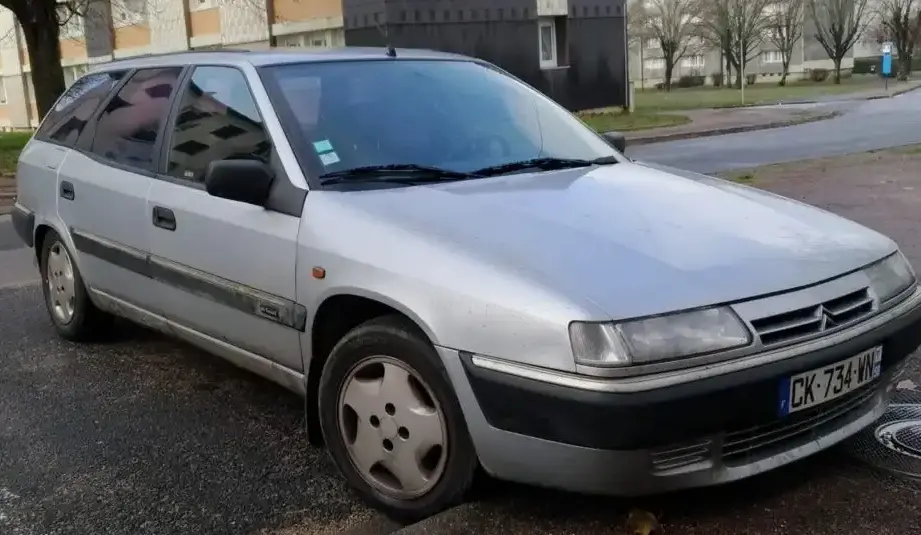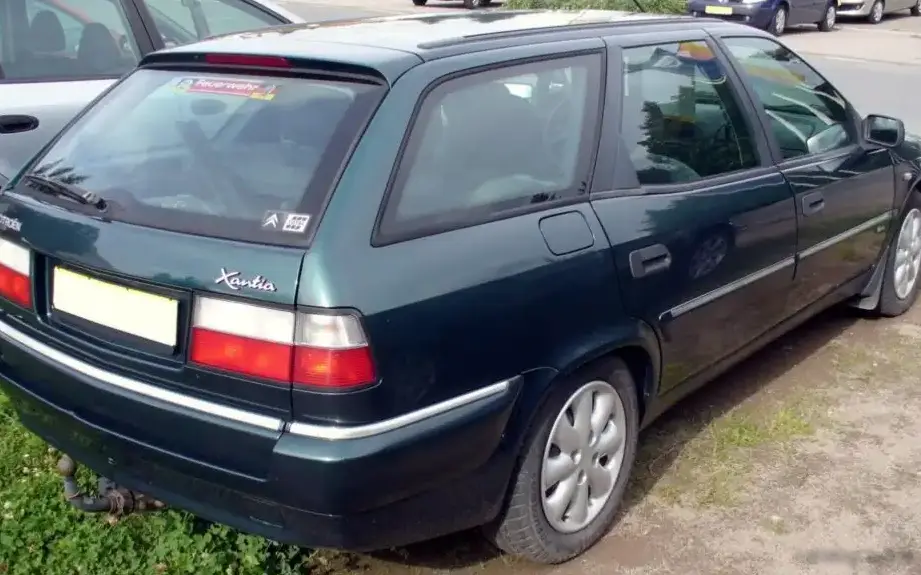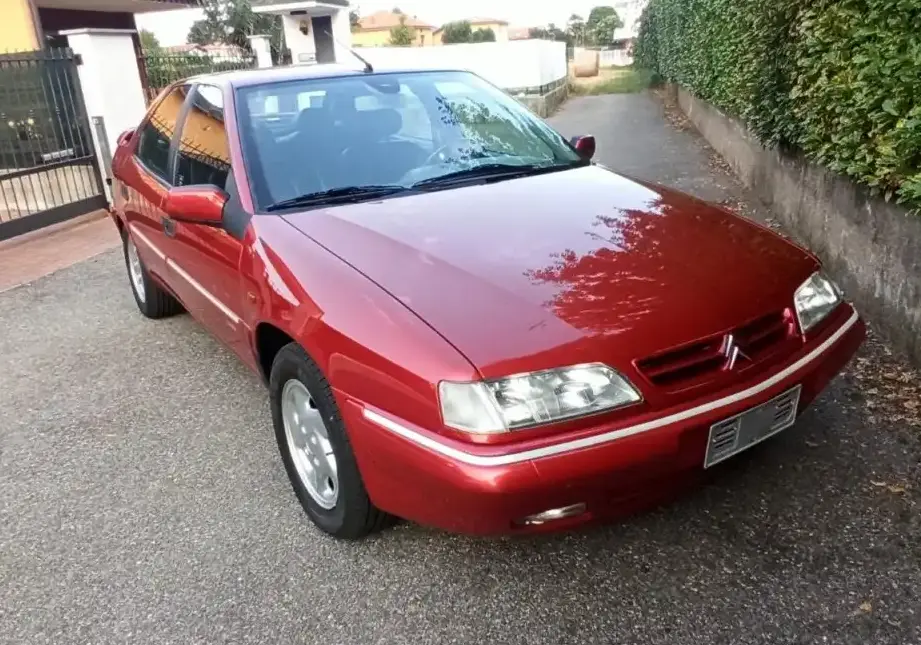
The Citroen Xantia (X2) 1.9 Turbo D, producing 90 horsepower, was a mainstay of the Xantia range from 1998 to 2001. Positioned as a fuel-efficient and practical option, it catered to buyers prioritizing economy and comfort over outright performance. This variant occupied the lower-mid range of the Xantia lineup, slotting below the more powerful petrol engines and the higher-output diesel versions. It was primarily sold in European markets, where diesel engines held a significant share of the automotive landscape, and represented Citroen’s commitment to offering a versatile family vehicle.
Technical Specifications
| Brand | Citroen |
| Model | Xantia |
| Generation | Xantia (X2) |
| Type (Engine) | 1.9 Turbo D (90 Hp) |
| Start of production | 1998 year |
| End of production | 2001 year |
| Powertrain Architecture | Internal Combustion engine |
| Body type | Hatchback |
| Seats | 5 |
| Doors | 4 |
| Fuel consumption (economy) – urban | 9.3 l/100 km (25.3 US mpg, 30.4 UK mpg, 10.8 km/l) |
| Fuel consumption (economy) – extra urban | 5.5 l/100 km (42.8 US mpg, 51.4 UK mpg, 18.2 km/l) |
| Fuel consumption (economy) – combined | 6.9 l/100 km (34.1 US mpg, 40.9 UK mpg, 14.5 km/l) |
| CO2 emissions | 181 g/km |
| Fuel Type | Diesel |
| Acceleration 0 – 100 km/h | 14.1 sec |
| Acceleration 0 – 62 mph | 14.1 sec |
| Acceleration 0 – 60 mph | 13.4 sec |
| Maximum speed | 177 km/h (109.98 mph) |
| Weight-to-power ratio | 14.6 kg/Hp, 68.6 Hp/tonne |
| Weight-to-torque ratio | 6.7 kg/Nm, 149.4 Nm/tonne |
| Power | 90 Hp @ 4000 rpm |
| Power per litre | 47.2 Hp/l |
| Torque | 196 Nm @ 2250 rpm (144.56 lb.-ft. @ 2250 rpm) |
| Engine layout | Front, Transverse |
| Engine Model/Code | DHX XUD9TF |
| Engine displacement | 1905 cm3 (116.25 cu. in.) |
| Number of cylinders | 4 |
| Engine configuration | Inline |
| Cylinder Bore | 83 mm (3.27 in.) |
| Piston Stroke | 88 mm (3.46 in.) |
| Compression ratio | 21.8:1 |
| Number of valves per cylinder | 2 |
| Fuel injection system | Precombustion chamber injection |
| Engine aspiration | Turbocharger, Intercooler |
| Valvetrain | OHC |
| Engine oil capacity | 5 l (5.28 US qt | 4.4 UK qt) |
| Coolant | 9 l (9.51 US qt | 7.92 UK qt) |
| Kerb Weight | 1312 kg (2892.46 lbs.) |
| Max. weight | 1840 kg (4056.51 lbs.) |
| Max load | 528 kg (1164.04 lbs.) |
| Trunk (boot) space – minimum | 480 l (16.95 cu. ft.) |
| Trunk (boot) space – maximum | 878 l (31.01 cu. ft.) |
| Fuel tank capacity | 65 l (17.17 US gal | 14.3 UK gal) |
| Max. roof load | 75 kg (165.35 lbs.) |
| Permitted trailer load with brakes (12%) | 1200 kg (2645.55 lbs.) |
| Permitted trailer load without brakes | 690 kg (1521.19 lbs.) |
| Permitted towbar download | 85 kg (187.39 lbs.) |
| Length | 4524 mm (178.11 in.) |
| Width | 1755 mm (69.09 in.) |
| Width including mirrors | 1980 mm (77.95 in.) |
| Height | 1410 mm (55.51 in.) |
| Wheelbase | 2740 mm (107.87 in.) |
| Front track | 1502 mm (59.13 in.) |
| Rear (Back) track | 1454 mm (57.24 in.) |
| Front overhang | 983 mm (38.7 in.) |
| Rear overhang | 801 mm (31.54 in.) |
| Minimum turning circle (turning diameter) | 10.8 m (35.43 ft.) |
| Drivetrain Architecture | The Internal combustion engine (ICE) drives the front wheels of the vehicle. |
| Drive wheel | Front wheel drive |
| Number of gears and type of gearbox | 5 gears, manual transmission |
| Front suspension | Independent type McPherson, Wishbone |
| Rear suspension | Hydro-pneumatic element, Trailing arm |
| Front brakes | Ventilated discs |
| Rear brakes | Disc |
| Assisting systems | ABS (Anti-lock braking system) |
| Steering type | Steering rack and pinion |
| Power steering | Hydraulic Steering |
| Tires size | 185/65 R15 |
| Wheel rims size | 15 |
INTRODUCTION
The Citroen Xantia (X2) 1.9 Turbo D 90 hp, produced between 1998 and 2001, was a popular choice for those seeking a comfortable and economical family car. Built on the 1HX0/A3 platform shared with the Peugeot 406, the Xantia aimed to blend Citroen’s renowned hydropneumatic suspension with a practical hatchback body style. This particular diesel variant was designed to offer a balance between performance and fuel efficiency, appealing to drivers covering long distances or prioritizing running costs. It represented a key part of Citroen’s strategy to offer a diverse range of options within the Xantia model line.
Powertrain & Engine Architecture
At the heart of the Xantia 1.9 Turbo D 90 hp lies the DHX XUD9TF engine, a 1905cc inline-four cylinder diesel. This engine utilizes a precombustion chamber injection system, a common feature in older diesel designs, which improves combustion efficiency. The XUD engine family is well-known for its durability and relatively simple mechanical design. A turbocharger with an intercooler is employed to boost power output, increasing the engine’s torque and responsiveness. The engine produces 90 horsepower at 4000 rpm and 196 Nm (144.56 lb.-ft.) of torque at 2250 rpm. The engine is transversely mounted in the front of the vehicle. The Xantia 1.9 Turbo D was typically paired with a five-speed manual transmission, although an automatic transmission was also available, albeit less common. The automatic gearbox, while offering convenience, generally resulted in slightly reduced fuel economy and performance.
Driving Characteristics
The Xantia 1.9 Turbo D 90 hp offered a relaxed and comfortable driving experience. While not particularly quick – acceleration from 0 to 100 km/h (0-62 mph) took around 14.1 seconds – it provided sufficient power for everyday driving and overtaking maneuvers. The turbocharger helped to mitigate some of the inherent lag associated with diesel engines, delivering a noticeable boost in power once spooled up. Compared to the higher-output diesel versions (like the 110 hp model) or the petrol engines, the 90 hp variant felt less eager to rev, but its strong low-end torque made it well-suited to cruising. The hydropneumatic suspension, a Citroen hallmark, provided a remarkably smooth and comfortable ride, absorbing bumps and imperfections in the road surface with ease. The automatic transmission, when equipped, offered smooth gear changes but could sometimes feel hesitant or slow to respond.
Equipment & Trim Levels
The Xantia 1.9 Turbo D 90 hp typically came with a reasonable level of standard equipment. This included central locking, power steering, electric front windows, and an adjustable steering column. Interior upholstery was generally cloth, with a functional and durable design. Higher trim levels offered options such as air conditioning, alloy wheels, a sunroof, and upgraded audio systems. The dashboard layout was typical of Citroen designs of the era, with a clear and straightforward instrument cluster. Safety features included ABS (Anti-lock Braking System) as standard.
Chassis & Braking
The Xantia’s chassis featured independent McPherson strut suspension at the front and a unique hydropneumatic suspension system at the rear. This rear suspension allowed for self-leveling and adjustable ride height, contributing to the car’s exceptional ride comfort. Braking duties were handled by ventilated discs at the front and discs at the rear. The ABS system helped to maintain steering control during emergency braking situations. The Xantia’s suspension setup was designed to provide a stable and comfortable ride, even when fully loaded.
Market Reception & Comparison
The Citroen Xantia 1.9 Turbo D 90 hp was generally well-received by automotive critics as a practical and economical family car. It was praised for its comfortable ride, spacious interior, and fuel efficiency. However, some critics noted its relatively modest performance compared to other engines in the Xantia range. Compared to the 1.8 petrol versions, the diesel offered significantly better fuel economy but lacked the petrol engine’s responsiveness. The 110 hp diesel variant provided a noticeable performance upgrade, but at a higher price point. The Xantia’s hydropneumatic suspension was a key selling point, setting it apart from many of its competitors.
Legacy
The Xantia 1.9 Turbo D 90 hp has proven to be a relatively reliable vehicle, with the XUD9TF engine being known for its longevity. However, the hydropneumatic suspension system requires regular maintenance and can be expensive to repair if neglected. Today, the Xantia 1.9 Turbo D is a relatively affordable used car, appealing to those seeking a comfortable and economical classic. Parts availability can be a challenge, but a dedicated community of Citroen enthusiasts helps to keep these cars on the road. The Xantia remains a testament to Citroen’s innovative engineering and commitment to providing a unique driving experience.