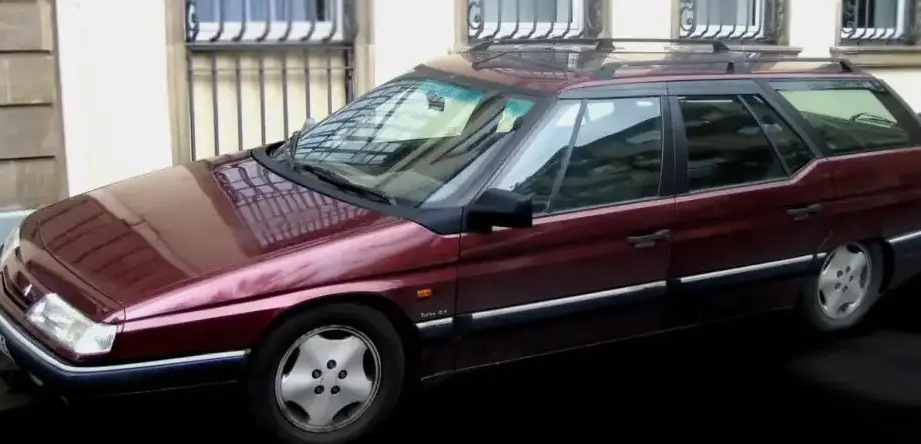
The Citroen XM (Y4) 2.5 Turbo D, produced from 1994 to 2000, represented a sophisticated offering in the large family car segment. Positioned as a premium variant within the Y4 XM range, it combined a turbocharged diesel engine with a five-speed manual transmission. The XM, as a whole, was Citroen’s flagship, intended to replace the aging CX, and was notable for its innovative hydropneumatic suspension and distinctive styling. The 2.5 Turbo D aimed to provide a balance of performance and fuel economy for long-distance drivers, particularly in European markets where diesel engines were increasingly popular.
Technical Specifications
| Brand | Citroen |
| Model | XM |
| Generation | XM (Y4) |
| Type (Engine) | 2.5 Turbo D (129 Hp) |
| Start of production | 1994 |
| End of production | June, 2000 |
| Powertrain Architecture | Internal Combustion engine |
| Body type | Hatchback |
| Seats | 5 |
| Doors | 5 |
| Fuel consumption (urban) | 10.9 l/100 km (21.6 US mpg, 25.9 UK mpg, 9.2 km/l) |
| Fuel consumption (extra urban) | 5.9 l/100 km (39.9 US mpg, 47.9 UK mpg, 16.9 km/l) |
| Fuel consumption (combined) | 7.7 l/100 km (30.5 US mpg, 36.7 UK mpg, 13 km/l) |
| CO2 emissions | 204 g/km |
| Fuel Type | Diesel |
| Acceleration 0 – 100 km/h | 12.1 sec |
| Acceleration 0 – 62 mph | 12.1 sec |
| Acceleration 0 – 60 mph | 11.5 sec |
| Maximum speed | 201 km/h (124.9 mph) |
| Emission standard | Euro 2 |
| Weight-to-power ratio | 12.2 kg/Hp, 81.6 Hp/tonne |
| Weight-to-torque ratio | 5.5 kg/Nm, 180.4 Nm/tonne |
| Power | 129 Hp @ 4300 rpm |
| Power per litre | 52.7 Hp/l |
| Torque | 285 Nm @ 2000 rpm (210.21 lb.-ft. @ 2000 rpm) |
| Engine layout | Front, Transverse |
| Engine Model/Code | THY DK5ATE |
| Engine displacement | 2446 cm3 (149.26 cu. in.) |
| Number of cylinders | 4 |
| Engine configuration | Inline |
| Cylinder Bore | 92 mm (3.62 in.) |
| Piston Stroke | 92 mm (3.62 in.) |
| Compression ratio | 22:1 |
| Number of valves per cylinder | 3 |
| Fuel injection system | Precombustion chamber injection |
| Engine aspiration | Turbocharger, Intercooler |
| Valvetrain | OHC |
| Engine oil capacity | 8 l (8.45 US qt | 7.04 UK qt) |
| Coolant | 13 l (13.74 US qt | 11.44 UK qt) |
| Kerb Weight | 1580 kg (3483.3 lbs.) |
| Max. weight | 2130 kg (4695.85 lbs.) |
| Max load | 550 kg (1212.54 lbs.) |
| Trunk (boot) space – minimum | 455 l (16.07 cu. ft.) |
| Trunk (boot) space – maximum | 1460 l (51.56 cu. ft.) |
| Fuel tank capacity | 80 l (21.13 US gal | 17.6 UK gal) |
| Max. roof load | 80 kg (176.37 lbs.) |
| Permitted trailer load with brakes (12%) | 1500 kg (3306.93 lbs.) |
| Permitted trailer load without brakes | 750 kg (1653.47 lbs.) |
| Permitted towbar download | 80 kg (176.37 lbs.) |
| Length | 4708 mm (185.35 in.) |
| Width | 1794 mm (70.63 in.) |
| Height | 1396 mm (54.96 in.) |
| Wheelbase | 2850 mm (112.2 in.) |
| Front track | 1520 mm (59.84 in.) |
| Rear (Back) track | 1447 mm (56.97 in.) |
| Front overhang | 1068 mm (42.05 in.) |
| Rear overhang | 790 mm (31.1 in.) |
| Ride height (ground clearance) | 141 mm (5.55 in.) |
| Drivetrain Architecture | The Internal combustion engine (ICE) drives the front wheels of the vehicle. |
| Drive wheel | Front wheel drive |
| Number of gears and type of gearbox | 5 gears, manual transmission |
| Front suspension | Independent type McPherson, Wishbone |
| Rear suspension | Hydro-pneumatic element, Trailing arm |
| Front brakes | Ventilated discs |
| Rear brakes | Disc |
| Assisting systems | ABS (Anti-lock braking system) |
| Steering type | Steering rack and pinion |
| Power steering | Hydraulic Steering |
| Tires size | 205/60 R15 |
Powertrain & Engine Architecture
The heart of the XM 2.5 Turbo D was the THY (DK5ATE) engine, a 2.4-liter inline-four cylinder diesel. This engine utilized precombustion chamber injection, a system common in European diesels of the era, which improved combustion efficiency and reduced noise compared to direct injection systems. A turbocharger with an intercooler was employed to boost power output to 129 horsepower at 4300 rpm and 285 Nm (210 lb-ft) of torque at 2000 rpm. The engine featured an overhead camshaft (OHC) valvetrain with three valves per cylinder. The five-speed manual transmission was chosen to handle the engine’s torque and provide a more engaging driving experience than the available automatic option.
Driving Characteristics
The 2.5 Turbo D offered a noticeable step up in performance compared to the naturally aspirated diesel versions of the XM. While not a sports car, the turbocharger provided strong mid-range acceleration, making it well-suited for highway cruising and overtaking. The manual transmission allowed drivers to exploit the engine’s torque band effectively. The gear ratios were relatively long, prioritizing fuel economy at higher speeds. Compared to the petrol-powered XM V6, the 2.5 Turbo D lacked the V6’s outright power but offered significantly better fuel economy and a more relaxed driving experience. The hydropneumatic suspension, a Citroen hallmark, provided a remarkably smooth and comfortable ride, absorbing bumps and imperfections in the road with ease.
Equipment & Trim Levels
The 2.5 Turbo D typically came with a good level of standard equipment, reflecting its position as a premium variant. This included power windows, central locking, power steering, and an anti-lock braking system (ABS). Interior upholstery was usually cloth, although leather was available as an option. Dashboard configuration was typical of the Y4 XM, featuring a functional and ergonomically designed layout. Optional extras included a sunroof, upgraded audio systems, and climate control. The XM was known for its complex dashboard controls, which took some getting used to, but offered a high degree of customization.
Chassis & Braking
The XM’s chassis featured independent McPherson strut suspension at the front and a unique hydro-pneumatic suspension system at the rear. This system allowed for self-leveling, adjustable ride height, and exceptional ride comfort. Braking was handled by ventilated discs at the front and solid discs at the rear. The ABS system helped to maintain control during hard braking. The suspension setup was tuned to prioritize comfort and stability, rather than sporty handling. Stabilizer bars were fitted to both the front and rear axles to reduce body roll.
Market Reception & Comparison
The Citroen XM 2.5 Turbo D was generally well-received by critics for its comfortable ride, refined engine, and spacious interior. However, it was also criticized for its complex electronics and potential reliability issues. Compared to rivals like the Ford Mondeo and Peugeot 605, the XM offered a more distinctive and luxurious experience, but at a higher price point. Fuel economy was a strong point, offering a significant advantage over petrol-powered alternatives. The 2.5 Turbo D was often seen as a more sensible and practical choice than the more powerful V6 models, appealing to drivers who prioritized long-distance comfort and fuel efficiency.
Legacy
The Citroen XM, while not a massive sales success, remains a fondly remembered car among enthusiasts. The 2.5 Turbo D powertrain, while capable, is known to require diligent maintenance, particularly regarding the turbocharger and fuel injection system. The hydropneumatic suspension, while providing exceptional comfort, can be expensive to repair. Today, well-maintained examples of the XM 2.5 Turbo D are becoming increasingly collectible, appealing to those who appreciate its unique character and innovative technology. Its long-term reliability is dependent on regular servicing and addressing any issues promptly. The XM represents a high point in Citroen’s engineering prowess and a bold attempt to create a truly distinctive and comfortable large family car.