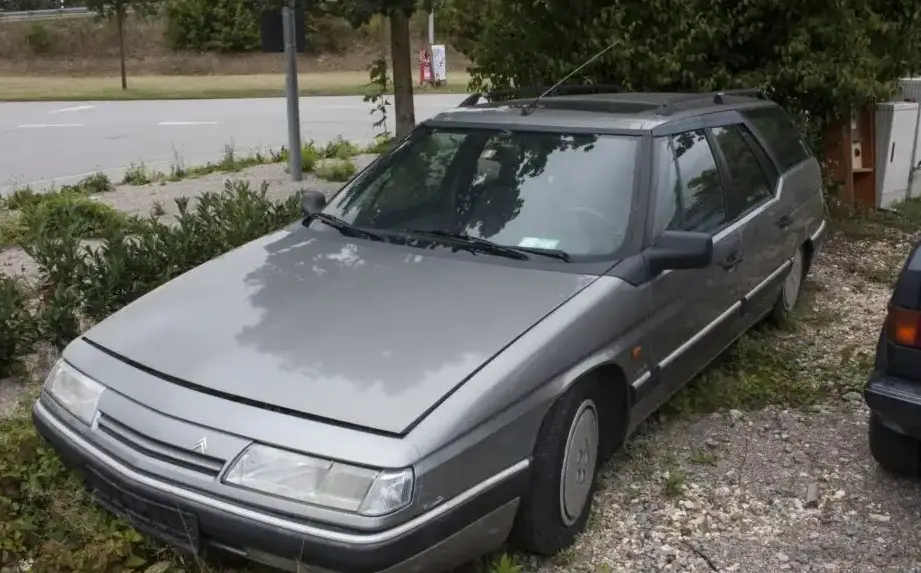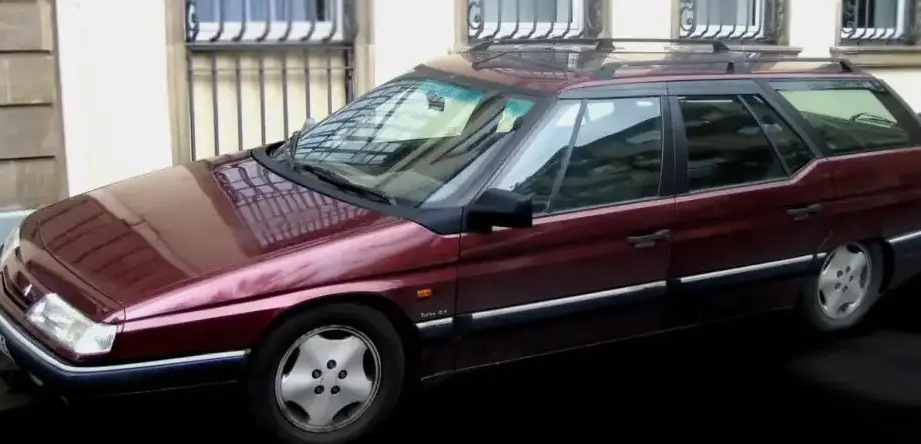
The Citroen XM (Y4) 3.0 V6, produced between 1997 and June 2000, represented the pinnacle of Citroen’s large executive car range during that period. Positioned as the flagship variant of the Y4 series, which spanned from 1994 to 2000, the 3.0 V6 offered a significant step up in performance and refinement compared to the four-cylinder models. The XM, known for its distinctive styling and innovative hydropneumatic suspension, aimed to compete with established German rivals like the Audi A6 and BMW 5 Series, offering a uniquely French alternative focused on comfort and technology. This particular engine and transmission combination was aimed at buyers who desired a blend of luxury, performance, and long-distance cruising capability.
Technical Specifications
| Brand | Citroen |
| Model | XM |
| Generation | XM (Y4) |
| Type (Engine) | 3.0 V6 (190 Hp) |
| Start of production | 1997 |
| End of production | June, 2000 |
| Powertrain Architecture | Internal Combustion engine |
| Body type | Hatchback |
| Seats | 5 |
| Doors | 5 |
| Fuel consumption (urban) | 15.9 l/100 km (14.8 US mpg, 17.8 UK mpg, 6.3 km/l) |
| Fuel consumption (extra urban) | 8 l/100 km (29.4 US mpg, 35.3 UK mpg, 12.5 km/l) |
| Fuel consumption (combined) | 10.9 l/100 km (21.6 US mpg, 25.9 UK mpg, 9.2 km/l) |
| CO2 emissions | 260 g/km |
| Fuel Type | Petrol (Gasoline) |
| Acceleration 0 – 100 km/h | 8.4 sec |
| Acceleration 0 – 62 mph | 8.4 sec |
| Acceleration 0 – 60 mph | 8 sec |
| Maximum speed | 233 km/h (144.78 mph) |
| Emission standard | Euro 2 |
| Weight-to-power ratio | 8.2 kg/Hp, 122.6 Hp/tonne |
| Weight-to-torque ratio | 5.8 kg/Nm, 172.3 Nm/tonne |
| Power | 190 Hp @ 5500 rpm |
| Power per litre | 64.5 Hp/l |
| Torque | 267 Nm @ 4000 rpm (196.93 lb.-ft. @ 4000 rpm) |
| Engine layout | Front, Transverse |
| Engine Model/Code | XZF ES9J4-L3 |
| Engine displacement | 2946 cm3 (179.78 cu. in.) |
| Number of cylinders | 6 |
| Engine configuration | V-engine |
| Cylinder Bore | 87 mm (3.43 in.) |
| Piston Stroke | 82.6 mm (3.25 in.) |
| Compression ratio | 10.5:1 |
| Number of valves per cylinder | 4 |
| Fuel injection system | Multi-port manifold injection |
| Engine aspiration | Naturally aspirated engine |
| Valvetrain | DOHC |
| Engine oil capacity | 7 l (7.4 US qt | 6.16 UK qt) |
| Coolant | 10 l (10.57 US qt | 8.8 UK qt) |
| Kerb Weight | 1550 kg (3417.17 lbs.) |
| Max. weight | 2080 kg (4585.62 lbs.) |
| Max load | 530 kg (1168.45 lbs.) |
| Trunk (boot) space – minimum | 455 l (16.07 cu. ft.) |
| Trunk (boot) space – maximum | 1460 l (51.56 cu. ft.) |
| Fuel tank capacity | 80 l (21.13 US gal | 17.6 UK gal) |
| Max. roof load | 100 kg (220.46 lbs.) |
| Permitted trailer load with brakes (12%) | 1500 kg (3306.93 lbs.) |
| Permitted trailer load without brakes | 750 kg (1653.47 lbs.) |
| Permitted towbar download | 80 kg (176.37 lbs.) |
| Length | 4708 mm (185.35 in.) |
| Width | 1794 mm (70.63 in.) |
| Height | 1396 mm (54.96 in.) |
| Wheelbase | 2850 mm (112.2 in.) |
| Front track | 1520 mm (59.84 in.) |
| Rear (Back) track | 1447 mm (56.97 in.) |
| Front overhang | 1068 mm (42.05 in.) |
| Rear overhang | 790 mm (31.1 in.) |
| Ride height (ground clearance) | 141 mm (5.55 in.) |
| Drivetrain Architecture | The Internal combustion engine (ICE) drives the front wheels of the vehicle. |
| Drive wheel | Front wheel drive |
| Number of gears and type of gearbox | 5 gears, manual transmission |
| Front suspension | Independent type McPherson, Wishbone |
| Rear suspension | Hydro-pneumatic element, Trailing arm |
| Front brakes | Ventilated discs |
| Rear brakes | Disc |
| Assisting systems | ABS (Anti-lock braking system) |
| Steering type | Steering rack and pinion |
| Power steering | Hydraulic Steering |
| Tires size | 205/65 R15 |
Powertrain & Engine Architecture
The heart of the XM 3.0 V6 is the XFZ ES9J4-L3 engine, a 2.9-liter, naturally aspirated V6. This engine, developed in collaboration with Peugeot and Renault, features a 60-degree V-angle and utilizes a cast iron block with aluminum cylinder heads. It employs multi-port fuel injection and a double overhead camshaft (DOHC) valvetrain, contributing to its relatively high specific output. The engine produces 190 horsepower at 5500 rpm and 267 Nm (196.93 lb-ft) of torque at 4000 rpm. The engine’s design prioritized smoothness and refinement over outright performance. The transmission is a 5-speed manual gearbox, delivering power to the front wheels. The engine oil capacity is 7 liters, and it requires a specific oil specification (details available upon login to Citroen’s service database).
Driving Characteristics
The XM 3.0 V6 offered a distinctly different driving experience compared to its four-cylinder counterparts. The V6 engine provided ample power for effortless cruising and confident overtaking, with a 0-60 mph time of around 8 seconds and a top speed of 144.78 mph. While not a sports car, the XM 3.0 V6 felt significantly more relaxed at highway speeds than the lower-powered models. The 5-speed manual transmission was well-matched to the engine’s characteristics, offering smooth shifts and a reasonable spread of gears. However, the car’s considerable weight (1550 kg / 3417.17 lbs) meant that it wasn’t particularly agile in corners. The hydropneumatic suspension, a Citroen hallmark, played a crucial role in providing a remarkably comfortable ride, absorbing bumps and imperfections in the road with ease.
Equipment & Trim Levels
The 3.0 V6 XM typically came well-equipped, reflecting its position as the range-topping model. Standard features included power windows, central locking, air conditioning, and an upgraded audio system. Interior upholstery was typically a high-quality cloth or leather, and the dashboard featured wood trim. Optional extras included a sunroof, upgraded sound system, and more advanced climate control systems. The interior design prioritized comfort and ergonomics, with supportive seats and a logical layout of controls.
Chassis & Braking
The XM’s chassis featured independent McPherson strut suspension at the front and a unique hydropneumatic suspension system at the rear. This system allowed for self-leveling and adjustable ride height, contributing to the car’s exceptional ride quality. Braking duties were handled by ventilated discs at the front and solid discs at the rear, assisted by an Anti-lock Braking System (ABS). The steering was a rack and pinion system with hydraulic power assistance, providing a reasonably direct and responsive feel.
Market Reception & Comparison
The Citroen XM 3.0 V6 was generally well-received by critics, who praised its comfortable ride, refined engine, and spacious interior. However, it was often criticized for its somewhat unconventional styling and its complexity, which could lead to higher maintenance costs. Compared to the four-cylinder XM models, the 3.0 V6 offered a significant performance upgrade but at the expense of fuel economy (10.9 l/100 km combined). Against its German rivals, the XM offered a different proposition – prioritizing comfort and innovation over outright sporting prowess.
Legacy
The Citroen XM 3.0 V6, while not a huge sales success, remains a fondly remembered car among enthusiasts. The XFZ engine, while not without its quirks, proved to be relatively durable when properly maintained. Today, the XM 3.0 V6 is a relatively rare sight on the road, and well-maintained examples are becoming increasingly collectible. The hydropneumatic suspension system requires specialized knowledge and maintenance, which can be a deterrent for some potential buyers. However, for those willing to invest the time and effort, the XM 3.0 V6 offers a unique and rewarding driving experience, representing a high point in Citroen’s history of innovative and comfortable automobiles.