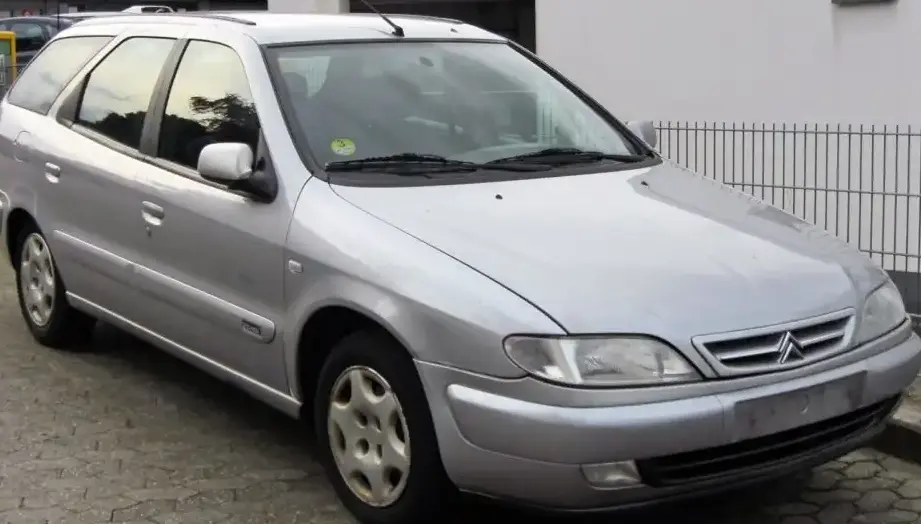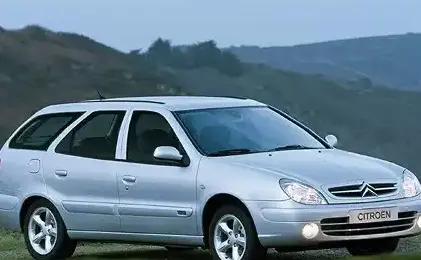
The Citroen Xsara Break 2.0 HDi (90 hp) represents a practical and fuel-efficient offering within the second generation (N2) Xsara Break lineup, produced between 2003 and 2005. Positioned as a mid-range variant, it catered to buyers seeking the versatility of a station wagon (estate) with the economy of a modern diesel engine. This model falls within the Phase III update of the N2 generation, incorporating minor cosmetic and equipment revisions. The Xsara Break, in general, was Citroen’s competitor in the compact family wagon segment, primarily aimed at the European market, offering a blend of practicality, comfort, and affordability.
Technical Specifications
| Brand | Citroen |
| Model | Xsara |
| Generation | Xsara Break (N2, Phase III) |
| Type (Engine) | 2.0 HDi (90 Hp) |
| Start of production | February, 2003 |
| End of production | 2005 |
| Powertrain Architecture | Internal Combustion engine |
| Body type | Station wagon (estate) |
| Seats | 5 |
| Doors | 5 |
| Fuel consumption (urban) | 7.5 l/100 km (31.4 US mpg) |
| Fuel consumption (extra urban) | 4.3 l/100 km (54.7 US mpg) |
| Fuel consumption (combined) | 5.5 l/100 km (42.8 US mpg) |
| CO2 emissions | 144 g/km |
| Fuel Type | Diesel |
| Acceleration 0 – 100 km/h | 13.6 sec |
| Acceleration 0 – 62 mph | 13.6 sec |
| Acceleration 0 – 60 mph | 12.9 sec |
| Maximum speed | 181 km/h (112.47 mph) |
| Emission standard | Euro 3 |
| Weight-to-power ratio | 13.9 kg/Hp |
| Weight-to-torque ratio | 6.1 kg/Nm |
| Power | 90 Hp @ 4000 rpm |
| Torque | 205 Nm @ 1900 rpm (151.2 lb.-ft. @ 1900 rpm) |
| Engine layout | Front, Transverse |
| Engine Model/Code | RHY DW10TD |
| Engine displacement | 1997 cm3 (121.86 cu. in.) |
| Number of cylinders | 4 |
| Engine configuration | Inline |
| Cylinder Bore | 85 mm (3.35 in.) |
| Piston Stroke | 88 mm (3.46 in.) |
| Compression ratio | 18:1 |
| Number of valves per cylinder | 2 |
| Fuel injection system | Diesel Commonrail |
| Engine aspiration | Turbocharger |
| Valvetrain | OHC |
| Engine oil capacity | 4.2 l (4.44 US qt | 3.7 UK qt) |
| Coolant | 5.8 l (6.13 US qt | 5.1 UK qt) |
| Kerb Weight | 1250 kg (2755.78 lbs.) |
| Max. weight | 1759 kg (3877.93 lbs.) |
| Max load | 509 kg (1122.15 lbs.) |
| Trunk (boot) space – minimum | 517 l (18.26 cu. ft.) |
| Trunk (boot) space – maximum | 1512 l (53.4 cu. ft.) |
| Fuel tank capacity | 54 l (14.27 US gal | 11.88 UK gal) |
| Max. roof load | 100 kg (220.46 lbs.) |
| Permitted trailer load with brakes (12%) | 1100 kg (2425.08 lbs.) |
| Permitted trailer load without brakes | 645 kg (1421.98 lbs.) |
| Permitted towbar download | 70 kg (154.32 lbs.) |
| Length | 4369 mm (172.01 in.) |
| Width | 1705 mm (67.13 in.) |
| Width including mirrors | 2014 mm (79.29 in.) |
| Height | 1420 mm (55.91 in.) |
| Wheelbase | 2540 mm (100 in.) |
| Front track | 1433 mm (56.42 in.) |
| Rear (Back) track | 1442 mm (56.77 in.) |
| Front overhang | 880 mm (34.65 in.) |
| Rear overhang | 949 mm (37.36 in.) |
| Minimum turning circle | 11.5 m (37.73 ft.) |
| Drivetrain Architecture | Front wheel drive |
| Drive wheel | Front wheel drive |
| Number of gears | 5 gears, manual transmission |
| Front suspension | Independent, type McPherson with coil spring and anti-roll bar |
| Rear suspension | Torsion |
| Front brakes | Ventilated discs |
| Rear brakes | Disc |
| Assisting systems | ABS (Anti-lock braking system) |
| Steering type | Steering rack and pinion |
| Power steering | Hydraulic Steering |
| Tires size | 195/55 R15 |
| Wheel rims size | 6J x 15 |
Powertrain & Engine Architecture
The heart of the Xsara Break 2.0 HDi (90 hp) is the DW10TD engine, specifically the RHY variant. This is a 1997cc, four-cylinder diesel engine utilizing a common rail direct injection system. The DW10 engine family is a long-running and widely used design by PSA (Peugeot Citroen) and has been refined over several iterations. The RHY version, introduced to meet Euro 3 emissions standards, features a fixed-geometry turbocharger. The engine employs an overhead camshaft (OHC) valvetrain with two valves per cylinder. The common rail system, supplied by Bosch, delivers fuel at extremely high pressure, optimizing combustion efficiency and reducing noise. This engine is known for its durability and relatively simple construction, contributing to its longevity. The 90 horsepower output is achieved at 4000 rpm, while peak torque of 205 Nm (151.2 lb-ft) is available from 1900 rpm, providing good low-end grunt for everyday driving. The engine is transversely mounted in the front of the vehicle, driving the front wheels.
Driving Characteristics
The 2.0 HDi 90 hp engine in the Xsara Break delivers a comfortable and economical driving experience, but it’s not a performance-oriented setup. Acceleration is adequate for most situations, with a 0-60 mph time around 12.9 seconds. The engine’s strong low-end torque makes it well-suited for overtaking and navigating hilly terrain. However, it lacks the outright punch of higher-powered HDi variants or the responsiveness of a gasoline engine. The five-speed manual transmission is well-matched to the engine’s characteristics, providing smooth gear changes. Compared to the 1.6 HDi, the 2.0 HDi offers more power and torque, resulting in improved acceleration and towing capacity. Compared to the more powerful 110 hp HDi version, the 90 hp model feels noticeably slower, especially at higher speeds. The focus is on fuel efficiency and relaxed cruising rather than spirited driving.
Equipment & Trim Levels
The 2.0 HDi 90 hp Xsara Break typically came equipped with a reasonable level of standard features. These included central locking, power windows, power steering, and an adjustable steering column. Interior upholstery was typically cloth, with a functional and durable design. Air conditioning was often an optional extra, as were features like alloy wheels, a CD player, and rear parking sensors. The Phase III update brought minor interior trim revisions, including updated fabric patterns and dashboard detailing. The overall interior ambiance was practical and comfortable, prioritizing functionality over luxury.
Chassis & Braking
The Xsara Break utilizes an independent McPherson strut suspension setup at the front, providing a comfortable ride and decent handling. The rear suspension employs a torsion beam, which is a cost-effective and space-efficient solution. The front brakes are ventilated discs, offering good stopping power, while the rear brakes are discs. Anti-lock Braking System (ABS) is standard, enhancing safety. The suspension is tuned for comfort, absorbing bumps and imperfections in the road surface effectively. Stabilizer bars are fitted to both the front and rear axles to reduce body roll during cornering.
Market Reception & Comparison
The Citroen Xsara Break 2.0 HDi (90 hp) was generally well-received by critics as a practical and economical family car. It was praised for its fuel efficiency, comfortable ride, and spacious interior. However, some reviewers noted that the engine lacked outright performance. Compared to rivals like the Ford Focus Estate and Volkswagen Golf Estate, the Xsara Break offered a competitive package in terms of price, fuel economy, and practicality. The 90 hp HDi engine provided a good balance between performance and economy, making it a popular choice for drivers who prioritized fuel efficiency over outright speed.
Legacy
The DW10TD engine, in its various iterations, has proven to be a remarkably durable and reliable powertrain. The 2.0 HDi 90 hp version is no exception. While age and mileage can lead to wear and tear on components like the turbocharger and fuel injectors, the engine itself is generally robust. Today, the Xsara Break 2.0 HDi (90 hp) can be found as an affordable and practical used car. Its fuel efficiency and relatively low maintenance costs make it an attractive option for budget-conscious buyers. However, potential buyers should be aware of the age-related issues common to older vehicles, such as corrosion and wear on suspension components.