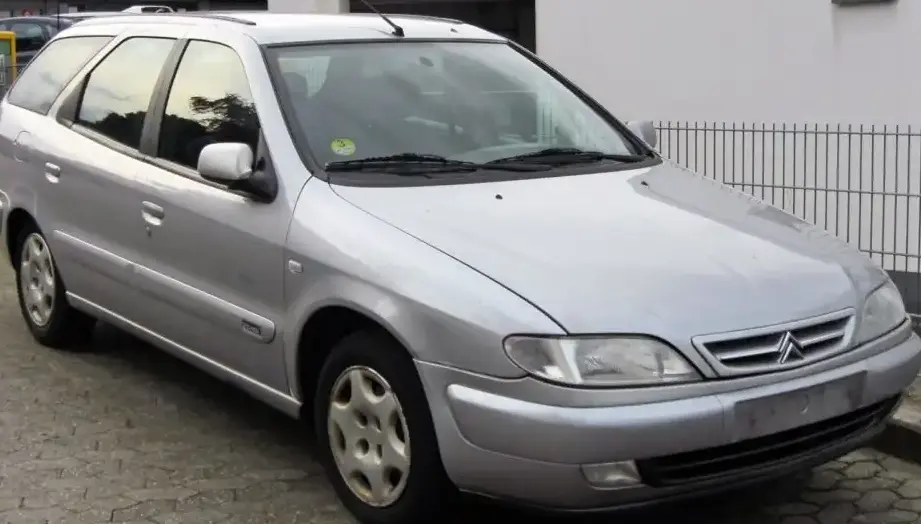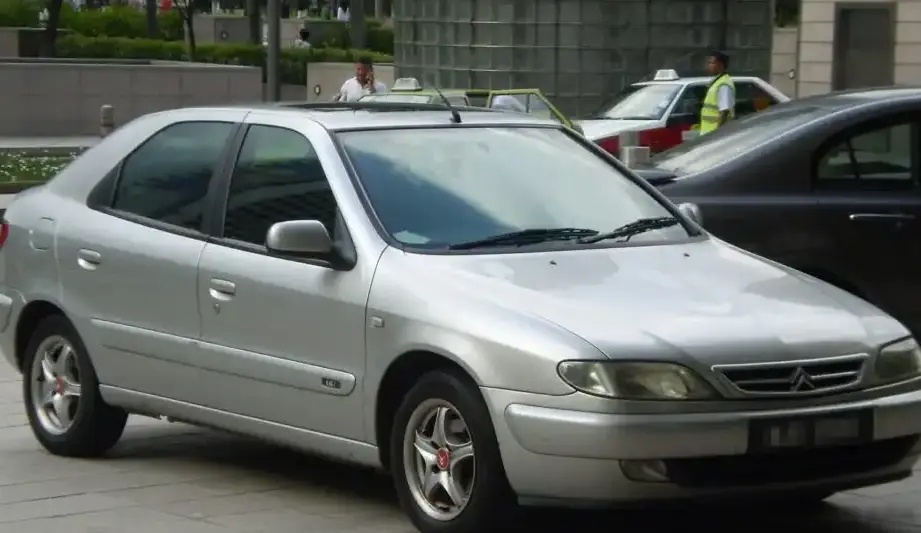
The Citroën Xsara 1.8i 16V, produced between 1998 and 2000, represents a mid-range offering within the first generation (N1) of the Xsara compact hatchback. Positioned above the base 1.4 and 1.6 liter models, and below the more performance-oriented versions, the 1.8i 16V aimed to provide a balance of performance and fuel economy for the European market. This variant was a key part of Citroën’s strategy to offer a diverse lineup within the competitive C-segment, appealing to buyers seeking a comfortable and reasonably powerful family car. The N1 Xsara was built on the PSA Group’s Platform 2, shared with the Peugeot 306.
Technical Specifications
| Brand | Citroen |
| Model | Xsara |
| Generation | Xsara (N1, Phase I) |
| Type (Engine) | 1.8 i 16V (110 Hp) |
| Start of production | 1998 |
| End of production | 2000 |
| Powertrain Architecture | Internal Combustion engine |
| Body type | Hatchback |
| Seats | 5 |
| Doors | 5 |
| Fuel consumption (urban) | 12 l/100 km (19.6 US mpg, 23.5 UK mpg, 8.3 km/l) |
| Fuel consumption (extra urban) | 6.3 l/100 km (37.3 US mpg, 44.8 UK mpg, 15.9 km/l) |
| Fuel consumption (combined) | 8.3 l/100 km (28.3 US mpg, 34 UK mpg, 12 km/l) |
| CO2 emissions | 198 g/km |
| Fuel Type | Petrol (Gasoline) |
| Acceleration 0 – 100 km/h | 10.7 sec |
| Acceleration 0 – 62 mph | 10.7 sec |
| Acceleration 0 – 60 mph | 10.2 sec |
| Maximum speed | 195 km/h (121.17 mph) |
| Weight-to-power ratio | 10.1 kg/Hp, 98.7 Hp/tonne |
| Weight-to-torque ratio | 7.2 kg/Nm, 139 Nm/tonne |
| Power | 110 Hp @ 5500 rpm |
| Power per litre | 62.5 Hp/l |
| Torque | 155 Nm @ 4250 rpm (114.32 lb.-ft. @ 4250 rpm) |
| Engine layout | Front, Transverse |
| Engine Model/Code | LFY XU7JP4 |
| Engine displacement | 1761 cm3 (107.46 cu. in.) |
| Number of cylinders | 4 |
| Engine configuration | Inline |
| Cylinder Bore | 83 mm (3.27 in.) |
| Piston Stroke | 81.4 mm (3.2 in.) |
| Compression ratio | 10.4:1 |
| Number of valves per cylinder | 4 |
| Fuel injection system | Multi-port manifold injection |
| Engine aspiration | Naturally aspirated engine |
| Valvetrain | DOHC |
| Engine oil capacity | 4.75 l (5.02 US qt | 4.18 UK qt) |
| Coolant | 7 l (7.4 US qt | 6.16 UK qt) |
| Kerb Weight | 1115 kg (2458.15 lbs.) |
| Max. weight | 1630 kg (3593.53 lbs.) |
| Max load | 515 kg (1135.38 lbs.) |
| Trunk (boot) space – minimum | 408 l (14.41 cu. ft.) |
| Trunk (boot) space – maximum | 1190 l (42.02 cu. ft.) |
| Fuel tank capacity | 54 l (14.27 US gal | 11.88 UK gal) |
| Max. roof load | 75 kg (165.35 lbs.) |
| Permitted trailer load with brakes (12%) | 1100 kg (2425.08 lbs.) |
| Permitted trailer load without brakes | 590 kg (1300.73 lbs.) |
| Permitted towbar download | 70 kg (154.32 lbs.) |
| Length | 4167 mm (164.06 in.) |
| Width | 1698 mm (66.85 in.) |
| Width including mirrors | 1975 mm (77.76 in.) |
| Height | 1405 mm (55.31 in.) |
| Wheelbase | 2540 mm (100 in.) |
| Front track | 1423 mm (56.02 in.) |
| Rear (Back) track | 1430 mm (56.3 in.) |
| Front overhang | 868 mm (34.17 in.) |
| Rear overhang | 759 mm (29.88 in.) |
| Minimum turning circle (turning diameter) | 11.5 m (37.73 ft.) |
| Drivetrain Architecture | The Internal combustion engine (ICE) drives the front wheels of the vehicle. |
| Drive wheel | Front wheel drive |
| Number of gears and type of gearbox | 5 gears, manual transmission |
| Front suspension | Independent, type McPherson with coil spring and anti-roll bar |
| Rear suspension | Torsion |
| Front brakes | Ventilated discs |
| Rear brakes | Disc |
| Assisting systems | ABS (Anti-lock braking system) |
| Steering type | Steering rack and pinion |
| Power steering | Hydraulic Steering |
| Tires size | 185/65 R14 |
Powertrain & Engine Architecture
The heart of the Xsara 1.8i 16V is the LFY (or sometimes XU7JP4) 1.8-liter inline-four cylinder engine. This engine is part of the PSA Group’s XU series, known for its robustness and relatively simple design. The “16V” designation indicates a dual overhead camshaft (DOHC) valvetrain, operating four valves per cylinder. This configuration enhances breathing and contributes to the engine’s power output. Fuel delivery is managed by a multi-port fuel injection system, providing precise fuel metering for improved efficiency and reduced emissions. The engine produces 110 horsepower at 5500 rpm and 155 Nm (114 lb-ft) of torque at 4250 rpm. The engine is transversely mounted, driving the front wheels. The transmission is a five-speed manual gearbox, offering a balance between fuel economy and driver control. While an automatic transmission was available on some Xsara models, it was less common with the 1.8L engine.
Driving Characteristics
The Xsara 1.8i 16V offers a noticeable step up in performance compared to the lower-displacement engines in the range. Acceleration to 60 mph takes around 10.2 seconds, and it achieves a top speed of approximately 121 mph. The five-speed manual transmission allows for effective use of the engine’s powerband. While not a sports car, the 1.8L engine provides sufficient power for comfortable highway cruising and overtaking. Compared to the more powerful versions of the Xsara, such as those equipped with the 2.0L 16V engine, the 1.8L feels less eager to rev, but offers better fuel economy. The gear ratios are well-chosen for everyday driving, providing adequate acceleration in each gear. The steering is light and precise, making the car easy to maneuver in urban environments.
Equipment & Trim Levels
The 1.8i 16V typically came equipped with a reasonable level of standard features. These included central locking, power steering, electric front windows, and an adjustable steering column. Interior upholstery was typically cloth, with a functional and durable design. Optional extras included air conditioning, alloy wheels, a sunroof, and upgraded audio systems. The trim level often dictated the availability of these options. The 1.8i 16V often sat in a mid-range position, offering more comfort and features than the base models but lacking the premium appointments of the top-of-the-line trims.
Chassis & Braking
The Xsara N1 utilizes an independent McPherson strut suspension at the front, providing a comfortable ride and good handling characteristics. The rear suspension employs a torsion beam setup, which is cost-effective and provides adequate stability. Braking is handled by ventilated discs at the front and solid discs at the rear. Anti-lock Braking System (ABS) was standard, enhancing safety by preventing wheel lockup during hard braking. The chassis is relatively lightweight, contributing to the car’s agility and fuel efficiency. Stabilizer bars are fitted to both the front and rear axles to reduce body roll during cornering.
Market Reception & Comparison
The Citroën Xsara 1.8i 16V was generally well-received by automotive critics as a practical and well-rounded family car. It was praised for its comfortable ride, decent performance, and reasonable fuel economy. Compared to rivals like the Volkswagen Golf and Ford Focus, the Xsara offered a distinctive French flair and a comfortable interior. However, some critics noted that the interior materials were not as high-quality as those found in some German competitors. Fuel economy figures of around 28.3 US mpg combined were competitive for the time. Reliability was generally good, although the XU engine series is known to be susceptible to head gasket issues if not properly maintained.
Legacy
The Citroën Xsara 1.8i 16V remains a relatively affordable and practical used car today. The XU7JP4 engine is known for its durability when properly maintained, although regular servicing is essential to prevent issues like head gasket failure. Parts availability is generally good, and the car’s simple mechanical design makes it relatively easy to repair. While not a collector’s item, the Xsara 1.8i 16V represents a solid and dependable choice for buyers seeking an economical and comfortable compact hatchback. Its blend of performance, fuel efficiency, and practicality ensured its popularity during its production run and continues to make it a viable option in the used car market.