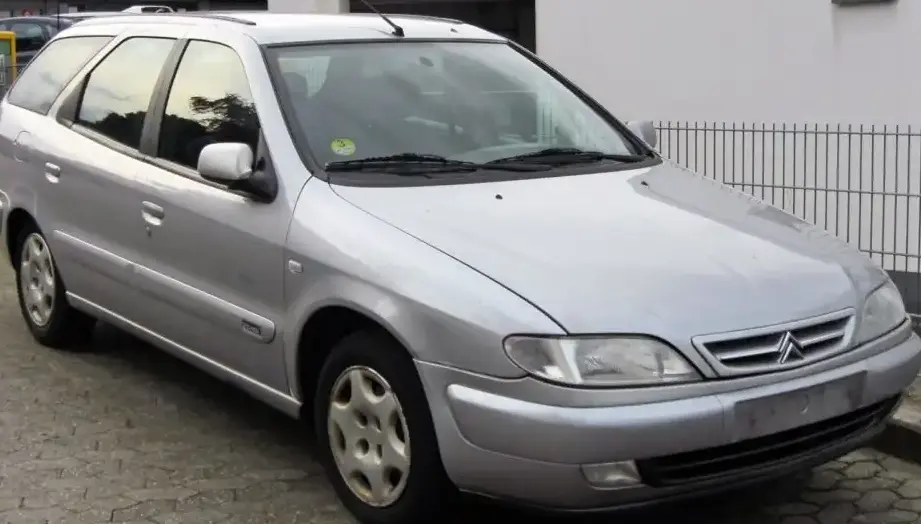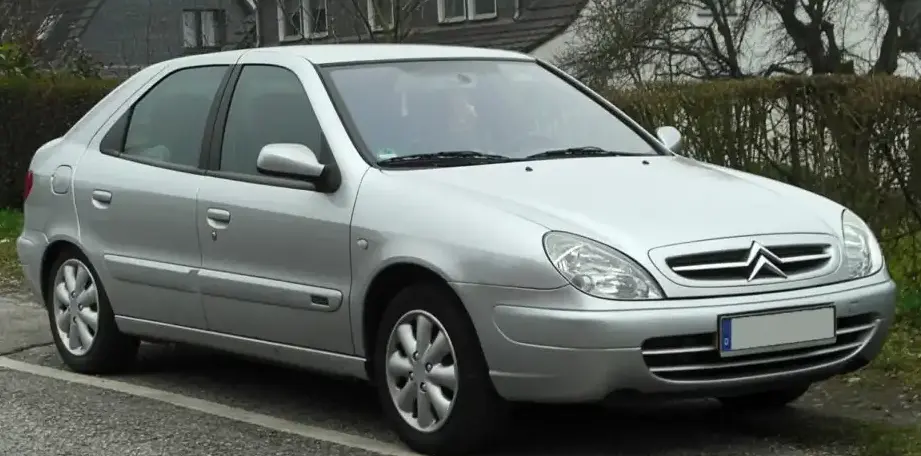
The Citroën Xsara 1.6i 16V, produced between 2000 and 2003 as part of the N1 Phase II generation, represented a popular mid-range offering within the Xsara lineup. Positioned above the base 1.4-liter models and below the more potent 2.0-liter variants, this 109 horsepower hatchback aimed to balance affordability with reasonable performance and equipment. The N1 series Xsara, built upon the PSA Group’s platform, was Citroën’s entry in the competitive compact family car segment, primarily targeted at the European market. This variant, with its 16-valve engine and typically a manual transmission (though automatic options existed), offered a step up in refinement and driving experience compared to the lower-spec models.
Technical Specifications
| Brand | Citroen |
| Model | Xsara |
| Generation | Xsara (N1, Phase II) |
| Type (Engine) | 1.6 i 16V (109 Hp) |
| Start of production | 2000 year |
| End of production | 2003 year |
| Powertrain Architecture | Internal Combustion engine |
| Body type | Hatchback |
| Seats | 5 |
| Doors | 5 |
| Fuel consumption (urban) | 9.3 l/100 km (25.3 US mpg, 30.4 UK mpg, 10.8 km/l) |
| Fuel consumption (extra urban) | 5.5 l/100 km (42.8 US mpg, 51.4 UK mpg, 18.2 km/l) |
| Fuel consumption (combined) | 6.9 l/100 km (34.1 US mpg, 40.9 UK mpg, 14.5 km/l) |
| CO2 emissions | 160 g/km |
| Fuel Type | Petrol (Gasoline) |
| Acceleration 0 – 100 km/h | 11 sec |
| Acceleration 0 – 62 mph | 11 sec |
| Acceleration 0 – 60 mph | 10.5 sec |
| Maximum speed | 195 km/h (121.17 mph) |
| Emission standard | Euro 3 |
| Weight-to-power ratio | 10.5 kg/Hp, 95.5 Hp/tonne |
| Weight-to-torque ratio | 7.8 kg/Nm, 128.8 Nm/tonne |
| Power | 109 Hp @ 5800 rpm |
| Power per litre | 68.7 Hp/l |
| Torque | 147 Nm @ 4000 rpm (108.42 lb.-ft. @ 4000 rpm) |
| Engine layout | Front, Transverse |
| Engine Model/Code | TU5JP4 |
| Engine displacement | 1587 cm3 (96.84 cu. in.) |
| Number of cylinders | 4 |
| Engine configuration | Inline |
| Cylinder Bore | 78.5 mm (3.09 in.) |
| Piston Stroke | 82 mm (3.23 in.) |
| Number of valves per cylinder | 4 |
| Fuel injection system | Multi-port manifold injection |
| Engine aspiration | Naturally aspirated engine |
| Valvetrain | DOHC |
| Engine oil capacity | 3.25 l (3.43 US qt | 2.86 UK qt) |
| Coolant | 7 l (7.4 US qt | 6.16 UK qt) |
| Kerb Weight | 1141 kg (2515.47 lbs.) |
| Max. weight | 1663 kg (3666.29 lbs.) |
| Max load | 522 kg (1150.81 lbs.) |
| Trunk (boot) space – minimum | 408 l (14.41 cu. ft.) |
| Trunk (boot) space – maximum | 1190 l (42.02 cu. ft.) |
| Fuel tank capacity | 54 l (14.27 US gal | 11.88 UK gal) |
| Max. roof load | 75 kg (165.35 lbs.) |
| Permitted trailer load with brakes (12%) | 1100 kg (2425.08 lbs.) |
| Permitted trailer load without brakes | 575 kg (1267.66 lbs.) |
| Permitted towbar download | 70 kg (154.32 lbs.) |
| Length | 4188 mm (164.88 in.) |
| Width | 1705 mm (67.13 in.) |
| Width including mirrors | 1975 mm (77.76 in.) |
| Height | 1405 mm (55.31 in.) |
| Wheelbase | 2540 mm (100 in.) |
| Front track | 1433 mm (56.42 in.) |
| Rear (Back) track | 1442 mm (56.77 in.) |
| Front overhang | 880 mm (34.65 in.) |
| Rear overhang | 768 mm (30.24 in.) |
| Minimum turning circle | 11.5 m (37.73 ft.) |
| Drivetrain Architecture | The Internal combustion engine (ICE) drives the front wheels of the vehicle. |
| Drive wheel | Front wheel drive |
| Number of gears and type of gearbox | 5 gears, manual transmission |
| Front suspension | Independent, type McPherson with coil spring and anti-roll bar |
| Rear suspension | Torsion |
| Front brakes | Ventilated discs |
| Rear brakes | Disc |
| Assisting systems | ABS (Anti-lock braking system) |
| Steering type | Steering rack and pinion |
| Power steering | Hydraulic Steering |
| Tires size | 195/55 R15 |
| Wheel rims size | 6J x 15 |
Powertrain & Engine Architecture
The heart of the Xsara 1.6i 16V is the TU5JP4 engine, a 1.6-liter inline-four cylinder petrol engine. This engine, a mainstay of PSA Group vehicles for many years, is known for its relative simplicity and durability. The ‘16V’ designation indicates a four-valve-per-cylinder configuration, enhancing breathing and contributing to improved power output compared to older two-valve designs. Fuel delivery is managed by a multi-point fuel injection system, providing precise fuel metering for optimal combustion. The engine utilizes a double overhead camshaft (DOHC) valvetrain, further optimizing valve timing and engine efficiency. Typically paired with a five-speed manual transmission, an optional four-speed automatic transmission was also available, though less common. The automatic gearbox, while offering convenience, generally resulted in slightly reduced fuel economy and acceleration.
Driving Characteristics
The 1.6i 16V Xsara offered a balanced driving experience. With 109 horsepower, acceleration was adequate for everyday driving, achieving 0-60 mph in around 10.5 seconds. While not a performance-oriented model, the engine provided sufficient torque for comfortable cruising and overtaking maneuvers. The manual transmission allowed for greater driver control and responsiveness, while the automatic version prioritized ease of use. Compared to the more powerful 2.0-liter variants, the 1.6i felt less eager to rev, but offered better fuel economy. The gear ratios in the manual transmission were well-spaced, providing a good balance between acceleration and fuel efficiency. The automatic transmission, while smooth, could feel somewhat sluggish during quick acceleration.
Equipment & Trim Levels
The 1.6i 16V Xsara typically came equipped with a reasonable level of standard features. These included central locking, power steering, electric front windows, and an adjustable steering column. Higher trim levels, such as the LX or Exclusive, added features like air conditioning, alloy wheels, a CD player, and upgraded interior trim. Interior upholstery was generally cloth, with options for more premium materials on higher-spec models. The dashboard layout was functional and straightforward, prioritizing usability over stylistic flair.
Chassis & Braking
The Xsara 1.6i 16V utilized an independent McPherson strut suspension at the front, providing a comfortable ride and decent handling. The rear suspension employed a torsion beam setup, which was cost-effective and offered a good compromise between ride comfort and handling. Braking duties were handled by ventilated discs at the front and solid discs at the rear, providing adequate stopping power for the vehicle’s weight and performance. Anti-lock Braking System (ABS) was standard, enhancing safety during emergency braking situations.
Market Reception & Comparison
The Citroën Xsara 1.6i 16V was generally well-received by automotive critics as a practical and affordable family car. It was praised for its comfortable ride, decent fuel economy, and reliable engine. However, some critics noted that the interior felt somewhat dated compared to rivals, and the handling wasn’t as sharp as some other cars in the segment. Compared to the 2.0-liter Xsara, the 1.6i offered better fuel economy but lacked the same level of performance. The 1.9 TDI diesel variant provided even better fuel economy and strong torque, but at a higher initial cost.
Legacy
The TU5JP4 engine, found in the Xsara 1.6i 16V, has proven to be a remarkably durable and reliable unit. With proper maintenance, these engines can easily exceed 200,000 miles. The Xsara 1.6i 16V remains a relatively affordable used car today, offering a practical and economical transportation option. While not a particularly sought-after model by enthusiasts, its simplicity and reliability make it a sensible choice for those seeking a dependable and budget-friendly hatchback. Parts availability is generally good, and maintenance costs are relatively low, contributing to its continued appeal in the used car market.