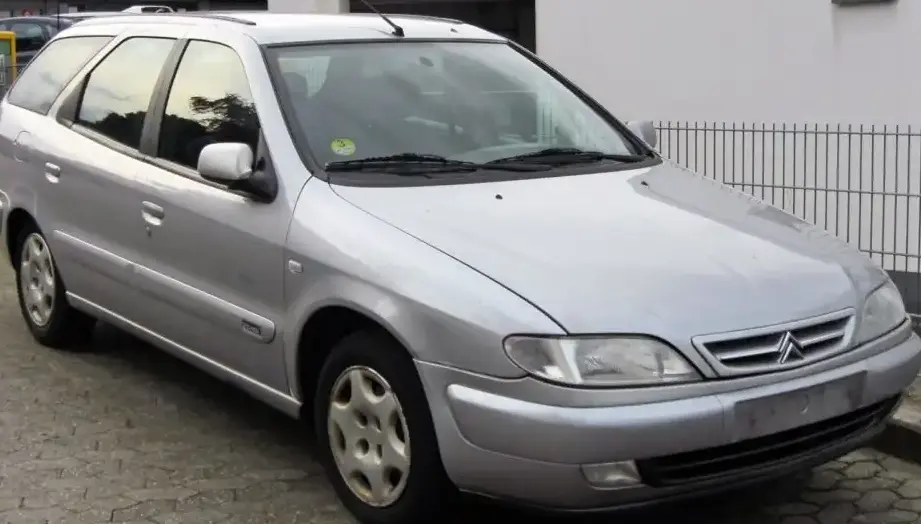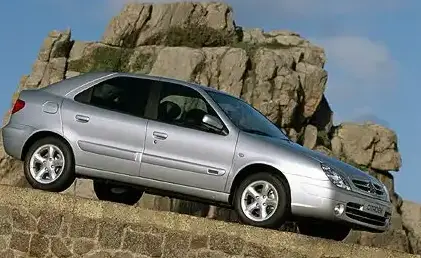
The Citroen Xsara 1.6 i 16V, produced between February 2003 and 2004, represents a mid-range offering within the second generation (N1, Phase III) of the Xsara compact hatchback. Positioned as a practical and relatively affordable option, this variant aimed to balance performance with fuel efficiency, appealing to a broad customer base. The Phase III update brought styling revisions and minor mechanical improvements to the Xsara line, solidifying its position as a competitive player in the European small family car segment. This specific 1.6L 16V engine, paired with a manual transmission, was a popular choice for buyers seeking a step up from the base models without the added cost of the more powerful options.
Technical Specifications
| Brand | Citroen |
| Model | Xsara |
| Generation | Xsara (N1, Phase III) |
| Type (Engine) | 1.6 i 16V (109 Hp) |
| Start of production | February, 2003 |
| End of production | 2004 |
| Powertrain Architecture | Internal Combustion engine |
| Body type | Hatchback |
| Seats | 5 |
| Doors | 5 |
| Fuel consumption (urban) | 9.3 l/100 km (25.3 US mpg, 30.4 UK mpg, 10.8 km/l) |
| Fuel consumption (extra urban) | 5.5 l/100 km (42.8 US mpg, 51.4 UK mpg, 18.2 km/l) |
| Fuel consumption (combined) | 6.9 l/100 km (34.1 US mpg, 40.9 UK mpg, 14.5 km/l) |
| CO2 emissions | 160 g/km |
| Fuel Type | Petrol (Gasoline) |
| Acceleration 0 – 100 km/h | 11 sec |
| Acceleration 0 – 62 mph | 11 sec |
| Acceleration 0 – 60 mph | 10.5 sec |
| Maximum speed | 195 km/h (121.17 mph) |
| Emission standard | Euro 3 D4 |
| Weight-to-power ratio | 10.5 kg/Hp, 95.5 Hp/tonne |
| Weight-to-torque ratio | 7.8 kg/Nm, 128.8 Nm/tonne |
| Power | 109 Hp @ 5800 rpm |
| Power per litre | 68.7 Hp/l |
| Torque | 147 Nm @ 4000 rpm (108.42 lb.-ft. @ 4000 rpm) |
| Engine layout | Front, Transverse |
| Engine Model/Code | TU5JP4 |
| Engine displacement | 1587 cm3 (96.84 cu. in.) |
| Number of cylinders | 4 |
| Engine configuration | Inline |
| Cylinder Bore | 78.5 mm (3.09 in.) |
| Piston Stroke | 82 mm (3.23 in.) |
| Number of valves per cylinder | 4 |
| Fuel injection system | Multi-port manifold injection |
| Engine aspiration | Naturally aspirated engine |
| Valvetrain | DOHC |
| Engine oil capacity | 3.25 l (3.43 US qt | 2.86 UK qt) |
| Coolant | 7 l (7.4 US qt | 6.16 UK qt) |
| Kerb Weight | 1141 kg (2515.47 lbs.) |
| Max. weight | 1663 kg (3666.29 lbs.) |
| Max load | 522 kg (1150.81 lbs.) |
| Trunk (boot) space – minimum | 408 l (14.41 cu. ft.) |
| Trunk (boot) space – maximum | 1190 l (42.02 cu. ft.) |
| Fuel tank capacity | 54 l (14.27 US gal | 11.88 UK gal) |
| Max. roof load | 75 kg (165.35 lbs.) |
| Permitted trailer load with brakes (12%) | 1100 kg (2425.08 lbs.) |
| Permitted trailer load without brakes | 575 kg (1267.66 lbs.) |
| Permitted towbar download | 70 kg (154.32 lbs.) |
| Length | 4188 mm (164.88 in.) |
| Width | 1705 mm (67.13 in.) |
| Width including mirrors | 2014 mm (79.29 in.) |
| Height | 1405 mm (55.31 in.) |
| Wheelbase | 2540 mm (100 in.) |
| Front track | 1433 mm (56.42 in.) |
| Rear (Back) track | 1442 mm (56.77 in.) |
| Front overhang | 880 mm (34.65 in.) |
| Rear overhang | 768 mm (30.24 in.) |
| Minimum turning circle (turning diameter) | 11.5 m (37.73 ft.) |
| Drivetrain Architecture | The Internal combustion engine (ICE) drives the front wheels of the vehicle. |
| Drive wheel | Front wheel drive |
| Number of gears and type of gearbox | 5 gears, manual transmission |
| Front suspension | Independent, type McPherson with coil spring and anti-roll bar |
| Rear suspension | Torsion |
| Front brakes | Ventilated discs |
| Rear brakes | Disc |
| Assisting systems | ABS (Anti-lock braking system) |
| Steering type | Steering rack and pinion |
| Power steering | Hydraulic Steering |
| Tires size | 195/55 R15 |
| Wheel rims size | 6J x 15 |
Powertrain & Engine Architecture
The heart of this Xsara variant is the TU5JP4 engine, a 1.6-liter inline-four cylinder petrol engine. This engine is a member of the well-regarded TU series of engines developed by PSA Peugeot Citroën. The TU5JP4 features a double overhead camshaft (DOHC) valvetrain with four valves per cylinder, contributing to its relatively high power output for its displacement. Fuel delivery is managed by a multi-port fuel injection system, providing precise fuel metering for optimal combustion. The engine produces 109 horsepower at 5800 rpm and 147 Nm (108.42 lb-ft) of torque at 4000 rpm. The engine’s design prioritized reliability and ease of maintenance, making it a popular choice for fleet vehicles and private buyers alike. The manual transmission, typically a five-speed unit, was chosen for its efficiency and driver engagement.
Driving Characteristics
The 1.6L 16V engine, while not exceptionally powerful, provided adequate performance for everyday driving. Acceleration from 0 to 100 km/h (0-62 mph) took around 11 seconds, making it competitive with other vehicles in its class. The manual transmission allowed for precise control over gear selection, enabling drivers to maximize the engine’s power and efficiency. The gear ratios were tuned for a balance between acceleration and fuel economy. Compared to the more powerful 2.0L variants, the 1.6L offered a more economical driving experience, but at the expense of outright performance. The lighter engine weight also contributed to slightly improved handling and responsiveness compared to its heavier counterparts.
Equipment & Trim Levels
The 1.6 i 16V Xsara typically came equipped with a reasonable level of standard features. These included power steering, central locking, electric front windows, and an anti-lock braking system (ABS). Interior upholstery was generally cloth, with a functional and durable design. Optional extras included air conditioning, alloy wheels, a CD player, and upgraded interior trim. The trim level often dictated the availability of these options, with higher trims offering more features as standard. The overall interior design was practical and focused on usability, reflecting the Xsara’s position as a family-oriented vehicle.
Chassis & Braking
The Xsara 1.6 i 16V utilized a McPherson strut front suspension and a torsion beam rear suspension. This setup provided a comfortable ride quality while maintaining reasonable handling characteristics. The front brakes were ventilated discs, offering good stopping power, while the rear brakes were solid discs. The hydraulic power steering provided light and precise steering feel. The suspension was tuned to prioritize comfort and stability, making it well-suited for everyday driving conditions. The relatively lightweight nature of the 1.6L engine contributed to a balanced chassis feel.
Market Reception & Comparison
The Citroen Xsara 1.6 i 16V was generally well-received by automotive critics as a practical and affordable family car. It was praised for its fuel efficiency, comfortable ride, and reliable engine. However, some critics noted that the engine lacked the outright performance of its larger counterparts. Compared to other vehicles in its class, such as the Ford Focus and Volkswagen Golf, the Xsara offered a competitive package in terms of price, features, and fuel economy. The 1.6L engine provided a good balance between performance and running costs, making it an attractive option for budget-conscious buyers.
Legacy
The TU5JP4 engine has proven to be a remarkably durable and reliable powerplant. Many examples are still on the road today, testament to its robust design and build quality. The Xsara 1.6 i 16V remains a popular choice in the used car market, offering a practical and affordable transportation solution. While not a performance icon, this variant represents a solid and dependable option for those seeking a well-rounded compact hatchback. Maintenance costs are generally reasonable, and parts availability remains good, ensuring that these vehicles can be kept running for many years to come.