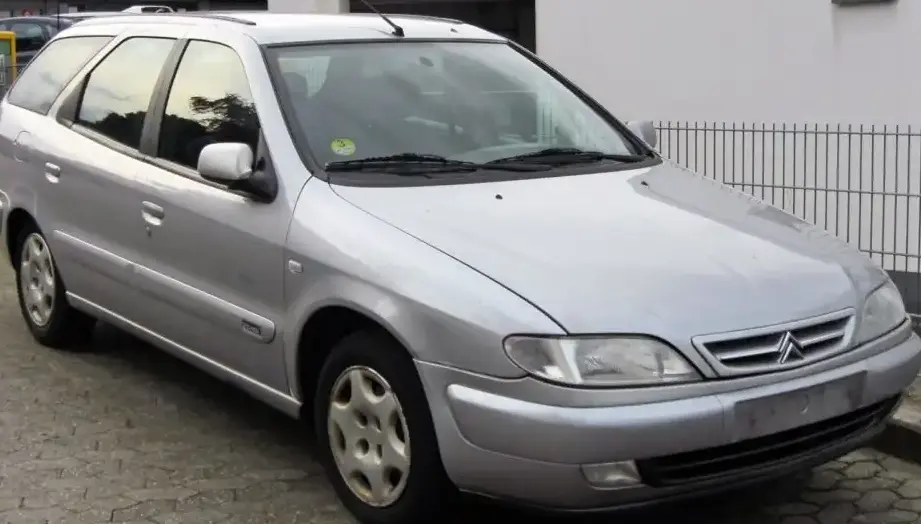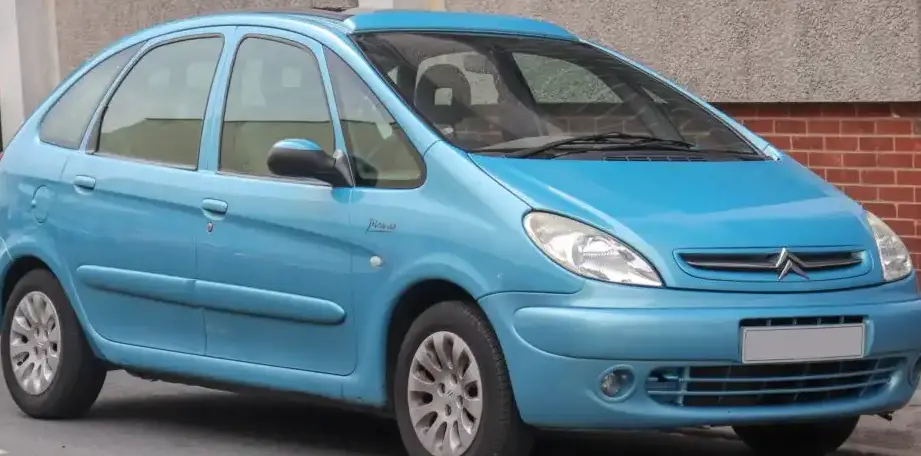
The Citroën Xsara Picasso 1.6, produced between 2000 and 2004, represents the first generation (N68, Phase I) of Citroën’s innovative compact minivan. Positioned as an entry-level offering within the Xsara Picasso range, it aimed to provide affordable family transport with a focus on practicality and space. This variant played a significant role in establishing the Picasso as a popular choice in the European market, offering a distinctive alternative to traditional hatchback and estate car options. It was built on the PSA Group’s Platform 2, also known as the 1HX0 platform, shared with the Peugeot 307.
Technical Specifications
| Brand | Citroen |
| Model | Xsara |
| Generation | Xsara Picasso (N68, Phase I) |
| Type (Engine) | 1.6 (95 Hp) |
| Start of production | 2000 year |
| End of production | 2004 year |
| Powertrain Architecture | Internal Combustion engine |
| Body type | Minivan |
| Seats | 5 |
| Doors | 5 |
| Fuel consumption (urban) | 10 l/100 km (23.5 US mpg, 28.2 UK mpg, 10 km/l) |
| Fuel consumption (extra urban) | 6.1 l/100 km (38.6 US mpg, 46.3 UK mpg, 16.4 km/l) |
| Fuel consumption (combined) | 7.5 l/100 km (31.4 US mpg, 37.7 UK mpg, 13.3 km/l) |
| CO2 emissions | 178 g/km |
| Fuel Type | Petrol (Gasoline) |
| Acceleration 0 – 100 km/h | 15 sec |
| Acceleration 0 – 62 mph | 15 sec |
| Acceleration 0 – 60 mph | 14.3 sec |
| Maximum speed | 171 km/h (106.25 mph) |
| Emission standard | Euro 3 |
| Weight-to-power ratio | 13.1 kg/Hp, 76.6 Hp/tonne |
| Weight-to-torque ratio | 9.2 kg/Nm, 108.9 Nm/tonne |
| Power | 95 Hp @ 5700 rpm |
| Power per litre | 59.9 Hp/l |
| Torque | 135 Nm @ 3000 rpm (99.57 lb.-ft. @ 3000 rpm) |
| Engine layout | Front, Transverse |
| Engine Model/Code | NFV TU5JP/L4 |
| Engine displacement | 1587 cm3 (96.84 cu. in.) |
| Number of cylinders | 4 |
| Engine configuration | Inline |
| Cylinder Bore | 78.5 mm (3.09 in.) |
| Piston Stroke | 82 mm (3.23 in.) |
| Compression ratio | 10.2:1 |
| Number of valves per cylinder | 2 |
| Fuel injection system | Multi-port manifold injection |
| Engine aspiration | Naturally aspirated engine |
| Valvetrain | OHC |
| Engine oil capacity | 3.5 l (3.7 US qt | 3.08 UK qt) |
| Coolant | 6.6 l (6.97 US qt | 5.81 UK qt) |
| Kerb Weight | 1240 kg (2733.73 lbs.) |
| Max. weight | 1790 kg (3946.27 lbs.) |
| Max load | 550 kg (1212.54 lbs.) |
| Trunk (boot) space – minimum | 550 l (19.42 cu. ft.) |
| Trunk (boot) space – maximum | 2128 l (75.15 cu. ft.) |
| Fuel tank capacity | 55 l (14.53 US gal | 12.1 UK gal) |
| Max. roof load | 80 kg (176.37 lbs.) |
| Permitted trailer load with brakes (12%) | 900 kg (1984.16 lbs.) |
| Permitted trailer load without brakes | 650 kg (1433 lbs.) |
| Permitted towbar download | 80 kg (176.37 lbs.) |
| Length | 4276 mm (168.35 in.) |
| Width | 1751 mm (68.94 in.) |
| Height | 1637 mm (64.45 in.) |
| Wheelbase | 2760 mm (108.66 in.) |
| Front track | 1434 mm (56.46 in.) |
| Rear (Back) track | 1452 mm (57.17 in.) |
| Front overhang | 838 mm (32.99 in.) |
| Rear overhang | 678 mm (26.69 in.) |
| Drivetrain Architecture | The Internal combustion engine (ICE) drives the front wheels of the vehicle. |
| Drive wheel | Front wheel drive |
| Number of gears and type of gearbox | 5 gears, manual transmission |
| Front suspension | Independent, type McPherson with coil spring and anti-roll bar |
| Rear suspension | Semi-independent suspension, longitudinal arms with transverse torsion shafts |
| Front brakes | Ventilated discs |
| Rear brakes | Drum |
| Assisting systems | ABS (Anti-lock braking system) |
| Steering type | Steering rack and pinion |
| Power steering | Hydraulic Steering |
| Tires size | 185/65 R15 |
Powertrain & Engine Architecture
The Citroën Xsara Picasso 1.6 utilized the NFV (TU5JP) engine, a 1.6-liter inline-four cylinder petrol engine. This engine was a mainstay in many PSA Group vehicles of the era. It featured a single overhead camshaft (OHC) design and multi-point fuel injection. The engine produced 95 horsepower at 5700 rpm and 135 Nm (99.57 lb-ft) of torque at 3000 rpm. The engine’s compression ratio was 10.2:1. The 1.6L engine was paired with a five-speed manual transmission, which was the most common configuration. While an automatic transmission was offered in some markets, it was less prevalent and typically resulted in slightly reduced performance and fuel economy. The engine’s design prioritized fuel efficiency and reliability over outright performance.
Driving Characteristics
The 1.6-liter engine in the Xsara Picasso provided adequate, but not exhilarating, performance. Acceleration from 0-100 km/h (0-62 mph) took around 15 seconds. In real-world driving, the engine felt somewhat strained when fully loaded or tackling steep inclines. The five-speed manual transmission allowed drivers to keep the engine in its optimal power band, but the overall experience was geared towards relaxed cruising rather than spirited driving. Compared to the more powerful 2.0-liter petrol or 1.9-liter diesel variants, the 1.6L felt noticeably slower. However, it offered a smoother and quieter driving experience than the diesel, and was more affordable to purchase and maintain.
Equipment & Trim Levels
The 1.6-liter Xsara Picasso typically came with a reasonable level of standard equipment. This included power steering, central locking, electric front windows, and an adjustable steering column. Interior upholstery was typically cloth, with a functional, if somewhat basic, dashboard layout. Optional extras included air conditioning, alloy wheels, a CD stereo, and rear electric windows. Higher trim levels, such as the Exclusive, added features like automatic headlights, rain-sensing wipers, and upgraded interior trim. The Picasso was known for its modular interior, with movable rear seats and a large, configurable boot space.
Chassis & Braking
The Xsara Picasso featured independent front suspension with McPherson struts and a semi-independent torsion beam rear suspension. This setup provided a comfortable ride quality, although handling was not particularly sporty. The front brakes were ventilated discs, while the rear brakes were drums. Anti-lock Braking System (ABS) was standard, enhancing safety. The suspension was tuned for comfort and practicality, prioritizing ride quality over sharp handling. The steering was hydraulic, providing light and easy steering feel.
Market Reception & Comparison
The Citroën Xsara Picasso 1.6 was generally well-received by critics as an affordable and practical family vehicle. It was praised for its spacious interior, comfortable ride, and distinctive styling. However, the 1.6-liter engine was often criticized for being underpowered, particularly when the vehicle was fully loaded. Compared to the 2.0-liter petrol and 1.9-liter diesel variants, the 1.6L offered better fuel economy but significantly less performance. The diesel version, in particular, was favored by those who prioritized fuel efficiency and torque. The 1.6L model appealed to buyers who prioritized affordability and a comfortable driving experience over outright performance.
Legacy
The Citroën Xsara Picasso 1.6, while not the most powerful variant, proved to be a reliable and durable powertrain. The TU5JP engine is known for its longevity, and with regular maintenance, can cover high mileages. In the used car market, these models remain relatively affordable and represent a good value for money. However, potential buyers should be aware of potential issues with the electrical system and suspension components. The Xsara Picasso, in general, helped to popularize the compact minivan segment and established Citroën as a leader in innovative family car design. The 1.6L version continues to be a viable option for those seeking a practical and economical family vehicle.