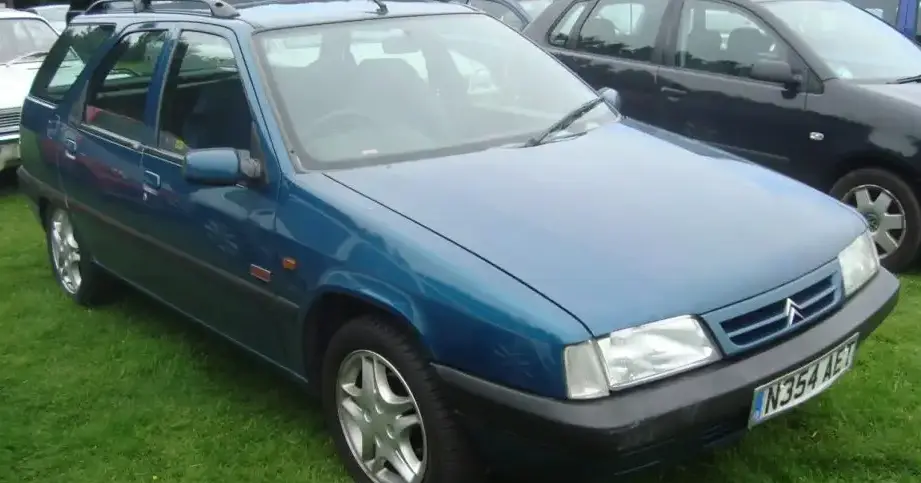
The Citroën ZX Volcane 2.0i 16V, produced between 1993 and 1994, represented a performance-oriented variant within the first generation (N2) of the ZX model range. Positioned as a sporty hatchback, the Volcane 2.0i 16V aimed to deliver a more engaging driving experience than the standard ZX models. It was a key offering in Citroën’s lineup during a period where the brand was seeking to modernize its image and appeal to a broader customer base. The ZX, as a whole, was designed to replace the aging BX and offered a more contemporary design and improved mechanicals. The three-door body style, as featured in the Volcane, further emphasized its sporty intentions.
Technical Specifications
| Brand | Citroen |
| Model | ZX |
| Generation | ZX (N2, Phase I) 3-door |
| Type (Engine) | Volcane 2.0 i 16V (155 Hp) |
| Start of production | 1993 |
| End of production | 1994 |
| Powertrain Architecture | Internal Combustion engine |
| Body type | Hatchback |
| Seats | 5 |
| Doors | 3 |
| Fuel consumption (urban) | 11.3 l/100 km (20.8 US mpg, 25 UK mpg, 8.8 km/l) |
| Fuel consumption (extra urban) | 5.9 l/100 km (39.9 US mpg, 47.9 UK mpg, 16.9 km/l) |
| Fuel consumption (combined) | 7.8 l/100 km (30.2 US mpg, 36.2 UK mpg, 12.8 km/l) |
| Fuel Type | Petrol (Gasoline) |
| Acceleration 0 – 100 km/h | 8.5 sec |
| Acceleration 0 – 62 mph | 8.5 sec |
| Acceleration 0 – 60 mph | 8.1 sec |
| Maximum speed | 220 km/h (136.7 mph) |
| Weight-to-power ratio | 7.4 kg/Hp, 134.8 Hp/tonne |
| Weight-to-torque ratio | 6.3 kg/Nm, 159.1 Nm/tonne |
| Power | 155 Hp @ 6500 rpm |
| Power per litre | 77.6 Hp/l |
| Torque | 183 Nm @ 3500 rpm (134.97 lb.-ft. @ 3500 rpm) |
| Engine layout | Front, Transverse |
| Engine Model/Code | RFY XU10J4/LZ |
| Engine displacement | 1998 cm3 (121.93 cu. in.) |
| Number of cylinders | 4 |
| Engine configuration | Inline |
| Cylinder Bore | 86 mm (3.39 in.) |
| Piston Stroke | 86 mm (3.39 in.) |
| Compression ratio | 10.4:1 |
| Number of valves per cylinder | 4 |
| Fuel injection system | Multi-port manifold injection |
| Engine aspiration | Naturally aspirated engine |
| Valvetrain | OHC |
| Engine oil capacity | 5.4 l (5.71 US qt | 4.75 UK qt) |
| Coolant | 8.5 l (8.98 US qt | 7.48 UK qt) |
| Kerb Weight | 1150 kg (2535.32 lbs.) |
| Max. weight | 1630 kg (3593.53 lbs.) |
| Max load | 480 kg (1058.22 lbs.) |
| Trunk (boot) space – minimum | 324 l (11.44 cu. ft.) |
| Trunk (boot) space – maximum | 1146 l (40.47 cu. ft.) |
| Fuel tank capacity | 56 l (14.79 US gal | 12.32 UK gal) |
| Max. roof load | 75 kg (165.35 lbs.) |
| Permitted trailer load with brakes (12%) | 1100 kg (2425.08 lbs.) |
| Permitted trailer load without brakes | 575 kg (1267.66 lbs.) |
| Permitted towbar download | 70 kg (154.32 lbs.) |
| Length | 4085 mm (160.83 in.) |
| Width | 1718 mm (67.64 in.) |
| Height | 1375 mm (54.13 in.) |
| Wheelbase | 2540 mm (100 in.) |
| Front track | 1432 mm (56.38 in.) |
| Rear (Back) track | 1425 mm (56.1 in.) |
| Front overhang | 863 mm (33.98 in.) |
| Rear overhang | 682 mm (26.85 in.) |
| Ride height (ground clearance) | 116 mm (4.57 in.) |
| Minimum turning circle (turning diameter) | 11.3 m (37.07 ft.) |
| Drivetrain Architecture | The Internal combustion engine (ICE) drives the front wheels of the vehicle. |
| Drive wheel | Front wheel drive |
| Number of gears and type of gearbox | 5 gears, manual transmission |
| Front suspension | Independent type McPherson, Wishbone |
| Rear suspension | Hydro-pneumatic element, Trailing arm |
| Front brakes | Ventilated discs |
| Rear brakes | Disc |
| Assisting systems | ABS (Anti-lock braking system) |
| Steering type | Steering rack and pinion |
| Power steering | Hydraulic Steering |
| Tires size | 195/55 R15 |
Powertrain & Engine Architecture
The heart of the ZX Volcane 2.0i 16V is the RFY XU10J4/LZ engine, a 1.998-liter inline-four cylinder gasoline engine. This engine is part of the XU series, developed by Peugeot-Citroën and renowned for its robustness and tunability. The “16V” designation indicates a four-valve-per-cylinder cylinder head, enhancing breathing and contributing to the engine’s higher power output. Fuel delivery is managed by a multi-port fuel injection system, providing precise fuel metering for optimal combustion. The engine utilizes an overhead camshaft (OHC) valvetrain. The engine produced 155 horsepower at 6500 rpm and 183 Nm (135 lb-ft) of torque at 3500 rpm. The engine’s transverse mounting and front-wheel-drive configuration were typical for European hatchbacks of the era. The five-speed manual transmission was the only transmission option available with this engine.
Driving Characteristics
The ZX Volcane 2.0i 16V offered a noticeably more spirited driving experience compared to lower-spec ZX models. The 155 hp engine provided brisk acceleration, with a 0-60 mph time of around 8.1 seconds and a top speed of 136.7 mph. The five-speed manual transmission allowed drivers to fully exploit the engine’s powerband. While not a dedicated sports car, the Volcane’s handling was competent, thanks to its independent front suspension and hydro-pneumatic rear suspension, a Citroën hallmark. The suspension provided a comfortable ride while maintaining reasonable body control. Compared to the base model ZX, the Volcane offered a more responsive throttle and a generally more engaging driving experience.
Equipment & Trim Levels
The Volcane trim level included several features designed to enhance both comfort and aesthetics. Standard equipment typically included alloy wheels, a more sporty interior trim, and upgraded seats. Options could include power windows, central locking, and a sunroof. The interior featured a sporty steering wheel and instrumentation. The Volcane was positioned as the premium trim level for the ZX, offering a more refined and well-equipped package than the base models.
Chassis & Braking
The ZX Volcane 2.0i 16V featured a McPherson strut front suspension and a hydro-pneumatic rear suspension. The hydro-pneumatic system, unique to Citroën, provided a self-leveling ride and excellent comfort. The braking system consisted of ventilated discs at the front and discs at the rear, providing adequate stopping power. Anti-lock braking system (ABS) was standard, enhancing safety. The steering was a rack-and-pinion system with hydraulic power assistance, offering precise and responsive steering feel.
Market Reception & Comparison
The Citroën ZX Volcane 2.0i 16V was generally well-received by automotive critics. It was praised for its sporty handling, comfortable ride, and strong engine performance. However, some critics noted that the interior quality was not quite up to par with some of its competitors. Compared to other hatchbacks of the time, such as the Volkswagen Golf GTI and the Ford Escort RS2000, the ZX Volcane offered a unique blend of comfort and performance, thanks to its hydro-pneumatic suspension. Fuel economy was reasonable for a performance-oriented hatchback, with combined fuel consumption of around 30.2 US mpg.
Legacy
The Citroën ZX Volcane 2.0i 16V remains a fondly remembered model among enthusiasts. The XU10J4 engine is known for its durability and reliability, and well-maintained examples can still provide years of enjoyable driving. The hydro-pneumatic suspension, while requiring occasional maintenance, offers a unique and comfortable ride experience. Today, the ZX Volcane is a relatively affordable classic car, appealing to those seeking a distinctive and engaging hatchback from the 1990s. Its unique combination of French engineering and sporty styling has ensured its place in automotive history.