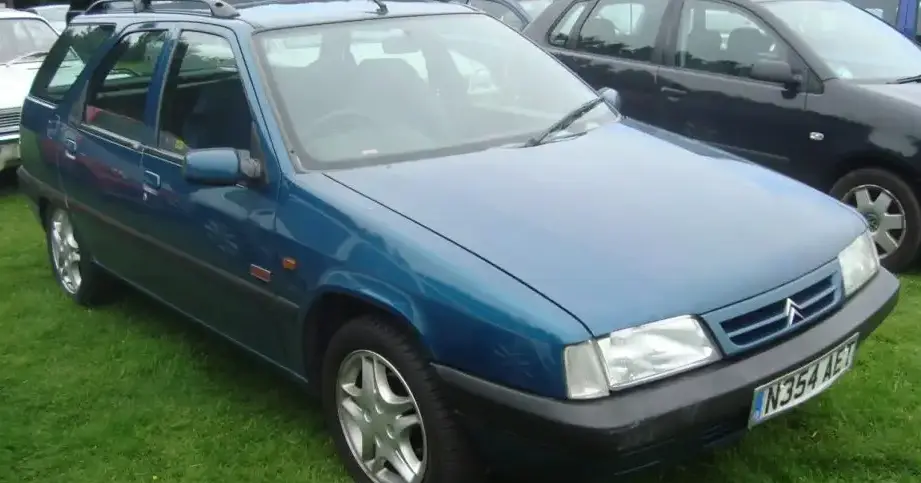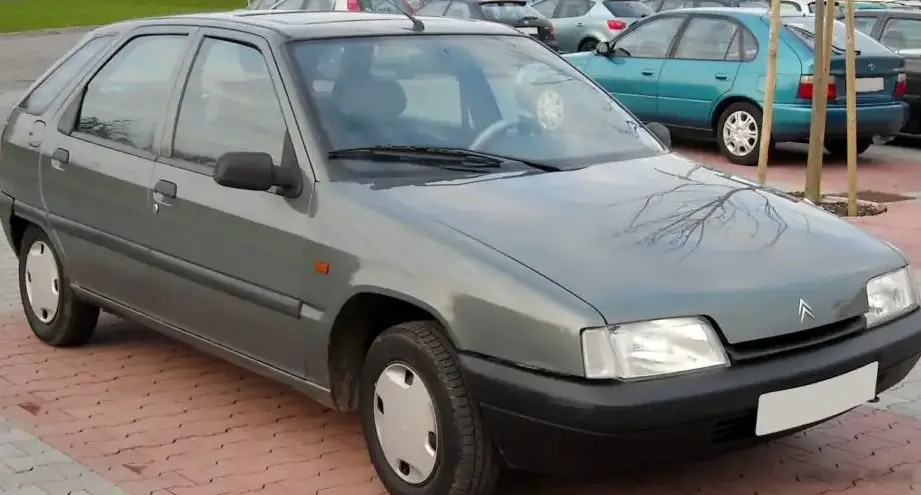
The Citroën ZX 1.1, produced between 1991 and 1994, represented the entry point into the ZX range, Citroën’s replacement for the popular BX. Part of the N2 series (Phase I), this five-door hatchback aimed to provide affordable and practical transportation within the compact family car segment. Positioned as the most economical variant, the 1.1-liter engine and manual transmission combination prioritized fuel efficiency over outright performance. It was a key model for Citroën in Europe, competing with vehicles like the Ford Escort and Volkswagen Golf, offering a distinctive blend of comfort and affordability. This variant was primarily aimed at budget-conscious buyers and those seeking a reliable, no-frills vehicle for daily commuting.
Technical Specifications
| Brand | Citroen |
| Model | ZX |
| Generation | ZX (N2, Phase I) 5-door |
| Type (Engine) | 1.1 (60 Hp) |
| Start of production | 1991 |
| End of production | 1994 |
| Powertrain Architecture | Internal Combustion engine |
| Body type | Hatchback |
| Seats | 5 |
| Doors | 5 |
| Fuel consumption (urban) | 7.8 l/100 km (30.2 US mpg, 36.2 UK mpg, 12.8 km/l) |
| Fuel consumption (extra urban) | 5.1 l/100 km (46.1 US mpg, 55.4 UK mpg, 19.6 km/l) |
| Fuel consumption (combined) | 6.8 l/100 km (34.6 US mpg, 41.5 UK mpg, 14.7 km/l) |
| Fuel Type | Petrol (Gasoline) |
| Acceleration 0 – 100 km/h | 16.8 sec |
| Acceleration 0 – 62 mph | 16.8 sec |
| Acceleration 0 – 60 mph | 16 sec |
| Maximum speed | 161 km/h (100.04 mph) |
| Weight-to-power ratio | 15.7 kg/Hp, 63.8 Hp/tonne |
| Weight-to-torque ratio | 11.9 kg/Nm, 84 Nm/tonne |
| Power | 60 Hp @ 5800 rpm |
| Power per litre | 53.4 Hp/l |
| Torque | 79 Nm @ 3200 rpm (58.27 lb.-ft. @ 3200 rpm) |
| Engine layout | Front, Transverse |
| Engine Model/Code | H1A TU1 K |
| Engine displacement | 1124 cm3 (68.59 cu. in.) |
| Number of cylinders | 4 |
| Engine configuration | Inline |
| Cylinder Bore | 72 mm (2.83 in.) |
| Piston Stroke | 69 mm (2.72 in.) |
| Compression ratio | 9.4:1 |
| Number of valves per cylinder | 2 |
| Fuel injection system | Carburettor |
| Engine aspiration | Naturally aspirated engine |
| Valvetrain | OHC |
| Engine oil capacity | 3.5 l (3.7 US qt | 3.08 UK qt) |
| Coolant | 6.5 l (6.87 US qt | 5.72 UK qt) |
| Kerb Weight | 940 kg (2072.35 lbs.) |
| Max. weight | 1465 kg (3229.77 lbs.) |
| Max load | 525 kg (1157.43 lbs.) |
| Trunk (boot) space – minimum | 324 l (11.44 cu. ft.) |
| Trunk (boot) space – maximum | 1146 l (40.47 cu. ft.) |
| Fuel tank capacity | 56 l (14.79 US gal | 12.32 UK gal) |
| Max. roof load | 75 kg (165.35 lbs.) |
| Permitted trailer load with brakes (12%) | 900 kg (1984.16 lbs.) |
| Permitted trailer load without brakes | 465 kg (1025.15 lbs.) |
| Permitted towbar download | 70 kg (154.32 lbs.) |
| Length | 4071 mm (160.28 in.) |
| Width | 1688 mm (66.46 in.) |
| Height | 1397 mm (55 in.) |
| Wheelbase | 2540 mm (100 in.) |
| Front track | 1414 mm (55.67 in.) |
| Rear (Back) track | 1407 mm (55.39 in.) |
| Front overhang | 849 mm (33.43 in.) |
| Rear overhang | 682 mm (26.85 in.) |
| Ride height (ground clearance) | 114 mm (4.49 in.) |
| Drag coefficient (Cd) | 0.32 |
| Drivetrain Architecture | The Internal combustion engine (ICE) drives the front wheels of the vehicle. |
| Drive wheel | Front wheel drive |
| Number of gears and type of gearbox | 5 gears, manual transmission |
| Front suspension | Independent type McPherson, Wishbone |
| Rear suspension | Hydro-pneumatic element, Trailing arm |
| Front brakes | Disc |
| Rear brakes | Drum |
| Assisting systems | ABS (Anti-lock braking system) |
| Steering type | Steering rack and pinion |
| Power steering | Hydraulic Steering |
| Tires size | 165/70 R13 |
Powertrain & Engine Architecture
The Citroën ZX 1.1 was powered by the H1A (TU1 K) engine, a 1.1-liter inline-four cylinder petrol engine. This engine was a mainstay in many Peugeot and Citroën models of the era, known for its simplicity and reliability. The TU1 engine featured a single overhead camshaft (OHC) operating two valves per cylinder. Crucially, this variant utilized a carburetor for fuel delivery, a cost-saving measure compared to fuel injection found in higher-spec models. This carburetor system, while less efficient than injection, contributed to the car’s affordability. The engine produced 60 horsepower at 5800 rpm and 79 Nm (58.27 lb-ft) of torque at 3200 rpm. The engine’s relatively low compression ratio of 9.4:1 was typical for the time and helped accommodate lower octane fuels. The engine was transversely mounted, driving the front wheels. The standard transmission was a five-speed manual gearbox, optimized for fuel economy rather than sporty performance.
Driving Characteristics
The ZX 1.1 offered modest performance. Acceleration from 0 to 100 km/h (0-62 mph) took approximately 16.8 seconds, and the top speed was around 161 km/h (100 mph). The carburetor and relatively low power output meant that the engine needed to be revved to extract the most performance. Gear ratios were spaced to prioritize fuel efficiency, resulting in a somewhat sluggish feel, particularly when overtaking. Compared to the more powerful 1.6 and 2.0-liter versions of the ZX, the 1.1 felt significantly underpowered. However, the light weight of the vehicle (940 kg / 2072 lbs) helped to mitigate some of the performance deficit. The ride quality, a Citroën hallmark, was generally comfortable thanks to the torsion bar front suspension and hydro-pneumatic rear suspension, even on uneven road surfaces.
Equipment & Trim Levels
The ZX 1.1 was typically offered with a basic level of equipment. Standard features included cloth upholstery, a simple dashboard layout, and manual windows and door locks. Power steering was often included, but air conditioning and central locking were usually optional extras. The interior was functional and durable, prioritizing practicality over luxury. Trim levels were relatively limited for the 1.1 model, with options primarily focused on adding comfort features like upgraded seat fabrics or a basic radio. The exterior typically featured steel wheels with hubcaps, and body-colored bumpers.
Chassis & Braking
The ZX featured an independent McPherson strut front suspension and a hydro-pneumatic trailing arm rear suspension. The hydro-pneumatic system, a Citroën innovation, provided a uniquely comfortable and self-leveling ride. The braking system consisted of disc brakes on the front wheels and drum brakes on the rear. ABS (Anti-lock Braking System) was often included as standard equipment, enhancing safety. The steering was a rack and pinion system with hydraulic power assistance, providing relatively light and precise steering feel. The tires were typically 165/70 R13, chosen for a balance of fuel efficiency and grip.
Market Reception & Comparison
The Citroën ZX 1.1 was generally well-received as an affordable and practical family car. Critics praised its comfortable ride and fuel efficiency, but noted its lack of performance. Compared to rivals like the Ford Escort and Volkswagen Golf, the ZX 1.1 offered a more distinctive driving experience, thanks to its unique suspension system. However, the carburetor engine was seen as outdated compared to the fuel injection systems found in some competitors. Fuel economy was a strong point, with combined figures around 6.8 l/100 km (34.6 US mpg), making it an attractive option for budget-conscious buyers. Reliability was generally good, although the carburetor required periodic maintenance.
Legacy
The Citroën ZX 1.1, while not the most powerful or technologically advanced version of the ZX, remains a popular choice among classic car enthusiasts and those seeking an affordable and reliable used car. The TU1 engine is known for its durability, and parts availability is generally good. The hydro-pneumatic suspension, while requiring occasional maintenance, provides a uniquely comfortable ride. Today, these cars are relatively inexpensive to purchase and maintain, making them a practical and enjoyable option for those looking for a classic French hatchback. The 1.1 variant, in particular, is valued for its simplicity and fuel efficiency, representing a bygone era of affordable motoring.